

Effort to raise minimum age for criminally charging children downgraded to study

A legislative effort to raise the minimum age Colorado children can be criminally charged was all but killed Wednesday after being downgraded to a task force to study potentially raising the age in the future.
As drafted, House Bill 1131 would have removed children aged 10, 11 and 12 from the juvenile court’s jurisdiction, increasing the age for prosecution from 10 to 13 years old, except when a child is suspected of committing murder or felony sexual assault. The bill would have also increased the minimum age when a child can be tried as an adult from 12 to 14 years old.
After Wednesday’s amendment, the bill would only create a task force in charge of developing recommendations for how to better serve 10-, 11- and 12-year-olds who commit crimes without putting them in the criminal justice system.
“We’re still posing the question and tasking people into being able to answer it,” said Rep. Jennifer Bacon, D-Denver, who is sponsoring the bill. “Regardless of what we may feel today, these are questions that we all deserve as a community, as a state, as policy makers, to help us answer so that we are not making decisions down the line where we do not have responses, data and insights to rely on.”
The amendment came after lawmakers on both sides of the aisle expressed concern about the original bill, questioning whether not criminally charging younger children would prevent them from accessing needed resources like court-mandated therapy. The original bill would have gone into effect in 2024, allowing just over a year to figure this out.
Though the amended bill won the approval of most Democrats, Republicans remained in firm opposition. On Thursday, the House passed the bill in a 37-26 vote, with all Republican representatives and three Democrats voting against the bill.
Opponents disapproved of the bill’s intention to move towards eventually increasing the minimum age for criminally charging children.
“We’re talking thousands of serious offenses that a juvenile between 10 and 13 could be committing,” said Rep. Matt Soper, R-Delta. “That’s what was proposed under the original bill. I do find that it’s troubling.”
In Colorado, an average of 525 children between 10 and 12 years old are charged with crimes each year, according to state estimates. Of those, around three are charged with felonies, 64 are charged with misdemeanors, 446 are charged with juvenile delinquency and 12 are charged with traffic offenses. The average length of stay in Colorado’s juvenile detention centers is 17 months, according to state data.
Supporters of the bill said children should not have to face the trauma and potentially life-altering consequences of an arrest to get support, saying the criminal justice system doesn’t address root causes of juvenile crime. One study found that up to 90% of people in the juvenile justice system have experienced trauma, including high rates of physical or sexual abuse.
Arrested children are more likely to be arrested as adults, less likely to graduate high school, more likely to be unemployed and face a higher risk of violence and sexual abuse while in detention, Bacon said. Children of color are also arrested at disproportionately high rates. From 2012 to 2020, Black children made up less than 7% of Colorado’s 10 to 12 year old population, but made up 20% of those detained, according to state data.
“We should be looking at, what are we doing? Why are kids committing crimes when they’re 10 or 11 or 12 years old? And how do we as a society fix that?” said Rep. Judy Amabile, D-Boulder, who voted in support of the bill. “I don’t believe that’s by running them through the criminal justice system.”
The amended bill will now be sent to the Senate for consideration in the coming weeks.



10th Circuit dismisses Tina Peters’ challenge to confinement as moot
Michael Karlik
michael.karlik@coloradopolitics.com
Updated 15 hours ago
The Denver-based federal appeals court granted the state’s unopposed request on Wednesday to dismiss former Mesa County clerk Tina Peters’ challenge to her confinement as moot. Although Peters received a commutation of her prison sentence last month from Gov. Jared...
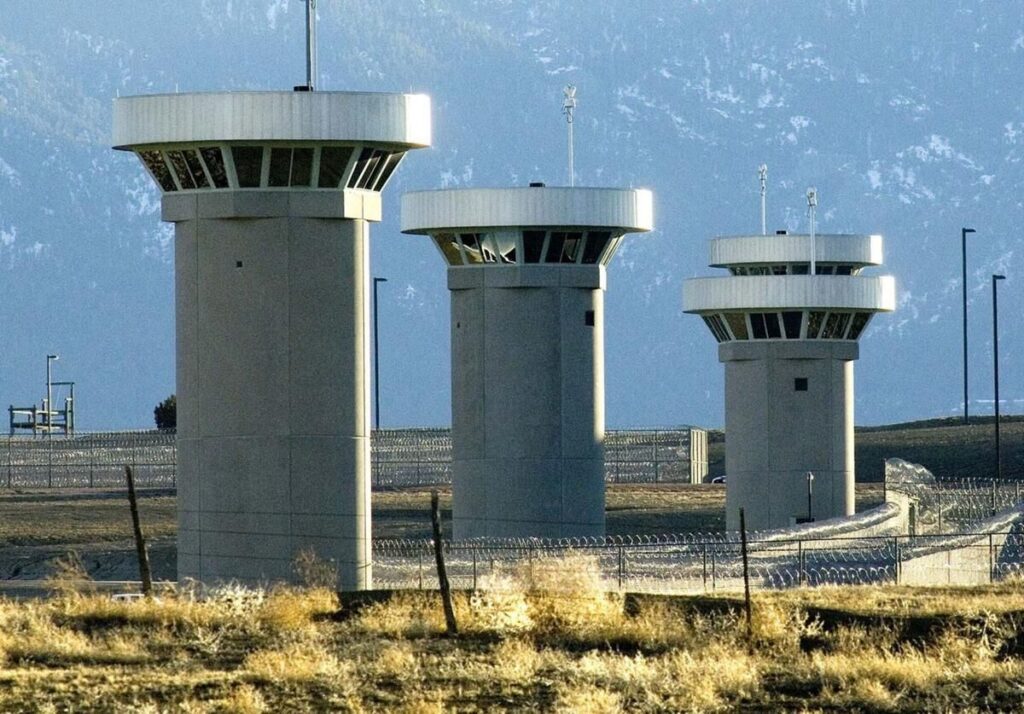
Federal judge declines to recuse from death penalty case after Supermax visit
Michael Karlik
michael.karlik@coloradopolitics.com
Updated 16 hours ago
A federal judge declined to recuse herself last month from a death penalty case arising out of Colorado’s “Supermax” prison, finding that her tour of the facility earlier this year did not bias her decision-making. U.S. District Court Judge Charlotte...

Colorado legislators, candidates differ over social media regulations for minors
Bethany Johnson
bethany.johnson@denvergazette.com
Updated 14 hours ago
Following the 2020 accidental overdose of her daughter, Colorado’s Patti Lujan is still pursuing a lawsuit against Snapchat, the social media platform she claims connected her daughter with a drug dealer, police said. Lujan, like many parents, is looking for...

Colorado state Senate: Meet the primary election candidates
Marianne Goodland
marianne.goodland@coloradopolitics.com
Updated 14 hours ago
Colorado’s June 30 primary features a slate of state Senate contests, with several incumbents stepping aside and competitive fields emerging in both parties. These are some of the races to watch as voters begin to submit ballots. Senate District 3:...

Top five hot mic moments from world leaders at G7 Summit
David Zimmermann Washington Examiner
davidzimmermannwashingtonexaminer@wpstage.coloradopolitics.com
Updated 17 hours ago
As the 52nd annual G7 Summit came to a close on Wednesday in France, world leaders not only discussed diplomacy front and center, but also engaged in lighter conversations on the sidelines. There were many hot-mic moments in which President Donald...

Appeals court clarifies offense of impersonating a peace officer
Michael Karlik
michael.karlik@coloradopolitics.com
Updated 20 hours ago
Colorado’s second-highest court clarified this month that a person commits the offense of impersonating a peace officer if they engage in “any conduct” while pretending to be law enforcement. In a case out of El Paso County, Richard James Coulier...

Hickenlooper raises $900K since April, heads into primary with almost $3 million on hand
Ernest Luning
ernest.luning@coloradopolitics.com
Updated 16 hours ago
U.S. Sen. John Hickenlooper raised just over $900,000 for his reelection bid in the 10-week pre-primary reporting period, the Colorado Democrat’s campaign said Wednesday. The campaign finished the period with almost $3 million in the bank, with more than 80%...

Four takeaways from Georgia, DC, Alabama, and Oklahoma primary elections
Rena Rowe, Washington Examiner
rena.rowe.washington.examiner@gazetteedit.wpenginepowered.com
Updated 19 hours ago
Voters across the country delivered a mixed verdict in a series of high-profile primary contests Tuesday, elevating political outsiders, boosting progressive candidates in deep-blue jurisdictions, and offering fresh clues about President Donald Trump’s hold on the GOP ahead of the...

Trump and Obama lock horns as White House tries to sell new Iran deal
NAOMI LIM Washington Examiner
naomi-lim-washington-examiner@coloradopolitics.com
Updated 19 hours ago
Former President Barack Obama‘s reemergence is looming over President Donald Trump‘s peace deal with Iran as the incumbent tries to sell his deal to an increasingly skeptical public after the nearly four-month war. Obama’s return to the headlines as he...

Littleton approves $1M for Starlight affordable housing project
Nicholas Fogleman
nicholas.fogleman@denvergazette.com
Updated 22 hours ago
The Littleton City Council on Tuesday approved a $1 million funding request to support construction of a new affordable housing development known as the Starlight Apartments. The council authorized the contribution from the city’s Affordable Housing Fund for the project,...
PREV
PREVIOUS

NONPROFIT REGISTER | When what you wear is all-important
CLOTHES TO KIDS OF DENVER Denver News: There are those who feel that what you wear is no big deal. But for kids, a well-worn or out-of-style wardrobe can have a devastating impact. As one young client noted in a video shown at the annual Reading, Writing and a Wardrobe luncheon, the opportunity to pick […]

Colorado House OKs expanding employment discrimination law to cover domestic workers
Legislation to protect tens of thousands of domestic workers from employment discrimination passed a major hurdle Thursday, receiving approval from the Colorado House. If enacted, House Bill 1367 would expand the Colorado Anti-Discrimination Act to cover employees who work for private households, such as cleaners, gardeners, nannies or elderly care takers. The bill would also […]