

Appeals court tosses man’s conviction due to trial outside of legal deadline
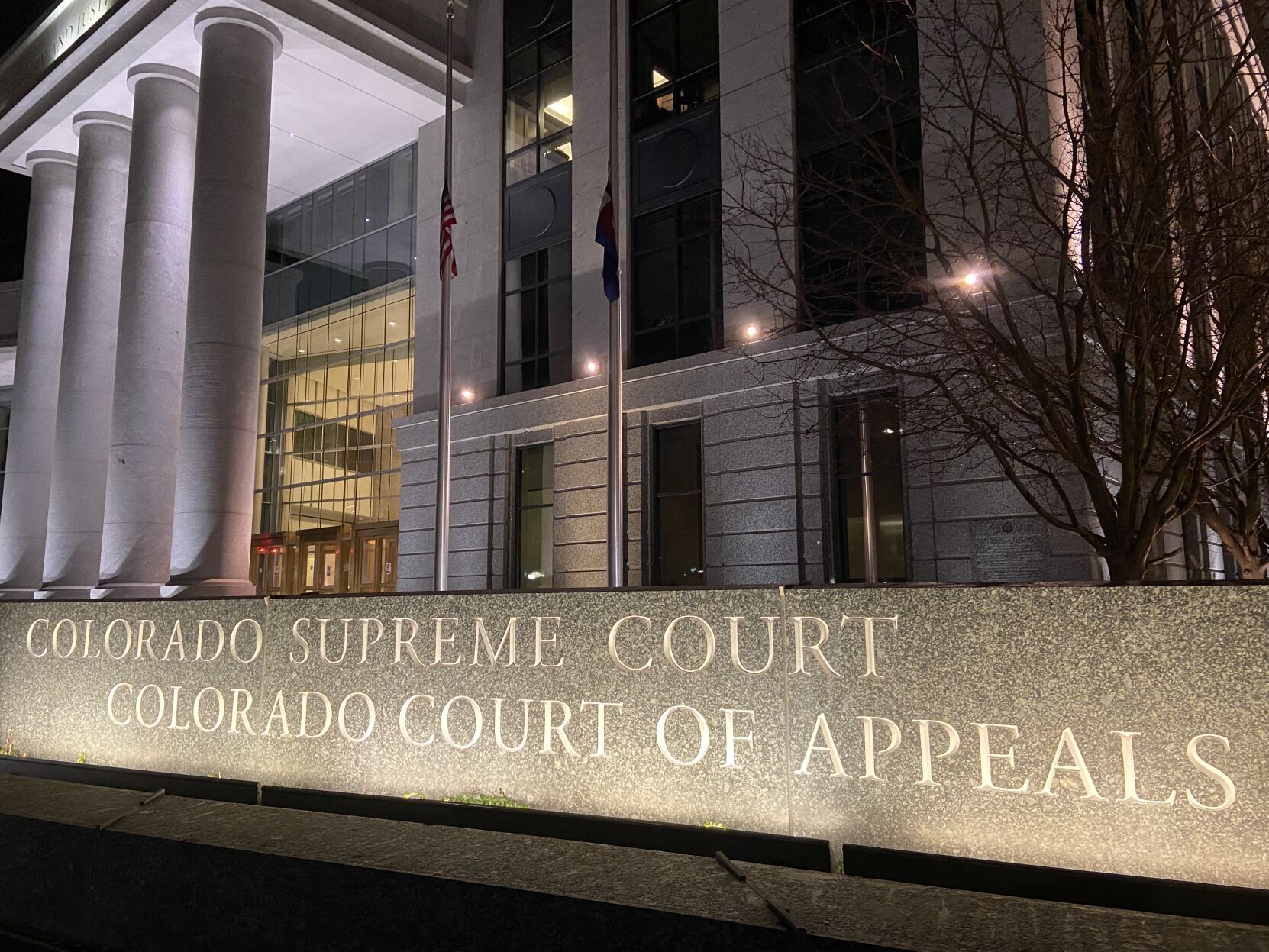
The state Court of Appeals has overturned a man’s criminal convictions and 4.5-year sentence because a Pueblo County judge and prosecutors failed to bring him to trial in time.
Although the U.S. Constitution guarantees defendants the right to a speedy trial, Colorado law is more specific. If the government does not ensure that a defendant is tried within six months of their not-guilty plea, the trial court must dismiss all charges. Prosecutors are further barred from charging the defendant again for the same offense.
A jury found Jeffrey Anthony Woodfork guilty of felony menacing and the possession of a weapon by a prior offender. The government alleged that Woodfork had applied pressure to his partner’s neck and fired a gun near her. Woodfork denied the assault and claimed the alleged victim had actually fired the gun. The jurors acquitted Woodfork of assault.
The trial began on Aug. 31, 2020, little more than a year since Woodfork pleaded not guilty. Originally, Woodfork’s trial date was Jan. 6, 2020. The victim, however, did not appear, nor did Woodfork’s sister, who was another witness for the prosecution. Over Woodfork’s objection, then-District Court Judge Kimberly J. Karn reset the trial for March 30, approximately six weeks beyond the speedy trial deadline in state law.
In that time, the novel coronavirus began to spread throughout Colorado and jury trial were suspended as a consequence. On March 30, Karn declared a mistrial, again over the defense’s objection. The same thing happened on June 1, the new trial date.
On Aug. 28, the defense asserted that Woodfork’s right to a speedy trial was violated, but Karn overruled the objection. The trial commenced three days later.
As part of Colorado’s speedy trial law, a judge may extend the trial date at the prosecution’s request without running afoul of the six-month deadline. To do so requires the court to find that, despite the prosecution acting with due diligence, there is key evidence unavailable on the trial date that will reasonably be available later.
In Woodfork’s case, Karn deemed the non-appearance of the two prosecution witnesses merited the first extension outside of the speedy trial window.
Woodfork argued on appeal that the prosecution had not satisfied any of the criteria for receiving the extension. There was no indication the prosecution exercised due diligence to secure the witnesses’ appearance, asserted Woodfork’s attorney. She added that one of the witnesses, Woodfork’s sister, never actually appeared for trial, calling into question her status as a key witness in the first place.
“Here, the prosecution failed to demonstrate that there was a reasonable basis to believe that (the witnesses) were only temporarily unavailable, where in fact, both these witnesses failed to appear at any of the trial dates in January 2020, March 2020, or June 2020,” wrote attorney Suzan Trinh Almony to the Court of Appeals.
Almony also quoted from a Colorado Supreme Court decision issued three months into the COVID-19 pandemic. While the justices agreed that trial courts could extend the speedy trial period if the public health emergency made certain evidence, including witness testimony, unavailable, the Supreme Court cautioned that “the prosecution cannot use a public health crisis as an excuse for its lack of due diligence.”
A three-judge panel for the Court of Appeals confined its review to the question of whether the victim’s testimony was material to the prosecution’s case. While Karn had said at the time that “Clearly, these two witnesses are material witnesses,” her perfunctory explanation did not satisfy the appellate judges.
The prosecution “stated only that ‘my two necessary witnesses are not here.’ There is nothing in the record showing that the district court weighed the materiality of the victim’s testimony or the competing interest of Woodfork’s right to a speedy trial,” wrote Judge Craig R. Welling in the April 7 opinion.
Based the prosecution’s failure to show it was eligible for an extension, the panel concluded Karn should have set Woodfork’s trial to begin by Feb. 16, 2020, six months from his not-guilty plea. Because she did not, the panel vacated his convictions.
The case is People v. Woodfork.

10th Circuit provides guidance on police searches of cloud-based data
Michael Karlik
michael.karlik@coloradopolitics.com
Updated 2 days ago
The Denver-based federal appeals court provided guidance to law enforcement agencies on Monday for ensuring that searches of cloud-based accounts comply with the Fourth Amendment’s requirements. A three-judge panel of the U.S. Court of Appeals for the 10th Circuit noted...
Federal judge releases man after 2 immigration judges disobey order
Michael Karlik
michael.karlik@coloradopolitics.com
Updated 2 days ago
A federal judge released a man from immigration detention on Thursday after two different immigration judges disobeyed his order in the same case. “At this point, the Court has granted Respondents two bites at the apple to prove detention of...
New rules for private judges in Colorado include discipline oversight, campaign contributions
David Migoya
david.migoya@gazette.com
Updated 1 day ago
The Colorado Supreme Court recently determined the state’s private judges — retired jurists appointed to oversee civil cases that rarely get public scrutiny — can now make political contributions freely and without reserve, overruling a prohibition that had been in...
Appeals court finds Prowers County judge incorrectly analyzed firetruck collision lawsuit
Michael Karlik
michael.karlik@coloradopolitics.com
Updated 3 days ago
Colorado’s second-highest court directed a Prowers County judge last month to take a second look at whether a firetruck operator and the county itself can be held liable for a collision with a motorist. Donald Williamson was driving through a...
Appeals court reverses assault convictions after jury received no definition of ‘harm’
Michael Karlik
michael.karlik@coloradopolitics.com
Updated 3 days ago
Colorado’s second-highest court reversed an Arapahoe County defendant’s assault convictions last week, concluding the trial judge neglected to define a key, ambiguous term for jurors. Police officers arrested David Cristobal Aragon at a house party for allegedly violating a restraining...
Colorado counties cannot challenge state law restricting immigration contracts, appeals court says
Michael Karlik
michael.karlik@coloradopolitics.com
Updated 3 days ago
Colorado’s second-highest court ruled on Thursday that counties lack standing to challenge a 2023 state law that restricts their ability to contract with the federal government or private entities for immigration detention. A three-judge Court of Appeals panel agreed with...

Colorado lawmakers propose changes to family court procedures | Bills in Brief
Marissa Ventrelli
marissa.ventrelli@coloradopolitics.com
Updated 3 days ago
Colorado lawmakers introduce hundreds of bills each year. Bills in brief cuts through the noise by explaining which proposals matter, what’s at stake, and how decisions at the Capitol could affect everyday life across the state. Colorado lawmakers from both parties are...
Federal judge partially allows second World Cup trafficking lawsuit to move forward
Michael Karlik
michael.karlik@coloradopolitics.com
Updated 4 days ago
A federal judge allowed some claims to move forward last month against companies operating out of Colorado that allegedly participated in a human trafficking venture involving Filipino laborers who constructed facilities for the 2022 World Cup in Qatar. There are...
Federal judge dismisses lawsuit seeking to force Colorado secretary of state to screen out scam filings
Michael Karlik
michael.karlik@coloradopolitics.com
Updated 3 days ago
A federal judge dismissed a lawsuit last week that sought to require Colorado’s secretary of state to verify corporate filings in the state’s database to reduce the risk of future fraud. Bernard Butts of Florida, who was 83 when he...
Federal judge finds no constitutional violation by Huerfano County well inspectors
Michael Karlik
michael.karlik@coloradopolitics.com
Updated 3 days ago
A federal judge concluded last month that two Huerfano County employees did not engage in an unconstitutional search when they approached the plaintiffs’ camper within 40 feet to investigate a potential code violation. In July 2021, the county’s building inspector,...
PREV
PREVIOUS

TRAIL MIX | Colorado's 2022 primary ballot takes shape as deadlines loom
Colorado is in that brief, awkward stage between the deadline for Republicans and Democrats to declare their candidacies for statewide and congressional offices and the deadline for the state’s top election official to certify this year’s primary ballot. During this roughly six-week stretch, from the middle of March to the end of April, the next […]

Defense gets chance to clarify gentlemen's agreements in DaVita criminal trial
Defense lawyers sought to change jurors’ perception of the corporate pacts at the heart of the federal criminal trial of DaVita, Inc. and its former leader, Kent Thiry, by clarifying the intent directly with one of the men responsible for the agreements. Andrew Hayek, the former chief executive officer of Surgical Care Affiliates, said on […]