

COURT CRAWL | Update on federal trials, racial bias in jury selection
Welcome to Court Crawl, Colorado Politics’ roundup of news from the third branch of government. A high-profile civil trial resolved in favor of the plaintiffs last week, while another criminal trial of a prominent Colorado businessman has been postponed for a week. Also, the state’s Court of Appeals issued multiple decisions analyzing racial bias in jury selection.
$14 million goes to Denver protesters
? A federal jury on Friday concluded that the City and County of Denver had violated the rights of racial justice protesters in 2020 by using excessive force in violation of the Fourth and First amendments. Jurors awarded $14 million to the 12 plaintiffs.
? “To have jurors who don’t know me … to have them see the same things that we saw, it’s incredibly validating.” -Elisabeth Epps, one of the plaintiffs and a current candidate for the state House of Representatives.
? The trial drew national attention, as the tactics Denver police used to subdue peaceful protests as well as criminal activity reflected the behavior of other departments at the time. Protesters were reacting to the police murder of George Floyd in Minneapolis, as well as the killings of Colorado’s Elijah McClain, Kentucky’s Breonna Taylor and other Black Americans.
? The federal judge overseeing the trial, R. Brooke Jackson, was no stranger to the Denver protests. It was Jackson who first issued a temporary restraining order in June 2020 placing restrictions on some police tactics. At the time, he wrote: “If a store’s windows must be broken to prevent a protestor’s facial bones from being broken or eye being permanently damaged, that is more than a fair trade. If a building must be graffitied to prevent the suppression of free speech, that is a fair trade. The threat to physical safety and free speech outweighs the threat to property.”
? Read The Denver Gazette’s entire coverage of the trial.
DaVita trial to kick off in April
? The first-of-its-kind criminal antitrust prosecution against Fortune 500 company DaVita, Inc. and its former leader, Kent Thiry, was supposed to start this morning. Instead, there will be a one-week delay. The clerk of the federal district court said a “trial participant” with exposure to COVID-19 was the reason for the postponement.
? To recap, the U.S. Department of Justice is accusing Thiry and DaVita of violating century-old antitrust law through a series of agreements with competitor companies to not solicit DaVita’s employees. Such behavior, the government contends, is inherently anticompetitive because it restricts the movement of workers in the labor market. This could be the first time such non-solicitation agreements are found to be illegal. Check back next Monday for trial coverage.

Race and jury selection
? Court Crawl readers likely know that the constitutional guarantee of a fair trial includes the right to an impartial jury. In addition, the 1986 decision of Batson v. Kentucky established that intentional racial discrimination in jury selection is a constitutional violation. But in practice, ferreting out discrimination isn’t so clear, as two decisions from the state’s Court of Appeals illustrated.
? First, during jury selection for the trial of a Black defendant, one potential juror in overwhelmingly-white Gilpin County said he had moved there because he “didn’t want diversity.” The trial judge felt there was no reason to remove the juror for cause. A Court of Appeals panel found the judge was wrong not to excuse the juror for his clearly racial comments, but declined to overturn the defendant’s convictions.
? Second, a prosecutor in Arapahoe County dismissed a Black juror from a Black defendant’s trial. Although the Batson decision requires non-racial reasons be given, the prosecutor took awhile to come up with an explanation, finally stating that the juror was staring “off into the distance.” The Court of Appeals found that implausible, and faulted the trial judge for not sticking by his instincts when he hadn’t seen the behavior the prosecutor claimed.
State Supreme Court activity
? The Colorado Supreme Court ordered a Weld County judge to return a public defender’s unredacted case files, saying he went too far in approving the prosecution’s subpoena to have the defense turn over the entirety of its work.
? The El Paso County sheriff can be sued for purposefully detaining a man for nearly four months after he posted bond, the Supreme Court decided.
? The justices will determine whether Thornton’s mayor – current congressional candidate Jan Kulmann – is abiding by term limits enshrined in the constitution. The court also agreed to hear a case involving oil and gas taxation.
Vacancies and appointments
? The deadline to apply to be the next U.S. District Court judge in Colorado has been extended to March 31. Colorado’s two senators have reconstituted an advisory committee to screen applicants. Submit your materials here.
? Applications are due by April 15 to succeed Judge Deborah J. Grohs on the district court for the Fourth Judicial District (El Paso and Teller counties). Also, there is an April 22 deadline for those applying to succeed Judge David J. Stevens on the district court for the 18th Judicial District (Arapahoe, Douglas, Lincoln and Elbert counties).
? The governor will choose between Jason Kelly and Benjamin Pacyga of Alamosa to succeed Judge Kimberly Cortez-Rodriguez on the Conejos County Court.
? There are three finalists to succeed Judge Zachary Martin on the Ouray County Court: Randy Brown of Fruita, Roger Sagal of Ridgway and Lane Thomasson of Montrose.
Civil justice system in Colorado is falling short, report warns
? The Colorado Access to Justice Commission released a report last week warning that self-represented litigants in Colorado’s civil justice system, or those who are seeking an attorney, are encountering multiple obstacles to effective representation. For instance: The online platform for virtual proceedings is unfriendly to those with disabilities or in need of English translation. A lack of broadband makes virtual attendance difficult. Court forms are also bewildering.
? “Participants repeatedly emphasized that individuals facing a civil legal problem frequently feel overwhelmed by the complex nature of both the law and court procedures. This is true not only for lay people with less education but even for people with advanced degrees, including lawyers.” –report of findings and recommendations from the commission
? The report comes after 41 virtual meetings across the state last year, in which Justice Melissa Hart and commission Executive Director Elisa Overall heard from over 500 participants. There are recommendations included for the legislature, the judicial branch, the legal community and law schools.

Miscellaneous decisions
? The Court of Appeals found the COVID-19 pandemic was an “extraordinary circumstance” that justified Colorado Springs police denying the option of a breath test to a suspected drunk driver.
? A transgender inmate reportedly told three prison officials she was at risk of being sexually assaulted if they sent her back to the general population. They sent her back, and she was indeed assaulted. The U.S. Court of Appeals for the 10th Circuit decided the officers were immune from liability.
? Two jurors in Montezuma County had contact with the defendant’s family during his trial, but the Court of Appeals found the encounters did not require a new trial.
? A Boulder County judge failed to dismiss a juror who admitted he would treat child witnesses as more credible than adult witnesses. The Court of Appeals granted a new trial to the defendant, a woman found guilty of sexually abusing a child.
SCOTUS check-in
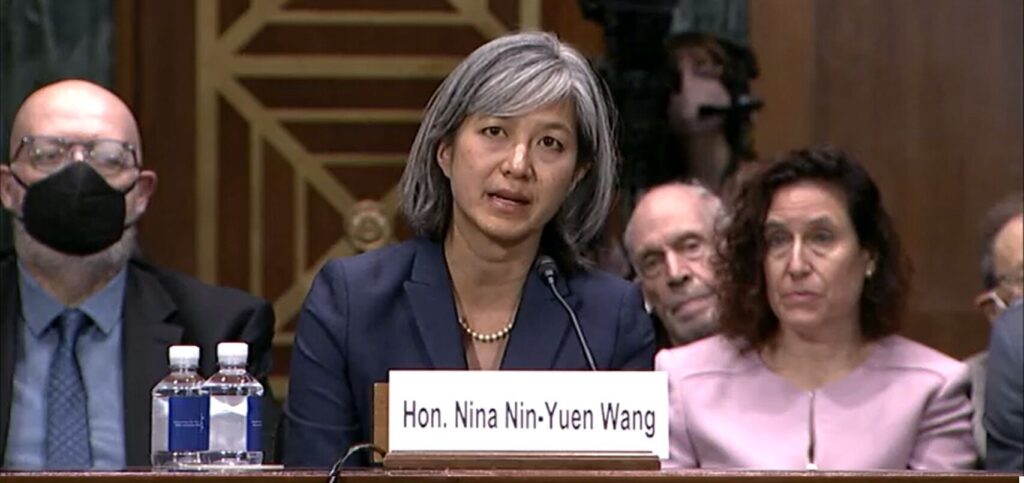
? The hearings for Judge Ketanji Brown Jackson’s nomination to the U.S. Supreme Court wrapped up last week, and a committee vote will likely take place next week. Attorney General Phil Weiser is among those voices calling for the Senate to confirm Jackson.
? While Jackson would be the first Black woman to join the nation’s highest court if confirmed, Colorado’s Supreme Court and Court of Appeals currently have no Black members. The Judicial Department, however, has multiple diversity initiatives underway.


Colorado lawmakers propose changes to family court procedures | Bills in Brief
Marissa Ventrelli
marissa.ventrelli@coloradopolitics.com
Updated 14 hours ago
Colorado lawmakers introduce hundreds of bills each year. Bills in brief cuts through the noise by explaining which proposals matter, what’s at stake, and how decisions at the Capitol could affect everyday life across the state. Colorado lawmakers from both parties are...
Federal judge partially allows second World Cup trafficking lawsuit to move forward
Michael Karlik
michael.karlik@coloradopolitics.com
Updated 16 hours ago
A federal judge allowed some claims to move forward last month against companies operating out of Colorado that allegedly participated in a human trafficking venture involving Filipino laborers who constructed facilities for the 2022 World Cup in Qatar. There are...
Federal judge dismisses lawsuit seeking to force Colorado secretary of state to screen out scam filings
Michael Karlik
michael.karlik@coloradopolitics.com
Updated 11 hours ago
A federal judge dismissed a lawsuit last week that sought to require Colorado’s secretary of state to verify corporate filings in the state’s database to reduce the risk of future fraud. Bernard Butts of Florida, who was 83 when he...

Federal judge finds no constitutional violation by Huerfano County well inspectors
Michael Karlik
michael.karlik@coloradopolitics.com
Updated 14 hours ago
A federal judge concluded last month that two Huerfano County employees did not engage in an unconstitutional search when they approached the plaintiffs’ camper within 40 feet to investigate a potential code violation. In July 2021, the county’s building inspector,...
Federal judge warns of increasingly inadequate immigration bond hearings
Michael Karlik
michael.karlik@coloradopolitics.com
Updated 1 day ago
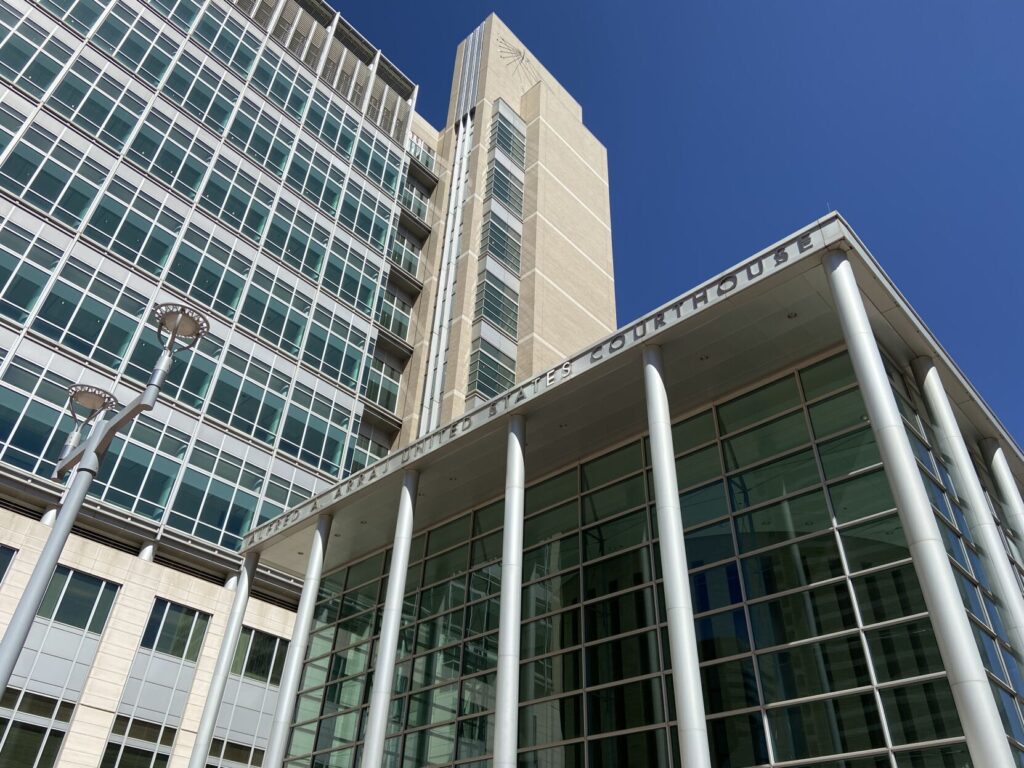
A federal judge ordered the immediate release of a man in immigration custody last week and, seemingly for the first time in Colorado, warned that the government is increasingly conducting inadequate bond hearings for detainees. Colorado’s federal trial court is facing...

10th Circuit upholds dismissal of Barry Morphew’s civil lawsuit against prosecutors, investigators
Michael Karlik
michael.karlik@coloradopolitics.com
Updated 1 day ago
The Denver-based federal appeals court agreed on Monday that Barry Morphew, who now stands accused for a second time of murdering his wife, failed to state viable claims against the government officials involved in his first, unsuccessful prosecution. Morphew was...
Federal judge blocks evidence from Aurora police’s unconstitutional search
Michael Karlik
michael.karlik@coloradopolitics.com
Updated 1 day ago
A federal judge ruled last month that prosecutors cannot use firearm evidence against a defendant because Aurora police searched him without having any reasonable basis to believe he was armed and dangerous. In evaluating the constitutionality of the search, U.S....

Colorado justices confirm lawyers may ‘borrow’ allegations from elsewhere
Michael Karlik
michael.karlik@coloradopolitics.com
Updated 2 days ago
The Colorado Supreme Court ruled on Monday that plaintiffs’ lawyers can use allegations made elsewhere to bolster their own clients’ claims, so long as the attorney first performs some degree of investigation into the “borrowed” assertions. Under Colorado’s rules for...
Appeals Court rules Douglas County violated open meeting laws
Nicholas Fogleman
nicholas.fogleman@denvergazette.com
Updated 2 days ago
The Colorado Court of Appeals ruled that Douglas County Commissioners violated Colorado open meeting laws in a series of closed meetings leading up to the county’s failed home rule special election. The Thursday ruling reversed a trial court’s denial of...

Colorado justices restore RTD subcontractor’s award, reject ‘drastic’ view of public works law
Michael Karlik
michael.karlik@coloradopolitics.com
Updated 3 days ago
The Colorado Supreme Court on Monday restored a $5.7 million award to a company that helped build a commuter rail line and, in doing so, rejected a view of state law that would nullify a subcontractor’s entitlement to any compensation...
PREV
PREVIOUS

Colorado-based anti-drug super PAC launches with attack ads against South Carolina's Nancy Mace
A new anti-drug super PAC based in Colorado said it is targeting U.S. Rep. Nancy Mace, the Republican congresswoman from South Carolina, in the primary election over her support for federally decriminalizing marijuana use. Protect Our Kids PAC, which is also launching this week, will engage in electioneering campaigns for legislative and congressional seats nationwide […]

Colorado Springs Mayor John Suthers joins other state leaders in criticizing fentanyl bill
Colorado Springs Mayor John Suthers on Monday joined other state leaders and law enforcement officials in saying that a fentanyl bill introduced last week by the Colorado Legislature “does not go far enough.” In a statement, he said that the bill – which targets drug dealers by proposing increased criminal penalties – “does not adequately […]