

NOONAN | Colorado public education is a disaster
Colorado alert! We’ve accomplished the breakdown of our public education system! It took us 145 years to build it and then take it down to the ground. Is that what we want?
It’s not because of COVID that our schools are in such bad shape and our teachers are at their wits’ end. But the epidemic has highlighted how badly we the people have conducted education policy and funding.
Past and current leadership in the state legislature as well as the Governor’s Office has inserted too many laborious mandates into the system. Most recent requirements are incompatible with lively, engaging education. They pin public school teachers in place and reduce students’ education to rote learning in order to score well on boring, high-stakes standardized tests.
Just as bad, we voters in Colorado are stingy. It’s irrational. Republicans and some Democratic politicians declare that school districts should do better with the money they have.
Here’s what that attitude means. Rural Colorado schools pay new teachers under $40,000, give them 30-35 students per class, and have them prepare up to five different classes per semester because they don’t have the money for better staffing.
These teachers are on a four-day schedule because the schools can’t afford a five-day week. There’s no time for creativity or enjoyment of learning on that timetable. Middle school and high school teachers are grading work from more than 150 students per semester.
In mountain communities, especially near resorts, rent is $1,500 per-month for a one-bedroom. Add health insurance, which with children can run another $1,000/month. Teachers in these areas can barely afford to rent yet alone buy a house. In resort towns, servers make more than teachers and they don’t have to grade papers at night and on weekends. The financial problems are worse for para-professionals and other support employees.
Out on the prairie, teachers make less than in the mountains. The teaching loads are the same. It’s difficult to attract teachers. New teachers can’t take the load of working with 30 to 35 kids per class, and in upper grades, of preparing so many different subjects.
The story is similar in suburban and urban schools. The pay is higher, but not enough. Staffing shortages and large classes are comparable to rural schools. Since returning to school post-COVID, kids are having difficulty adjusting. After being cooped up for more than a year, some students can’t stop talking and others can’t stay focused.
These problems are more poignant for our special-needs kids. There aren’t enough special education teachers to accommodate needs, and there’s not enough time in the shortened weeks in mountain and rural communities to provide required support for kids. For English Language Learners, there aren’t enough ELL teachers, translators and para-professionals to facilitate student learning.
Then there’s the unrelenting, organized attacks on the public teaching profession. Local elites at Colorado’s Gates Family Foundation, Gary Community Ventures, Colorado Concern, Ready Colorado, the Children’s Campaign, and Democrats for Education Reform have invested their ample financial muscle backing legislators who push their business-oriented competition model on public schools.
After more than a decade, the disaster is clear – no improvement overall in achievement scores, fewer teachers entering the profession and more teachers leaving the profession after fewer than five years.
State interventions to improve districts have had terrible results. The Adams 14 School District situation is instructive. The district in the Commerce City area has a high percentage of low-income students from minority communities who get to suck up bad air from Suncor Refinery all day. The State Board of Education deemed the district a failure and put a for-profit management company in charge. That decision has resulted in no improvement in achievement. Now the Board threatens to close the district’s high school in a repetition of Denver Public School’s closure of Manual High School a decade ago. This will not work out.
If public schools are to regain their capacity and vigor, a different education model must emerge. It should be supportive with rigor, not competitive. It should focus on adequate pay for teachers, classroom sizes where students strive and enjoy learning, support services so kids are fed and mentally and physically healthy, and educator evaluation systems emphasizing collaboration.
The sooner we get on this project, the better. It’s the least we can do for this COVID generation of kids.
Paula Noonan owns Colorado Capitol Watch, the state’s premier legislature tracking platform.

Not-so-public comment in Douglas County | Paula Noonan
Paula Noonan
paula-noonan@coloradopolitics.com
Updated 12 hours ago
Let’s do some high and low history. First, the high history. England’s King George III didn’t like the complaining he heard from the American colonies, so he went to war to shut the people up. President Donald Trump doesn’t like...
Why Colorado should stop charging swipe fees on sales taxes | OPINION
Colorado Politics
colorado-politics@coloradopolitics.com
Updated 1 day ago
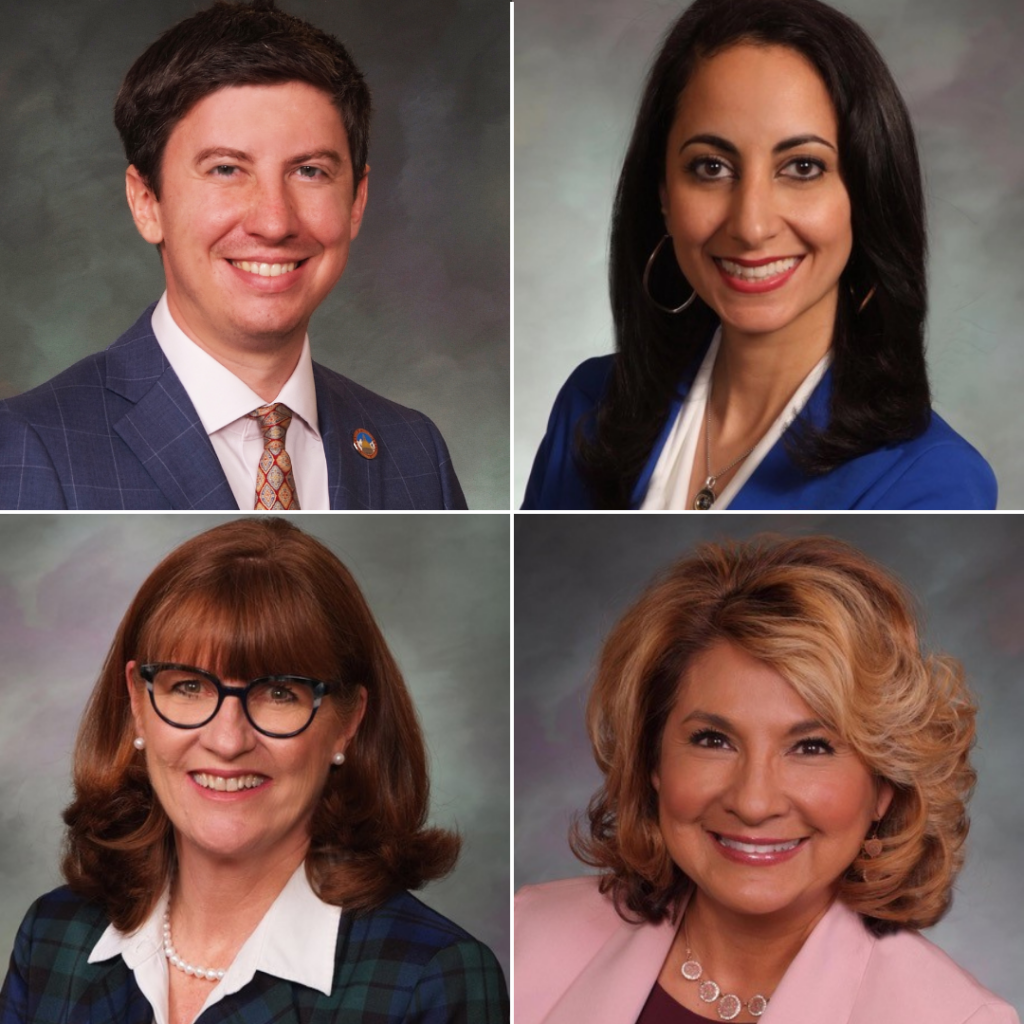
By William Lindstedt, Iman Jodeh, Julie McCluskie and Monica Duran Small businesses across Colorado are working harder than ever right now to keep their doors open, hire local workers and serve their communities. But every day, they are forced to...
Colorado can be a gamechanger in regulating GLP-1 weight loss drugs | OPINION
Colorado Politics
colorado-politics@coloradopolitics.com
Updated 1 day ago
By Nancy Glick “As goes California, so goes the nation” is a phrase reflecting California’s reputation as a bellwether in setting regulations that often become a precedent for national policy. Now, Colorado can play this role, setting new safety standards...
Colorado can be a gamechanger in regulating GLP-1 weight loss drugs | OPINION
Colorado Politics
colorado-politics@coloradopolitics.com
Updated 1 day ago
By Nancy Glick “As goes California, so goes the nation” is a phrase reflecting California’s reputation as a bellwether in setting regulations that often become a precedent for national policy. Now, Colorado can play this role, setting new safety standards...
The public health hazards in sports betting | PODIUM
Colorado Politics
colorado-politics@coloradopolitics.com
Updated 11 hours ago
By Brandon Zelasko As Colorado lawmakers revisit sports betting policy this session, the state has an opportunity to widen the lens. Beyond revenue projections and regulatory frameworks lies a critical question: Are we fully reckoning with the human effect of...
Colorado’s public lands are not for sale | OPINION
Colorado Politics
colorado-politics@coloradopolitics.com
Updated 2 days ago
By Jonathan Houck Our state is defined by its public land. It shapes our communities, our economy and our Colorado way of life. Just driving through Gunnison County, where I have lived for more than 30 years, sometimes I can’t...
The real impact of regulations on businesses, employees and Colorado’s way of life | OPINION
Colorado Politics
colorado-politics@coloradopolitics.com
Updated 3 days ago
By Loren Furman and Steve Swinney Every day in Colorado, business owners are faced with decisions most people never see, shaped by rising costs and a regulatory environment that has grown more complex over time. Those choices eventually reveal themselves...
Should we have recall votes for all Colorado elected officials? | Hal Bidlack
Hal Bidlack
hal-bidlack@coloradopolitics.com
Updated 3 days ago
As I write this on the Sunday before you read it, we’ve just learned of the first American casualties of our, what — war? conflict? attack? — on Iran. The Supreme Leader of Iran, for the past 36 years or...
Colorado legislature should not reverse lottery modernization | OPINION
Colorado Politics
colorado-politics@coloradopolitics.com
Updated 3 days ago
By Bill Clayton Four years ago, the Colorado General Assembly passed bipartisan legislation to modernize the state’s lottery system and strengthen funding for Colorado’s outdoor projects and open spaces. Lawmakers recognized a simple reality: consumer behavior has evolved. Most Coloradans...

Could Weiser or Bennet as governor each be an improvement over Polis? | Miller Hudson
Miller Hudson
miller-hudson@coloradopolitics.com
Updated 12 hours ago
The weekend before last was a forerunner to numerous forums and debates where U.S. Sen. Michael Bennet and Attorney General Phil Weiser will jostle for position in the Democratic primary for governor. The victor seems certain to be headed to...
PREV
PREVIOUS
Durango Herald: From ‘undocumented’ to ‘mixed-immigration status’
One word can carry so much weight. In this case, it’s the word “undocumented.” Enrique Orozco, community advocate with Compañeros, brought this to the attention of reporters and editors at The Durango Herald recently, when the word “undocumented,” used in a direct quote, was included in a story. “Undocumented” can “out people in jeopardy of […]

SLOAN | A fond farewell as Taiwanese turmoil possible
Kelly Sloan Jerry Chang is one of the most personable and well-informed individuals I have had the pleasure of knowing, traits that serve him well as a representative of the Government of Taiwan, a little successful democracy nestled in the shadow of a communist behemoth that doesn’t want it represented at all. Jerry has spent […]