

Appeals court decision on Indian child case sets up split for Supreme Court
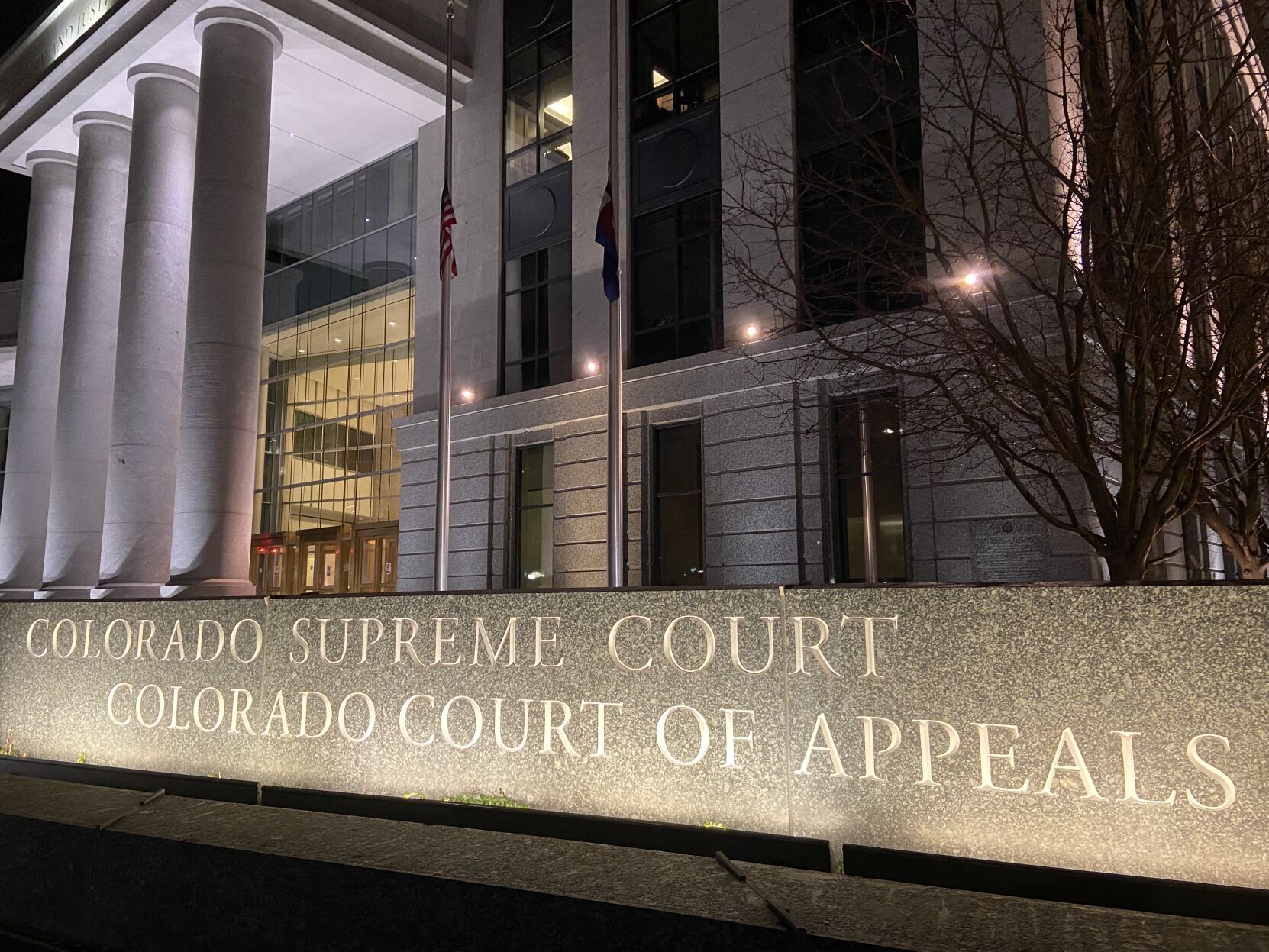
There are now two competing interpretations from the state’s second-highest court for how judges have “reason to know” that a child in a custody proceeding fits the legal definition of an American Indian child, setting up the Colorado Supreme Court to have the final say on the matter.
Last week, a three-judge panel for the Court of Appeals agreed that an Adams County judge did not have reason to know the child who was the subject of court proceedings was covered under protections for American Indian children. The panel reached its conclusion despite the fact that District Court Judge Katherine R. Delgado repeatedly heard that the girl may have had Cherokee and Sioux heritage.
The ruling contrasts with a similar case out of Denver, People in the interest of E.M., that a separate panel of judges decided in December. There, the juvenile court judge had information from the child’s mother, grandmother and grandfather suggesting tribal lineage. The Court of Appeals found the judge did, in those circumstances, have reason to know the child in the case was an Indian child.
The state Supreme Court agreed to review the E.M. decision on March 7, three days before the appellate court issued its competing ruling in the Adams County case.
Both decisions hinge on interpretations of state law and the Indian Child Welfare Act, a 1978 federal measure designed to prevent the breakup of American Indian families through the foster care and adoption systems of the states. In a key provision, states must notify relevant tribal nations of child welfare and custody proceedings that involve an “Indian child,” and allow tribes to participate going forward.
Under ICWA, “Indian child” refers to a minor who is a member of a federally-recognized tribal nation or who is eligible for membership through their lineage. However, the notice requirement is only triggered when a judge knows or has reason to know that the case involves an Indian child.
Following the appellate panel’s decision in the Adams County proceedings, the Office of Respondent Parents’ Counsel, which provides legal representation to indigent parents in child welfare cases, warned about the consequences of the ruling. Melanie Jordan, the office’s case strategy director, took issue with the detailed investigation the panel told the county’s human services department to undertake before tribes could even receive notice that their rights may be implicated.
“The ORPC is concerned that this opinion could lead to greatly reduced opportunities for tribes to be involved or consulted on these cases,” she said. “This opinion creates a very nuanced and complicated procedure for determining ICWA compliance that the ORPC is concerned will be difficult for trial courts to implement and will lead to delay and uncertainty.”
The case involved a girl, identified as A-J.A.B., and her mother, whose parental rights Delgado terminated after a court hearing. The mother told Delgado on multiple occasions that she may have Cherokee and Sioux heritage. Delgado responded by instructing the mother to fill out “the ICWA paperwork” so the Adams County Human Services Department could investigate A-J.A.B.’s eligibility for tribal membership.
Instead, the mother failed to turn in any paperwork. Although Delgado believed the proceedings might have triggered ICWA’s protections, even the mother’s attorney acknowledged that there was no reason to believe A-J.A.B. was an Indian child. The judge then declared that she had received no information about the mother’s enrollment in a tribal nation, and Delgado terminated the mother’s parental rights.
On appeal, the mother argued Delgado did have reason to know A-J.A.B. qualified as an Indian child based on the mother’s claims about her heritage. The appellate panel made two findings: First, Delgado did not have reason to know, but, second, she should have directed Adams County to investigate the situation further.
“To exercise due diligence, the Department had to identify every federally recognized tribe associated with the Cherokee and Sioux ancestry groups, explore the basis of mother’s Indian heritage claim to determine what additional information it needed to obtain, and provide that information to assist the court in determining whether there is ‘reason to know’ the child is an Indian child,” wrote Judge David Furman in the March 10 opinion.
Although the law does not define “due diligence,” the panel emphasized that judges should treat a child as if they were an Indian child until it is clear they do not fit the description.
Critically, the panel rebuked the prior conclusion the Court of Appeals reached in E.M., the case out of Denver. The judges in E.M. believed that a court has “reason to known” when there is information suggesting a child may have ancestors affiliated with a specific tribe, even if the information does not yet define the child as Indian. The E.M. panel cited a string of cases backing up its interpretation.
Instead, the judges reviewing the Adams County case felt that a higher threshold was appropriate, meaning someone involved with the proceedings “discovers information that the child is a member of a tribe or that the child is eligible for membership through a biological parent’s membership.” The Supreme Court could overrule that conclusion, though, if it believes the E.M. panel reached the correct interpretation, or vice versa.
In an unusual move for the appellate court, Furman issued a four-page, detailed explanation for how Delgado should handle the case going forward to determine whether there is reason to know A-J.A.B. is an Indian child. He outlined the multistep investigation Adams County should undertake, starting with interviews of the child’s mother and grandmother and expanding to other relevant parties.
Furman also instructed the human services department to tell the panel if Delgado had not concluded the case within 28 days.
“The appellate courts are very concerned, as are we, about the length of time that these cases take to resolve while parents and children are waiting for answers,” said Jordan, with the Office of Respondent Parents’ Counsel. “I believe the very detailed order is aimed at reducing that delay and keeping things moving.”
Other states’ courts have occasionally stepped in to lay out explicitly the protocol for ICWA cases. In 2012, the Michigan Supreme Court added a seven-step tutorial at the end of an opinion to instruct lower courts how to apply the “reason to know” and notice provisions of ICWA.
“I think most state courts are getting tired and frustrated of these reason-to-know appeals where the record is murky, so they have to remand it for more information. This is the source of nearly 100 appeals annually in California alone,” said Kathryn E. Fort, director of the Indian Law Clinic at Michigan State University.
“If I had to guess on motivation, the goal is to force the agency to do what it is legally required to do in a way that allows the Court of Appeals to quickly decide these appeals when they do arise,” she added.
The case is People in Interest of A-J.A.B.

10th Circuit dismisses paralyzed man’s claims against Colorado Springs, officer
Michael Karlik
michael.karlik@coloradopolitics.com
Updated 6 hours ago
The Denver-based federal appeals court upheld the dismissal last week of a man’s excessive force claims against the city of Colorado Springs and the officer who tased him, causing him to fall down a sloped surface and break his neck....
Colorado justices weigh overlap between child prostitution offenses
Michael Karlik
michael.karlik@coloradopolitics.com
Updated 9 hours ago
Members of the Colorado Supreme Court last week appeared willing to uphold a man’s conviction for an attempted child prostitution offense, which the state’s second-highest court previously found to be a violation of his right to equal protection under the...

State Supreme Court holds oral arguments, 10th Circuit revives dormant initiative | COURT CRAWL
Michael Karlik
michael.karlik@coloradopolitics.com
Updated 10 hours ago
Welcome to Court Crawl, Colorado Politics’ roundup of news from the third branch of government. The state Supreme Court heard oral arguments last week in multiple civil and criminal cases, plus the Denver-based federal appeals court is doing something unusual...
Is a pardon for Tina Peters coming? Colorado governor confirms he is weighing options
The Denver Gazette
the-denver-gazette@coloradopolitics.com
Updated 4 hours ago
Gov. Jared Polis on Friday strongly indicated he is considering clemency for Tina Peters, the former county clerk convicted of a security breach at her election office. When pressed about the matter, Polis didn’t offer an explicit answer, but he...
10th Circuit oral arguments to feature trial judges for first time in 12 years
Michael Karlik
michael.karlik@coloradopolitics.com
Updated 3 days ago
When the Denver-based federal appeals court convenes next week to hear oral arguments, six new faces will be staring down from the bench. No, the U.S. Court of Appeals for the 10th Circuit has not added six new members. It...
Federal judge says ICE cannot impose monitoring conditions beyond immigration judge’s order
Michael Karlik
michael.karlik@coloradopolitics.com
Updated 3 days ago
A federal judge told U.S. Immigration and Customs Enforcement on Thursday that it cannot impose additional restrictions or monitoring conditions beyond those ordered by an immigration judge when releasing a person on bond. In November, U.S. District Court Judge Gordon...
Colorado justices weigh constitutionality of student backpack search based on confidential tip
Michael Karlik
michael.karlik@coloradopolitics.com
Updated 2 days ago
The Colorado Supreme Court considered on Wednesday whether a tip submitted through the state’s confidential school safety system provided a Douglas County administrator with reasonable suspicion to search a student’s backpack for drugs. A trial judge blocked evidence from the...
10th Circuit rebuffs Jeffco’s attempt to expand immunity footprint
Michael Karlik
michael.karlik@coloradopolitics.com
Updated 3 days ago
The Denver-based federal appeals court confirmed on Wednesday that it would not treat a judge’s decision to move a civil case forward as the automatic equivalent of denying immunity to governmental officials. The order from the U.S. Court of Appeals...

Colorado Supreme Court to hear cases on witness retaliation, slip-and-fall
Michael Karlik
michael.karlik@coloradopolitics.com
Updated 1 day ago
The Colorado Supreme Court announced on Monday that it will decide whether defendants can be convicted of retaliating against a victim or witness when that person has not yet testified and is not scheduled to testify. At least three of...
Colorado Supreme Court struggles with rubric for significant reductions in parenting time
Michael Karlik
michael.karlik@coloradopolitics.com
Updated 4 hours ago
The Colorado Supreme Court attempted to identify on Wednesday the circumstances under which judges may reduce the number of days a parent spends with their child post-divorce without it rising to the level of a “restriction” that requires more rigorous...
PREV
PREVIOUS

Expert says camping bans make efforts to help homeless more difficult
A leader in Denver’s efforts to reduce homelessness told city officials that urban camping bans make their job harder and more difficult to get people off the streets. Given Aurora recently passed its own urban camping ban and Denver has had one in place for years, District 3 Councilmember Jamie Torres asked Metro Denver Homeless […]

Alamosa City Council approves funding for recall of controversial San Luis Valley district attorney
After listening to an hour of public comment regarding their controversial district attorney, including testimony from the police chief and city manager, the Alamosa City Council voted 4-1 to use taxpayer dollars in an effort to recall him. Alonzo Payne took office in 2021 and has three years left on his term, but a recall […]