

10th Circuit oral arguments to feature trial judges for first time in 12 years
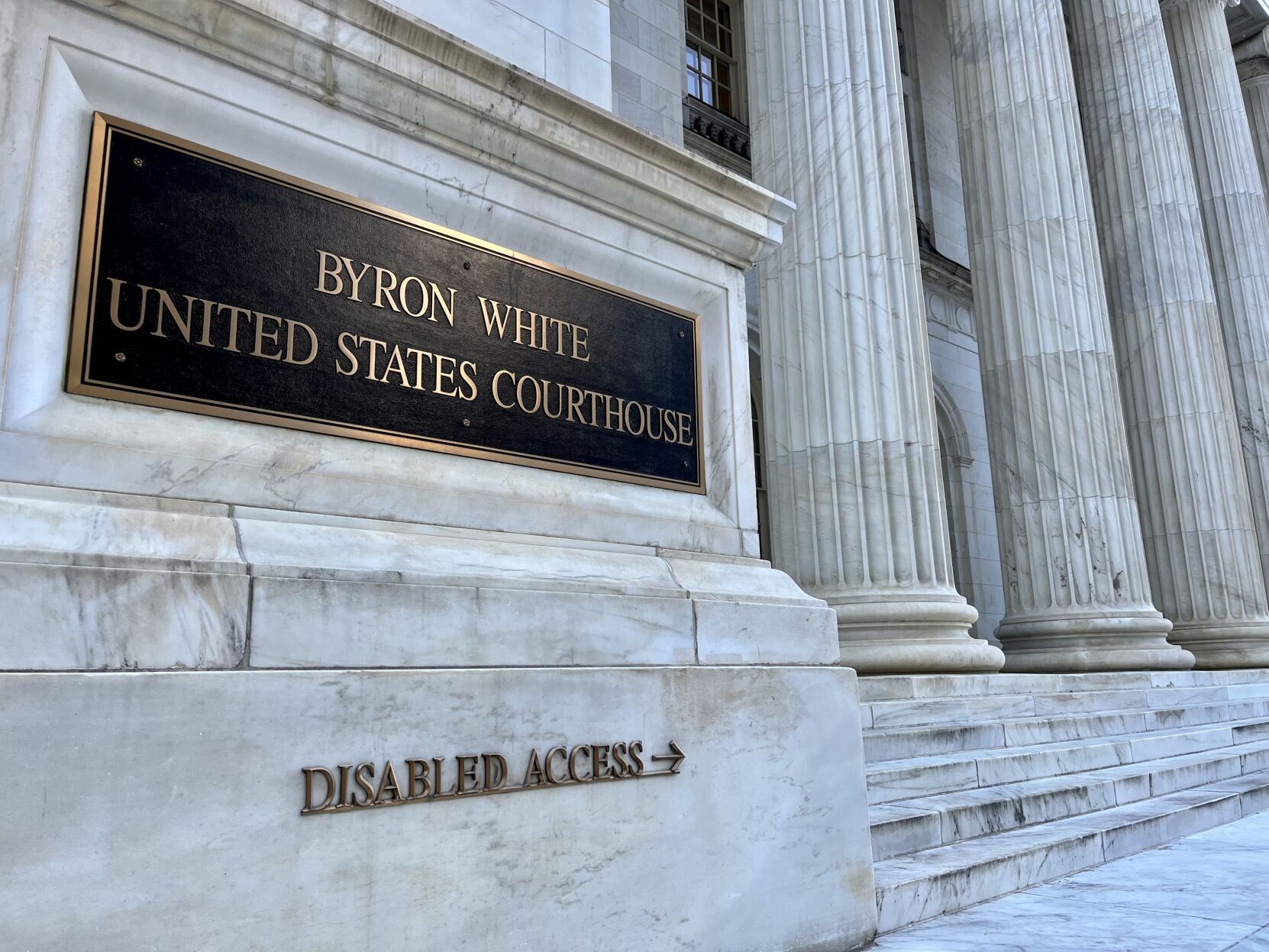
When the Denver-based federal appeals court convenes next week to hear oral arguments, six new faces will be staring down from the bench.
No, the U.S. Court of Appeals for the 10th Circuit has not added six new members. It still consists of 12 presidentially nominated, U.S. Senate-confirmed judges and a handful of semi-retired senior judges. They hear appeals in three-member panels in cases arising from Colorado, Oklahoma, Utah, Kansas, New Mexico and Wyoming.
But for the first time in over 12 years, the 10th Circuit’s upcoming oral argument session will feature trial judges from various district courts sitting on the appellate panels.
In a practice known as “sitting by designation,” federal judges can temporarily hear cases in courts inside or outside of their geographic circuit, depending on the courts’ needs.
“For many years, it was common practice for the circuit to invite district judges to sit by designation in order to promote collegiality, provide insight into the appellate process, and assist with particularly heavy oral argument calendars,” said Chris Wolpert, the 10th Circuit’s clerk. “The court decided to invite district judges to sit by designation for our January 2026 term of court for the same reasons we previously extended such invitations.”
He clarified that, although the January session is “relatively busy,” the court “is not struggling to keep pace with its current workload.”
The six U.S. District Court judges who will be joining the arguments are:
- Chief Judge John F. Heil III of the Northern District of Oklahoma, a first-term appointee of President Donald Trump
- Senior Judge Kathryn H. Vratil of Kansas, a George H.W. Bush appointee
- Judge Robert J. Shelby of Utah, a Barack Obama appointee
- Judge Holly L. Teeter of Kansas, a Trump appointee
- Judge Matthew L. Garcia of New Mexico, a Joe Biden appointee
- Judge Ann Marie McIff Allen of Utah, a Biden appointee

“Sometime last fall, the Tenth Circuit solicited interest from district judges to sit by designation, and I put my name in the proverbial hat,” Garcia told Colorado Politics in an email. “I also hope it’s a positive and educational experience for my law clerks, who work extremely hard at their jobs. They are quite excited to participate in the appellate process firsthand.”
Teeter said she learned in the fall that she would be participating in the circuit’s arguments, and she has prepared in generally the same way as she does on her district court.
“She is happy to help with the caseload and is interested in experiencing a different role within the judiciary,” Teeter’s chambers wrote in an email.
Wolpert said the last time district judges sat by designation on the 10th Circuit was in September 2013. He did not know whether the court had ever had six district judges participate simultaneously in arguments, but he said all the judges who responded to the 10th Circuit’s invitation and had availability in January were scheduled for the sitting.
Already, the 10th Circuit has issued one decision in which Allen, from Utah, was one of the panel members. Wolpert said that the case was intended to have oral arguments next week, but the panel opted to resolve the appeal on the written materials alone last week.
Judge Timothy M. Tymkovich of Colorado, who has been a 10th Circuit judge since 2003, told Colorado Politics that when he first arrived, the court welcomed judges from elsewhere at almost every session of oral arguments. But the practice stopped when the caseload could be handled with circuit judges alone.
“The Ninth Circuit pretty much has a standing invitation because their caseload is so heavy,” he said, referring to the most populous circuit largely covering the Western states. Tymkovich said he has heard cases in the Ninth Circuit on four occasions.
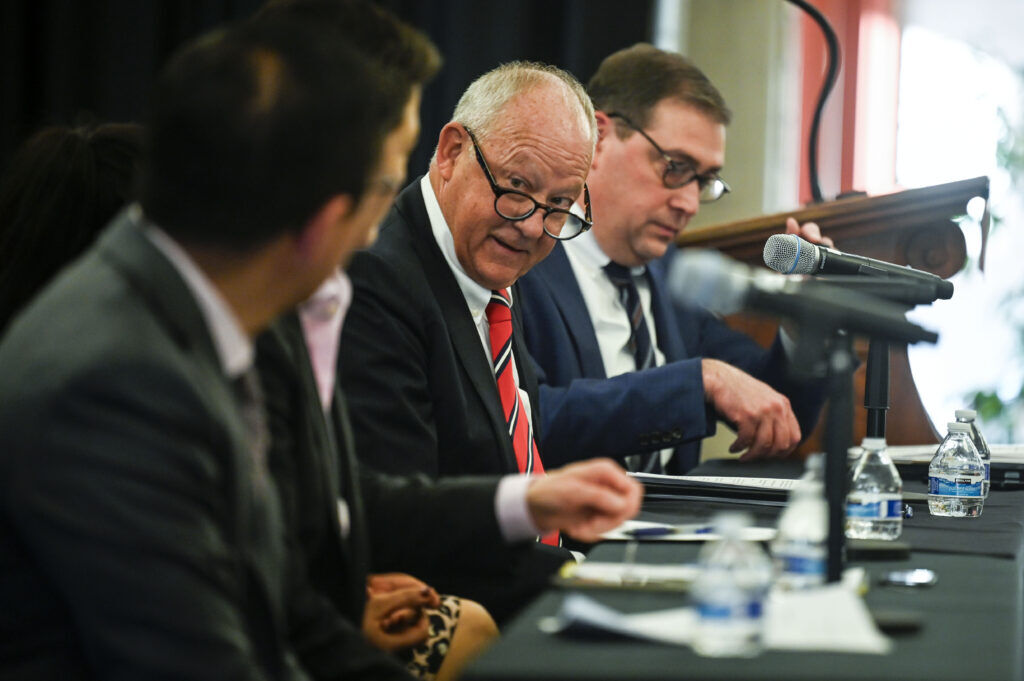
Although a judicial committee oversees assignments of judges between circuits, Tymkvoich noted all of the active judges on the 10th Circuit can sit on the various district courts within the jurisdiction, as he has done on Colorado’s trial court.
When the U.S. Supreme Court in 2020 expanded federal criminal jurisdiction in Oklahoma based on historical tribal boundaries, Tymkovich, who was then the 10th Circuit’s chief judge, “asked every judge in the 10th Circuit if he or she were willing to go take a case down there,” he said.
“I think it’s valuable for appellate circuit judges to have some exposure to what the district courts do and what it’s like. Conversely, I think it’s valuable for district court judges to have the opportunity. When they sit on an appellate court, it’s a different experience, different skill set,” Tymkovich said. “Even when I go to a place like the Ninth Circuit, which is another circuit court, the way they do business has important differences from the way the 10th Circuit does. I think I’ve learned from being exposed to the way different courts work.”

Parenting from prison: Inmates hope to be present in their children’s lives, while physically absent
Marianne Goodland
marianne.goodland@coloradopolitics.com
Updated 2 hours ago
The room was decorated with balloons, the tables sparking bright with colors as the smell of pizza and cake wafted through the air. As did music. This was, after all, a father-daughter dance. Except this was not a typical father-daughter...
Appeals court confirms Colorado judges can compel electronic records from out of state
Michael Karlik
michael.karlik@coloradopolitics.com
Updated 23 hours ago
Colorado’s second-highest court clarified on Thursday that judges are empowered to compel out-of-state companies to produce electronic records under state law. El Paso County jurors convicted Mischa Jargowsky on three counts of money laundering and one violation of Colorado’s organized...
10th Circuit upholds finding of no racial discrimination against family at Denver Chili’s
Michael Karlik
michael.karlik@coloradopolitics.com
Updated 3 days ago
The Denver-based federal appeals court agreed on Wednesday that a Black plaintiff failed to show that a Chili’s manager’s request for her family to provide valid payment at the outset of their meal amounted to racial discrimination. Markesha Futrell-Smith filed...
Appeals court reinstates Mesa County defendant’s request for DNA testing under new Colorado law
Michael Karlik
michael.karlik@coloradopolitics.com
Updated 4 days ago
Colorado’s second-highest court revived a Mesa County defendant’s petition for DNA testing in his three-decade-old attempted murder case on Thursday, concluding that a trial judge wrongly interpreted a recent Colorado law in dismissing the request outright. Jurors convicted Billy Joe...
Appeals court reverses Denver juvenile’s conviction due to improper expert testimony
Michael Karlik
michael.karlik@coloradopolitics.com
Updated 2 days ago
Colorado’s second-highest court reversed a juvenile defendant’s conviction for unlawful sexual contact on Thursday after an expert witness’s testimony improperly suggested the child victim was telling the truth. The defendant, identified as S.H-S., was around 16 years old when he...

Judge orders home confinement for Barry Morphew
Dennis Huspeni
dennis.huspeni@gazette.com
Updated 4 days ago
An Alamosa County district judge has ordered home confinement for Barry Morphew, who is accused of murdering his wife. Barry Morphew, 59, faces a first-degree murder charge in the death of his wife, Suzanne Morphew, who disappeared Mother’s Day weekend...
Appeals court says jury does not need to view porn to determine if it’s ‘obscene’
Michael Karlik
michael.karlik@coloradopolitics.com
Updated 2 days ago
Colorado’s second-highest court ruled for the first time on Thursday that a jury does not always need to view pornographic material to determine if it meets the criteria for obscenity. Mesa County jurors found Shayla Ann Simpson guilty of child...
10th Circuit disagrees Sterling officer had no basis to arrest motorist who lacked insurance details
Michael Karlik
michael.karlik@coloradopolitics.com
Updated 5 days ago
The Denver-based federal appeals court disagreed on Tuesday with a trial judge’s decision to bar evidence from a pat-down search from being used against a defendant. Federal prosecutors obtained an indictment of Jorge Sigala-Baray for being a felon in possession of a...

Colorado Springs officers’ tasing, threats prompt federal judge to block use of suspect’s statements
Michael Karlik
michael.karlik@coloradopolitics.com
Updated 5 days ago
A federal judge blocked the government last month from using some of a defendant’s statements as evidence, reasoning that the defendant made them involuntarily as Colorado Springs officers tased him five times and one officer threatened to kill him. Officers...
Appeals court rejects CDOT employee’s discrimination, retaliation claims
Michael Karlik
michael.karlik@coloradopolitics.com
Updated 3 days ago
Colorado’s second-highest court agreed last week that a Colorado Department of Transportation employee had not shown that his employer discriminated and retaliated against him due to his religion and national origin. Ayman Salloum, who described himself as a 70-year-old Muslim...
PREV
PREVIOUS

Federal judge says ICE cannot impose monitoring conditions beyond immigration judge's order
A federal judge told U.S. Immigration and Customs Enforcement on Thursday that it cannot impose additional restrictions or monitoring conditions beyond those ordered by an immigration judge when releasing a person on bond. In November, U.S. District Court Judge Gordon P. Gallagher found that the government violated the rights of Khristyne Batz Barreno by keeping […]

Colorado appeals Trump's rejection of federal disaster declarations for flooding, fires
Colorado has formally appealed the Trump administration’s decision to deny requests for federal disaster declarations tied to two wildfires and flooding last year. Gov. Jared Polis said the state asked the federal government to reconsider its denials for the Elk and Lee fires and the flooding that hammered Western Colorado. “We are submitting these appeals […]