

TABOR lawsuit comes to a close as plaintiffs decline SCOTUS appeal
The decade-long legal attempt to declare Colorado’s Taxpayer Bill of Rights unconstitutional has come to an end, as the plaintiffs will let stand a decision from the U.S. Court of Appeals for the 10th Circuit that dismissed the case in December.
“The lawyers representing the plaintiffs have decided not to seek Supreme Court review of the 10th Circuit decision. So the case is over for now,” C.L. Harmer, a spokesperson for the plaintiffs, told Colorado Politics.
Although Harmer did not say whether the attorneys plan to refile the lawsuit in federal district court in some form, there have been no additional filings in the case since the 10th Circuit’s dismissal.
The lawsuit to overturn the 1992 TABOR amendment to Colorado’s constitution began in 2011 and encompassed a lengthy roster of plaintiffs, including state and local lawmakers, school districts, and a board of county commissioners. The theory behind the litigation was that TABOR, which mandates that new taxes or tax increases be put to a vote of the people, violated the 1875 law that made Colorado a state and guaranteed that its government be “republican in form.”
A “republican” form of government, the plaintiffs argued, requires that elected lawmakers be able to make taxing and spending decisions.
The lawsuit reached the 10th Circuit on multiple occasions, and even the Supreme Court. Finally, after a rare all-judges hearing at the 10th Circuit last year, the appeals court voted by 7-2 to dismiss the case in December. The majority concluded that the plaintiffs – at that point consisting entirely of the local government bodies – had not shown that the guarantee of a republican form of government applied to them.
“The clause promising a constitution republican in form has no clear beneficiary,” wrote Chief Judge Timothy M. Tymkovich.
Although TABOR was intended to restrain the growth of government, critics hold it responsible for Colorado’s low levels of investment in key government obligations, including education. Nevertheless, statewide attempts to permanently undo TABOR have stalled. In addition to the lawsuit, a 2019 ballot initiative seeking to redirect taxpayer refunds under TABOR to education and transportation failed to pass.
Another proposed initiative to repeal TABOR outright did not make it onto the ballot the following year.


Judicial fees, furniture under scrutiny as Colorado lawmakers consider budget request
Michael Karlik
michael.karlik@coloradopolitics.com
Updated 15 hours ago
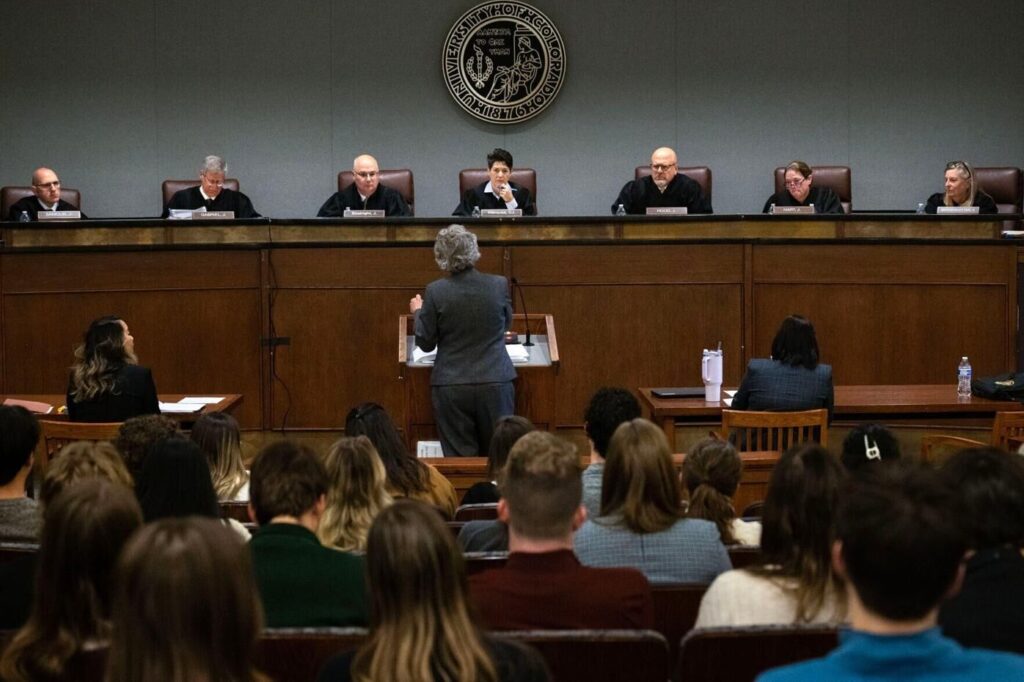
Members of the legislature’s Joint Budget Committee expressed concerns last week about aspects of the judiciary’s requested $845 million budget for courts and probation, while also hearing about the Judicial Department’s relatively restrained spending over time. “If you adjust for...
Colorado Supreme Court approves tenant-friendly rule change, broadens professional discipline for sexual misconduct
Michael Karlik
michael.karlik@coloradopolitics.com
Updated 13 hours ago
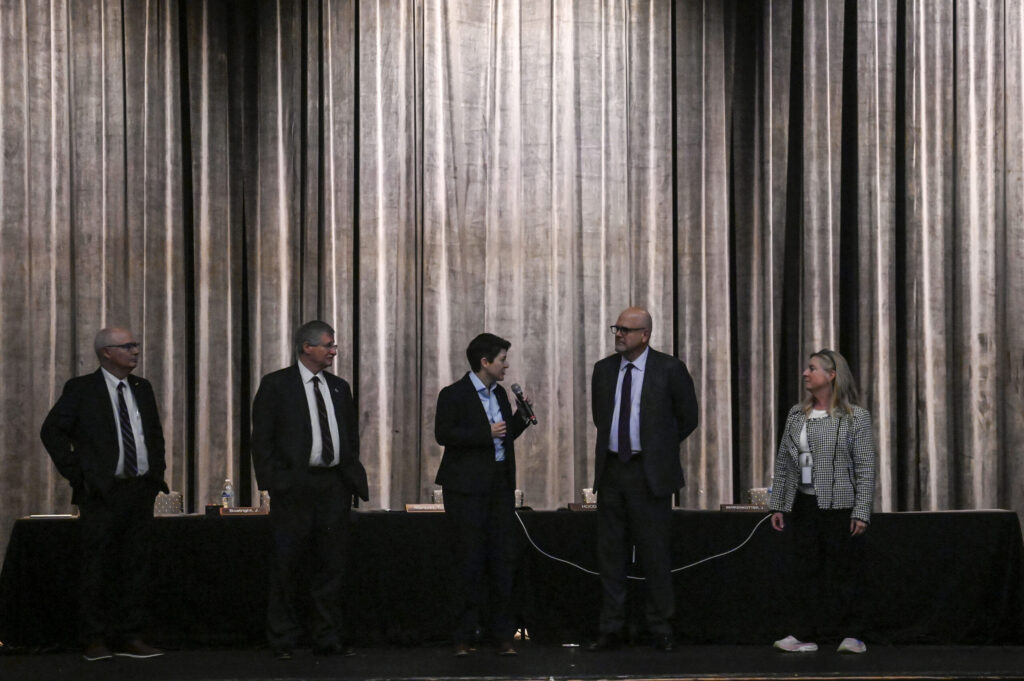
The Colorado Supreme Court approved a set of rule changes last week that will make it easier for tenants facing eviction to respond to and learn about their landlord’s initial court filing, and for lawyers to be held professionally accountable...
Colorado commission makes new access-to-justice recommendations after renewed listening tour
Michael Karlik
michael.karlik@coloradopolitics.com
Updated 6 hours ago
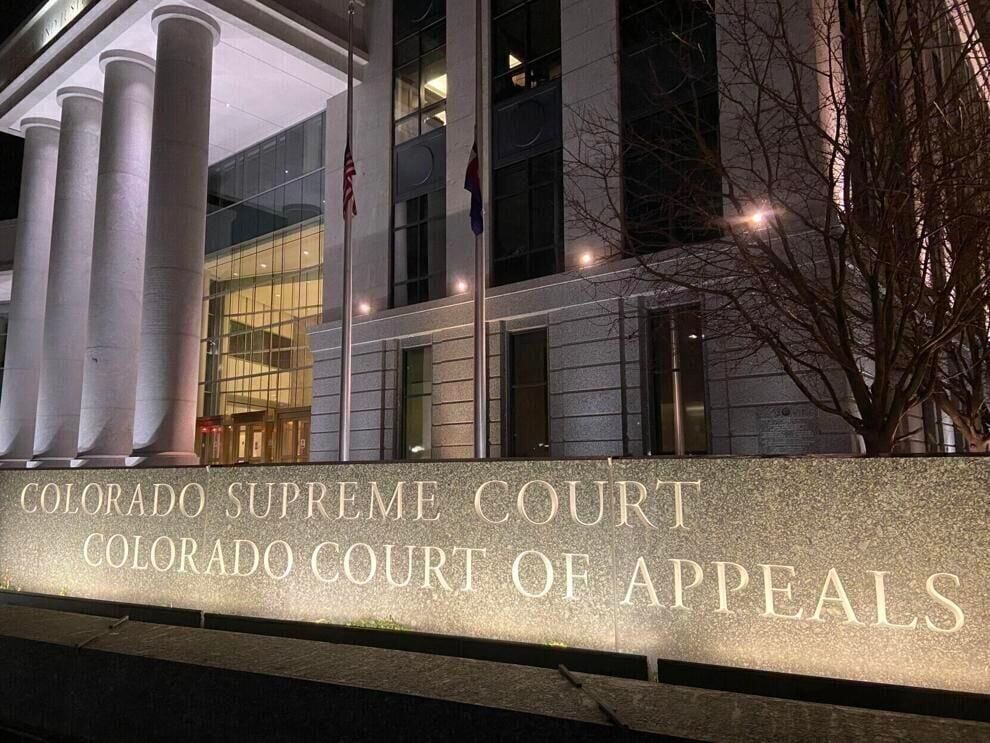
Adding judges to handle caseloads. Expanding authority for paraprofessionals in civil cases. Allowing self-represented litigants to file electronically. Making the judiciary’s website user-friendly. Those were among the recommendations advanced by the Colorado Access to Justice Commission in a report released Friday,...

‘Deep source of pride’: Federal judge speaks about first year on bench, how he spends his time
Michael Karlik
michael.karlik@coloradopolitics.com
Updated 2 days ago
One of Colorado’s newest federal judges spoke on Thursday about his first year on the bench, his philosophy behind facilitating case settlements and how his background as a public defender informs his current role. “Most of my career, I represented...
Trump says he has ‘pardoned’ Tina Peters
Wire Services
wire-services@coloradopolitics.com
Updated 4 days ago
President Donald Trump on Thursday said he is “pardoning” Tina Peters, though that won’t free the former Colorado elections administrator as she was convicted under state laws of a security breach of her office’s voting equipment. Trump’s pardon power does...

Man set for plea deal in Evergreen shooting
Sage Kelley
sage.kelley@denvergazette.com
Updated 4 days ago
A Lakewood man may be on his way to a plea deal after allegedly ramming police vehicles at the Evergreen Walmart just a day after the Evergreen High School shooting. Tyler Young, 33, waived his right to a preliminary hearing...
Appeals judge believes revised ‘reasonable doubt’ definition is unconstitutional
Michael Karlik
michael.karlik@coloradopolitics.com
Updated 3 days ago
Although Colorado’s second-highest court has issued multiple decisions in recent months upholding a revised definition of “reasonable doubt” from three years ago, an appellate judge became the first on Thursday to argue that a key phrase violates defendants’ constitutional right...
CDOT did not violate constitutional rights of outdoor advertising company, appeals court says
Michael Karlik
michael.karlik@coloradopolitics.com
Updated 4 days ago
Colorado’s second-highest court concluded last month that the Colorado Department of Transportation did not violate the constitutional rights of an outdoor advertising company by denying two permits for billboards in Adams County. StreetMediaGroup, LLC argued CDOT violated its right to...

Family files lawsuit over 2023 Jeffco inmate death
Sage Kelley
sage.kelley@denvergazette.com
Updated 4 days ago
The family of 27-year-old Ashley Jo Raisbeck filed a lawsuit against the Jefferson County Sheriff’s Office nearly two years after the woman died in custody. Jaime Raisbeck, Ashley’s mother, stood outside of the Alfred A. Arraj Courthouse Wednesday morning, a...

Colorado Supreme Court’s opinion output drops by two-thirds amid justice’s absence
Michael Karlik
michael.karlik@coloradopolitics.com
Updated 6 days ago
The Colorado Supreme Court has released significantly fewer new opinions in recent months compared to the previous two years, even as the judicial branch insisted that a member’s open-ended absence is not causing delays. Justice Melissa Hart has been on...
PREV
PREVIOUS

Polis says Colorado will send hundreds of helmets, body armor to Ukraine
Arguing that saving even just one life is worth it, the Polis administration said Colorado is sending hundreds of ballistic helmets and scores of body armor to Ukraine, which is ferociously fighting the Russian invasion. The Polis administration said the Colorado Department of Public Safety alone is donating more than 750 helmets and 80 sets of […]

Elections Division seeks dismissal of residency complaint against House minority leader
The Colorado Secretary of State’s Office has filed a motion to dismiss a complaint alleging House Minority Leader Hugh McKean did not live in House District 51 as required by law. However, the complaint is the second such incident in recent weeks to reveal problems with the state’s 2019 motor voter law. Austin Hein, formerly […]