

OUT WEST ROUNDUP | Utah state lawmakers limit press access to House floor

UTAH
Legislators pass media restrictions for House floor
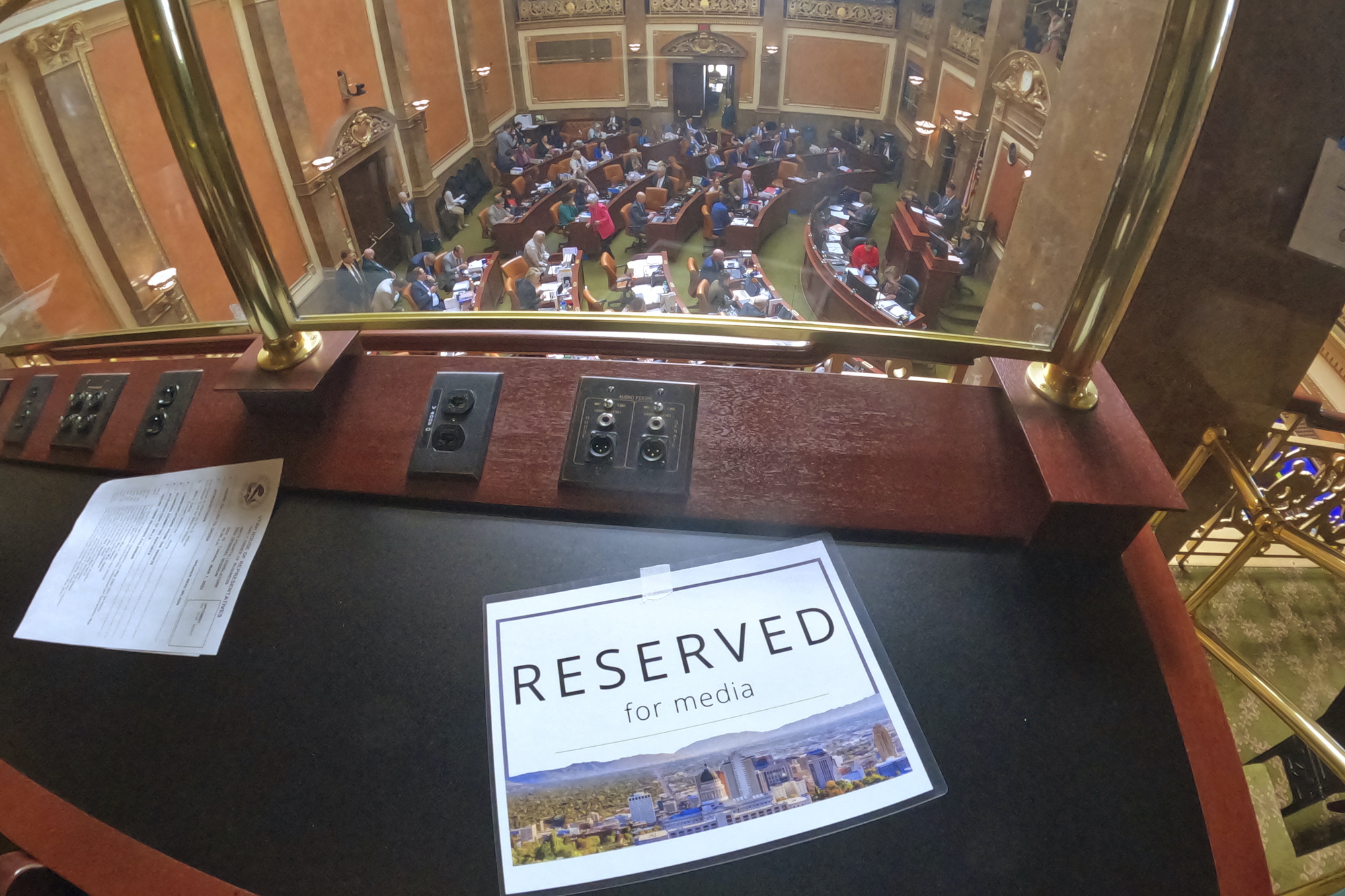
SALT LAKE CITY – The Utah House of Representatives approved new rules on Feb. 28 that limit where members of the press can film and interview lawmakers, following similar action taken by the Utah Senate two weeks earlier.
The rules extend pandemic-era restrictions on when journalists can report from the floors of state legislative chambers.
Journalists covering the Utah Legislature must now ask for permission to interview lawmakers on the floor of the House of Representatives and other restricted areas. TV reporters must ask committee chairs for permission to film speakers and crowds from behind the dais where lawmakers sit in committee hearings.
“I know that sometimes committee members get a little bit nervous from the cameras right behind them because they can see their screens,” Republican Rep. Timothy Hawkes said in a committee hearing about the measure.
Media organizations and journalists covering the Statehouse opposed the rules changes in the Utah House and Senate, arguing that restricting media movements would make it more difficult to cover fast-paced action and make it easier for lawmakers to dodge the press. They said the move reduced transparency – a claim that lawmakers denied.
Utah Media Coalition lobbyist Renae Cowley Laub proposed an alternative, telling lawmakers that credentialed members of the media were working on establishing a formal press corps that could work with lawmakers to refine the rules in a mutually satisfactory way.
She proposed creating a commission with two members of the press and designees from the House, Senate and state legislative officials to govern press rules, similar to the method used in Utah courthouses.
WYOMING
Helicopter goat shoot fells 50 invasive animals
JACKSON – Contractors hired by Grand Teton National Park have killed 50 invasive mountain goats this week in a campaign to protect the park’s herd of native bighorn sheep.
Jeremy Barnum, the park’s chief of staff, told The Jackson Hole News&Guide on Feb. 24 that an “overwhelming majority” of the goats have been removed from the Teton Range. The helicopter shooting operation will continue for several more days.
The goats migrated from Idaho into the Tetons. They are considered a risk to a small herd of native, isolated sheep in the range because they compete for limited high-altitude habitat and carry disease that can threaten the bighorns. The park estimates the bighorn population at about 125.
“The potential risk to the bighorn sheep herd has been dramatically reduced,” Barnum said. “And that’s the end goal.”
Park officials have posted signs at trailheads to alert backcountry skiers about the operation. Helicopter crews are instructed to avoid areas used by skiers or after spotting ski tracks.
Grand Teton park first used helicopter crews in 2020 to shoot the goats but stopped after Gov. Mark Gordon and others asked park officials to let hunters do the job. The mountain goat population was estimated at 100 before removal operations started in 2020.
NEW MEXICO
Rape victim sues city over rape kit backlog
ALBUQUERQUE – A rape survivor is suing the city of Albuquerque over its backlog of untested rape kits, alleging a nearly decade-long delay allowed her rapist to freely attack other women.
The Albuquerque Journal reported Sunday that the victim is asking for unspecified damages in the lawsuit, which was filed in 2nd Judicial District Court.
In the suit, the victim says Albuquerque police discriminated against women and girls by treating violent rapes as a low priority.
When asked to comment on the suit, police spokeswoman Rebecca Atkins pointed to Mayor Tim Keller signing an executive order in 2018 ordering police to make a plan for clearing the backlog.
The victim gave a rape kit in 2010 after reporting being kidnapped, bound and raped at knifepoint. Her kit was not tested until 2018. The evidence linked her rape to Victor Gonzales, 44.
Gonzales was arrested in 2020 on kidnapping and two counts of criminal sexual penetration. He is scheduled to go on trial in June. He was previously charged with multiple attacks on women that occurred between 2010 and 2012.
Raymond Maestas and Sean Beherec, who are representing Gonzales, said there are discrepancies in the lawsuit.
“In this lawsuit, we see big differences in the accuser’s story from what she reported to police initially, and the jury needs to hear this change in story,” the attorneys said in a written statement.
Regulators approve plan to keep coal plant open
ALBUQUERQUE – New Mexico regulators on Feb. 23 approved a plan by the state’s largest electric utility to keep open part of a coal-fired power plant for an extra three months as a way to keep air conditioners humming this summer and reduce the risk of blackouts.
Public Service Co. of New Mexico will keep one unit at the San Juan Generating Station running through September, rather than closing it this summer as planned.
Developers have blamed supply chain problems and the pandemic for delays in the construction of the solar farms and battery storage stations that were supposed to replace the lost capacity once the coal plant shut down.
As PNM tries to avoid a shortage this summer, the utility said challenges remain on ensuring customer needs are met in the summer of 2023 due to regulatory delays related to another case that involves the upcoming expiration of leases for power generated by the Palo Verde nuclear plant in Arizona.
Environmentalists said during a Feb. 23 briefing that no one could have predicted that the closure of the San Juan power plant and construction of the replacement power would be disrupted by a pandemic. They argued that the delays are short term and should not derail public confidence in New Mexico’s mandates for emissions-free electricity generation within the next two decades.
“Renewable energy plus storage is a solution. It works. There’s nothing that we’re seeing that changes that,” said Jason Marks, a former member of the Public Regulation Commission and an attorney who works with the Sierra Club.
ARIZONA
House OKs GOP bill backing gun businesses
PHOENIX – The Arizona House voted on Feb. 23 to penalize businesses that refuse to do business with firearms companies by barring them from state contracts.
The proposal that passed with only support from majority Republicans drew strong opposition from the banking industry but backing from gun groups and the firearms industry.
The proposal from GOP Rep. Frank Carroll would require companies signing contracts worth more than $100,000 with the state or local governments to certify they won’t refuse to work with firearms-related companies.
Carroll and firearms industry lobbyists said some banks are refusing to do business with firms involved with the firearms industry. They framed it as an issue of banks preventing people from exercising their Second Amendment rights.
But bankers resisted the bill, calling it government overreach for lawmakers to try to force businesses to deal with other companies against their will. Industry lobbyists who testified against the bill also said lawmakers are politicizing an issue that is not present in Arizona.
The 31-28 party-line vote sends the measure to the Senate for consideration.
The legislation follows the shutdown of social media sites popular with extremists, including Gab and Parler, when their web hosts, banks or payment processors refused to continue doing business.
The Arizona bill stands in contrast to efforts in more liberal states to target gun manufacturers.


Department of Agriculture warns of packages holding potentially invasive seeds
Michael Braithwaite
michael.braithwaite@gazette.com
Updated 11 minutes ago
Spring planting is around the corner, and the Colorado Department of Agriculture wants residents to know where their seeds are coming from. Officials with the department warned Tuesday that they received reports of unsolicited packages containing plant seeds mailed internationally...

Federal judge hears ICE agents’ confusion about law, injunction on warrantless arrests
Michael Karlik
michael.karlik@coloradopolitics.com
Updated 11 hours ago
A federal judge heard testimony on Tuesday from U.S. Customs and Immigration Enforcement agents in Colorado, who had trouble describing the requirements of his recent injunction and the training they received on making warrantless arrests pursuant to the law. On...

10th Circuit dismisses challenge to Colorado legislature’s decorum rules
Michael Karlik
michael.karlik@coloradopolitics.com
Updated 18 hours ago
The Denver-based federal appeals court concluded on Tuesday that Colorado lawmakers cannot be sued for creating and enforcing rules of decorum that circumscribe the public commentary allowed at legislative committee hearings. A three-judge panel of the U.S. Court of Appeals...

U.S. energy secretary warns Colorado’s energy policies could drive up prices, deter businesses
Scott Weiser
scott.weiser@gazette.com
Updated 16 hours ago
U.S. Energy Secretary Chris Wright on Monday warned that Colorado’s energy policies could lead to higher electricity prices and deter businesses, such as data centers, from locating in the state. Wright, a former executive of a Colorado-based energy company tapped...

Split vote by Colorado Title Board stops ballot push to privatize Pinnacol Assurance
Marianne Goodland
marianne.goodland@coloradopolitics.com
Updated 20 hours ago
The Colorado Title Board, a three-member panel that sets the language for ballot measures, recently reversed a prior decision and blocked a proposal to privatize Pinnacol Assurance from moving forward. The main issue decided by the title board is whether...
Jackson and Kavanaugh disagree over if the Supreme Court treats Trump like Biden
David Zimmermann Washington Examiner
davidzimmermannwashingtonexaminer@wpstage.coloradopolitics.com
Updated 21 hours ago
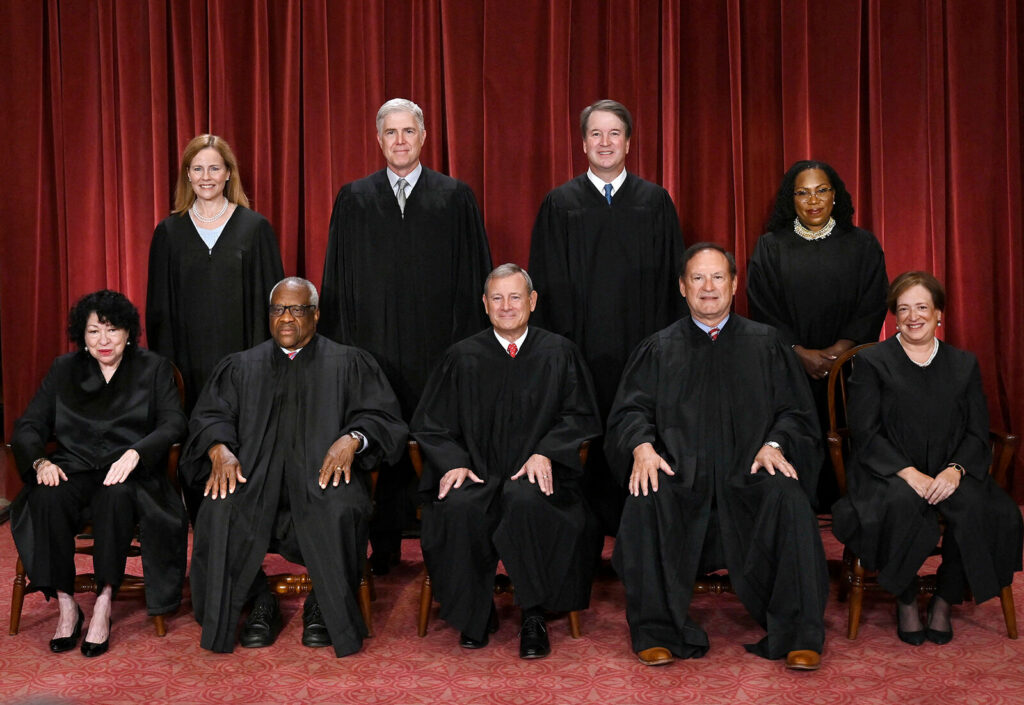
Supreme Court justices Ketanji Brown Jackson and Brett Kavanaugh disagreed on Monday over whether the high court treats President Donald Trump the same as former President Joe Biden in cases brought by their respective administrations. Jackson, who often writes dissents...

Rand Paul announces tentative date for Mullin DHS confirmation hearing
Washington Examiner Staff, Washington Examiner
washington.examiner.staff.washington.examiner@gazetteedit.wpenginepowered.com
Updated 21 hours ago
The nomination of Sen. Markwayne Mullin (R-OK) to be the next Department of Homeland Security Secretart was officially sent to the Senate by the White House on Monday. Mullin was nominated on March 5 by President Donald Trump to replace...
Trump calls SAVE America Act his ‘No. 1’ priority for House GOP
Rachel Schilke, Washington Examiner
rachel.schilke.washington.examiner@gazetteedit.wpenginepowered.com
Updated 21 hours ago
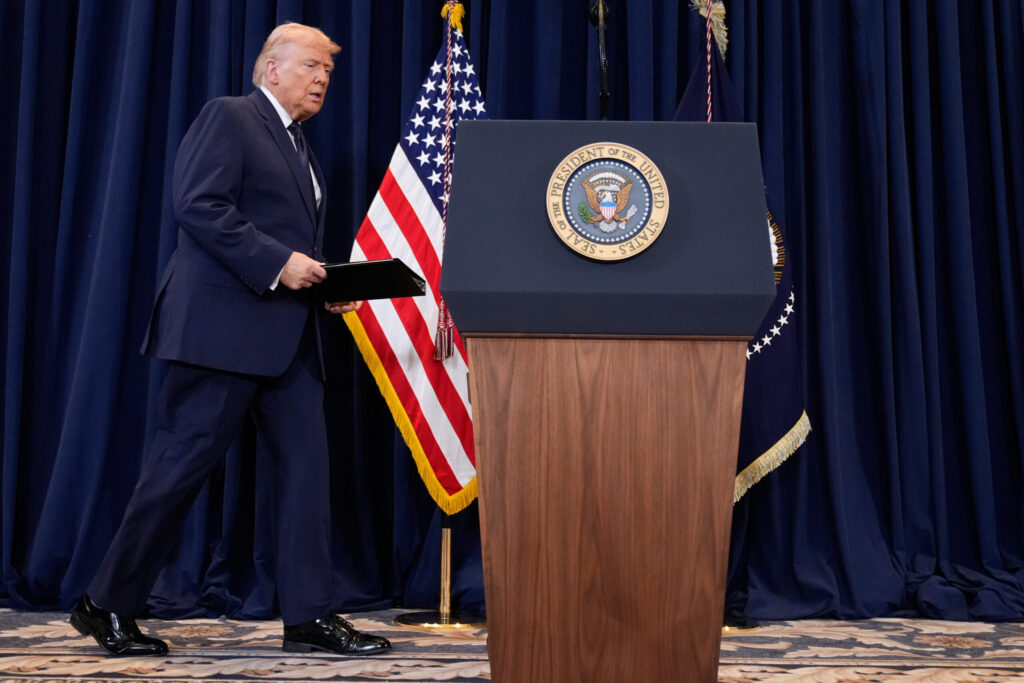
DORAL, Florida — President Donald Trump made his “biggest plea” to House Republicans on Monday: Pass the SAVE America Act, a GOP voter identification bill, even if it takes the rest of this year. A little over 100 of the...

Colorado Senate panel OKs bill named for Boulder teen cyclist killed in 2023 crash
Marissa Ventrelli
marissa.ventrelli@coloradopolitics.com
Updated 15 hours ago
The Senate Judiciary Committee on Monday gave unanimous approval to a bill that would require law enforcement officers responding to crashes resulting in serious injury or death to offer drivers a voluntary breathalyzer test. Sponsors hope the measure would provide...

Fort Carson-based soldier killed in Iranian attack
Mary Shinn
mary-shinn@coloradopolitics.com
Updated 23 hours ago
A Fort Carson-based soldier is among the U.S. service members killed in an attack by Iran during Operation Epic Fury, according to a Department of Defense news release. Sgt. Benjamin N. Pennington, 26, died Sunday of injuries sustained during an...
PREV
PREVIOUS

SONDERMANN | On Robert Bork, Ketanji Brown Jackson and a new verb
Eric Sondermann Jeff Blattner was there at what many regard as the beginning. That origin point, though Blattner would dispute it, was the 1987 nomination of Robert Bork to the U.S. Supreme Court and the all-out assault that ensued. Today’s deep, consuming polarization has many fathers. More than a few observers point to the Bork […]

THIS WEEK AT THE COLORADO CAPITOL | Week of March 7, 2022
Here are legislative committee hearings and other events of note for the week ahead at the Colorado state Capitol. Committee schedules are subject to change. The daily schedule is available on the legislature’s website. Options for public testimony during committee hearings can be found here. House regulations regarding remote testimony can be found here. Senate regulations are here. According […]