

State Supreme Court adopts new accountability standard for prosecutors

The Colorado Supreme Court has clarified the circumstances under which prosecutors may face professional sanctions for failing to disclose information that they know, or should know, would cast doubt on the guilt of the criminally accused.
The rule change also quietly reversed the high court’s two-decade-old precedent requiring disclosure to defendants only when evidence is “material to the outcome of the trial.”
Representatives of prosecutors and defense attorneys had presented the Supreme Court with a proposal to revise Rule 3.8(d) in the state’s Rules of Professional Conduct, making it easier for prosecutors who withhold relevant information to be held accountable for acting in bad faith. Longstanding court precedent has held that depriving the defense of favorable information affects the constitutional right to a fair trial.
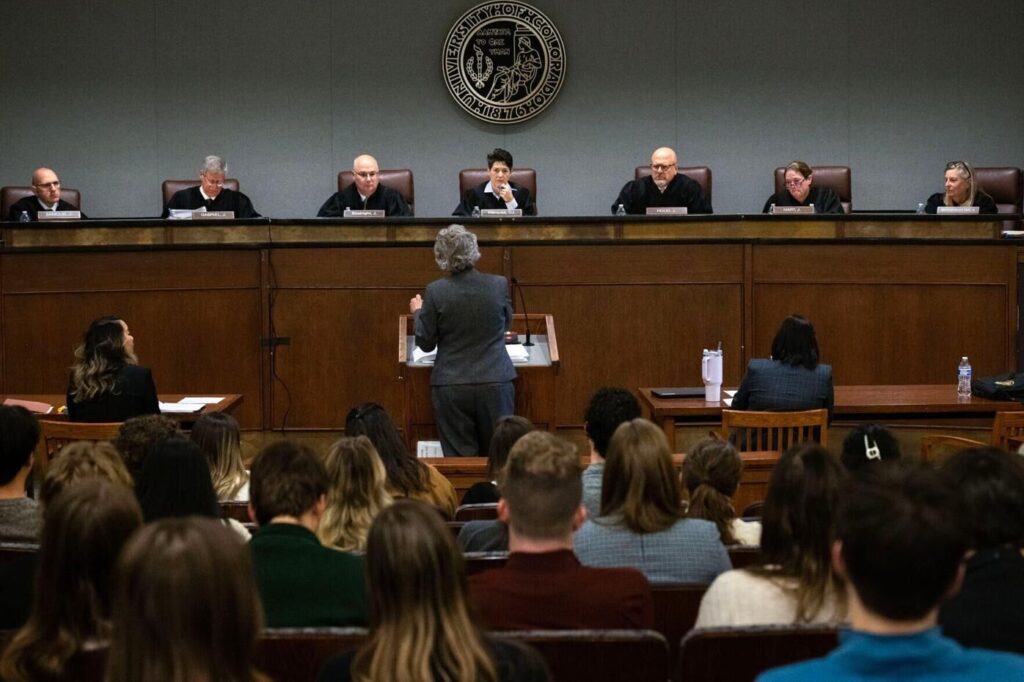
“The world has very much changed. We are under more intense scrutiny … and we accept the responsibility of making sure people are not wrongfully convicted or make poor decisions in a criminal case because they did not have the information they should have,” Daniel P. Rubinstein, district attorney of Mesa County and a member of the working group, told the justices at a hearing last month.
Some members of the court balked at the original proposal, believing it went too far beyond what other states required of their prosecutors. The draft required prosecutors to turn over information that affects “a defendant’s critical decisions” in their case.
As adopted, Rule 3.8(d) now focuses on information that affects a person’s decision on whether to accept a plea deal. At the same time, the revised rule mandates that prosecutors consider the key stages of a criminal case in their timing of disclosures to the defense.
Rubinstein told Colorado Politics that some of the changes the justices made are more protective of prosecutors compared to the original proposal, but “most of the modifications made by the Supreme Court are varied language of the same goal our group was trying to accomplish.”
Among the other adjustments, Rule 3.8(d) would require prosecutors to alert the defense if they are unable to obtain relevant information from other agencies, such as police departments.
The Supreme Court also chose to impose the professional obligation on prosecutors to share information with the defense regardless of the information’s effect on the outcome of the trial. That is a departure from a 2002 decision from the court that interpreted the disclosure requirement.
In that ruling, Colorado’s justices referenced the landmark U.S. Supreme Court decision in Brady v. Maryland, in which a prosecutor withheld the murder confession from another man in the defendant’s case. The court in its 1963 decision labeled the suppression of evidence favorable to the accused as unconstitutional if the information is “material either to guilt or to punishment.”
Critics have pointed out that because Brady pertains to information that prosecutors know and the defense does not know about, compliance depends upon the good faith of individual prosecutors.
Nevertheless, Colorado Supreme Court previously elected to incorporate the Brady standard into Rule 3.8(d), deciding that only if evidence would materially affect the outcome of the trial do prosecutors have to disclose it.
In its final form, the rule now applies to information regardless of how it might affect the outcome.
The Supreme Court received comments from defense attorneys supportive of the rule in principle. The U.S. Attorney’s Office sent a 10-page letter to the court in opposition.
“I don’t believe that the average prosecutor is unethical or meaning to be unethical,” testified public defender Ben Longnecker to the court, but “they shouldn’t be able to just simply dismiss cases when they mess up.”
The Supreme Court adopted the rule change on Feb. 24, but it does not take effect until July 1.


Divided Colorado Supreme Court rejects defendant’s claim of deficient DNA investigation
Michael Karlik
michael.karlik@coloradopolitics.com
Updated 3 hours ago
The Colorado Supreme Court decided on Tuesday, by 4-2, that a defendant failed to allege how uninvestigated, inaccessible DNA evidence would have shown he was wrongly convicted. When Jamale D. Townsell filed a petition from prison seeking postconviction relief, he...
Colorado justices uphold shooting conviction despite jury saying defendant not the shooter
Michael Karlik
michael.karlik@coloradopolitics.com
Updated 16 hours ago
The Colorado Supreme Court ruled on Tuesday that a man can stand convicted of murder, even though jurors found he was not the one who shot the victim and the evidence suggested he was not present for the shooting. There...
Susan Blanco new Colorado Supreme Court justice
Michael Karlik
michael.karlik@coloradopolitics.com
Updated 14 hours ago
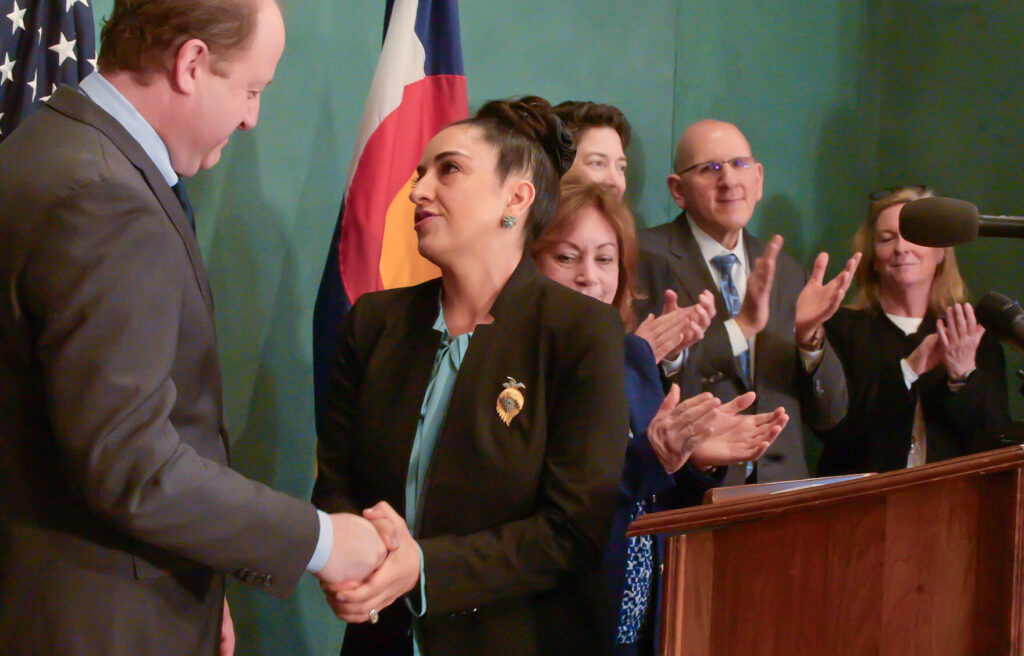
Chief Judge Susan Blanco of Larimer and Jackson counties is the newest member of the Colorado Supreme Court, Gov. Jared Polis announced on Tuesday. “A few words come to mind: Innovation. Excellence. Creativity. Hard work. These are values we need...
Appeals court clarifies what materials judges may rely on for postconviction decisions
Michael Karlik
michael.karlik@coloradopolitics.com
Updated 2 days ago
Colorado’s second-highest court clarified on Thursday that trial judges who are deciding whether to grant relief to convicted defendants may rely on the materials attached to, or referenced in, the parties’ arguments. In contrast to direct appeals of criminal convictions,...

Colorado Supreme Court accepts cases about reliability of gun-to-bullet matching
Michael Karlik
michael.karlik@coloradopolitics.com
Updated 4 days ago
The Colorado Supreme Court announced on Monday that it will hear two cases questioning the reliability of expert testimony that purports to identify whether a specific bullet was fired from a specific gun. At least three of the court’s seven...
Colorado District Attorneys unveil 2026 legislative priorities | WHAT’S YOUR AGENDA?
Marissa Ventrelli
marissa.ventrelli@coloradopolitics.com
Updated 6 days ago
Welcome to What’s Your Agenda?: The Colorado Politics’ weekly publication of trade association priorities for the state’s 2026 legislative session. The Colorado District Attorneys’ Council provides training, resources, and legislative support to every prosecutor in the state. In order to...
Colorado justices skeptical of challenge to water enterprises’ eminent domain power
Michael Karlik
michael.karlik@coloradopolitics.com
Updated 4 days ago
Members of the Colorado Supreme Court appeared receptive on Wednesday to the notion that water-related enterprises have the legal authority to exercise the governmental power of eminent domain over private property. An enterprise is a government-owned business that provides fee-based...
Colorado justices skeptical that intimate messages relevant to assault case
Michael Karlik
michael.karlik@coloradopolitics.com
Updated 5 days ago
Members of the Colorado Supreme Court seemed to agree on Tuesday that a Douglas County judge acted reasonably by blocking evidence of a defendant’s BDSM-related conversations with the victim in his trial for assault and false imprisonment. Jurors found Donald Louis...
Second appeals judge voices concerns about new ‘reasonable doubt’ instruction
Michael Karlik
michael.karlik@coloradopolitics.com
Updated 6 days ago
Another member of Colorado’s second-highest court registered his concern on Thursday that a portion of the recently revised “reasonable doubt” definition improperly lowers the prosecution’s burden to prove a defendant guilty. Judge Daniel M. Taubman wrote that the current instruction...
Colorado Supreme Court blocks ‘child-to-parent violence’ testimony in Boulder County case
Michael Karlik
michael.karlik@coloradopolitics.com
Updated 7 days ago
The Colorado Supreme Court concluded on Friday that a Boulder County judge incorrectly green-lit a psychologist’s expert testimony when the defendant had not laid the necessary groundwork for the evidence. State law requires criminal defendants to provide notice and undergo...
PREV
PREVIOUS
Colorado's politicos pan, praise Biden's first year in office
Even as U.S. President Joe Biden sought to rally Americans at home and allies abroad against the Russian invasion of Ukraine, Republicans and Democrats in Colorado remained deeply divided, with some GOP members blaming the president for Vladimir Putin’s war in Europe. The president’s allies maintained that the Biden administration is meeting America’s domestic and […]

Louisville council favors letting Marshall fire victims 'opt out' of green building codes
The Louisville City Council late Tuesday agreed to find a way for residents whose homes were destroyed by the Marshall fire to opt out of net-zero building code requirements that were implemented just weeks before the deadly Dec. 30 blaze. Members listened to more than two hours of emotional testimony from more than 60 residents, […]