

COURT CRAWL | Interview with 10th Circuit’s top judge, Boulder in the courts

Welcome to Court Crawl, Colorado Politics’ roundup of news from the third branch of government. The chief judge of the U.S. Court of Appeals for the 10th Circuit sat for an interview with Colorado Politics, and the City of Boulder has a mixed record in recent weeks of defending itself from liability in court.
Inside the 10th Circuit
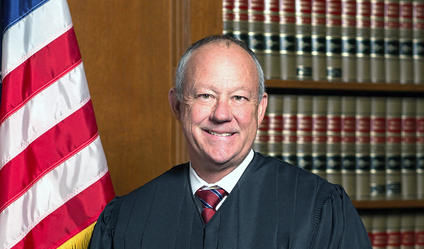
? In a rare interview, Chief Judge Timothy M. Tymkovich of the Denver-based 10th Circuit spoke with Colorado Politics about what has changed during his nearly two decades on the bench, the potential for live video streaming in the courtroom, and the Senate’s confirmation process for judges, among other topics. Tymkovich, a former solicitor general of Colorado, is also nearing the end of his seven-year term as chief judge, and indicated who will inherit the gavel next. Here is an excerpt:
Tymkovich: I’m not a big fan of the present confirmation process. I think that there must be a better way to build a process.
I went through in 2003 and that was a contentious era – although really since the early ’90s, post-Robert Bork, the Supreme Court confirmation process has been contentious. And that has trickled down to the circuit level and the district court level. The very day that I had my hearing in the Senate, one of the other nominees for the D.C. Circuit, Miguel Estrada, was filibustered on the floor of the Senate, and his nomination did not go forward.
I think the senators and the Justice Department and the White House have really done great favors to the 10th Circuit with the quality of our nominees. When I went through, you pretty much had to reach a 60-vote threshold, and that’s completely changed over the last six or seven years. I think you see more oppositional votes than you used to, I don’t think necessarily based on the quality of the nominee.
It’s just become a little more difficult for the nominees year after year after year.
CP: During the 2016 presidential campaign, your name appeared on Donald Trump’s list of potential U.S. Supreme Court nominees. How did you feel about that?
Tymkovich: Well, Neil Gorsuch [former 10th Circuit judge and current Supreme Court justice] was there and it happened for him against all odds. I didn’t have any advance notice of that and don’t think in retrospect it really meant much. Who knows how judges made it on that list, but anyway, it didn’t affect the way I approached my job or my cases.
CP: I can see how on the one hand it’s obviously a tremendous honor to be recognized as a candidate for the very prestigious job of Supreme Court justice. I can also see how a judge might feel uneasy with their name being used in the context of a political campaign, and being identified with one candidate might implicate how others view that judge’s impartiality. Is that a valid critique?
Tymkovich: I don’t think so. I think one of the continuing strengths of the judiciary is our commitment to impartiality and the rule of law. That might sound like high rhetoric, but if you travel the world it’s still what people look to as the United States federal judiciary’s core strength.
We also have a strong conflict of interest policy and code of conduct that regulate our political activity and we reveal our financial holdings through annual reports. Finally, we show our work as a transparent organization. I write an opinion and everybody in the public, in the legal community and the journalistic community can review our opinions and work and judge for himself or herself.
Sidewalks and welfare checks: Boulder’s month in court
? The City of Boulder won a key, albeit narrow, victory at the Colorado Supreme Court last week. The justices decided in a 4-3 vote that Boulder had immunity from being sued by a woman who tripped and injured herself on a sidewalk gap that Boulder knew to be a hazard but had not fixed. The ruling didn’t grant blanket immunity for all sidewalk hazards, but certainly doesn’t make it any easier for people to sue over “common” defects.
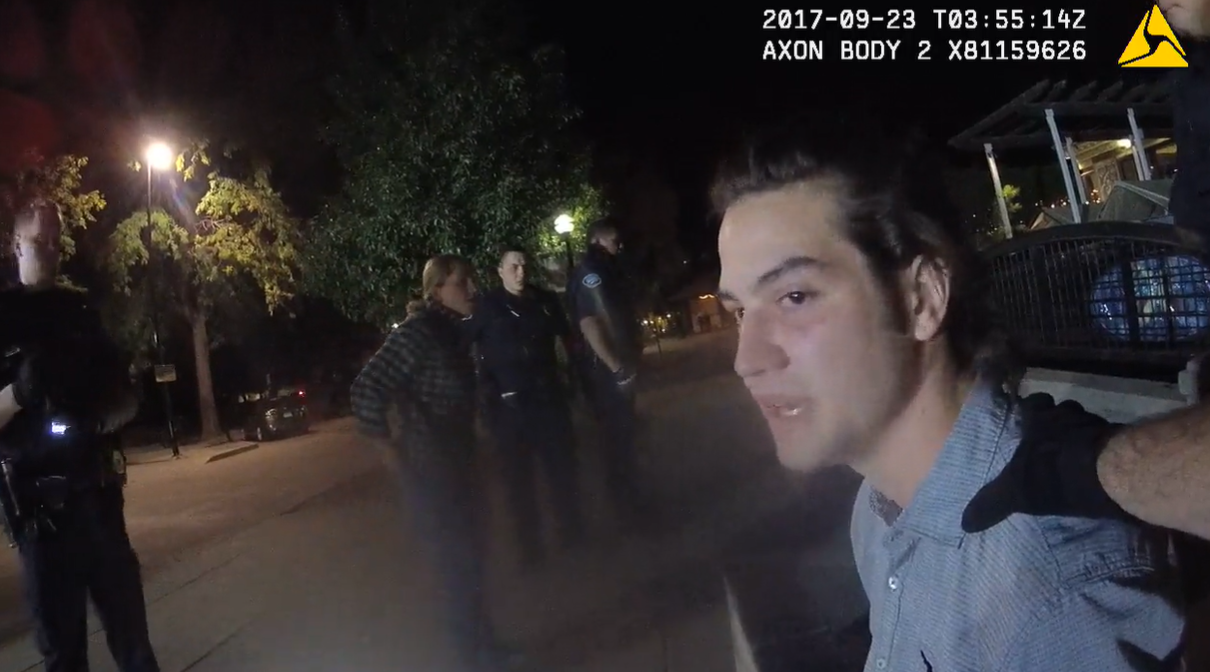
? Colorado Politics’ cover story from this week explored the case of Seth Franco, who was the subject of a 2017 welfare check that ended in his transportation to jail instead of a hospital. A federal jury decided last year that the welfare check became an unlawful arrest, and Boulder’s failure to train its officers was the cause. Now, the city is trying to reverse the verdict and the $3.41 million in damages the jury awarded. Here is an excerpt:
The five-day trial began on Monday, Oct. 18, 2021. The lawyers for plaintiff Sage Franco – Seth’s brother – quickly resorted to proving the heart of the case: Boulder officers had no idea they could not arrest probation violators.
“As a City of Boulder law enforcement officer, you believe you can arrest someone for a probation violation without an arrest warrant for the crime of failure to comply with probation?” attorney Gwyneth Whalen asked Flynn, the detective.
“Correct,” she responded.
At one point, Christian Griffin, another attorney for Franco, brought up the concept of a detainer. When a probation officer issues a detainer for a suspected probation violation, it allows law enforcement to arrest a person. However, the detainer process also ensures that the person arrested goes before a judge at the next possible time – something that did not happen for Seth Franco.
“When Seth Franco was surrounded, handcuffed, and searched, and walked outside, no officer had a detainer for him at the tea house, correct?” Griffin asked Peterson, the highest-ranking officer who responded to Franco’s welfare check.
“Had a detainer for him?” she responded.
“Yeah. Do you know what I mean?”
“I don’t,” she answered.
“You don’t even know what I mean by that word, do you?” Griffin said.
“I don’t know what that is to you,” Peterson replied.
Supreme Court update
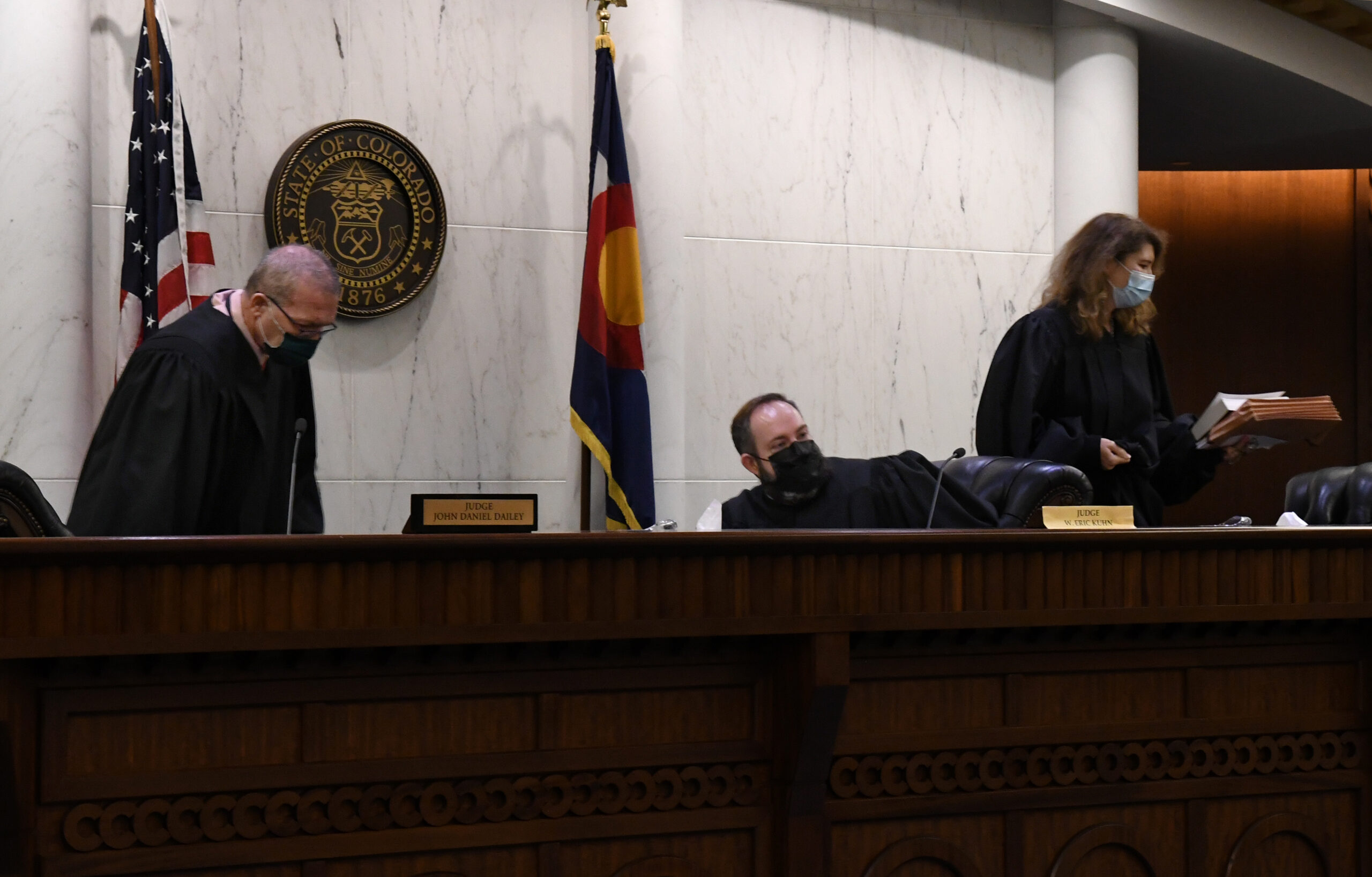
? The state Supreme Court released multiple key decisions over the past week. In the first case, Vail Resorts won its bid to have a luxury hotel valued at a lower price than Eagle County calculated, with the Supreme Court rebuking the county’s methodology.
? The justices also issued a rare ruling on a “Batson challenge,” implicating racial discrimination in jury selection. The court found a Denver prosecutor failed to give non-racial reasons for excusing a Hispanic juror from a Hispanic defendant’s trial, and the trial court judge mishandled his analysis of the juror strike.
? A momentary detour on the subject of Batson challenges: state lawmakers have introduced a bill to address and reduce the incidence of implicit racial bias in jury selection, but all 22 of the state’s elected district attorneys have a problem with the proposed solution.
? Back to the Supreme Court, the justices will decide whether the state’s Court of Appeals was correct when it refused to consider the effect a sleeping juror had on the defendant’s constitutional right to a trial by a jury of 12.
Other appeals in the news
? The 10th Circuit temporarily blocked a Biden administration rule requiring a $15 minimum wage to employees of outdoor recreation companies operating on public lands. A district court judge previously denied the request for a preliminary injunction, but the circuit is allowing the injunction to last through the appeal.
? A coroner’s office employee was fired for her performance issues, and wasn’t retaliated against because she took medical leave, the 10th Circuit concluded.
? A man was convicted for threatening an Adams County judge. A panel of the state’s Court of Appeals was divided, however, on whether the defendant’s statements amounted to rhetorical frustration or an actual threat of harm.
? There was no problem the Court of Appeals could find with a Jefferson County judge’s decision to reduce a $1.5 million jury verdict in a civil case by 70%.
? Store security footage directly contradicted a witness’s recollection that the defendant used force when trying to rob a store, prompting the Court of Appeals to overturn his conviction.
? A man who was barely over 18 at the time of a fatal gang shooting received a lifetime sentence without the possibility of parole. Another defendant, who actually fired the shot, is parole-eligible after 40 years because he was 17 years and 363 days old at the time. The Court of Appeals declined to overturn the older defendant’s sentence as unconstitutional.
Vacancies and appointments
? There is a vacancy on the Adams County Court with the impending retirement of Judge Brian N. Bowen on April 29. Applications are due by March 14.
? Applications are due by March 18 for aspirants to succeed retiring Judge Harold Sargent on the Jefferson County Court, and also to succeed Judge Barbara A. Zollars on the Rio Grande County Court.
? The governor has appointed Conejos County Judge Kimberly D. Cortez to be a district court judge of the 12th Judicial District, which encompasses six counties in southern Colorado. She will succeed Judge Martin A. Gonzales.
? Criminal defense attorney Erin M. Rowe Wilson will be the next Routt County Court judge following the retirement of James H. Garrecht.
? Finally, some big news out of Colorado’s federal trial court, as Judge William J. Martínez announced he will step down as an active judge next February. This opens the door for the Biden administration to make a fourth appointment to the seven-member court.
Miscellaneous decisions
? Federal prosecutors revealed in court the identities of co-conspirators in an alleged scheme by DaVita, Inc. and its former leader, Kent Thiry, to restrict competition by agreeing not to solicit each other’s employees.
? The Court of Appeals reversed a man’s conviction for murder because the trial judge used an improper analogy when trying to define reasonable doubt for jurors.
? The U.S. Supreme Court has taken up the appeal of a Christian graphic designer from Colorado who seeks to create wedding websites – just not for same-sex couples.
? An Adams County judge considered whether to terminate a man’s parental rights, and had him appear in courtroom via telephone. The only problem was that a different man – with the same name as the father – was on the line by mistake. The Court of Appeals found no problem with the judge’s actions.
Legislative branch meets judicial branch
? Finally, this tweet from U.S. Rep. Ed Perlmutter caught the attention of the Court Crawl:


Colorado appeals judge’s delays in releasing opinions noted by performance commission
Michael Karlik
michael.karlik@coloradopolitics.com
Updated 5 hours ago
The citizen-led performance commission that provides guidance to voters about whether to retain members of Colorado’s second-highest court raised concerns by judges and attorneys that Judge Elizabeth L. Harris sometimes struggles with releasing opinions promptly. Harris, who joined the Court...
Colorado judge explores sanctions against DOJ, ICE for rearresting man 4 days after release on bond
Michael Karlik
michael.karlik@coloradopolitics.com
Updated 18 hours ago
A federal judge in Colorado is considering sanctions against the government after immigration agents rearrested a man four days after an immigration judge found him suitable for release on bond. On July 28, U.S. Magistrate Judge N. Reid Neureiter ordered...
Divided disciplinary panel censures Montezuma County judge after agreement reached
Michael Karlik
michael.karlik@coloradopolitics.com
Updated 1 day ago
A disciplinary panel formally imposed a public censure, suspension, and further training on Montezuma County Court Judge Ian J. MacLaren on Tuesday by a 2-1 vote. Under constitutional Amendment H, which voters adopted in November 2024, MacLaren was set to...
Colorado’s Western Slope magistrate judges describe unique role in federal judiciary
Michael Karlik
michael.karlik@coloradopolitics.com
Updated 2 days ago
Two of Colorado’s federal judges stationed on the Western Slope spoke to lawyers on Wednesday about their unique roles, the ways their workloads differ, and the need for more criminal defense lawyers to take cases outside the Front Range. “Here...

Denver sues Philip Morris, other tobacco companies over cigarette butt litter
Deborah Grigsby
deborah.smith@denvergazette.com
Updated 2 hours ago
Denver is demanding that some of the biggest tobacco companies in the world pay for the cleanup of discarded cigarette butts on its streets, following a similar campaign that cities in other states have pursued. Denver’s lawsuit, filed this week...

Federal judge rules that request for bond hearing not necessary to challenge immigration detention
Michael Karlik
michael.karlik@coloradopolitics.com
Updated 2 days ago
A federal judge in Colorado ruled last week that it is not mandatory for a person to seek a bond hearing with an immigration judge before they challenge the lawfulness of their detention in federal court. For the past year,...

Boulder Valley School District introduces new policies following antisemitism lawsuit
Marissa Ventrelli
marissa.ventrelli@coloradopolitics.com
Updated 19 hours ago
The chief of Boulder Valley School unveiled new policies for the 2026-2027 school year following a lawsuit filed on behalf of a student alleging antisemitic harassment. In June, the Anti-Defamation League filed a federal civil rights complaint against the school...

Colorado NRA chapter seeks injunction against new gun‑training requirement
Marissa Ventrelli
marissa.ventrelli@coloradopolitics.com
Updated 23 hours ago
The Colorado chapter of the National Rifle Association is seeking an injunction to stop the state from enforcing a new law that took effect earlier this month. The new law requires anyone buying or selling certain firearms to first complete...
Denver moves to dismiss Trump challenge to ‘assault-style’ weapons ban
Deborah Grigsby
deborah.smith@denvergazette.com
Updated 17 hours ago
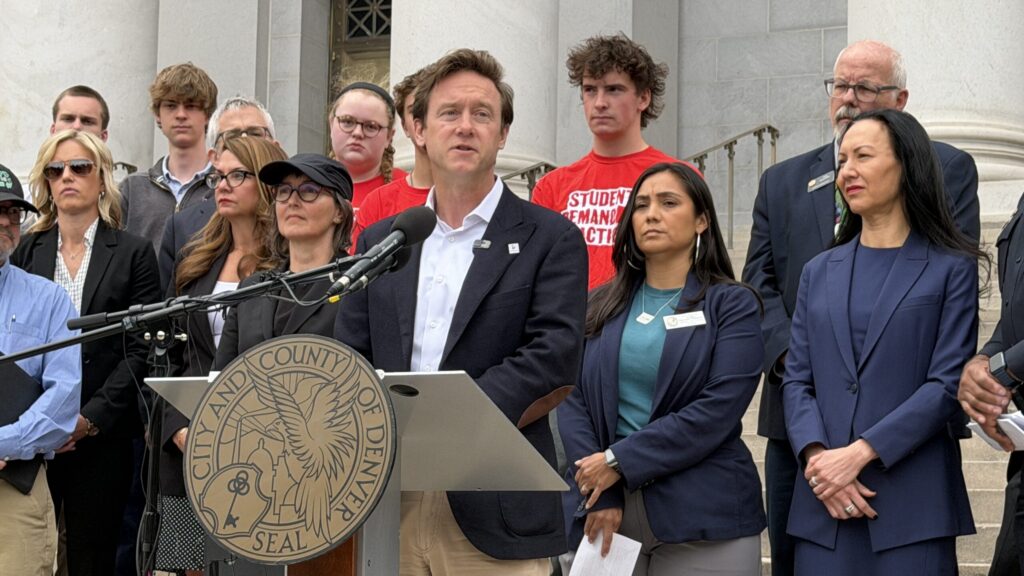
Denver has filed a motion to dismiss a lawsuit brought by the Trump administration challenging the city’s ban on “assault-style” weapons and magazines exceeding a 15-round capacity. The U.S. Department of Justice filed a suit in federal court in May,...
Federal judge dismisses ex-Colorado judicial discipline director’s conspiracy lawsuit
Michael Karlik
michael.karlik@coloradopolitics.com
Updated 3 days ago
A federal judge dismissed a lawsuit from Colorado’s former judicial discipline director on Tuesday, finding that he failed to adequately state claims for conspiracy or constitutional violations. Christopher S.P. Gregory, who served as the executive director of the Colorado Commission on Judicial...
PREV
PREVIOUS

Hundreds gather for 'Stand With Ukraine' rally Colorado Capitol, which glows blue and yellow
Ukraine’s national colors of blue and yellow bloomed outside Colorado’s Capitol on Saturday as hundreds of people – with and without ties with the Eastern European country – gathered to stand in unity with the “breadbasket of Europe.“ People held and waved the nation’s flag on the steps of the Capitol and along Lincoln Street. […]

Colorado Senate swears in newest member
The state Senate on Monday officially welcomed its newest member, Sen. Nick Hinrichsen, who was elected by a vacancy committee on Feb. 19 to replace Sen. Leroy Garcia. Following a joke or two from Senate President Steve Fenberg, the Pueblo Democrat was sworn in by Colorado Supreme Court Chief Justice Brian Boatright. Hinrichsen won a four-way […]