

Court recommends tossing excessive force, ketamine lawsuit from Lakewood councilwoman’s boyfriend

Police and paramedics who arrested a Lakewood city council member’s boyfriend and injected him with ketamine should receive immunity for their actions, a federal magistrate judge recommended last week.
Jeremiah Axtell had sued the city of Lakewood, several individual officers, West Metro Fire Protection District, a paramedic and two physicians. His claims included excessive force, unlawful arrest and failure to provide adequate medical care. Axtell’s girlfriend, Lakewood Council Member Anita Springsteen – who is also his attorney – alleged that Axtell’s “only crime was to date a City Councilwoman.”
But on Jan. 26, U.S. Magistrate Judge Michael E. Hegarty determined the defendants should receive qualified immunity because Axtell had failed to establish they violated any clearly-established rights of his. Even though the Colorado General Assembly enacted restrictions on the use of ketamine the year after Axtell’s arrest, he could not use the legislature’s action to challenge his own sedation for “excited delirium.”
“Plaintiff has not cited a single case in which a paramedic was held liable for excessive force when that paramedic exercised medical judgment and administered ketamine to address excited delirium,” Hegarty wrote.
In Axtell’s narrative to the court, there was tension between Springsteen and a Rocky Mountain Assisted Living memory care center in her neighborhood. Springsteen reportedly complained to the state health department about sanitation, health and elder abuse violations, while staff at the center allegedly were verbally abusive toward neighbors.
On January 28, 2020, Axtell allegedly picked up an adult diaper “with feces spilling out” from the roadway outside the facility. Springsteen had asked staff to do so, but they instead reportedly directed profanities at her. Employees called police, reporting that Axtell was “charging” the care center and “says he has knives in his pockets or something like that.”
Lakewood police and Axtell disagreed about what happened after officers arrived. Axtell claimed he pulled his shirt up to show he had no weapons while an agent said Axtell reached in his pockets. Axtell retreated to Springsteen’s property, but the agent searched him. Other officers arrived and handcuffed Axtell on the ground in a manner that caused “abrasions and ligament damage,” according to the lawsuit.
When West Metro Fire Protection District workers arrived, paramedic Austyn Onstott noted that Axtell appeared to be in excited delirium due to his “random spurts of uncontrollable laughter” and being verbally and physically aggressive. Onstott administered 450 milligrams of ketamine and Axtell received transportation to St. Anthony Hospital.
Court records show that prosecutors charged Axtell with seven offenses, ranging from felony menacing and violating a protection order to disobeying a police officer. The district attorney’s office dismissed all of the charges.
The lawsuit alleged violations of Axtell’s constitutional rights: Lakewood police did not have probable cause to believe he had committed a crime and used an unreasonable degree of force. There was no medical or law enforcement need to forcibly inject him with ketamine. And the government failed to properly train police and paramedics on the use of ketamine.
“When the entire country was rioting over police misconduct, and the rioting extended to Colorado specifically because of a ketamine injection case with Elijah McClain, and the municipality of Lakewood and special district WMFR still did nothing to address the issue of policy making and training on an identical or similar issue – this became the definition of deliberate indifference,” Springsteen wrote on behalf of Axtell.
Springsteen, who was an advocate for the 2021 legislation restricting ketamine’s use, referred to McClain, the 23-year-old who died in August 2019 after paramedics in Aurora injected him with 500 milligrams of ketamine. Like Axtell, McClain allegedly experienced excited delirium, which is not a recognized medical diagnosis. Instead, it is a condition typically cited after a person who is combative or agitated dies in police custody.
The defendants asserted qualified immunity, with the police arguing it was reasonable to use “minimal physical force” on Axtell given reports of his threatening behavior. The fire protection district contended that Onstott’s injection of ketamine based on a medical determination similarly did not violate Axtell’s constitutional rights.
“Patients are often injected by paramedics and EMTs with medications at incident scenes with police officers present,” the district’s attorneys wrote.
Hegarty’s recommendation of dismissal sided with the defendants. He saw the force as reasonable and that police arguably had probable cause to arrest Axtell based on the 9-1-1 call from the memory care center and the determination that Axtell appeared to be in violation of a protection order. The magistrate judge also did not believe Axtell plausibly showed Onstott was deliberately indifferent to his medical needs with the ketamine injection.
Axtell’s allegations “may establish that Paramedic Onstott acted negligently, but they do not plausibly allege that he knew Plaintiff faced a substantial risk of harm and disregarded that risk,” he wrote.
The parties in the case have 14 days to file objections with U.S. District Court Judge Raymond P. Moore, after which he will decide whether to adopt or reject Hegarty’s recommendation.
Springsteen told Colorado Politics she is consulting with Axtell about whether to file an objection. Elected to the Lakewood council in 2019, she has characterized the forcible injection of ketamine as “assault and battery.” Since the change in state law, only a justifiable medical emergency allows for first responders to sedate or incapacitate someone with ketamine if they are under suspicion for criminal conduct.
Springsteen added she was disappointed that qualified immunity provides a barrier to plaintiffs’ claims of constitutional violations, and that she has video of Axtell’s encounter with first responders that supports his version of events.
The case is Axtell v. City of Lakewood et al.
This article has been updated with comments from Anita Springsteen.



‘I thought I was gonna die;’ JeffCo teen shot in face recounts shooting during trial
Matt Kyle
matt.kyle@denvergazette.com
Updated 2 days ago
A Jefferson County teen who was shot in the face when he and his friend were seeking a spot to take homecoming photos said he believed he was going to die as he recounted the shooting during trial testimony on...

Legislature overrules state Supreme Court decisions, federal judges contend with violations of orders | COURT CRAWL
Michael Karlik
michael.karlik@coloradopolitics.com
Updated 5 days ago
Welcome to Court Crawl, Colorado Politics’ roundup of news from the third branch of government. The Colorado legislature overruled two recent state Supreme Court decisions in this year’s session, plus federal judges are addressing the government’s violations of their orders...
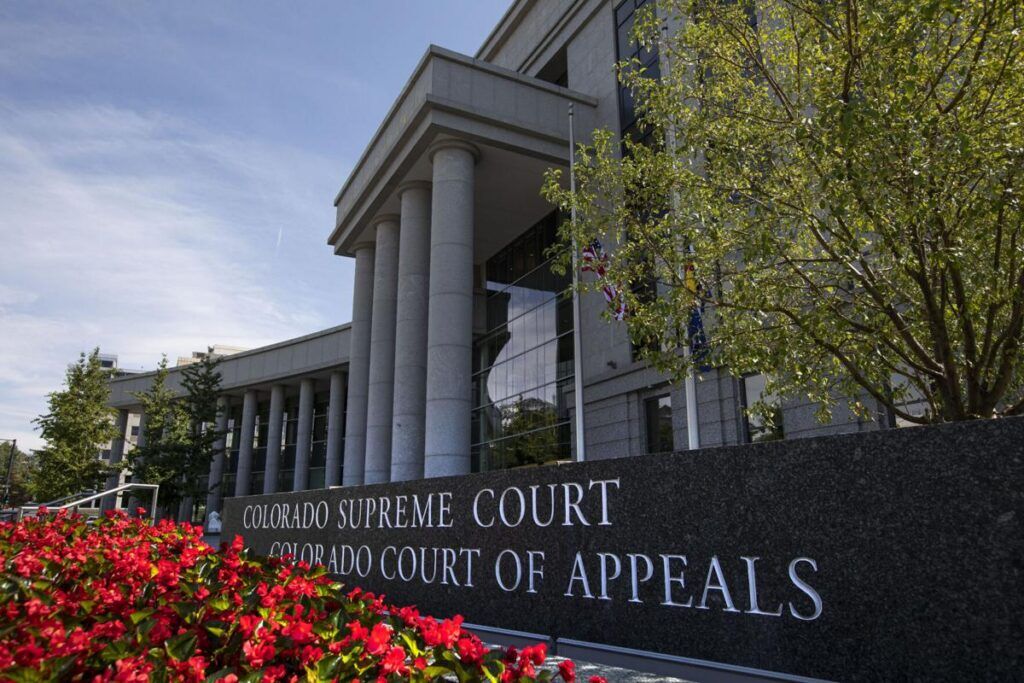
Appeals court reinstates murder case despite ex-DA Linda Stanley’s conduct
Michael Karlik
michael.karlik@coloradopolitics.com
Updated 5 days ago
Colorado’s second-highest court reinstated the murder and child abuse charges on Thursday against a Fremont County defendant, reasoning that the former district attorney’s misconduct did not warrant dismissal of the charges. A judge previously dismissed the criminal case against defendant...

How a CU Boulder law school program helped free a Denver man after 27 years in ‘shaken baby’ murder case
Matt Kyle
matt.kyle@denvergazette.com
Updated 4 days ago
From the first time she looked at Stephen Martinez’s case, Boulder attorney Jeanne Segil knew she had a shot at getting him released from prison. Martinez, 58, spent 27 years behind bars for a crime he now says never happened....

Tina Peters thanks Polis for shortening her sentence, calls Colorado Democrats’ censure a ‘travesty’
Ernest Luning
ernest.luning@coloradopolitics.com
Updated 1 week ago
Two days after the Colorado Democratic Party formally condemned Gov. Jared Polis over his decision last week to shorten Tina Peters’ prison sentence for tampering with election equipment, Peters heaped praise on the term-limited Democrat and slammed his party for...

Federal judge green-lights jury visit to Aurora detention center in forced-labor lawsuit
Michael Karlik
michael.karlik@coloradopolitics.com
Updated 1 week ago
A federal judge granted a request on Thursday to have jurors visit the privately run U.S. Immigration and Customs Enforcement detention center in Aurora as part of an upcoming civil trial over alleged forced labor practices. U.S. District Court Senior...

Federal judges’ responses vary to immigration authorities’ disregard of orders
Michael Karlik
michael.karlik@coloradopolitics.com
Updated 1 week ago
Colorado’s U.S. District Court judges have responded in recent days to the government’s violations of, or unclear compliance with, their orders in immigration detention cases, resulting in directives to immediately free the petitioners. “I’m just struggling to understand how he...
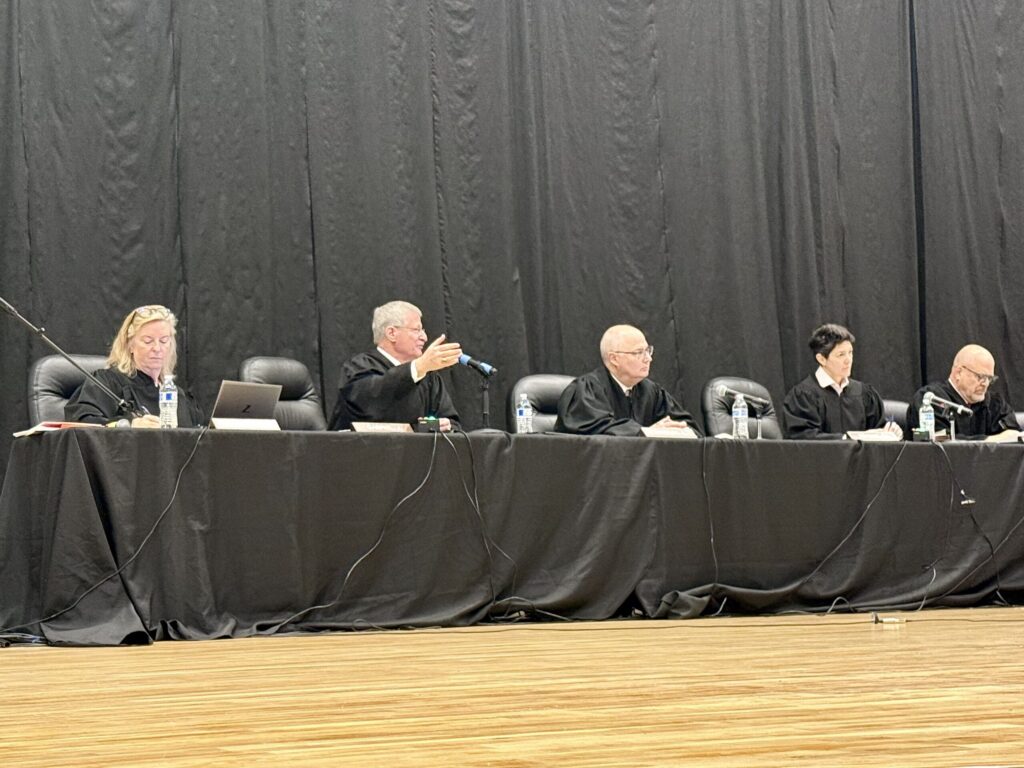
Colorado Supreme Court ditches debt collection case
Michael Karlik
michael.karlik@coloradopolitics.com
Updated 4 days ago
The Colorado Supreme Court declined to rule on Friday in a case questioning the procedure a creditor may use to obtain records from entities related to a debtor, in which the court initially expressed its interest. Joel Farkas is liable...
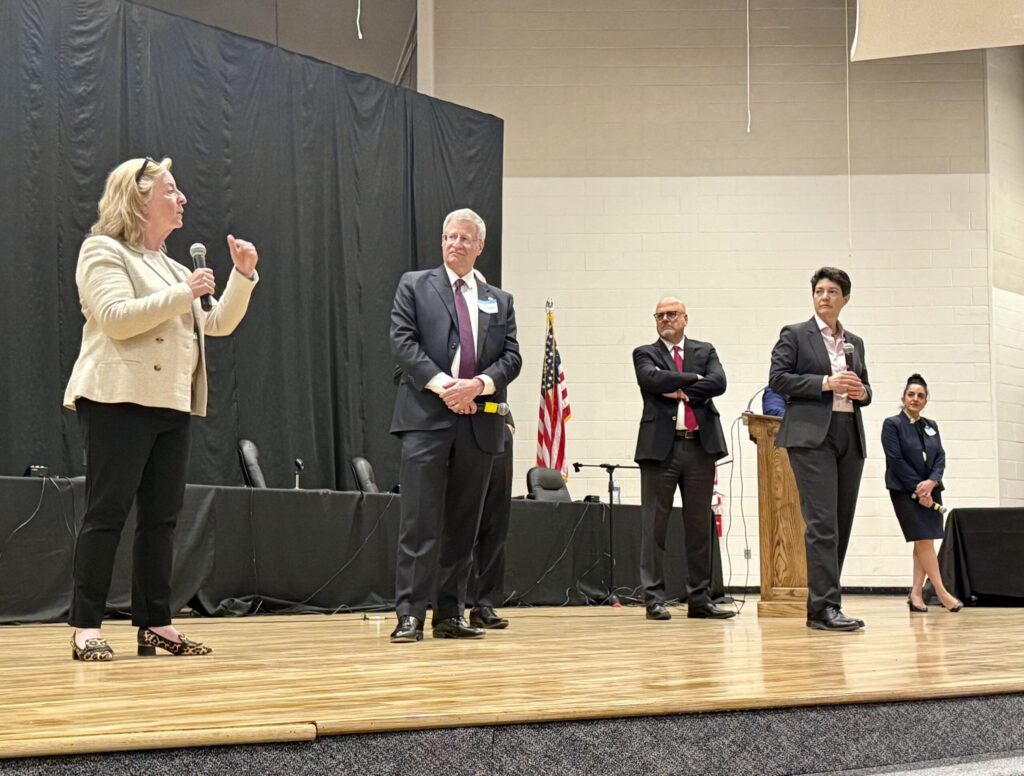
Colorado Supreme Court to evaluate test for alimony after remarriage
Michael Karlik
michael.karlik@coloradopolitics.com
Updated 4 days ago
The Colorado Supreme Court announced on Monday that it will evaluate whether divorcing spouses must explicitly agree that alimony payments from one partner to the other will continue after one person remarries, or whether a “clear implication” will suffice. The...
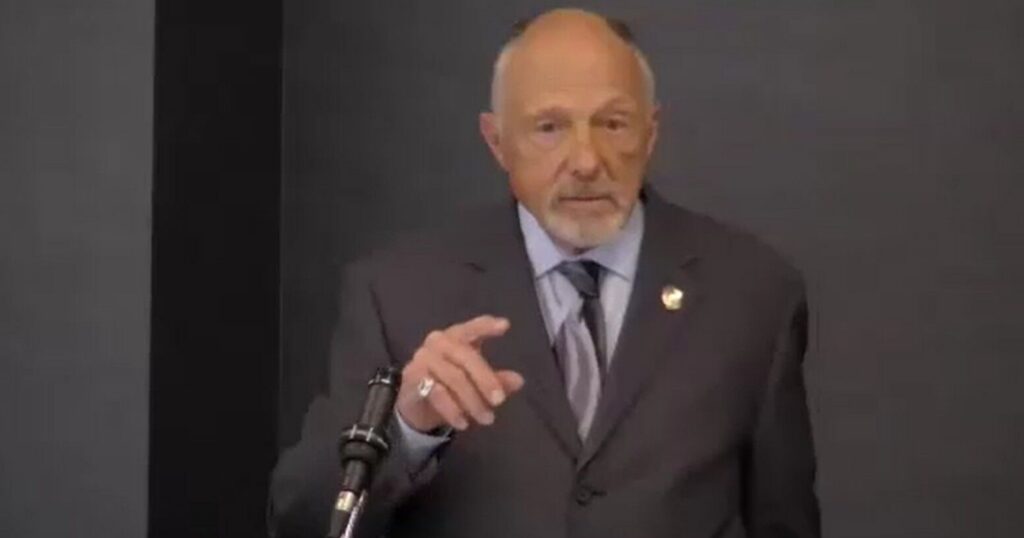
Retired Colorado appeals judge speaks about civic advocacy, SCOTUS
Michael Karlik
michael.karlik@coloradopolitics.com
Updated 5 days ago
Retired state Court of Appeals Judge Russell Carparelli offered mild critiques of the U.S. Supreme Court earlier this month as he spoke about the rule of law, and urged lawyers to “get in the game” by advocating in the political...
PREV
PREVIOUS

House committee approves bill exempting nonprofit child care centers from property tax
Nonprofit child care centers in Colorado wouldn’t have to pay property taxes under legislation a state House committee advanced on Tuesday in the hopes of reducing costs and improving access. House Bill 1006 aims to modify current law that allows property owned and operated by nonprofit child care centers to be exempt from property taxes. The bill […]
Biden deploying 3,000 troops to fortify Europe amid Russia-Ukraine standoff
President Joe Biden has decided to deploy thousands of troops to and within Europe amid the Russia-Ukraine standoff. Biden’s decision, which the Pentagon announced on Tuesday, comes as the United States continues to attempt to thwart off a possible Russian invasion of Ukraine as the former has amassed a military buildup of more than 100,000 […]