

Colorado’s job recovery lags behind neighboring states

While Colorado has out-performed the majority of states, it lags behind its neighbors in recovering jobs lost during the pandemic.
Four Western states – Arizona, Idaho, Texas and Utah – already recovered all the jobs they lost at the onset of the COVID-19 pandemic.
Colorado, by contrast, has regained 335,500 of the 375,800 jobs lost between February and April 2020, translating to a job recovery rate of 89.3 percent and exceeding the U.S. average of 84%, according to state data.
Chris Brown, Vice President of Policy and Research at the Common Sense Institute, said a few factors might help explain Colorado’s lag.
First, he noted that Colorado experienced a steeper employment decline in 2020 compared to the four states. Employment declined 13.3% in April 2020 in Colorado – two points higher than Texas and five points more than Utah, where jobs only fell by 8%.
Second, Brown noted, that among the five states, Colorado is the only one whose employment declined at the end of 2020. Common Sense Data showed that Colorado lost25,500 jobs over November and December 2020, while Utah added 18,000, Texas added 116,600, Arizona added 9,800 jobs, and Idaho added 10,700 jobs.
Brown noted that Colorado’s overall 4.5% employment growth in 2021 is actually above Idaho and Utah, tied with Arizona, and below Texas.
“So, a major factor as to why Colorado’s employment recovery lags these other states has to do with how deep of a hole we had to climb out of,” Brown said. “While the last two months of employment growth were strong, most state forecasts project a slowing of growth in 2022. And our own analysis indicates our state faces $2.1 billion in new taxes and fees over the next several years. Therefore, we still have a long way to go to full recovery and it is important the policy environment recognizes that.”
Other experts said a robust growth trend before the onslaught of the pandemic and large tech sector have fueled quicker economic turnaround in some states.
“So, what’s really gone right for those four states is a longer story than just the aftermath of the pandemic,” Adam Kamins of Moody’s Analytics told Yahoo Finance on Thursday, referring to Arizona, Idaho, Texas and Utah. “They are states that have been growing rapidly. They’re states that have generally a large tech sector, or maybe warm weather, or some advantage that’s been attracting people there for a long time. The kind of continuation of that trend and the increased prevalence of remote work – meaning people can move anywhere they want – is driving more and more people to those states.”
Kamins noted that the Mountain West is leading the way in the country’s recovery, while other places, like New York, for example, face a “much steeper and much deeper hole” to climb out of than Arizona or Texas.
In addition, recovery will lag in states that have been losing residents or not gaining them as fast as other regions, said Kamins, who also noted that certain industries, such as restaurants and hotels, are taking much longer to ramp back up.
An analysis by the Wall Street Journal, which noted that Republicans dominate Arizona, Idaho, Texas and Utah, said the four states adopted “relatively relaxed Covid-19 restrictions,” softening the blow on their economies.
In boasting of Arizona’s recovery, Gov. Doug Ducey, a Republican, cited his state’s tax approach, “combined with a responsible, hands-off approach to government” as spurring its “unparalleled economic growth.” Arizona gained 17,800 jobs from November to December, putting its unemployment rate at 4.1% .
Colorado’s unemployment rate declined to 4.8% after gaining 9,000 jobs in the same period. It’s the first time since March 2020 that the economic metric fell below 5%, the Colorado Department of Labor and Employment said, adding it’s also the seventh consecutive month of unemployment rate decline.
The Common Sense Institute said at this pace, Colorado would reach pre-pandemic employment levels in April.
But the state must add about 8,600 jobs each month on average in order to regain employment levels that adjust for population growth before COVID-19, the think tank added.
The job growth is uneven. The state labor department said several counties’ unemployment rate – not seasonally adjusted – remains higher than 5%, notably Pueblo (6.4%), Huerfano (6.3%), Las Animas (5.5%), Fremont (5.5%), and Rio Grande (5.2%).
While other counties, including Boulder (3.2%), Denver (4.6%) and El Paso (4.3%), fare much better.
Job recovery in metro areas also vary. Colorado Springs stands at 113% of jobs lost between February and April 2020, Denver is close at 93%, while Greeley lags at 63%.
In a statement last week, the Polis administration touted Colorado’s most recent economic indicators, saying it’s one of the fastest recovery rates in the country.
“I’m excited that the lowest unemployment rate since the pandemic began and positive job growth sends a clear message that Colorado continues to be the best place to live, work and grow a business and Coloradans are moving forward,” Gov. Jared Polis said in a news release. “Our administration is on a mission to save people money, grow an even stronger workforce, make historic investments in services to connect workers with good paying jobs so we can all thrive.”
Like many states, Colorado adopted drastic measures to curb the spread of the virus, including closing down gyms, restaurants and other public places, at the height of the pandemic. The bulk of those restrictions, including several that the Polis administration adopted at the early stage of the global health crisis, have since been lifted.



Colorado Politics Calendar July 27-Aug. 2
Rachael Wright, Special to Colorado Politics
rachael.wright@coloradopolitics.com
Updated 4 days ago
CoPo’s weekly political calendar will help you find political and public-policy events throughout Colorado. It includes candidate and issue campaign events, public policy meetings, court hearings, state and local party conventions, assemblies, debates, rallies, parades, speaking engagements, traveling dignitary appearances,...

The through line from Donald Trump to Victor Marx | SONDERMANN
By Eric Sondermann
by-eric-sondermann@coloradopolitics.com
Updated 4 days ago
Over 10 years ago, before Donald Trump could ever defeat Hillary Rodham Clinton, he had to first engineer a hostile takeover of the Republican Party. Prior to his descent of that golden escalator, the previous seven Republican presidential nominees had...

Colorado districts prepare for school year amid mental health cuts. But will less cellphone distractions help?
Marissa Ventrelli
marissa.ventrelli@coloradopolitics.com
Updated 2 days ago
The signs of a new school year are everywhere — buses in the shop, teachers unpacking boxes, families ticking through supply lists — but behind the familiar rituals, Colorado districts are preparing for a year defined less by routine than...
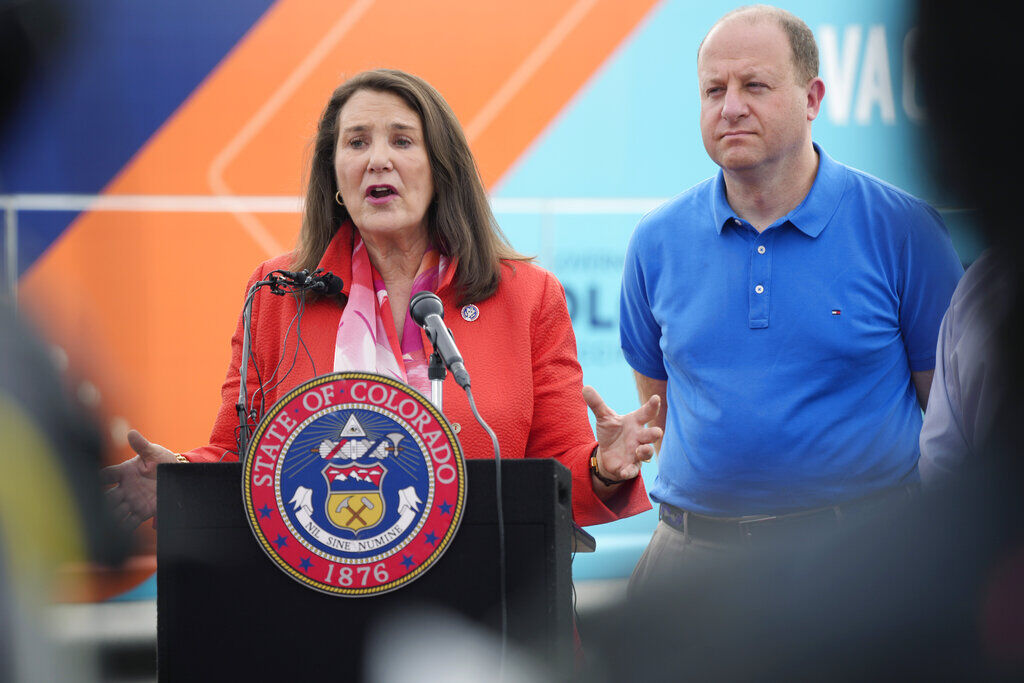
Armstrong staffer considers congressional bid, DeGette angers rural communities with wilderness act | A LOOK BACK
Rachael Wright, Special to Colorado Politics
rachael.wright@coloradopolitics.com
Updated 2 days ago
Forty-five years ago this week: If the lines were drawn just right, Republican Sen. Bill Armstrong stood the chance of losing his office manager, Ruth Fountain. Fountain admitted she was seriously thinking about running for Colorado’s new congressional seat in...
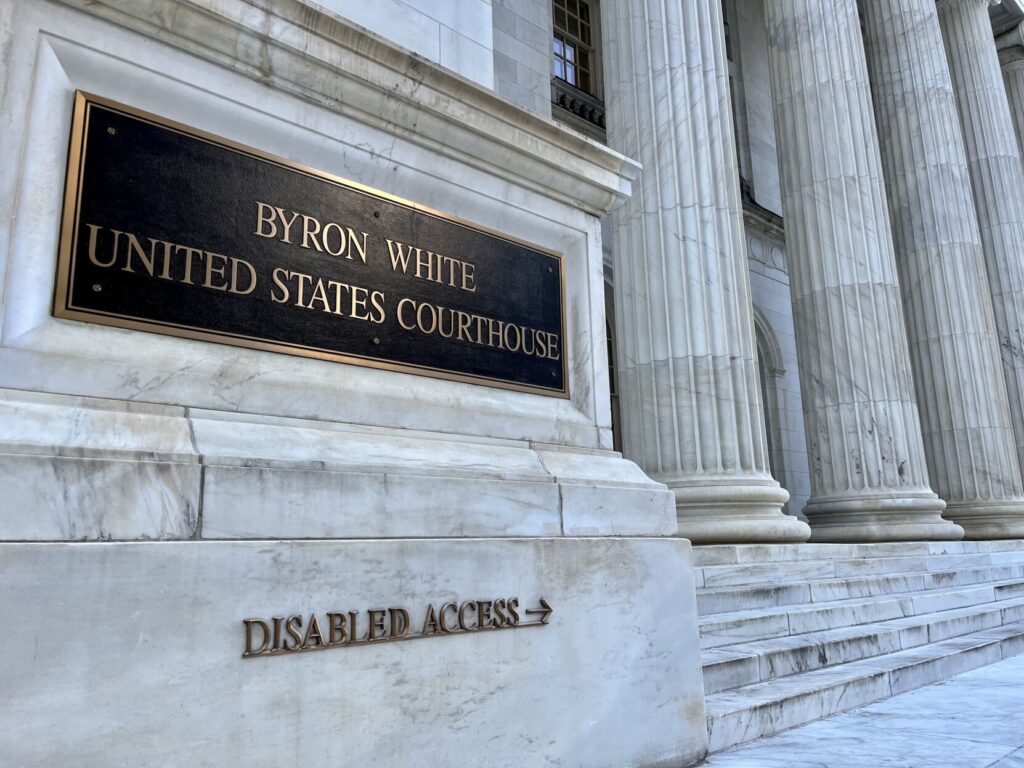
10th Circuit dismisses woman’s lawsuit following 10-year attempt to undo restraining order
Michael Karlik
michael.karlik@coloradopolitics.com
Updated 1 day ago
The Denver-based federal appeals court rejected a woman’s challenge on Friday to a restraining order imposed on her more than a decade ago, finding that she cannot credibly claim she will be prosecuted for violating the restraining order through her...
10th Circuit dismisses woman’s lawsuit following 10-year attempt to undo restraining order
Michael Karlik
michael.karlik@coloradopolitics.com
Updated 2 days ago
The Denver-based federal appeals court rejected a woman’s challenge on Friday to a restraining order imposed on her more than a decade ago, finding that she cannot credibly claim she will be prosecuted for violating the restraining order through her...

Surprise candidate Shimon Blau cleared to face off against Melat Kiros in November
Ernest Luning
ernest.luning@coloradopolitics.com
Updated 1 day ago
Unaffiliated congressional candidate Shimon Blau, a Denver doctor, has qualified by petition for the general election in Colorado’s 1st District, where Democrat Melat Kiros defeated 15-term U.S. Rep. Diana DeGette in last month’s primary, the Colorado Secretary of State’s Office...

Colorado produce not tied to nationwide cyclospora outbreak, agriculture officials say
Marissa Ventrelli
marissa.ventrelli@coloradopolitics.com
Updated 19 hours ago
There is no indication that the recent outbreak of cyclospora, a fecal parasite that has contaminated food and water across nearly every state, can be linked to produce grown in Colorado, according to the state’s Department of Agriculture. “Colorado growers...

UNC opens College of Osteopathic Medicine
Marissa Ventrelli
marissa.ventrelli@coloradopolitics.com
Updated 1 day ago
The University of Northern Colorado held a grand opening for its new College of Osteopathic Medicine on Friday, with Gov. Jared Polis in attendance to celebrate the culmination of a two-year, $127.5 million project. The project was funded through legislation...
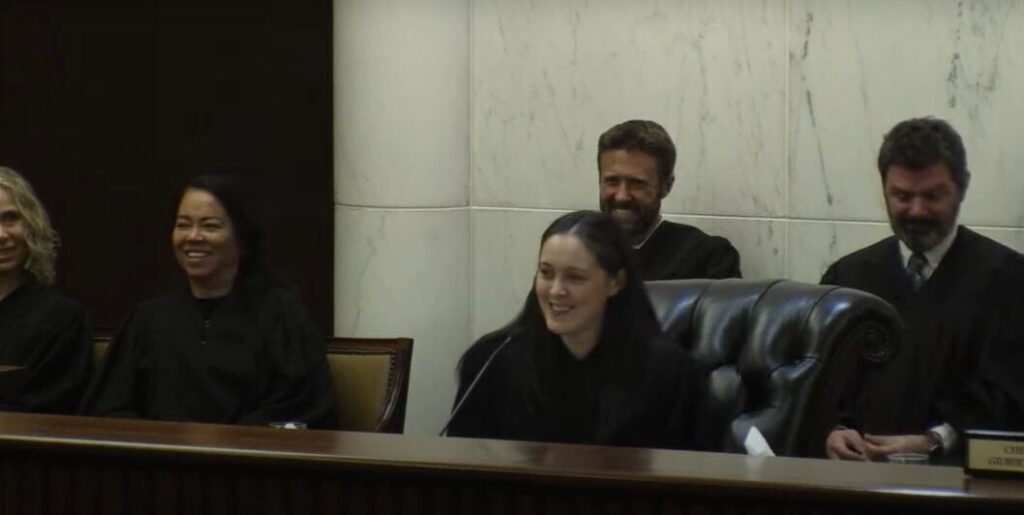
Colorado equal pay law does not require plaintiffs to allege gender-based retaliation, appeals court finds
Michael Karlik
michael.karlik@coloradopolitics.com
Updated 15 hours ago
The 2019 Colorado law aimed at rooting out pay discrimination on the basis of sex does not require a plaintiff to allege their employer retaliated against them for sex- or gender-related reasons, the state’s second-highest court decided on Thursday. Lawmakers...
PREV
PREVIOUS

Republican US Senate candidate Joe O'Dea launches radio ad campaign
Colorado Republican Joe O’Dea hits the airwaves statewide Wednesday with a radio ad pitching the U.S. Senate candidate’s working-class roots and status as a first-time candidate. The 60-second ad launches days after O’Dea announced that he plans to petition his way onto the June primary ballot. He’s one of seven Republicans seeking the nomination to […]

Bill aims to slash Colorado business fees
Colorado Democratic legislators, with backing from the governor and secretary of state, aim to reduce the amount of fees new businesses pay when forming. Dubbed the “Colorado Business Fee Relief Act,” House Bill 1001 would reduce common filing fees for new business registrations, annual renewals, trade name registrations and others. Some would be cut to […]