

AARP Colorado urges energy regulators to reject Xcel’s rate hike, criticizes legislature

The country’s biggest advocate for senior citizens is urging the Colorado Public Utilities Commission to reject Xcel Energy’s proposal to increase energy rates by nearly $200 million, arguing it would disproportionately hit low-income and fixed-income residents.
AARP Colorado said the rate hike, if approved, will hammer residents who can least afford their energy bills and argued it would sit atop the surge in the price of natural gas in the last few months and additional expenses arising out of the cold spell in February last year that utilities are passing on to their customers.
The group also lamented that legislators have allowed the state’s regulated utilities to pass on costs to consumers instead of having their shareholders shoulder that burden and Coloradans are bearing the brunt of state policymakers’ vision of a carbon-free society.
Xcel Energy, which serves 1.5 million Coloradans, is seeking the Colorado Public Utilities Commission’s permission to hike energy rates by $182.2 million. Initially, the company sought a $338.5 million increase, but several parties, including the commission’s staffers, agreed to settle at $182.2 million.
That translates to a rate hike of $5.24 for residential customers and and $6.64 for commercial ratepayers. If approved, the new rates would take effect on April 1, 2022.
In a filing with the commission, Xcel said the proposed settlement serves the public interest.
“The diversity of interests represented in this proceeding helped ensure that this negotiated settlement agreement serves the public interest,” Xcel told state regulators. “If approved, this settlement will result in just and reasonable rates and this settlement is consistent with Colorado law.”
And in a statement after the parties reached the agreement, the energy company said the proposed settlement would ensure “we continue to deliver benefits and investments that will improve service reliability, protect our customers, strengthen grid resilience, enhance the customer experience and deliver more low-cost, clean energy to Coloradans.”
But AARP Colorado said residential ratepayers would bear the brunt of the rate hike among Xcel Energy’s classes of customers.
The group also criticized the Colorado General Assembly, saying it has decided to fund the state’s transition to renewable on the backs of Coloradans.
“Our biggest concern is the pancaking of all these rate increases, many of them put on by the legislature to transition into clean energy,” said Bill Levis, former chief of the Office of Consumer Counsel, which is now called the Utility Consumer Advocate.
Levis noted a recent law mandating the Public Utilities Commission to consider how its actions would affect disproportionately impacted communities.
“The legislature is sending two distinct and contradictory messages – one, the consumers will have to pay for all of the transition to clean energy, and, at the same time, the commission must ensure disadvantaged communities don’t absorb the cost,” Levis told Colorado Politics.
He added: “The commission is in a conundrum because they have to enforce the law that the legislature passed.”
Levis made the same argument during a public hearing late on Wednesday.
In a statement, AARP Colorado said it “strongly supports” the transition to renewable energy, but it is “extremely concerned that residential ratepayers, who can least afford it, are being asked to absorb an unfair percentage of the costs.”
The commission is deliberating on Xcel Energy’s rate hike request at a time when millions of Coloradans face steep increases in energy bills this winter, with some having to pay as much as 50% more compared to last winter, and as residents struggle to keep up with soaring inflation while the global COVID-19 pandemic hammers the state and the rest of the country.
Filings with Colorado’s regulatory body showed that an average energy consumer in an Xcel Energy territory will pay an additional $132.86 over a five-month period beginning in November this year and ending in March of next year.
The sharp rise in natural gas prices is primarily fueling the rate hike, but actions by state regulators and policymakers have also contributed.
In the case of Xcel Energy, the spike also emanates from an earlier rate hike approved by the Colorado Public Utilities Commission and, to a lesser extent, a law mandating utilities to charge customers more to help finance an energy assistance program for low-income residents. State officials said that small cost to consumers translates to big help for the state’s most economically vulnerable residents.


Colorado board permits state to appeal injunction against arthritis drug price cap
Marissa Ventrelli
marissa.ventrelli@coloradopolitics.com
Updated 2 hours ago
A Colorado board voted Friday to allow the Attorney General’s Office to fight an injunction against a price cap on a drug that treats arthritis. A U.S. district court judge had granted the company Amgen a preliminary injunction, temporarily blocking...

Federal judge rejects constitutional claims, ‘expressions of hatred’ by Club Q defendant
Michael Karlik
michael.karlik@coloradopolitics.com
Updated 2 hours ago
A federal judge rejected a defendant’s claims that he received constitutionally ineffective assistance of counsel while facing federal hate crime and firearms charges for murdering five people at a Colorado Springs LGBTQ nightclub in 2022. Anderson Lee Aldrich is serving...

Divided 10th Circuit upholds Colorado congestion fee on car rentals
Michael Karlik
michael.karlik@coloradopolitics.com
Updated 2 hours ago
The Denver-based federal appeals court concluded on Monday that a 2024 “congestion impact fee” that lawmakers imposed on short-term vehicle rentals did not conflict with a federal prohibition on certain airport-related charges. Beginning in the 1970s, Congress began limiting the...

Space Force should measure workforce needs as it prepares to double in size, GAO report says
Mary Shinn
mary-shinn@coloradopolitics.com
Updated 8 hours ago
The Space Force needs more people. It’s just not precisely sure how many more. A Government Accountability Office report released earlier this month found that the youngest and smallest military branch does not have a process to consistently or accurately...

Colorado schools receive $24 million for free meals program
Marissa Ventrelli
marissa.ventrelli@coloradopolitics.com
Updated 2 hours ago
The Colorado Department of Education is providing Colorado schools with nearly $24 million in grant funding to implement a free lunch program. Approved by voters in 2022, the Healthy School Meals for All provides free breakfast and lunch to all...

Secret Service agent placed on administrative leave after arrest for near-deadly hazing ritual
Claire Carter
claire.carter@washingtonexaminer.com
Updated 10 hours ago
A Miami Secret Service agent in Florida was placed on administrative leave following his arrest on Sunday in connection with a near-deadly hazing incident at a University of Miami fraternity. Marquez Christopher Pinder, 29, was arrested alongside two other individuals...
Forest fire west of Sedalia prompts evacuations in Douglas County
Nicholas Fogleman
nicholas.fogleman@denvergazette.com
Updated 12 hours ago
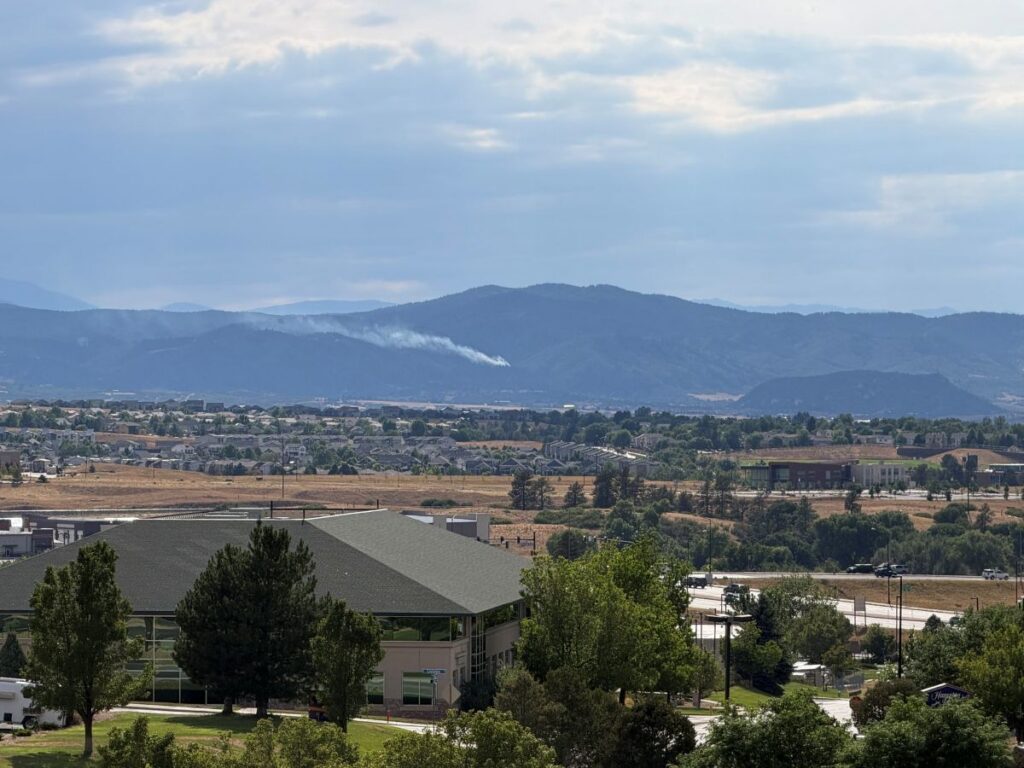
Emergency crews are responding to a forest fire burning west of Sedalia, prompting evacuation orders for nearby residents Sunday afternoon. At about 5 p.m. Sunday, the Douglas County Sheriff’s Office issued an evacuation order for residents within a 2-mile radius...

Airstrikes have paused and talks are pressing forward. But can the US and Iran take the off-ramp?
The Associated Press
the-associated-press@coloradopolitics.com
Updated 12 hours ago
WASHINGTON (AP) — The U.S. military has paused its airstrikes on Iran after nearly two weeks of intensifying bombing, while diplomatic efforts have pushed forward to try to avert a return to all-out war. But it remains to be seen...
Penrose fortune paved the way for Colorado Springs to be a military, space and sports town
Mary Shinn
mary-shinn@coloradopolitics.com
Updated 12 hours ago
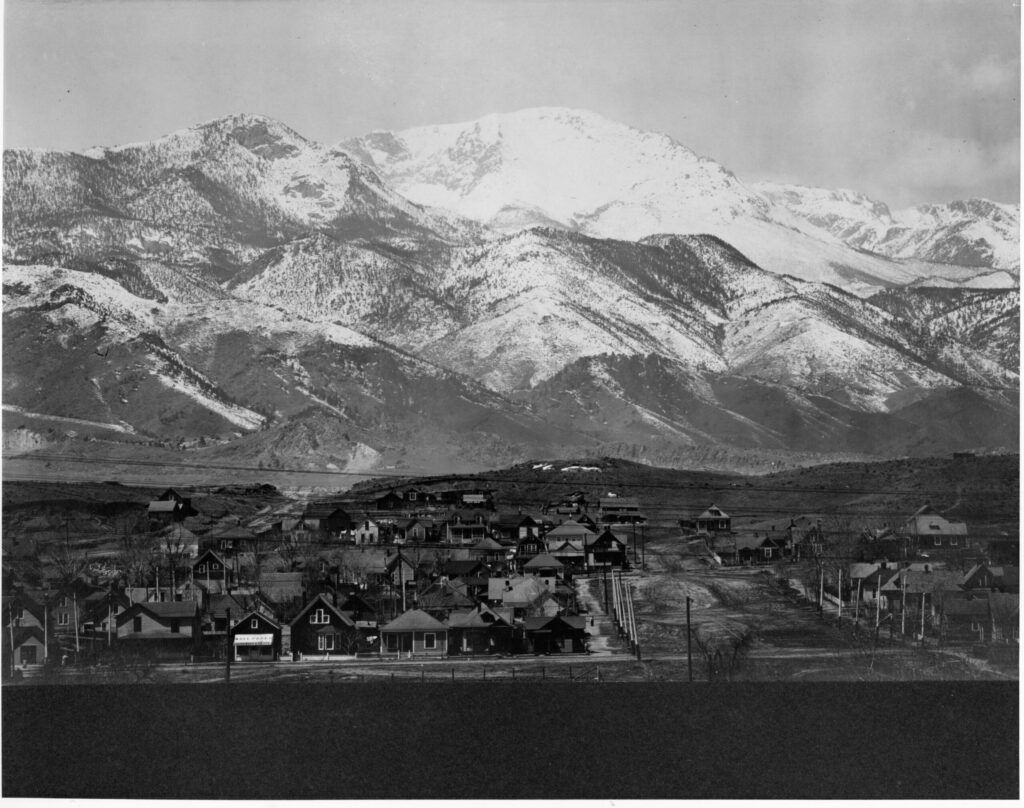
Colorado Springs is always working to catch the next big economic wave. “We’re always trying to figure out what the next thing is going to be,” explained Matt Mayberry, director of the Colorado Springs Pioneers Museum. In the early days,...

Colorado Politics Calendar July 27-Aug. 2
Rachael Wright, Special to Colorado Politics
rachael.wright@coloradopolitics.com
Updated 5 days ago
CoPo’s weekly political calendar will help you find political and public-policy events throughout Colorado. It includes candidate and issue campaign events, public policy meetings, court hearings, state and local party conventions, assemblies, debates, rallies, parades, speaking engagements, traveling dignitary appearances,...
PREV
PREVIOUS

Local unions endorse Democrat Diana DeGette's re-election bid
A slate of local unions endorsed U.S. Rep. Diana DeGette’s bid for a 14th term on Tuesday, calling the Denver Democrat a champion for labor and citing her support for last year’s bipartisan infrastructure bill. DeGette is facing two primary challengers in the overwhelmingly Democratic 1st Congressional District, which she has represented since 1997. Unions […]

Democrat Lesley Dahlkemper decides against jumping in primary for Perlmutter's seat
Jefferson County Commissioner Lesley Dahlkemper has decided against running for the Colorado congressional seat held by retiring Democratic U.S. Rep. Ed Perlmutter. Instead, the Lakewood Democrat plans to stick with her bid for re-election, she told Colorado Politics. Dahlkemper, a former member of the Jefferson County school board, said last week that she was considering […]