

COURT CRAWL | Colorado’s justices return to light caseload, courts respond to omicron

Welcome to Court Crawl, Colorado Politics’ roundup of news from the third branch of government. The Colorado Supreme Court returns on Tuesday to hear only a handful of cases, while the judicial branch at large is grappling with the effect of the omicron variant on courthouse operations.
Hello, goodbye to the Supreme Court
? It’s time for the Colorado Supreme Court to hear its monthly oral arguments and on the January calendar, there are a total of three (3) cases to be heard. Chief Justice Brian D. Boatright told Colorado Politics in an interview (see below) that the light caseload reflects that there simply aren’t many appeals ready to be argued:
“Since I’ve been here, I don’t think we’ve ever been in a situation where we’re hearing every case that’s been fully briefed and ready to go as soon as it’s ready. A lot of times, for example, we will fill the December docket with cases that are ready, then some other cases that already have to be tossed over to January. But now, we’re just able to hear the cases that are ready.” -Boatright
? So what are the fortunate few on the docket for Tuesday? One is a water rights case, another implicates liability for insurance claims adjustors, and the third questions whether governmental immunity shields jail operators from liability for their intentional policy choices involving pretrial detainees.
To postpone or not to postpone?
? It is no secret that the omicron variant of the novel coronavirus is spreading throughout the United States. As of Monday, the Colorado Department of Public Health and Environment reported that more than one in four people tested for COVID-19 received a positive result. Consequently, several judicial districts across the state postponed their jury trials until late January or even mid-February after determining they could not safely assemble jury pools.
? At the federal courthouse in downtown Denver, operations are still continuing, but one judge cautioned that the court would reevaluate in a couple of weeks.
? And in related news, you may have heard that the U.S. Supreme Court heard oral arguments on Friday about a pair of Biden administration regulations that require vaccination or testing for a large segment of the workforce. A decision should be coming soon about whether to uphold those policies.

State’s chief justice gives update on pandemic operations, judicial investigation
? In an interview with Colorado Politics, Chief Justice Boatright talked about judicial operations and the backlog of jury trials in light of the ongoing pandemic, plus provided a brief update on the independent investigation into the judicial branch. He also discussed his motivation for taking the top judicial job and how the other justices are now more involved in the administration of the branch. Here is an excerpt:
CP: Last year, you mentioned to Colorado Politics that your entire focus as chief justice would be to help the judicial branch get through the disruption of the COVID-19 pandemic. Yet here we are, headed into 2022, and the pandemic is still ongoing. What are the big concerns that you still have about COVID-19, and have you been able to focus on other priorities despite the continuation of the health emergency?
Boatright: I think we learned to adjust and to communicate as a branch to try and adjust to the variants. I don’t know all of that has changed, other than we’ve been able to start up jury trials with a few exceptions. There are some jurisdictions that, because of the [COVID-19] numbers, have had to suspend jury trials again….

I also had to adjust when some negative news stories came out – that required some focus. But us navigating through and staying open continues to be a priority for us. The one message I would like to convey is how proud I am of our trial court staff and judges for keeping our doors open and our system of justice moving forward.
CP: You told the General Assembly in the “State of the Judiciary” address last year that the backlog of trials was an issue. They enacted House Bill 1309, which gave some flexibility to the speedy trial deadline. The public defenders at the time believed that maintaining a deadline was crucial to getting cases resolved quickly because it encouraged parties to reach a plea deal and perhaps make prosecutors realize they didn’t have the ironclad case they thought they did.
Where do we stand as a state with the trial backlog? And looking at the situation now, do you think the speedy trial legislation was necessary after all? Or did the public defenders have a point?
Boatright: I know that a lot of our jurisdictions have indicated that once we were able to restart the trials, a lot of cases that were in the range that could be settled were settled.
I do know the speedy trial statute has been used, although not extensively, and has been helpful because, again, it indicated things were going to move forward and people need to come to the table and having meaningful discussions about resolving cases.
It’s hard for me to say what the numbers would be if we didn’t have that legislation. I know our judges are working through the backlog and I’m sure different jurisdictions have different situations. We have a Joint Budget Committee meeting coming up, and we’re going to try to get some of those numbers.
Vacancies and appointments
? Applications are due by Feb. 4 for a part-time Ouray County Court judgeship to succeed Zachary Martin. A high school education or equivalent is required.
? In the 12th Judicial District of Alamosa, Conejos, Costilla, Mineral, Rio Grande and Saguache counties, applications are due by Jan. 28 for the vacancy created by retiring District Court Judge Martin A. Gonzales.
? The mayor of Denver appointed Nicole M. Rodarte to be the presiding judge of Denver County Court, effective Jan. 1. She is the first woman of color to hold the position.
? The U.S. Senate Committee on the Judiciary is scheduled to vote this Thursday on the nomination of Charlotte N. Sweeney to be a federal judge in Colorado. The Biden administration originally nominated her last year, but the Senate failed to confirm her in time.
Vaccine litigation
? A group of 18 students and medical staff at the University of Colorado’s Anschutz campus have religious-based objections to getting vaccinated, and are challenging the campus’s policy for granting exemptions. Last week, a federal judge ruled they can remain anonymous in the lawsuit because of a hostile climate toward the unvaccinated.
? Two representatives of Colorado’s outdoor recreation industry are asking a federal judge to block part of a Biden administration rule requiring a $15 minimum wage plus overtime for federal contractors – including seasonal river guides who operate on public land.
Miscellaneous decisions
? The state Supreme Court will not hear a case after all that asked whether trial court judges can act as the tie-breaker in cases where divorced spouses cannot agree on a parenting decision.
? After a new state law took effect on Jan. 1, a man has filed a lawsuit against the Archdiocese of Denver for the sexual abuse he experienced four decades ago.
? According to a new ethics opinion, state judges’ employees can participate in certain political activity on their own time without it reflecting on their employer.
? A sovereign citizen in Costilla County told sheriff’s employees he was a “continental marshal” who could take over the jail. He was convicted of impersonating a police officer, but the Court of Appeals determined his conduct amounted to free speech.



Colorado Politics Calendar July 27-Aug. 2
Rachael Wright, Special to Colorado Politics
rachael.wright@coloradopolitics.com
Updated 4 days ago
CoPo’s weekly political calendar will help you find political and public-policy events throughout Colorado. It includes candidate and issue campaign events, public policy meetings, court hearings, state and local party conventions, assemblies, debates, rallies, parades, speaking engagements, traveling dignitary appearances,...

The through line from Donald Trump to Victor Marx | SONDERMANN
By Eric Sondermann
by-eric-sondermann@coloradopolitics.com
Updated 4 days ago
Over 10 years ago, before Donald Trump could ever defeat Hillary Rodham Clinton, he had to first engineer a hostile takeover of the Republican Party. Prior to his descent of that golden escalator, the previous seven Republican presidential nominees had...

Colorado districts prepare for school year amid mental health cuts. But will less cellphone distractions help?
Marissa Ventrelli
marissa.ventrelli@coloradopolitics.com
Updated 2 days ago
The signs of a new school year are everywhere — buses in the shop, teachers unpacking boxes, families ticking through supply lists — but behind the familiar rituals, Colorado districts are preparing for a year defined less by routine than...
Armstrong staffer considers congressional bid, DeGette angers rural communities with wilderness act | A LOOK BACK
Rachael Wright, Special to Colorado Politics
rachael.wright@coloradopolitics.com
Updated 2 days ago
Forty-five years ago this week: If the lines were drawn just right, Republican Sen. Bill Armstrong stood the chance of losing his office manager, Ruth Fountain. Fountain admitted she was seriously thinking about running for Colorado’s new congressional seat in...
10th Circuit dismisses woman’s lawsuit following 10-year attempt to undo restraining order
Michael Karlik
michael.karlik@coloradopolitics.com
Updated 1 day ago
The Denver-based federal appeals court rejected a woman’s challenge on Friday to a restraining order imposed on her more than a decade ago, finding that she cannot credibly claim she will be prosecuted for violating the restraining order through her...
10th Circuit dismisses woman’s lawsuit following 10-year attempt to undo restraining order
Michael Karlik
michael.karlik@coloradopolitics.com
Updated 2 days ago
The Denver-based federal appeals court rejected a woman’s challenge on Friday to a restraining order imposed on her more than a decade ago, finding that she cannot credibly claim she will be prosecuted for violating the restraining order through her...
Surprise candidate Shimon Blau cleared to face off against Melat Kiros in November
Ernest Luning
ernest.luning@coloradopolitics.com
Updated 1 day ago
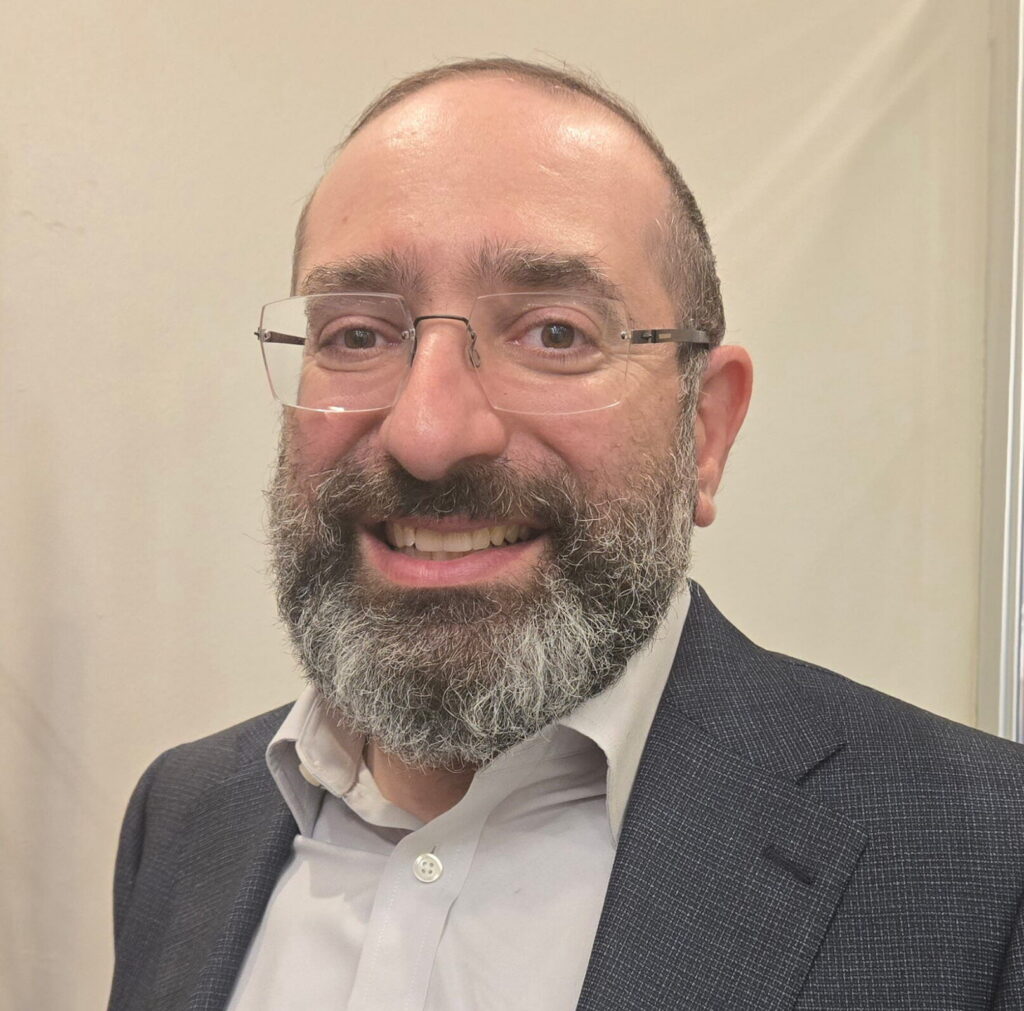
Unaffiliated congressional candidate Shimon Blau, a Denver doctor, has qualified by petition for the general election in Colorado’s 1st District, where Democrat Melat Kiros defeated 15-term U.S. Rep. Diana DeGette in last month’s primary, the Colorado Secretary of State’s Office...

Colorado produce not tied to nationwide cyclospora outbreak, agriculture officials say
Marissa Ventrelli
marissa.ventrelli@coloradopolitics.com
Updated 19 hours ago
There is no indication that the recent outbreak of cyclospora, a fecal parasite that has contaminated food and water across nearly every state, can be linked to produce grown in Colorado, according to the state’s Department of Agriculture. “Colorado growers...

UNC opens College of Osteopathic Medicine
Marissa Ventrelli
marissa.ventrelli@coloradopolitics.com
Updated 1 day ago
The University of Northern Colorado held a grand opening for its new College of Osteopathic Medicine on Friday, with Gov. Jared Polis in attendance to celebrate the culmination of a two-year, $127.5 million project. The project was funded through legislation...
Colorado equal pay law does not require plaintiffs to allege gender-based retaliation, appeals court finds
Michael Karlik
michael.karlik@coloradopolitics.com
Updated 15 hours ago
The 2019 Colorado law aimed at rooting out pay discrimination on the basis of sex does not require a plaintiff to allege their employer retaliated against them for sex- or gender-related reasons, the state’s second-highest court decided on Thursday. Lawmakers...
PREV
PREVIOUS

Public health emergency provisions still in effect at state Capitol for 2022
Public health provisions put in place to allow the Colorado General Assembly to operate during the COVID-19 pandemic will still be in effect when lawmakers convene later this week for the 2022 legislative session. A memo released by Legislative Council, which staffs committee hearings, said members of the public can participate in those hearings by either […]

State Supreme Court rules home-defense law applied to Colorado Springs man who killed intruder
The basement of a Colorado Springs apartment building was covered under the state law that permits deadly force in defense of a home, the Colorado Supreme Court ruled on Monday. The decision upholds a lower court’s determination that Patrick Rau was able to claim immunity from prosecution for shooting and killing Donald Russell in 2017. […]