

Following reversals of DUI convictions, Supreme Court ponders if prosecutors can seek second trial

When the Colorado Supreme Court decided last year in favor of a higher threshold for proving felony drunk driving offenses at trial, the ruling resulted in dozens of DUI cases being sent back to the lower courts with instructions to reverse the felony convictions.
But now that First Judicial District Attorney Alexis King is attempting to try one man a second time for his offense, the members of the Court must decide whether the prohibition on double jeopardy prevents her and prosecutors around the state from doing so.
On Tuesday, the justices heard oral arguments in the case of Kevin Viburg, who served a sentence for felony driving under the influence after prosecutors charged him in 2016 and a jury found him guilty. DUI is a misdemeanor in Colorado, unless a person has at least three prior convictions. Then it becomes a felony, with a correspondingly harsher sentence.
The procedure in Viburg’s case — and many others — was for the jury to render a guilty verdict for misdemeanor DUI beyond a reasonable doubt. Afterward, the trial judge determined whether, by a preponderance of the evidence, Viburg had three prior convictions. The judge then enhanced the sentence to a felony, which was the intent of the lawmakers who sponsored Colorado’s felony DUI law.
Then in November, the Supreme Court struck down that practice. By a 4-2 decision in Linnebur v. People, the justices concluded that the prosecution needed to prove the existence of the prior convictions to the jury, not the judge. In doing so, the Court left unanswered the question of whether it was legal for the government to seek a second trial.
“This is unique: the defendant served the full sentence and here we are, facing the possibility of putting the defendant through another trial,” observed Justice Richard L. Gabriel during oral arguments.
Earlier this year, a Jefferson County District Court judge denied Viburg’s motion to dismiss the felony DUI charges against him for the same 2016 offense. Viburg appealed directly to the Supreme Court, citing the general constitutional protection against being prosecuted twice.
“We have a valid verdict in this case. We have an untouched, valid verdict in this case,” Deputy State Public Defender Meredith O’Harris told the justices, referring to the fact that Viburg still stands convicted of a misdemeanor, with a reversal only of his sentence enhancement.
She argued that double jeopardy prohibits the government from seeking a second trial to get another opportunity to present evidence it did not offer at the first trial. Moreover, there were questions about what another conviction would mean logistically for Viburg.
“Would a second verdict override, or merely supplement, the first conviction? Does the original verdict have any significance at a successive jury trial for the same offense? Which conviction prevails?” she wrote in her court brief.
By contrast, the government believed prosecutors should have “one fair opportunity” to present their evidence to the jury about all elements of an offense — which now includes the proof of three prior convictions.
“I want to touch on the idea of governmental oppression,” said Colleen R. Lamb, appellate deputy district attorney in King’s office. “You see this theme running through double jeopardy cases. And the courts have determined that in situations where people have not had the full opportunity under the correct legal standard to present their case, that is not an example of governmental oppression.”
Lamb framed a retrial instead as an “opportunity” for proceedings that are free from legal error.
“From the defendant’s perspective, it certainly feels like governmental oppression because he gets run through the mill twice,” responded Justice William W. Hood III.
Although double jeopardy can bar retrials for certain reasons, like when evidence is insufficient to sustain a conviction or the government violates the speedy trial deadline, the Court of Appeals regularly orders new trials in instances where a trial court made a procedural error. As recently as September 2, a panel of appellate judges held off on answering the double jeopardy question in a DUI appeal, noting the Viburg case would soon be before the Supreme Court.
The case is People v. Viburg.
Colorado Politics Must-Reads:

Colorado board permits state to appeal injunction against arthritis drug price cap
Marissa Ventrelli
marissa.ventrelli@coloradopolitics.com
Updated 14 hours ago
A Colorado board voted Friday to allow the Attorney General’s Office to fight an injunction against a price cap on a drug that treats arthritis. A U.S. district court judge had granted the company Amgen a preliminary injunction, temporarily blocking...

Federal judge rejects constitutional claims, ‘expressions of hatred’ by Club Q defendant
Michael Karlik
michael.karlik@coloradopolitics.com
Updated 14 hours ago
A federal judge rejected a defendant’s claims that he received constitutionally ineffective assistance of counsel while facing federal hate crime and firearms charges for murdering five people at a Colorado Springs LGBTQ nightclub in 2022. Anderson Lee Aldrich is serving...

Divided 10th Circuit upholds Colorado congestion fee on car rentals
Michael Karlik
michael.karlik@coloradopolitics.com
Updated 10 hours ago
The Denver-based federal appeals court concluded on Monday that a 2024 “congestion impact fee” that lawmakers imposed on short-term vehicle rentals did not conflict with a federal prohibition on certain airport-related charges. Beginning in the 1970s, Congress began limiting the...
10th Circuit dismisses woman’s lawsuit following 10-year attempt to undo restraining order
Michael Karlik
michael.karlik@coloradopolitics.com
Updated 4 days ago
The Denver-based federal appeals court rejected a woman’s challenge on Friday to a restraining order imposed on her more than a decade ago, finding that she cannot credibly claim she will be prosecuted for violating the restraining order through her...
10th Circuit dismisses woman’s lawsuit following 10-year attempt to undo restraining order
Michael Karlik
michael.karlik@coloradopolitics.com
Updated 4 days ago
The Denver-based federal appeals court rejected a woman’s challenge on Friday to a restraining order imposed on her more than a decade ago, finding that she cannot credibly claim she will be prosecuted for violating the restraining order through her...
Colorado equal pay law does not require plaintiffs to allege gender-based retaliation, appeals court finds
Michael Karlik
michael.karlik@coloradopolitics.com
Updated 3 days ago
The 2019 Colorado law aimed at rooting out pay discrimination on the basis of sex does not require a plaintiff to allege their employer retaliated against them for sex- or gender-related reasons, the state’s second-highest court decided on Thursday. Lawmakers...
Hudson faces lawsuit over ICE detention facility
Nicole C. Brambila
nicole-c-brambila@coloradopolitics.com
Updated 4 days ago
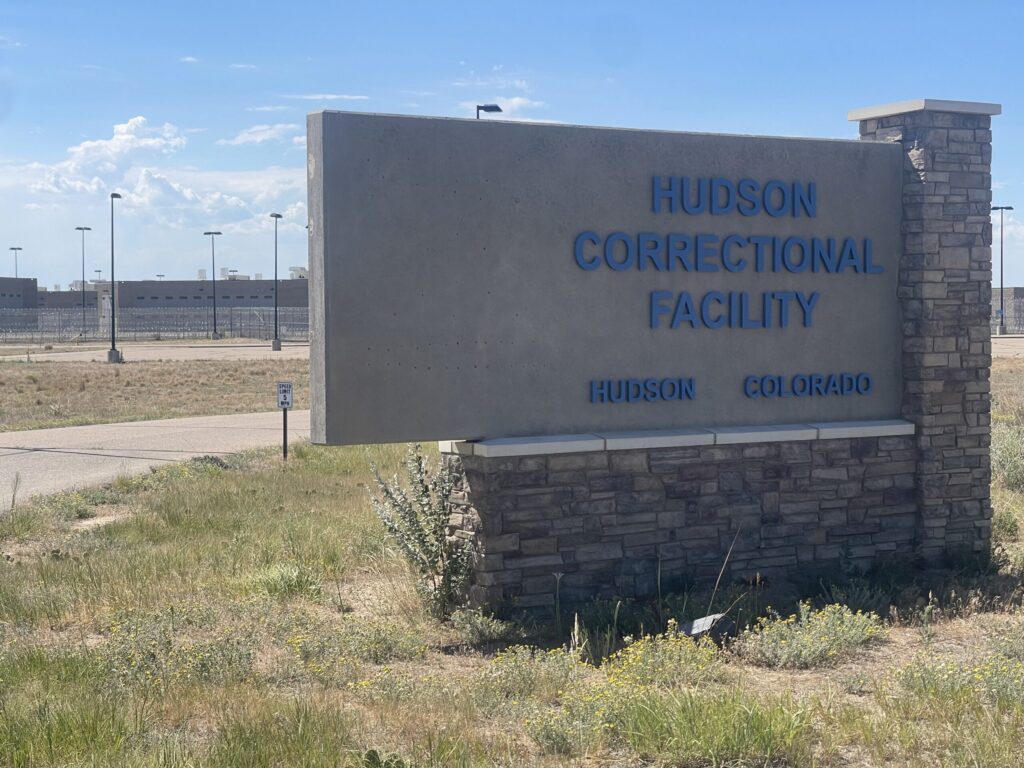
A nonprofit organization filed a lawsuit against the Town of Hudson Wednesday, challenging plans to reopen a former federal prison in the town as a U.S. Immigration and Customs Enforcement detention facility. Together Colorado, along with Janet E. Carlson, filed...
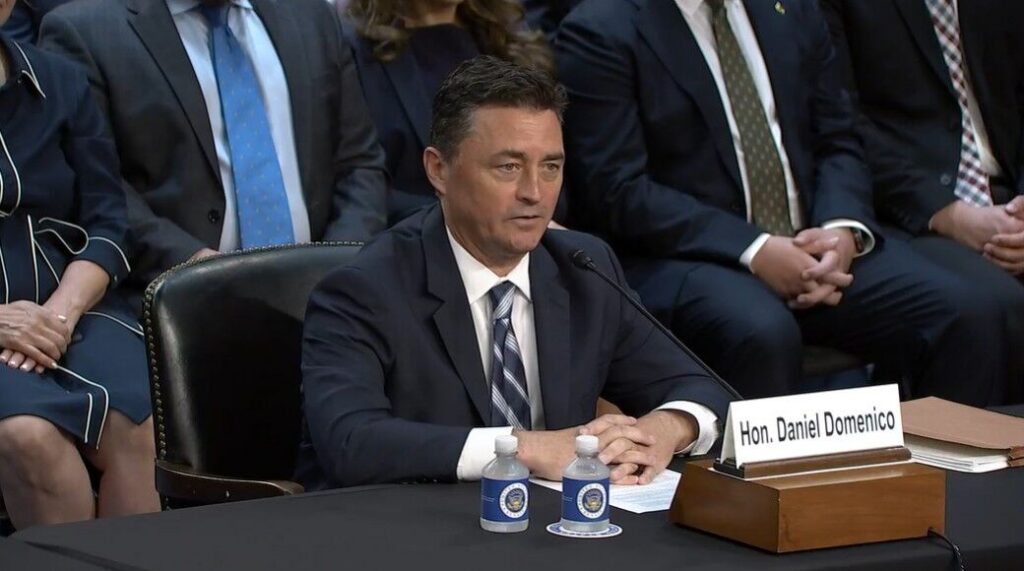
Senate committee advances Trump’s 10th Circuit nominee, as Domenico responds to questions about delays
Michael Karlik
michael.karlik@coloradopolitics.com
Updated 4 days ago
The U.S. Senate Judiciary Committee advanced President Donald Trump’s nominee to the Denver-based federal appeals court on Thursday by a party-line vote of 12-10. U.S. District Court Judge Daniel D. Domenico, who was Trump’s first-term appointee to Colorado’s federal trial...
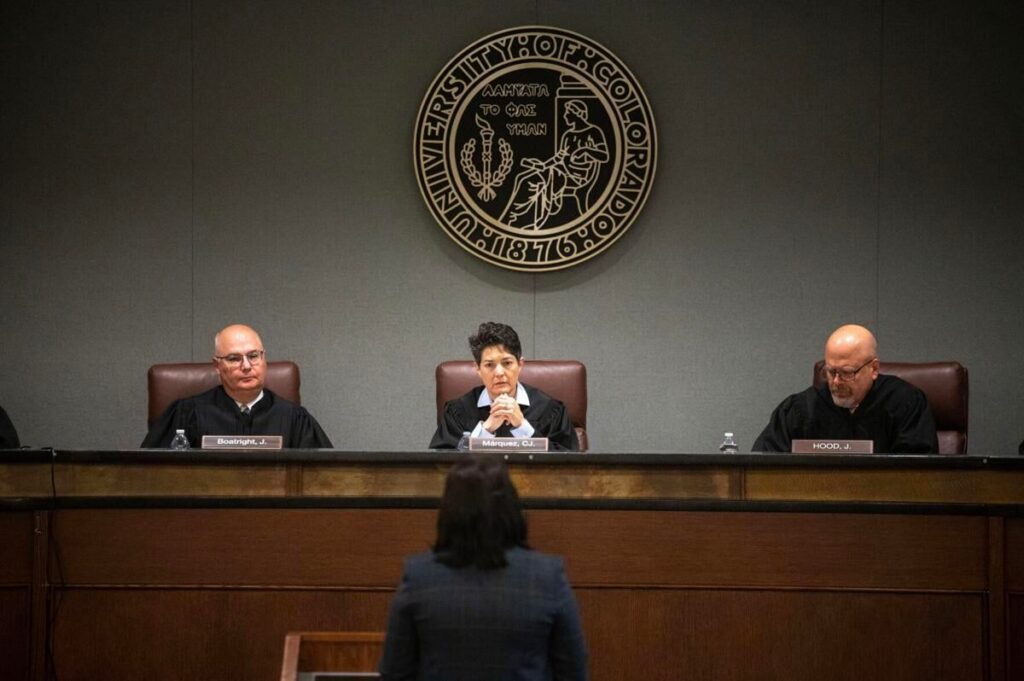
Colorado justices to hear embryonic donation dispute
Michael Karlik
michael.karlik@coloradopolitics.com
Updated 5 days ago
The Colorado Supreme Court announced on Monday that it will decide whether lower court judges properly applied its framework for adjudicating disputes over the fate of pre-embryos, in which one person wants to use them to become a parent and...
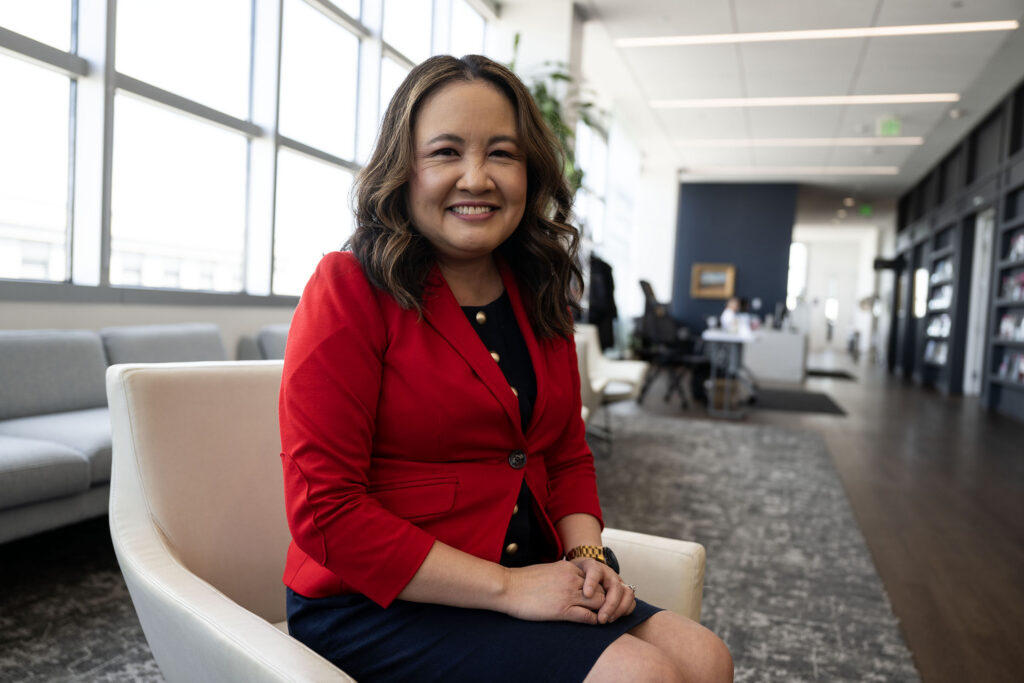
Isolation, emotion, persona: Colorado judicial programming prepares people for life on the bench
Michael Karlik
michael.karlik@coloradopolitics.com
Updated 5 days ago
As a trial judge and now as a member of the Colorado Supreme Court, Justice Carlos A. Samour Jr. has heard the view that being a judge is isolating. “In neither court have I felt isolated. I’ve always interacted a...
PREV
PREVIOUS

Supreme Court weighs role of race in Latino juror's dismissal
The Colorado Supreme Court is weighing what to do with the conviction of a man who kidnapped, raped and attempted to murder a teenager in Denver decades ago, but whose trial may have been rendered unfair by excluding a juror of color because of the juror’s race. On Tuesday, members of the Court heard oral […]

Appeals court orders release or sentence reduction for Colorado juvenile serving 108 years
If the state courts in Colorado do not modify the sentence of a man serving 108 years for crimes he committed as a juvenile, the federal appeals court based in Denver has ordered his release to comply with U.S. Supreme Court precedent. The Supreme Court decided in 2010 that a life sentence without the meaningful […]