

State geographic naming board begins tackling controversial name changes
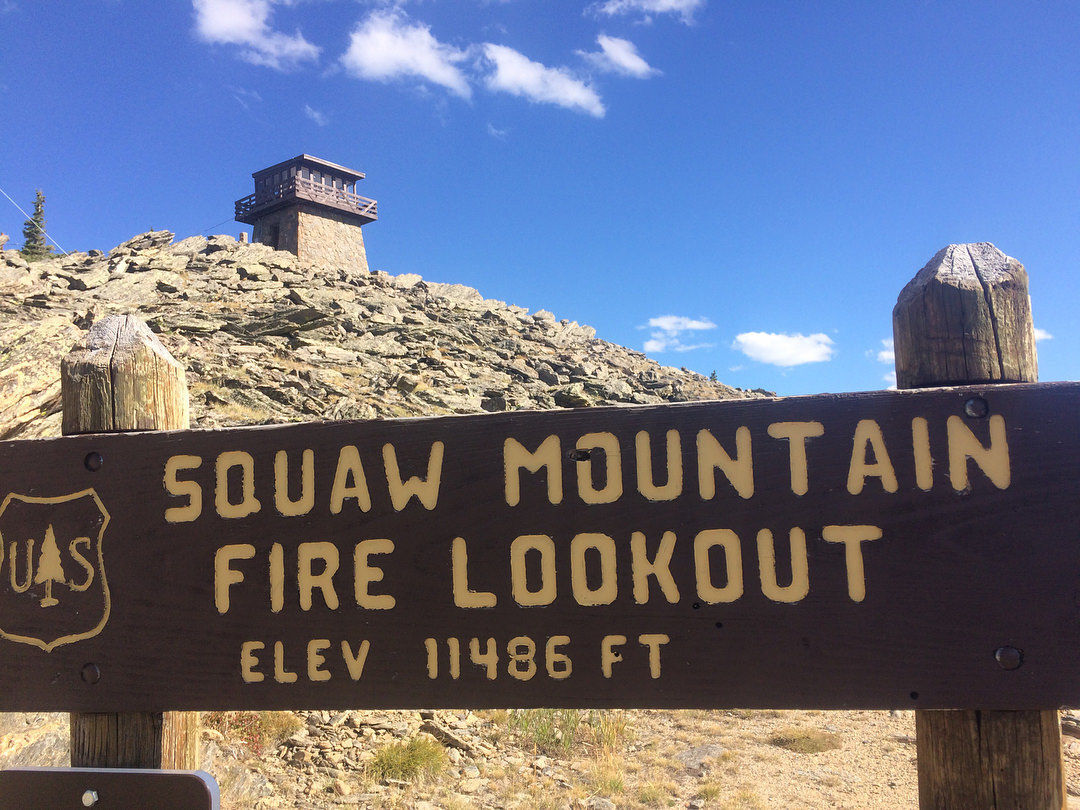
The state board charged with reviewing name changes for geographic landmarks with offensive names on Thursday rejected two requests and started reviews of more controversial proposals.
The Geographic Naming Board, part of the Department of Natural Resources, has dozens of requests before it, with the most controversial being the renaming of Mt. Evans in Clear Creek County.
Thursday’s meeting reviewed changing the name of Squaw Mountain (or “S-Mountain,” as most people called it Thursday) in Clear Creek County, north of Mount Evans, to Mestaa’?hehe (pronounced mess-ta-HAY) Mountain, as well as looking at two Delta County landmarks named “Negro.” The board did not vote on the newer proposals but will continue to review them in future meetings.
The board also turned down two proposals originating in San Miguel County to change the name of V H Pasture Reservoir to Elk Springs Reservoir and to change Vurl Reservoir to Wapiti Reservoir.
The request came from KL Spear of Placerville, who acquired the land around VH Pasture Reservoir in 2014 as part of a land trade with the U.S. Forest Service, according to the proposal. He intends to put the land into a conservation easement for preservation of its deer and elk habitat. The reservoir’s original name is a bit of a mystery, but the proposal hints that it may have belonged to a cattleman who used the land for grazing. Documentation from the local historical society indicated the cattleman was likely Hans Von Hagen, an early settler in nearby Ridgeway.
San Miguel County commissioners took no position on the request, and the Forest Service was not opposed, according to Jennifer Runyon of the federal U.S. Board on Geographic Names, part of the U.S. Geological Survey (USGS). Runyon noted during an April meeting that the federal board doesn’t care for name changes for lands with historical ties just because the land changes hands.
The board’s recommendation now goes to the governor, who would forward it to the federal board.
The proposal to rename S-Mountain carries some pressure from the federal board, according to comments made by Runyon in June. That pressure is coming from people who have been waiting four years for the name change, she told the Colorado board.
The federal proposal said that “Mestaa’?hehe was the daughter of White Thunder, a Cheyenne tribal leader. She married William Bent, the founder of Bent’s Fort, located in present day Otero County. At Bent’s Fort, Mestaa’?hehe served as translator and helped negotiate trade deals between white settlers and native groups. Mestaa’?hehe died during the birth of her fourth child. A modern historian describes “Mistanta [sic] and Bent as ‘the central business and social leaders of the region.'”
Originally, the proposal was submitted in 2017 by Sarah Hahn Campbell, a Denver high school English teacher. At that time, she asked the name be changed to Mount Mistanta. But that was withdrawn in favor of the preferred spelling offered by the U.S. Forest Service on behalf of Teanna Limpy, the Tribal Historic Preservation Officer of the Northern Cheyenne Tribe. The term “squaw” is offensive to Indigenous women, based on the native word for vagina.
The Squaw Mountain name has been on USGS maps since 1923, the proposal said. There are two other summits named Squaw Mountain, three streams named Squaw Creek and 36 features, both natural and man-made, with the word “Squaw,” including Squaw Pass in Clear Creek County. Runyon said the Colorado board could be proactive on suggesting name changes and could do so for Squaw Pass.
Limpy told the board Thursday she supports the current proposal and talked about Mestaa’?hehe’s history.
Clear Creek County Commissioner Randall Wheelock, a member of the naming board, said that the county is waiting on the board to take action on the “S-word” mountain so they can inform citizens on name changes to other features, including roads. Wheelock said the county’s intent is to rename those other roads with offensive names. The county commissioners held several meetings to educate residents and non-residents about the history, and Wheelock estimated 95% of the residents support the name change. “We recognize it’s our place to follow and learn.”
No one spoke against the proposal during public comment Thursday. Those who spoke in favor of the proposal often referred to restorative justice and the healing power that changing names has.
Rick Williams, a Lakota Cheyenne elder who initiated the effort to ask Gov. Jared Polis to rescind two anti-Native peoples proclamations from Gov. John Evans, spoke in support of the name change. “It’s an honorable thing to do,” he told the board.
Now is the time to restore and reclaim justice, and bring back communities deserving of this justice, said Renee Millard-Chacon of Spirit of the Sun, a Denver non-profit founded by indigenous women to promote education, health and wellness for Native youth and young adults.
Through tears, Jan Iron, who is Diné (formerly known as Navajo), said Colorado is the land of the Cheyenne, Arapahoe Lakota, Pawnee, Ute and other tribes. “To know that this mountain was desecrated with this name really saddens me. I appreciate the efforts to change it to something more appropriate.” Iron said the name change is common sense. “Pass it through with no hesitation, it’s only right.”
“I cannot imagine anything passing for a sensible argument to keep the name,” said board member Patty Limerick of CU Boulder. Referring to Williams’ comments, she said “honorable” should be the board’s steering mechanism.
The federal board recently received a proposal to change Squaw Mountain in Teller County, near Victor, to Sunnyside Mountain, according to Runyon. Beth Hoover of Colorado Springs also proposed renaming Squaw Gulch, also in Teller County, to Mound Gulch, which was once the name of a city in the area.
Another proposal under consideration by the Colorado board is to change the name of Negro Creek in Delta County to either Hops Creek or Clay Creek. Backing the change: the Delta County Board of Commissioners. The commission held a naming contest at Cedaredge High School, which came up with the names that the commission voted on. Hops refers to the area’s brewing history. There is a second Negro Creek, in Mesa County.
Delta County also is backing a second proposal, to change the name of Negro Mesa, also in Delta County, to Clay Mesa. The name has been on USGS maps since 1962.
The board has about two dozen proposals to consider, including four proposed name changes for Mount Evans (the standard is to consider the first one submitted) as well as name changes for geographic landmarks with the names Redskin, Chinaman and Kit Carson (a mountain in Saguache County).

Colorado board permits state to appeal injunction against arthritis drug price cap
Marissa Ventrelli
marissa.ventrelli@coloradopolitics.com
Updated 7 hours ago
A Colorado board voted Friday to allow the Attorney General’s Office to fight an injunction against a price cap on a drug that treats arthritis. A U.S. district court judge had granted the company Amgen a preliminary injunction, temporarily blocking...

Federal judge rejects constitutional claims, ‘expressions of hatred’ by Club Q defendant
Michael Karlik
michael.karlik@coloradopolitics.com
Updated 7 hours ago
A federal judge rejected a defendant’s claims that he received constitutionally ineffective assistance of counsel while facing federal hate crime and firearms charges for murdering five people at a Colorado Springs LGBTQ nightclub in 2022. Anderson Lee Aldrich is serving...

Divided 10th Circuit upholds Colorado congestion fee on car rentals
Michael Karlik
michael.karlik@coloradopolitics.com
Updated 3 hours ago
The Denver-based federal appeals court concluded on Monday that a 2024 “congestion impact fee” that lawmakers imposed on short-term vehicle rentals did not conflict with a federal prohibition on certain airport-related charges. Beginning in the 1970s, Congress began limiting the...

Space Force should measure workforce needs as it prepares to double in size, GAO report says
Mary Shinn
mary-shinn@coloradopolitics.com
Updated 13 hours ago
The Space Force needs more people. It’s just not precisely sure how many more. A Government Accountability Office report released earlier this month found that the youngest and smallest military branch does not have a process to consistently or accurately...

Colorado schools receive $24 million for free meals program
Marissa Ventrelli
marissa.ventrelli@coloradopolitics.com
Updated 7 hours ago
The Colorado Department of Education is providing Colorado schools with nearly $24 million in grant funding to implement a free lunch program. Approved by voters in 2022, the Healthy School Meals for All provides free breakfast and lunch to all...

Secret Service agent placed on administrative leave after arrest for near-deadly hazing ritual
Claire Carter
claire.carter@washingtonexaminer.com
Updated 14 hours ago
A Miami Secret Service agent in Florida was placed on administrative leave following his arrest on Sunday in connection with a near-deadly hazing incident at a University of Miami fraternity. Marquez Christopher Pinder, 29, was arrested alongside two other individuals...
Forest fire west of Sedalia prompts evacuations in Douglas County
Nicholas Fogleman
nicholas.fogleman@denvergazette.com
Updated 17 hours ago
Emergency crews are responding to a forest fire burning west of Sedalia, prompting evacuation orders for nearby residents Sunday afternoon. At about 5 p.m. Sunday, the Douglas County Sheriff’s Office issued an evacuation order for residents within a 2-mile radius...

Airstrikes have paused and talks are pressing forward. But can the US and Iran take the off-ramp?
The Associated Press
the-associated-press@coloradopolitics.com
Updated 17 hours ago
WASHINGTON (AP) — The U.S. military has paused its airstrikes on Iran after nearly two weeks of intensifying bombing, while diplomatic efforts have pushed forward to try to avert a return to all-out war. But it remains to be seen...
Penrose fortune paved the way for Colorado Springs to be a military, space and sports town
Mary Shinn
mary-shinn@coloradopolitics.com
Updated 17 hours ago
Colorado Springs is always working to catch the next big economic wave. “We’re always trying to figure out what the next thing is going to be,” explained Matt Mayberry, director of the Colorado Springs Pioneers Museum. In the early days,...

Colorado Politics Calendar July 27-Aug. 2
Rachael Wright, Special to Colorado Politics
rachael.wright@coloradopolitics.com
Updated 6 days ago
CoPo’s weekly political calendar will help you find political and public-policy events throughout Colorado. It includes candidate and issue campaign events, public policy meetings, court hearings, state and local party conventions, assemblies, debates, rallies, parades, speaking engagements, traveling dignitary appearances,...
PREV
PREVIOUS

Bennet touts $400 million measure to expand home health care, increase pay in field
U.S. Sen. Michael Bennet said Wednesday that he’s confident a massive spending package being assembled in the Senate will include legislation he’s pushing to expand home health care and boost pay for workers in the field. “Our home care workers provide vital services to families, seniors and people living with disabilities in our communities, but […]

Denver nonprofit sues city over zoning process for homeless encampments
A Denver-based nonprofit is suing the city, alleging Denver’s zoning administrator changed zoning to allow homeless encampments without input from the public, city council or the city’s zoning board. The suit was filed Wednesday in Denver District Court by Dan Burrows of the Public Trust Institute on behalf of four Denver residents and Denver Deserves […]