

Glenwood Canyon I-70 closure wreaks havoc on travel and the economy
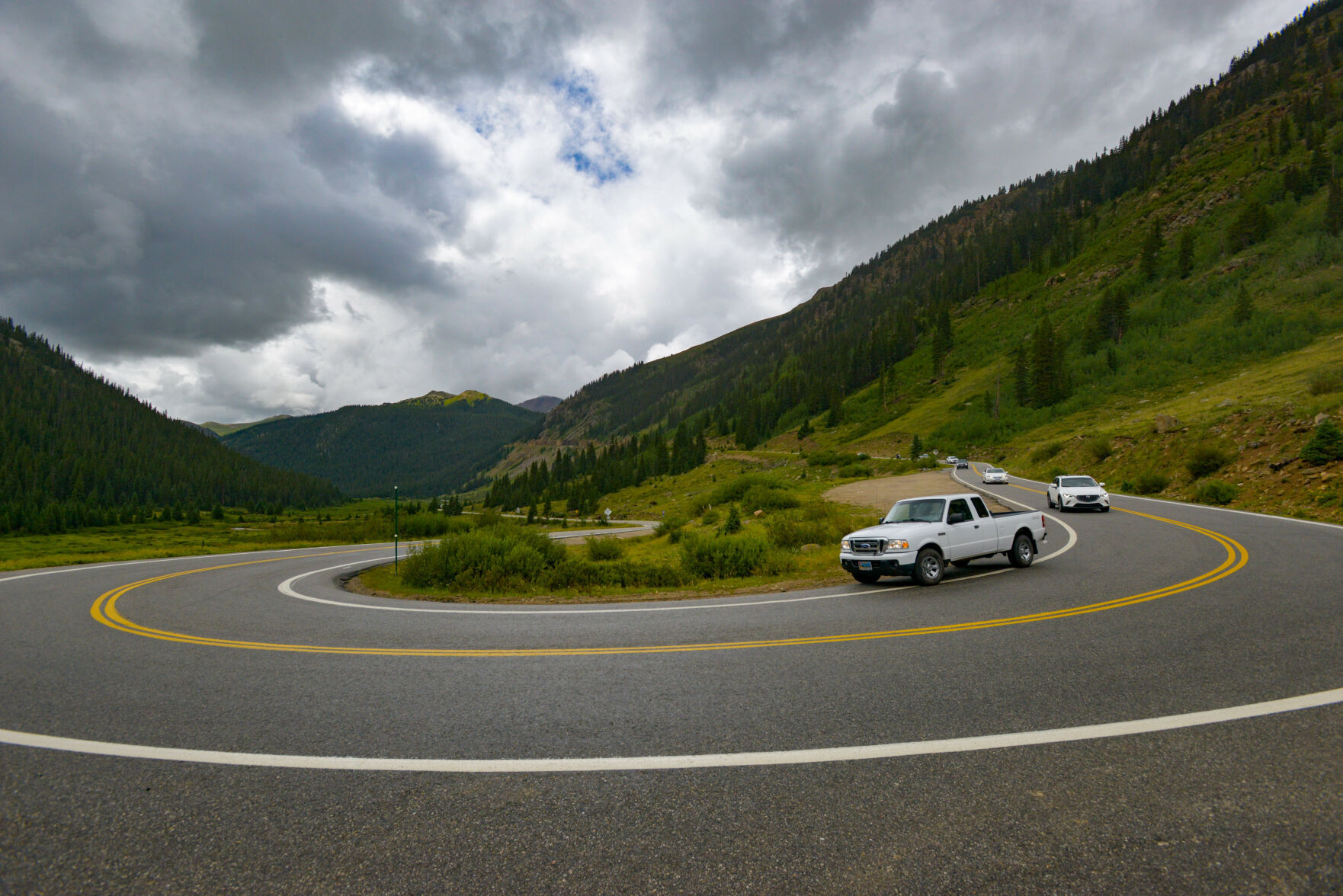
Fires, mudslides and the extended closure of Interstate 70 through Glenwood Canyon have created a perfect storm of economic and transportation problems for western Colorado that are likely to reverberate for years.
The disruptions to travel, supply lines, drops in tourism bookings, deliveries of gasoline, food and merchandise and problems caused by people unfamiliar with the area trying to navigate around the closure have added to the already-strained emergency response assets and frayed pretty much everybody’s tempers.
Hardest hit by economic and traffic woes are the towns along the Roaring Fork Valley from Aspen to Glenwood Springs and workers who have to commute over Cottonwood Pass between Gypsum and Glenwood Springs to get to and from work.
Gregg Macaluso, an?adjunct professor at the?University of Colorado Leeds School of Business?who teaches supply chain strategy and innovation, said the closure of one of only five major east-west interstate shipping routes magnified supply chain problems that were already impacted by an ongoing shortage of truck drivers and by the COVID-19 pandemic that have been affecting supply chains not only locally, but nationally for several years.
On July 29 and again on Aug. 1, unprecedented monsoon rains dumped as much as 4 inches of rain in an hour on the Grizzly Creek burn scar, causing multiple mudslides. At Blue Gulch the rainwater gathering more than 3,400 feet above the canyon floor soared over a 200-foot cliff half a mile north of I-70 and poured into the ravine below. When the cascade of mud and rock hit the highway, both upper and lower decks of the roadway were covered with up to 10 feet of debris.
The storms have been characterized as a “500-year event,” which means that climatologists calculate there is a 0.02% chance of an event of that magnitude every year.
On Monday, Gov. Jared Polis and Department of Transportation Director Shoshana Lew requested $116 million in disaster relief funds from the Federal Highway Administration to repair I-70, improve a bypass route and mitigate hazards on the slopes above the highway. The Federal Highway Administration responded Tuesday to the request, one business day later, with a grant of $11.6 million under its quick-release process, 10% of the total Polis requested.
Glenwood Springs, on the west end of the canyon, was cut off from easy access by travelers and tourists as well as suppliers, resulting in an overall business downturn with canceled reservations, empty hotel rooms and some empty shelves in stores.
Glenwood Springs Mayor John Godes says tourism has taken a huge hit, what with the fire closing the canyon last year, the COVID-19 pandemic and now the mudslides.
“I-70 is a major artery throughout the state, so statewide, region-wide, within our local region and the region of western states, it’s a very disruptive natural occurrence,” Godes said.
“It’s really, really hurt our economy,” he said. “Hotel rooms are vacant. The impact to the economy is very similar to the Grizzly Creek fire when it shut down I-70. Glenwood Springs was a ghost town. We rely on visitors, the local economy relies on that. Not having that ability to get people from the Front Range or wherever to be able to come out here to raft, to fly-fish, to soak in the hot springs, it’s really crippling for our economy.”
Godes wasn’t able to say precisely what the fiscal impact of this long-term closure might be, but he compared it to the fire that set up the situation the city is facing now.
“I do know that when the Grizzly Creek fire hit, in the middle of COVID, there was a lot of things that were going on, obviously, but it cratered our sales tax revenue by about 20%,” Godes said. “So any prolonged disruption of I-70 is just very difficult for us to get through.”
Godes said his expectations for the public stopping to spend money in Glenwood haven’t panned out, and the increase in traffic on Colorado Highway 82 caused by travelers using Independence Pass into Aspen haven’t helped much either.
“It’s devastating to our businesses to hear words like ‘severely damaged’ and ‘disaster,’ said Lisa Langer, director of tourism promotion for the Glenwood Springs Chamber of Commerce. “When we hear those words, it makes it sound like we’re not open, and Glenwood Springs is open and looking forward to greeting visitors.”
Langer said that before the mudslides, “We were actually running 30 to 40% over our figures, pretty much across the tourism spectrum, of 2019. We were doing really well this year.”
Inundated with shortcut traffic
In Aspen, legions of automobiles coming down from Independence Pass clog up East Cooper Avenue – as Highway 82 is known there – that runs through Aspen and down the valley to Glenwood Springs, passing through villages and towns including Basalt, El Jebel and Carbondale.
All that through traffic headed west to I-70 ends up in Glenwood, clogging its streets but not leaving much money behind in the process, Godes said.
“When the Grand Avenue Bridge was replaced in 2017, I was one of these optimistic people that thought all these commuters from Aspen are going to stop at our restaurants and just sit and wait for traffic to clear a little bit and then continue,” he said. “That did not happen. People stayed in their cars with their windows rolled up, their air conditioning on, their music playing and just gritted through it.”
Pitkin County Sheriff Joe DiSalvo is even less pleased with the traffic on Independence Pass. He says the sheer volume of traffic trying to get around Glenwood Canyon, not to mention those who don’t pay attention to the many signs limiting vehicle length to 35 feet or less on the pass, are causing traffic jams, delays of up to 8 hours and serious safety problems. There are three narrow one-lane sections of the road near Aspen that catch large vehicle drivers unaware.
“The road is just not built for this kind of traffic,” DiSalvo said. “The other day we had a car on fire up on the pass and there was no way we could get a fire truck up there. Fortunately the car burned out without starting a forest fire.”
Getting any kind of emergency equipment up from Aspen to deal with accidents or illness has become a lengthy process. The alternative for emergency response is from Leadville, some 58 miles from Aspen.
It’s not all bad news
There are some winners on the CDOT-approved northern detour that takes drivers through Silverthorne, Steamboat Springs, Craig, Meeker and Rifle, a 220-mile, 4-hour detour.
Speaking of the detour, Macaluso said, “My estimate is that it’s not a big deal, but when you multiply it against the fact that there are less available drivers, there will be a ripple effect. It won’t be just the length of time of the detour. What that effect is is hard to gauge, it depends on the commodity and the circumstance, but it’s not trivial.”
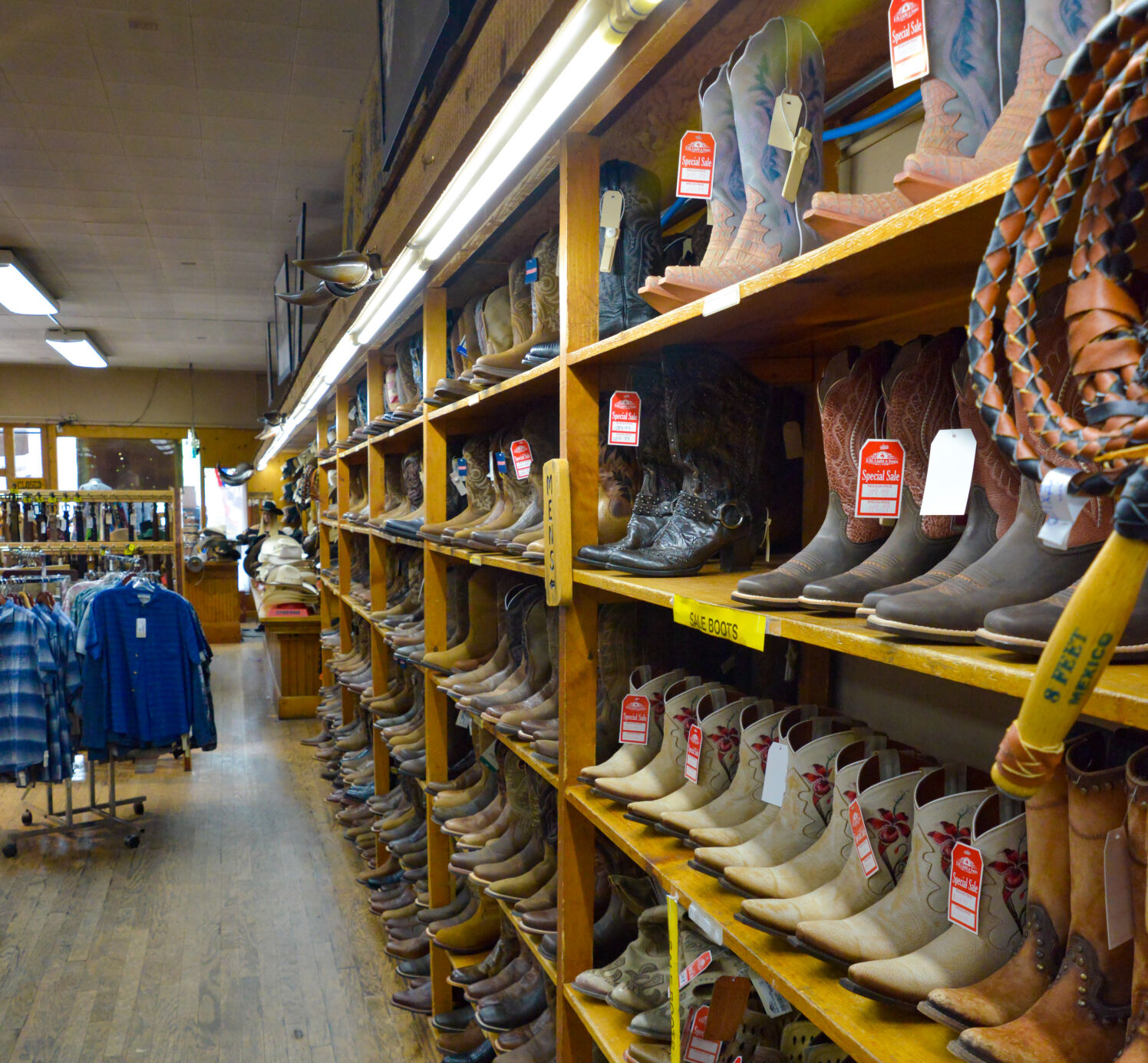
Lindsay and Chris Dillenbeck, fifth-generation owners of Steamboat Springs’ iconic F.M. Light & Sons western clothing, boots and hat store, said all the traffic has been great for business.
“It’s too bad that everyone has to be rerouted and take this long detour, but we hope that while they do they get to enjoy some beautiful scenery and maybe stop in our town and get a taste of the Wild West, which is still here.”
Drivers on the detour are clogging up U.S. Highway 40, which is also Steamboat’s main drag, Lincoln Avenue, thanks to the 25 mph speed limit and numerous stoplights. Delays can be 30 minutes or more just to get through town.
As a result, unlike Glenwood, many people are taking a break and patronizing downtown businesses rather than sit in a seemingly endless line of semi-trucks, cars and RVs moving at a snail’s pace.
F.M. Light & Sons opened for business Nov. 9, 1905. Its iconic yellow and black signs along the highways leading into Steamboat can be seen as far as 50 miles out in all four directions. The signs were erected in the 1930s by Dillenbeck’s great-great grandfather, Clarence Light, and the Dillenbecks continue to maintain them.
“It’s our job. My husband and I go out and paint signs and fix them multiple times a year,” said Lindsay. “It’s still a family business and we’re working hard to maintain it.”
By keeping them in repair they maintain their right to have them, something now largely prohibited by the Lady Bird Johnson Highway Beautification Act of 1965, which prohibits most advertising signs and billboards along federally-funded highways like Route 40.
Further north, in Craig, the restaurants along Victory Way and Pershing Street, aka Route 40 and Colorado Highway 13, are also experiencing heavy traffic. But Dr. Chris Senseney, professor of civil engineering at the University of Colorado, says its streets, along with most of the roadways along the detour route, are not designed for this amount of heavy truck traffic, which will result in premature deterioration of the pavement that will be expensive to repair.
Speeding and improper passing are a big problem on the detour as well. While it’s not known how many traffic tickets have been issued, a worker at the Moffat County Public Safety Center, which houses the Moffat County Sheriff’s Office, Craig Police Department and Colorado State Patrol, said law enforcement has issued “a boatload of warnings.”
Down Colorado 13, according to Emily Mohr of the Meeker Chamber of Commerce, the “not too sleepy” town is even less enamored of the trucks and traffic, which makes it difficult at times to get across Market Street because there are no traffic lights, and drivers seem to think they don’t have to slow down through town.
Meeker is a recreational destination for off-road vehicle touring, fishing and camping in the summer, hunting in the fall and snowmobile excursions in the winter.
There’s not much drop-in tourism by impatient drivers frustrated by the 220-mile detour they’ve been forced onto, but once off Market Street, historic Main Street still enjoys plenty of bucolic small-town charm, with visitors willing to take a break being able to enjoy the shops and restaurants without the bustling crowds in Steamboat.
The western terminus of the northern detour is Rifle, where workers flag eastbound traffic diverted off I-70 at the West Rifle exit onto the Highway 13 bypass on the west side of town.
Only passenger vehicles and local delivery trucks headed for towns to the east such as Silt, Newcastle, Glenwood Springs and destinations up the Roaring Fork Valley like Carbondale and Aspen are allowed back onto I-70 eastbound.
CDOT is working hard to open up two-way traffic on the bottom deck as soon as possible, and Gov. Polis is requesting federal aid that will speed up the process. Until then traffic through the canyon will travel back to the 1970s, to a time when everyone had to slow down to 50 miles per hour and enjoy the scenery for 15 miles on what was once the last remaining segment of two-lane interstate highway in the nation.




Gazette family of papers rakes in 64 awards at 2025 Colorado Press Association Better News Contest
Elizabeth Pond
elizabeth.pond@denvergazette.com
Updated 4 hours ago
The Gazette family of newspapers won 64 awards in the Colorado Press Association’s annual Better News Contest — a whopping 36 more than the three papers collectively won last year. Colorado Politics raked in 27, The Colorado Springs Gazette took...

What courageous citizenship really looks like | Vince Bzdek
Vince Bzdek
vince.bzdek@gazette.com
Updated 1 day ago
By Vince Bzdek What exactly is courage? Ernest Hemingway famously called it grace under pressure. Mark Twain wrote that “courage is resistance to fear, mastery of fear — not absence of fear.” C.S. Lewis refined that even more: “Courage is...

The coming election and mischief in the making | SONDERMANN
Eric Sondermann
eric-sondermann@coloradopolitics.com
Updated 4 days ago
America’s tribalism is such these days that we struggle to even agree on the basic rules. Elections have always been hotly contested. As the saying goes, “Politics ain’t beanbag.” The process has long involved elements of nastiness and underhanded conduct....

Colorado Politics Calendar Aug. 31-Sept. 6
Rachael Wright, Special to Colorado Politics
rachael.wright@coloradopolitics.com
Updated 4 days ago
CoPo’s weekly political calendar will help you find political and public-policy events throughout Colorado. It includes candidate and issue campaign events, public policy meetings, court hearings, state and local party conventions, assemblies, debates, rallies, parades, speaking engagements, traveling dignitary appearances,...
Tancredo in Running for Dept. of Ed. Position | A LOOK BACK
Rachael Wright, Special to Colorado Politics
rachael.wright@coloradopolitics.com
Updated 4 days ago
Forty-five years ago this week: “I know that my name has been placed before the Secretary of Education, and I know that I’m one of three or four being considered for the Department of Education’s Region 8,” said state Rep....
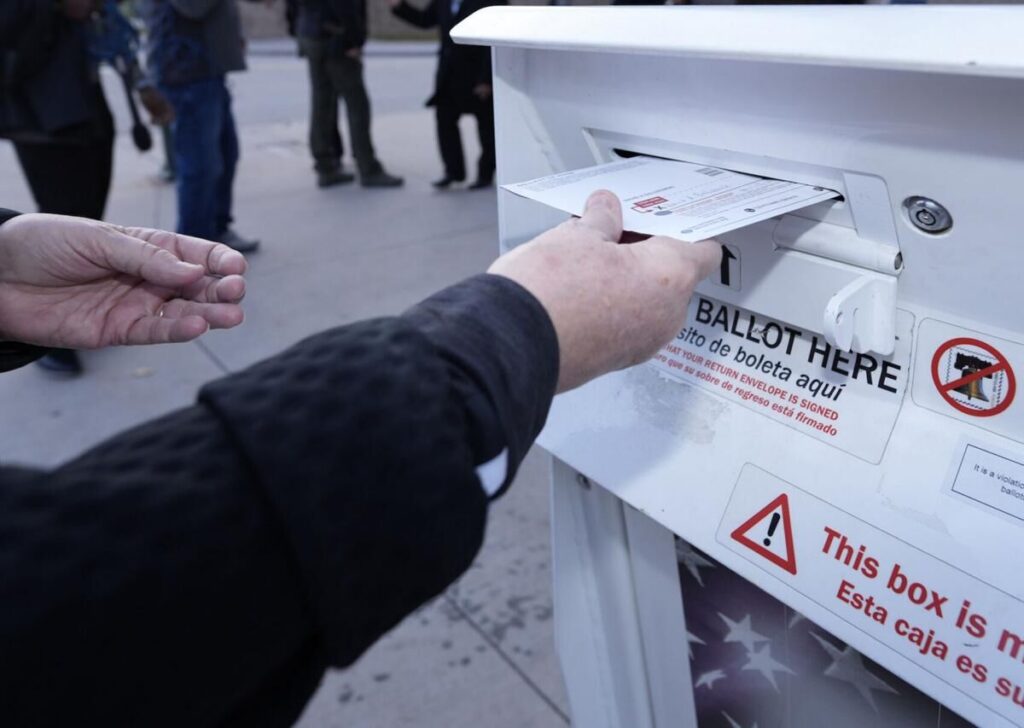
Colorado measure adding ID checks to mail-in voting qualifies for ballot
Marissa Ventrelli
marissa.ventrelli@coloradopolitics.com
Updated 2 days ago
A ballot initiative that would require voters to include additional information on mail-in ballots has qualified for the November election, according to the Secretary of State’s Office. Backed by El Paso County Treasurer Chuck Broerman and former Deputy Secretary of...

Colorado election website error exposes personal data of confidential voters
Marissa Ventrelli
marissa.ventrelli@coloradopolitics.com
Updated 2 days ago
A system update accidentally lifted protections on confidential records in Colorado, exposing dozens of voters’ personal information, according to the Secretary of State’s Office. The limit that normally blocks access to confidential voter profiles was inadvertently disabled during an update...
PUC adds weekly comment after killing private talks
Scott Weiser
scott.weiser@gazette.com
Updated 2 days ago
The Colorado Public Utilities Commission will take public comment at the start of every commissioner’s weekly meeting beginning Sept. 9 as part of its new transparency mandate, the commission announced, expanding a slot previously limited to the second Wednesday of...
10th Circuit overturns framework for sentencing probation violators by 11-1
Michael Karlik
michael.karlik@coloradopolitics.com
Updated 1 day ago
In a rare decision by all 12 of its full-time judges, the Denver-based federal appeals court ruled in a lopsided vote on Friday that one of its members created a sentencing process for probation violators that was out of step...
Federal judge dismisses excessive force lawsuit against Colorado Springs, officer
Michael Karlik
michael.karlik@coloradopolitics.com
Updated 1 day ago
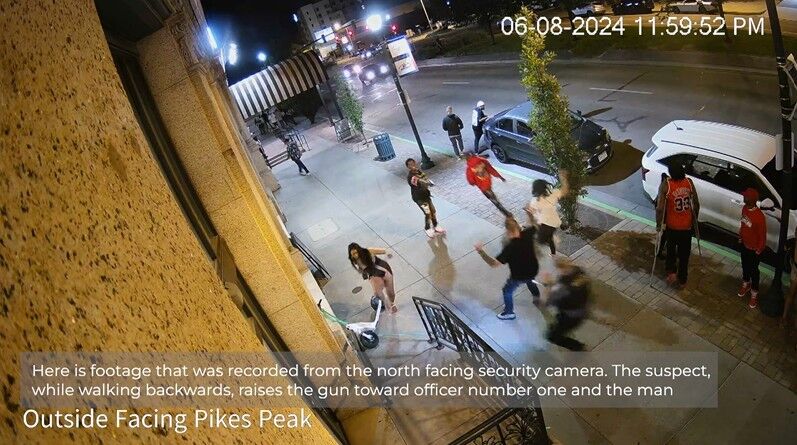
A federal judge concluded last week that a Colorado Springs police officer could not be held liable for shooting a suspect three times after the man menaced two victims with a gun and fled the scene. Al’morion Germany was involved...
PREV
PREVIOUS

10th Circuit reinstates First Amendment lawsuit of Muslim inmate forced to shave beard
Reversing a lower court’s ruling on Tuesday, the federal appeals court based in Colorado reinstated the lawsuit of a Muslim man against a state correctional officer for allegedly forcing him to shave his beard – despite a policy that allowed for beards as religious expression. A three-judge panel of the U.S. Court of Appeals for the […]

Mesa County Clerk Tina Peters slams Secretary of State's probe during appearance at symposium
Republican Mesa County Clerk Tina Peters isn’t responding to an order issued by Democratic Secretary of State Jena Griswold to turn over election equipment, video footage and documents after a password to county election equipment surfaced online. She may not be speaking to Griswold or responding to requests for comment, but that doesn’t mean Peters […]