

Changes to independent monitor appointment process pass first reading in Denver City Council

Denver’s City Council took a step Monday night toward handing over the power to appoint the head of the agency responsible for policing Denver’s police to a citizen-led volunteer oversight board.
The full council approved on first reading a pair of bills outlining a handful of city charter and code changes related to Denver’s Office of the Independent Monitor.
Among the series of changes, one bill gives appointment power of the monitor to Denver’s Citizen Oversight Board. If approved by the full council, the changes would go to a public vote on Nov. 2.
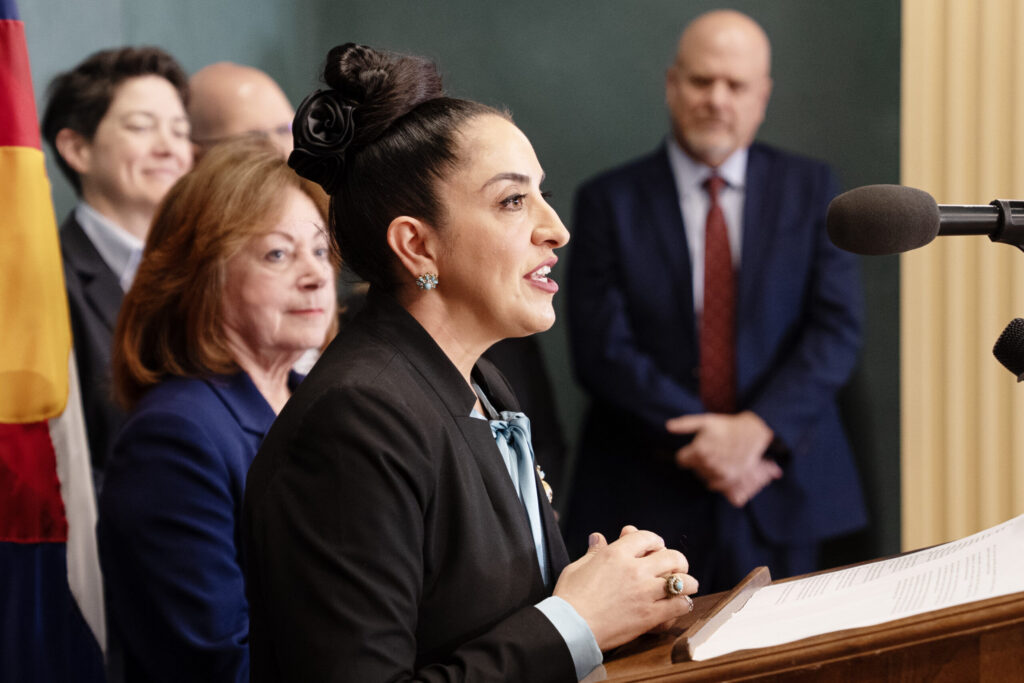
Council Pro Tem Jamie Torres, who represents Denver’s District 3, sponsors the bills. She told The Denver Gazette the ability for the monitor’s office to exist in the city’s charter outside of any elected section of the charter makes the office truly independent.
Currently, the mayor appoints a monitor – subject to City Council’s approval – from among nominees chosen by a five-member search committee headed by the chair of the Citizen Oversight Board. Torres and at-large Councilmember Robin Kniech have made clear the monitor’s office is not “broken,” but having a body that is different than the person who appoints the city’s heads of law enforcement appoint their watchdog is crucial for public trust.
“Folks, I think, out in the community are very aware of power and influence. And wanting to have our law enforcement oversight agent exist without that level political power and influence [is] a really important piece of objective oversight,” Torres told The Denver Gazette.
In a statement to The Denver Gazette, a spokesperson for Mayor Michael Hancock’s office said, “Mayor Hancock is not generally opposed to the proposal at this time.”
Under the new structure, City Council would still have confirmation power for the chosen monitor candidate.
The bills also would allow the monitor to hire their own independent counsel, and make employees of the Office of the Independent Monitor employed under Career Service, rather than employed at will. Career Service employees get certain process guarantees for human-resource matters such as hiring, firing, disciplinary and grievance issues.
Torres said classifying employees of the monitor’s office as Career Service employees is important to insulate them from retaliation when they make controversial findings or express unpopular opinions.
“The OIM and the COB should be able to have that kind of freedom of opinion and reporting without that fear of retaliation, or that their job hangs in the balance,” she said.
City code changes outlined in one of the bills would also require the Citizen Oversight Board to identify members of the monitor search committee within 60 days of the position becoming vacant, and would add two members to the committee. The new additions would include a mayoral appointee and a person who has had lived experience in the justice system.
The Office of the Independent Monitor has not had a permanent head since January, when the previous monitor, Nick Mitchell, stepped down. Gregg Crittenden has served as interim monitor.
District 9 Councilmember Candi CdeBaca has asked for an amendment to one of the bills to encode subpoena power for the independent monitor in the city charter, which is essentially Denver’s Constitution. She requested the change Monday in a meeting of a public safety working group convened to consider recommendations made by the Reimagining Policing and Public Safety Task Force, which released its report in May.
Torres replied she would check with the City Attorney’s Office to clarify whether the monitor currently has any power to subpoena.
The task force’s report recommended the monitor’s office have subpoena power to increase its access to evidence and documents in investigations. The office currently has limited authority to compel the Denver Police Department to cooperate with evidence collection in its investigations, and the task force’s report notes the monitor’s office had to rely on the police department for access to body-worn camera footage during its investigation of police response to last summer’s racial justice protests.
The bills come a year after CdeBaca direct-filed a bill, bypassing a committee process, to turn the monitor’s appointment power over to City Council. The council voted 9 to 3 to send the bill back to committee, and the legislation did not make it back to the full council after that.
CdeBaca told The Denver Gazette she isn’t concerned now about having her name on this pair of bills because she doesn’t want to lose sight of getting the changes made by the bills across the finish line, the most important focus.
“The point is that I want this to happen. And it’s in alignment with the recommendations from the task force; I was a part of that. The community wants it to happen,” she said.
In a presentation last week to City Council’s Safety, Housing, Education and Homelessness Committee, Torres and Councilmember Robin Kniech said the transition of appointment power makes sense because the Citizen Oversight Board already has day-to-day responsibilities of overseeing the monitor and performance evaluation. Torres added she believes the Citizen Oversight Board having appointment authority rather than City Council avoids politicizing the process.
CdeBaca said she isn’t convinced that handing appointment power of the monitor over to the Citizen Oversight Board takes politics out of the process because its nine members are alternately appointed by the mayor and City Council anyway, with one joint appointee. But she doesn’t strongly object to the oversight board being the monitor’s appointing body, either, she said.
“On the appointments that we share [with the mayor], we can continuously keep blocking each other. So I don’t think it necessarily is different than the politics that would be involved if Council was appointing, but I’m also not super opposed to it either.”
Citizen Oversight Board vice chair Julia Richman spoke briefly at last Wednesday’s committee meeting in support of the changes proposed by the bills, saying the body believes the “improvements will make a difference in terms of our current state and some of the limitations we see in the clarity of the authority of the board and the monitor themselves.”

Colorado Supreme Court upholds police search of car based on arm movements
Michael Karlik
michael.karlik@coloradopolitics.com
Updated 1 hour ago
The Colorado Supreme Court decided last week that Denver officers’ search of a vehicle was constitutional, based on their perception of the occupants’ arm movements that a trial judge found to not be credible. Officers Keegan Grubb and Richard Eberharter...
Flat or graduated income tax? Colorado groups push dueling measures for November election
Marissa Ventrelli
marissa.ventrelli@coloradopolitics.com
Updated 5 hours ago
Colorado voters could face two opposing income-tax measures on the November ballot, with the dueling campaigns seeking to advance proposals that would take the state in sharply different fiscal directions. One initiative seeks to replace Colorado’s flat income tax with...

10th Circuit tosses Pueblo County sheriff defendants’ appeal in fatal shooting lawsuit
Michael Karlik
michael.karlik@coloradopolitics.com
Updated 8 hours ago
The Denver-based federal appeals court rejected an attempt from Pueblo County sheriff’s employees on Wednesday to rely on their own version of the facts to escape liability for fatally shooting an unarmed man outside a middle school. A trial judge...

Backers of Colorado road-funding initiative reject withdrawal deadline, negotiations with lawmakers continue
Marissa Ventrelli
marissa.ventrelli@coloradopolitics.com
Updated 6 hours ago
The standoff over Colorado’s road‑funding initiative will continue after supporters declined state lawmakers’ request to withdraw the measure, while both sides signaled they are still willing to pursue a broader agreement ahead of the fall deadline. Initiative No. 175, backed...

US primed for summer of unpredictable gas prices as Iran war rages on: ‘Living this uncertainty’
Emily Hallas, Washington Examiner
emily.hallas.washington.examiner@gazetteedit.wpenginepowered.com
Updated 8 hours ago
The war with Iran has made summer gas prices unpredictable, as President Donald Trump’s shifting messaging on hostilities keeps the energy markets in limbo. There’s little concrete direction on where gas prices could go in the coming months, an expert...

USPS proposes changes to mail-in ballots in states that don’t hand over voter rolls
Molly Parks, Washington Examiner
molly.parks.washington.examiner@gazetteedit.wpenginepowered.com
Updated 6 hours ago
The Postal Service proposed a new rule pushing states to turn over their mail-in and absentee voter rolls to the agency, a move in line with President Donald Trump’s March executive order tightening regulations on mail-in voting in federal elections....
Colorado justices uphold strict interpretation of consumer protection law against debt collector
Michael Karlik
michael.karlik@coloradopolitics.com
Updated 4 hours ago
The Colorado Supreme Court concluded last month that a debt collector failed to comply with state law by suing a woman for an unpaid credit card debt without documentation that it owned her account. Portfolio Recovery Associates, LLC filed a...

The Latest: US military launches strikes against Iran in response to downing of American helicopter
The Associated Press
the-associated-press@coloradopolitics.com
Updated 1 day ago
The U.S. military announced that it has begun strikes against Iran following the crash of a U.S. Army Apache helicopter off the coast of Oman. In a statement posted to social media, U.S. Central Command said the strikes would be...

Colorado governor signs bill requiring pollution controls, cost reporting for extended coal operations
Scott Weiser
scott.weiser@gazette.com
Updated 1 day ago
Gov. Jared Polis signed into law a bill in reaction to orders from the U.S. Department of Energy to keep older coal units online. The federal government’s instructions applied to Craig Unit 1 in Colorado, one of five coal units...

Mental Health Colorado names 2026 legislators of the year
Marissa Ventrelli
marissa.ventrelli@coloradopolitics.com
Updated 1 day ago
Six state lawmakers have received recognition from the advocacy organization Mental Health Colorado for their work during the 2026 legislative session. “Mental Health Colorado’s work to pass laws, change practices, and build a movement depends on courageous advocates and bipartisan...
PREV
PREVIOUS

Colorado aerospace industry growing, hiring
Turns out the service industry isn’t the only one experiencing a labor shortage. Two Colorado aerospace companies Gov. Jared Polis toured Monday are each looking to hire hundreds. “These are huge opportunities in aerospace, from administrative to engineers, this is an opportunity to grow Colorado’s position as a leader in this space,” Polis said at […]

Denver’s Sloan’s Lake neighborhood to be rezoned to allow ‘granny flats’
The Sloan’s Lake neighborhood and part of West Colfax Avenue will be rezoned to allow for accessory dwelling units, colloquially called “granny flats,” after the city council unanimously approved the rezoning Monday. This allows owners of qualified single-unit residential properties in Sloan’s Lake and six properties in West Colfax to build ADUs on their properties […]