

NOONAN | Racism is systemic, deeply damaging
Anti-Critical Race Theory arguments are de rigueur these days. This is interesting because the theory emerged in the 1970s when it became clear to Derrick Bell, a Black legal scholar at Harvard University Law School, that the civil rights movement of the 1950s and 1960s had stalled out at reducing, yet alone eliminating, racial discrimination in housing, health care, education, voting, and criminal law.
It’s not difficult to describe the effects of race in any one of these areas. As a starter, locally, with the end of the eviction hiatus due to the COVID pandemic, expect a disproportionate impact of homelessness on individuals from African-American and Latina/o communities. It will be disproportionate because many minorities have not had a fair shot at accumulating enough income, yet alone wealth, to maintain stable housing.
As to health care, it’s demonstrable that African-American and Latino/a individuals with COVID have gotten sicker, ended up in hospitals more often, and died at a greater rate than others. The inference is that these demographic groups have more health issues due to their living in proximity to industrial pollution, inadequate access to health care, and problematic treatment of medical conditions. African-American women die more frequently with pregnancy and child birth. They have worse outcomes with breast cancer and suffer hyper-tension and diabetes at higher rates than whites.
Many conservative politicians, pundits, and Wall Street bankers argue for public charter schools as the solution to “achievement gaps” between minority children and white kids. Oh that it were so. But the overall consequences for minority students of living in poverty, taking in polluted air and water, having unhealthy nutrition, struggling with unstable housing, and receiving inadequate health care stunt their learning in any education environment, period.
On reflection, the individual and social strains of racial discrimination are ongoing, systemic, and deeply damaging. They haven’t ended in the more than 400 years since African American slavery began in the Jamestown colony, or since the Civil War, or since the Civil Rights Act of 1964.
While racial discrimination is not the entirety of the nation’s past and present, its bearing on minorities is a critical feature of their American life. And while discrimination’s deleterious daily impact is perhaps less felt or even negligible for many white Americans, its effects are enormous on society as a whole as a trillion-pound weight against the fulfillment of economic, education, and social opportunity for minority Americans.
A question for critical race theory antagonists is this: If these issues are not addressed at some point in a student’s public education, how can the country expect the nation’s future to bend toward equality, equity, and justice for all?
If the issues are substantively confronted only in higher education, loads of people won’t have an understanding of racism’s consequences. If the issues are left to adulthood, it’s easy to imagine that they’ll continue to fester under the surface of American life. Too many majority Americans are ostrichs when it comes to race and discrimination.
To have a thriving America in the future, much as Germany today is a thriving nation due to its own reckoning with its past, our public schools must meet the challenges of presenting an honest history of the nation. It’s likely that some white children and their parents will be offended by the facts of this history. It’s likely that some white children and their parents will feel shame. Imagine the shame German students feel when they visit Dachau, but they do it.
But shame and guilt are not where a good education leaves honest history. Honest history leads to open minds, self-reflection, empathy and compassion for others, and a passion and commitment to do better by our fellow citizens.
Honest history leads to a dedication in Americans to ferreting out legacy obstructions to opportunity, equality, and equity buried in our laws, our environmental policies, our health care services, public education, and criminal justice.
Honest history doesn’t tell individuals who have suffered racial discrimination, or whose ancestors lived through slavery and Jim Crow, to “just get over it.” That’s not how humans feel and live. Honest history asks us to acknowledge, analyze, and act to make the union “more perfect” for all who live here.

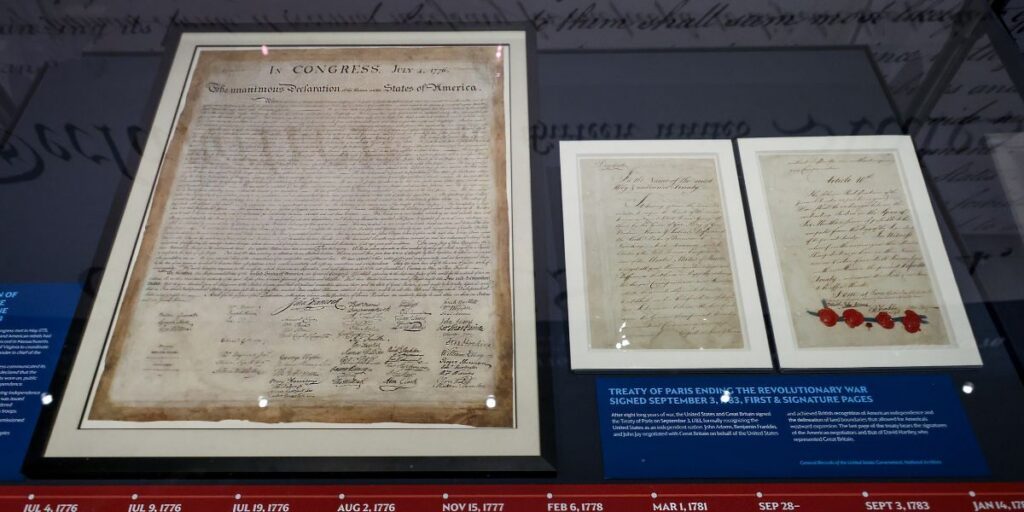
Founding documents reconnect us to our shared American roots – and rebelliousness | Vince Bzdek
Vince Bzdek
vince.bzdek@gazette.com
Updated 5 hours ago
When you first lay eyes on the actual founding documents of our country that, for the first time in history, have traveled together from their gilded cages in Washington to visit us out here in the hinterlands, you’re struck not...
Would you hire Jena Griswold to handle your case? | SONDERMANN
By Eric Sondermann
by-eric-sondermann@coloradopolitics.com
Updated 4 days ago
If you were in a child custody dispute with a former spouse, would you hire an attorney with experience in family law or would you trust your case to an operative with virtually zero mastery? If you were getting ready...
Trends to track as Colorado’s in precarious position pre-gubernatorial primaries | Paula Noonan
Paula Noonan
paula-noonan@coloradopolitics.com
Updated 3 days ago
As they say on Colorado Public Radio’s Marketplace, let’s do the numbers. April 2026 voter registrations continued a long-term Colorado trend with a large majority of new or changed voter registrations joining the unaffiliated cohort. Total registrations of Democrats, Republicans...

High-potency hemp products are hurting Colorado kids | GUEST COLUMN
Colorado Politics
colorado-politics@coloradopolitics.com
Updated 2 days ago
By Heidi Lawrence Six years ago, my daughter, by most metrics, was a typical overachieving teenager. She was a straight-A, pre-professional ballet dancer. She loved school and art, had lots of friends, and above all else, she was kind, funny...
Michael Fields reviews Colorado’s 2026 legislative session | The OpEdge Podcast
Tony Olivero
tony.olivero@gazette.com
Updated 3 days ago
Michael Fields, executive director of Advance Colorado, joins OpEdge host and investigative columnist Jimmy Sengenberger to assess the good, the bad and the ugly of the Colorado General Assembly’s 2026 legislative session. Reflecting on the 120 bills passed in 120...
From secret huddles to Zebulon — the high cost of the Dougco BOCC’s shady governance | PODIUM
Colorado Politics
colorado-politics@coloradopolitics.com
Updated 4 days ago
By Bob Marshall, Lora Thomas and Julie Gooden In Douglas County, a new and dangerous standard of governance has taken root: if the public doesn’t like your plan, simply stop letting the public in the room. During the last year,...

Election must be decided on issues of combating public corruption, restoring integrity in government | FEEDBACK
Colorado Politics
colorado-politics@coloradopolitics.com
Updated 3 days ago
There has been considerable press and outrage regarding Gov. Jared Polis’ commutation of former Mesa County Clerk and Recorder Tina Peters’s remaining prison sentence. The outrage is reinforced by President Donald J. Trump’s creation of a $1.776 billion compensation fund...
Is the ‘penumbra of privacy’ going, going, gone in Colorado? | Hal Bidlack
Hal Bidlack
hal-bidlack@coloradopolitics.com
Updated 5 days ago
Once again, there are too many things in Colorado Politics that are newsworthy and should be written about. Unless my kindly editor will allow me to write a book-length column this week? (Ed: not so much…) First up, I’d like...

Quiet at the state Capitol doesn’t mean silence on energy policy | GUEST COLUMN
Colorado Politics
colorado-politics@coloradopolitics.com
Updated 5 days ago
By Carly West By many accounts, Colorado’s 2026 legislative session was unusually quiet on oil-and-natural-gas policy. There was no sweeping new oil-and-natural-gas package. No major new production restrictions. After years of contentious energy debates dominating the Capitol, the relative quiet...
The history, and future, of extinction in Colorado | GUEST COLUMN
Colorado Politics
colorado-politics@coloradopolitics.com
Updated 5 days ago
By Eric Washburn When I was a kid growing up in Aurora in the late 1960s and early 1970s, one of my favorite things to do was to go to the Denver Museum of Natural History and spend countless hours...
PREV
PREVIOUS

SLOAN | Denver council deems accuracy dehumanizing
Kelly Sloan The Denver City Council this week unanimously approved a proposal to do away with the term “illegal alien” in the city charter, replacing it with the more ambiguous and clumsier, but politically acceptable, “worker without authorization.” The state did the same thing with a bill last session making the identical replacement in public […]

Don't dilute Colorado Latinos' political clout
Mike Cortés When Colorado’s Independent Redistricting Commission released preliminary legislative maps last month, they made two glaring errors: failing to respect the varying needs of Latino communities across the state, and diluting our voting power by creating new maps that reduce the current number of districts where Latinos are able to make a difference with […]