

Farmworkers bill of rights wins preliminary approval in Colorado House

The agriculture industry this week won only minor concessions from the sponsors of a bill that intends to grant farmworkers some of the same labor protections available to non-farmworkers. After a debate stretching more than five hours Friday, the House gave Senate Bill 87 preliminary approval.
SB 87 has been the biggest challenge for the industry, already struggling to recover from the pandemic and the Trump trade war, in the 2021 session, opponents said.
The bill grants farmworkers the right to join labor unions, engage in collective bargaining and strike. It removes the longtime exemption for farmworkers in the state’s Labor Peace Act.
Under SB 87, workers have the right to seek action in the courts for retaliation or other complaints, require that they be paid minimum wage and overtime pay, and that employers provide workers with transportation and access to “key service providers,” including health care providers, clergy and lawyers.
One of the most notable political aspects of the bill was where it was assigned. Despite its title, “Agricultural Worker Rights,” it bypassed the ag committees in both chambers and went to friendlier committees. That was even in the House, where the bill’s sponsor, Karen McCormick, D-Longmont, is the chair of the House Agriculture, Livestock and Water Committee.
The bill is backed by legal advocates and unions and as introduced was opposed by every major ag organization in the state, as well as numerous business groups. Commissioner of Ag Kate Greenberg told the Senate Business Affairs and Labor Committee back in March that she could not support the bill in its current form.
In the House State, Civic, Military and Veterans Affairs Committee on Thursday, the bill was amended to delay the implementation of an advisory committee at the state Department of Labor and Employment that would do rulemaking on the bill, added an agreed-upon minimum pay for sheep herders that was lower than in the original version, and removed the provision allowing third-party individuals to bring workplace claims on behalf of workers (and to be paid the money instead of to the workers bringing the claim).
It also created a variance process for ag producers to apply for other exceptions related to ag practices, and clarified some of the language around hand-weeding, including the ban on short-handled hoes, cited as a tool that causes injury because the worker must bend over for hours to use it.
McCormick told the state affairs committee Thursday that ag workers are among the hardest-working people she knows, and “many of them have to work without some of the most basic labor protections that most of us have benefited from for our entire working lives.”
The majority of agricultural employers in Colorado treat their employees fairly, McCormick added. Those workers happily return to those employers season after season. But some do not treat their workers fairly and as a result some workers are exploited, she explained. That includes retaliation when they complain, which can be reduced hours or pay, or even threats of deportation.
Caraveo spoke of her own family’s experience: uncles who worked picking onions, who would come home exhausted at the end of the day. A visit last summer to a farm exposed her to the living conditions some of the workers experienced, which included places infested with flies, no air conditioning in their on-site residences and many having to sleep in the same room despite the pandemic.
The committee also heard from some workers who said they have been treated poorly. “Not everyone can do this work,” said a farmworker from Bennett and mother of six. In all the places she worked, conditions were terrible, she said: no rest on the weekends, wage theft and sexual harassment. One boss fired her when she asked for permission to go to a clinic. They didn’t provide regular bathroom breaks, and when working in the fields, there was no water to wash off the insecticides – although workers were shown a video that explained the dangers of those chemicals, and then later required to sign a paper stating that they understood the consequences of that exposure, she said.
“We need job protection,” she told the committee.
But ag advocates believe the bill is more about punishing the industry than helping workers. Carlyle Currier, president of Colorado Farm Bureau and a rancher in Mesa County, said the bill is ambiguous and will create confusion and uncertainty in an industry already difficult to predict.
“The legal uncertainties have the potential to devastate my ranch,” he told the committee.
Ag producers don’t set the prices for their goods, and as a result must be adaptive and flexible in ways that are not consistent with most other industries. Ag is highly seasonal, he said, a different environment from the office job. That also means compensation looks different.
“It is not as simple as writing a wage number into legislation and discussing it between committee hearings,” he said.
Dan Waldvogle of Rocky Mountain Farmers Union said his group has been working toward a balance with SB 87. They support standards and protections for workers, but also support sustaining family farming and ranching in Colorado.
Does the bill have the right balance? Does it take into account the other factors that farm and ranch operations face? The answer appeared to be “no” from Waldvogle. He said SB 87 will be disruptive to the industry, and will lead to more consolidation, concentration and mechanization.
In the end that means less access to local food in Colorado, he told the committee. “There will be unintended consequences.”
However, after the amendments, Colorado Farm Bureau moved to a “monitor” position, as did Rocky Mountain Farmers Union. Both had previously been opposed.
Bruce Talbot from the Colorado Fruit and Vegetable Growers noted that small farms don’t have the profit margin to withstand legal costs. His family grows peaches, wine grapes and cherries in Palisade, and formerly apples and pears until their market value dropped below the cost of production. The bill will drive up his costs fighting off frivolous lawsuits and harassment.
Attorney Jennifer Rodriguez, who manages the farmworker division for Colorado Legal Services, told the committee she has talked to hundreds of farm workers, some who work in 104-degree heat and sometimes without water. She annually shows her summer interns a 1960 documentary, “Harvest of Shame,” and little has changed since then, she said. Workers who want to learn English aren’t given the opportunity to do that, nor are they allowed to access lawyers, education or health care.
“The entire focus continues to be on the farm and not the worker,” Rodriguez said. She asked the committee to think about what it is about the special characteristics of the ag industry that make it OK to care more about the employer’s finances than a worker’s health and safety.
Friday’s debate drew amendments and comments from lawmakers involved in Colorado agriculture, all Republicans.
One amendment offered during Friday afternoon’s debate tried to bring all the parties to the table to discuss wages and working conditions on an annual basis. That amendment was offered by Rep. Rod Pelton, R-Cheyenne Wells, a farmer and rancher. The parties would include workers, worker representatives, ag employers and ag organization representatives, along with representatives from the Department of Labor and Employment.
These are people with strong knowledge about ag and how it should be run, and those stakeholder meetings should be fair, said Rep. Shane Sandridge, R-Colorado Springs. “We don’t want people in there who are advocates in a certain area and are unbiased,” he said. The amendment failed.
Rep. Richard Holtorf, R-Akron, a farmer and rancher, called the bill “a lawyer’s dream.” He noted that under the bill’s whistleblower section, a worker can sue an ag producer in district court.
“We don’t run to the courthouse to solve problems,” he told the House.
“We’re trying to give these workers the same protections” as other sectors, protections they have been left out of for 86 years: minimum wage, compensation for overtime, access to water, shade and health care providers, Caraveo said Friday.
Much of the bill won’t apply to the majority of ag employers, McCormick said, adding that the bill was for workers who have fallen through the cracks, and it’s important that they get basic protections.
“We should all play by the same rules,” she said.
Rep. Marc Catlin, a Montrose Republican who is vice-chair of the ag committee and who grew up on a family farm, led much of the questioning during Thursday’s hearing and spoke at length Friday.
Ag is worth $40 billion to the state economy, Catlin said, and claimed this change is being brought from out of state. “We’re better when we talk to one another,” and to talk with rather than talk at, he said.
The abuse and mistreatment of farmworkers is a vestige of the past, according to Catlin. In this day and age, an ag operation doesn’t have to be very big to have a million dollars of crop laying in the field, he explained.
“We decide how much it will take” to harvest the crop, pick the fruit, or work with the lambs. People are treated with respect, he said. “Don’t get the mistaken impression that agriculture in general … has gone about purposely injuring or belittling or making people feel less than.”
Senate Bill 87 will be up for a final vote either on Saturday (if the House convenes) or on Monday. If approved, it will have to head back to the Senate for a review of amendments.



Suddenly, Colorado has a private school choice program │ Vince Bzdek
Vince Bzdek
vince.bzdek@gazette.com
Updated 14 hours ago
By Vince Bzdek When I was a kid going to St. John’s Catholic grade school in Denver, I remember asking my mom if she and dad minded paying taxes for public schools since all her kids attended Catholic ones. We...
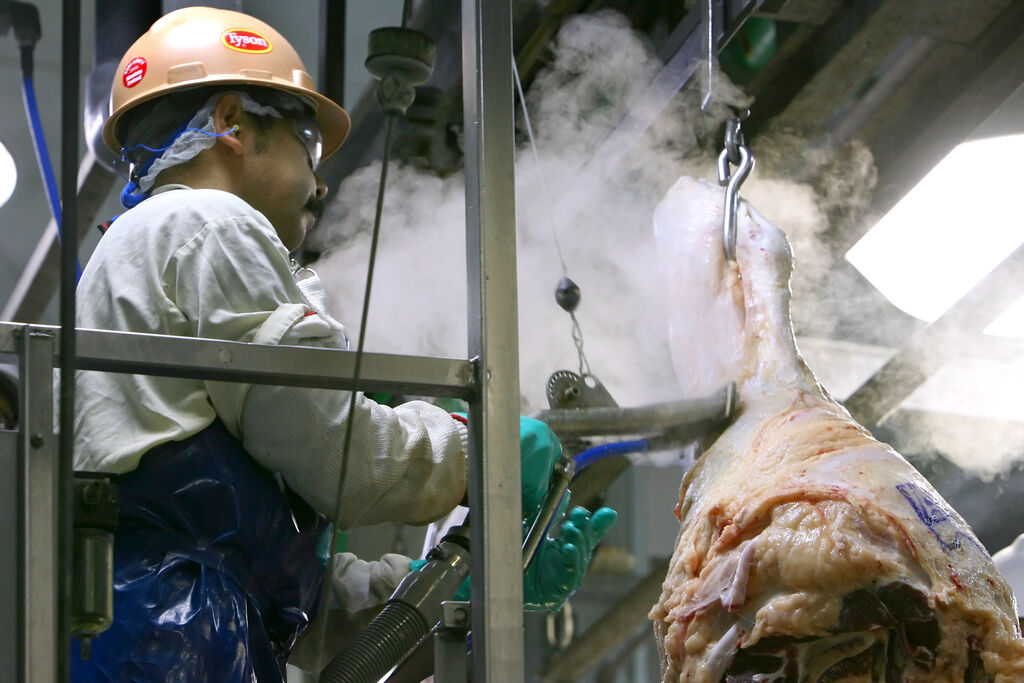
Tyson’s beef plant closure in Nebraska to impact town, ranchers nationwide | OUT WEST ROUNDUP
Ernest Luning
ernest.luning@coloradopolitics.com
Updated 4 days ago
NEBRASKA Beef plant’s closure could ripple OMAHA — Tyson Foods’ decision to close a beef plant that employs nearly one third of residents of Lexington, Nebraska, could devastate the small city and undermine the profits of ranchers nationwide. Closing a...

Calendar Dec. 15-21
Rachael Wright
rachael.wright@coloradopolitics.com
Updated 4 days ago
CoPo’s weekly political calendar will help you find political and public-policy events throughout Colorado. It includes candidate and issue campaign events, public policy meetings, court hearings, state and local party conventions, assemblies, debates, rallies, parades, speaking engagements, traveling dignitary appearances,...

Denver Mayor Peña makes unexpected announcement | A LOOK BACK
Rachael Wright
rachael.wright@coloradopolitics.com
Updated 4 days ago
Thirty-Five Years Ago This Week: Denver Mayor Federico Peña announced personal news that caught many of his supporters and Denver residents who paid close attention to politics off guard. Just two weeks prior on Nov. 16, 1990, The Colorado Statesman...

Julie Gonzales’s long but not impossible odds | SONDERMANN
Eric Sondermann
eric-sondermann@coloradopolitics.com
Updated 4 days ago
Allow me to start with a flashback. It was Thanksgiving 2024, just over 12 months back. For the first time, our son Clarke hosted the family Thanksgiving near New York City. It is a sign of our aging when the...

Performers announced for 14th Klezfest | NONPROFIT REGISTER
Thelma Grimes
thelma.grimes@coloradopolitics.com
Updated 3 days ago
MIZEL MUSEUM JCC DENVER Denver News: Klezfest 2025, which takes place Dec. 20, will feature performances by a host of popular Jewish entertainers: Rabbi Joe Black and Steve Brodsky; Hal Aqua & The Lost Tribe; Mishmish and Gora Gora Orkestar. Rabbi Black is a pioneer of contemporary Jewish music and has...

Colorado commission makes new access-to-justice recommendations after renewed listening tour
Michael Karlik
michael.karlik@coloradopolitics.com
Updated 2 days ago
Adding judges to handle caseloads. Expanding authority for paraprofessionals in civil cases. Allowing self-represented litigants to file electronically. Making the judiciary’s website user-friendly. Those were among the recommendations advanced by the Colorado Access to Justice Commission in a report released Friday,...

Trump targets Colorado AI law with executive order, setting stage for legal fight
Marianne Goodland
marianne.goodland@coloradopolitics.com
Updated 2 days ago
Colorado’s 2024 effort to regulate artificial intelligence is facing a direct challenge from the Trump administration. President Donald Trump signed an executive order on Thursday to block states from enforcing their own AI laws. Trump also announced the creation of...
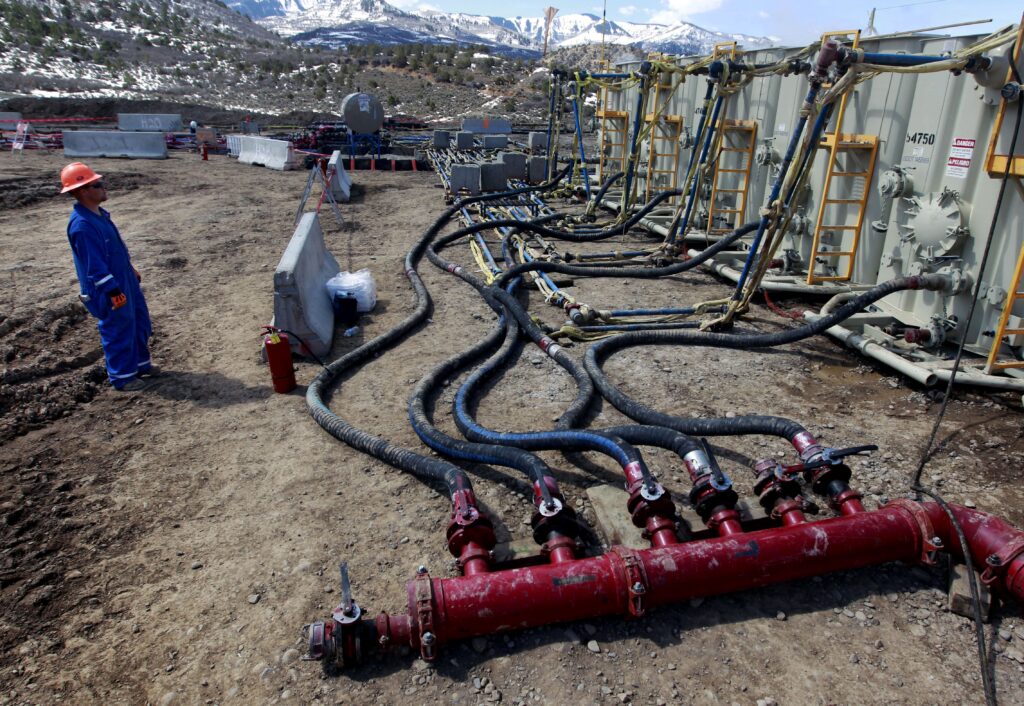
Colorado residents face high energy bills after regulators turn away from natural gas, experts say
Mark Samuelson Special to The Denver Gazette
mark.samuelson@denvergazette.com
Updated 2 days ago
Colorado residents could be paying a lot more for home energy, following the state’s decision last week to turn away from natural gas as a home cooking and heating fuel, experts said. Some 1.9 million Colorado households warm their homes...
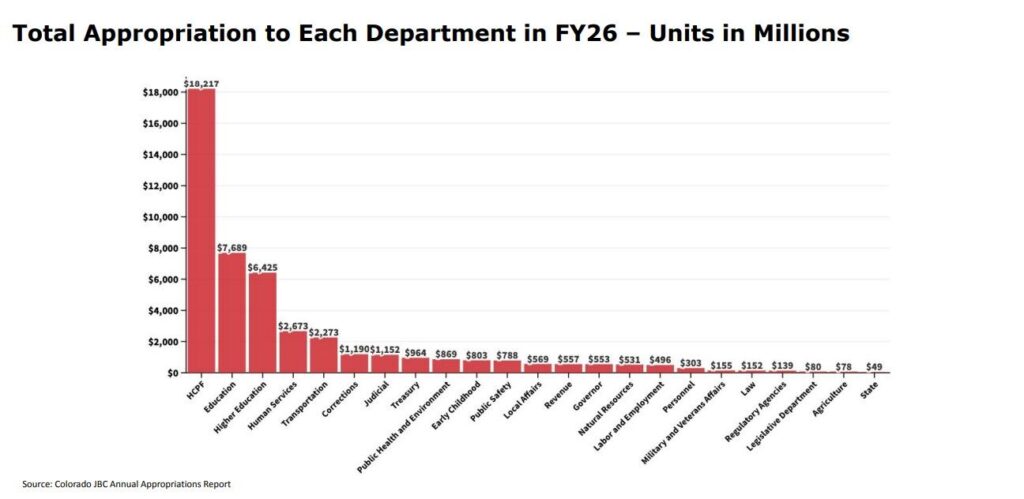
Colorado’s government spending has outpaced inflation, analysis finds
Marissa Ventrelli
marissa.ventrelli@coloradopolitics.com
Updated 2 days ago
Colorado’s per-person spending has increased by 31% over the last two decades despite slowed population growth, according to a new analysis by the Common Sense Institute. The annual report compares state spending by department over the last 20 years, tracking...
PREV
PREVIOUS

A LOOK BACK | Hudson fights for mountain monorail along I-70
Twenty Years Ago This Week: Miller Hudson, executive director for the Colorado Intermountain Fixed Guideway Authority, said he was forging ahead with plans to develop an overhead monorail to alleviate the congestion on Colorado’s highways and interstates. CIFGA was created in 1998 by the state legislature to explore the possibility of a high-speed transportation system […]

OUT WEST ROUNDUP | Uranium waste plan faces outcry; emission rules take effect
NAVAJO NATION Concerns raised over plan to transfer uranium waste ALBUQUERQUE — U.S. nuclear regulators are considering a licensing change proposed by a uranium company that would clear the way for 1 million cubic yards of waste to be transferred from a mining area in western New Mexico to a mill site a short distance […]