

Bill to eliminate trial backlog runs into staunch opposition from public defenders
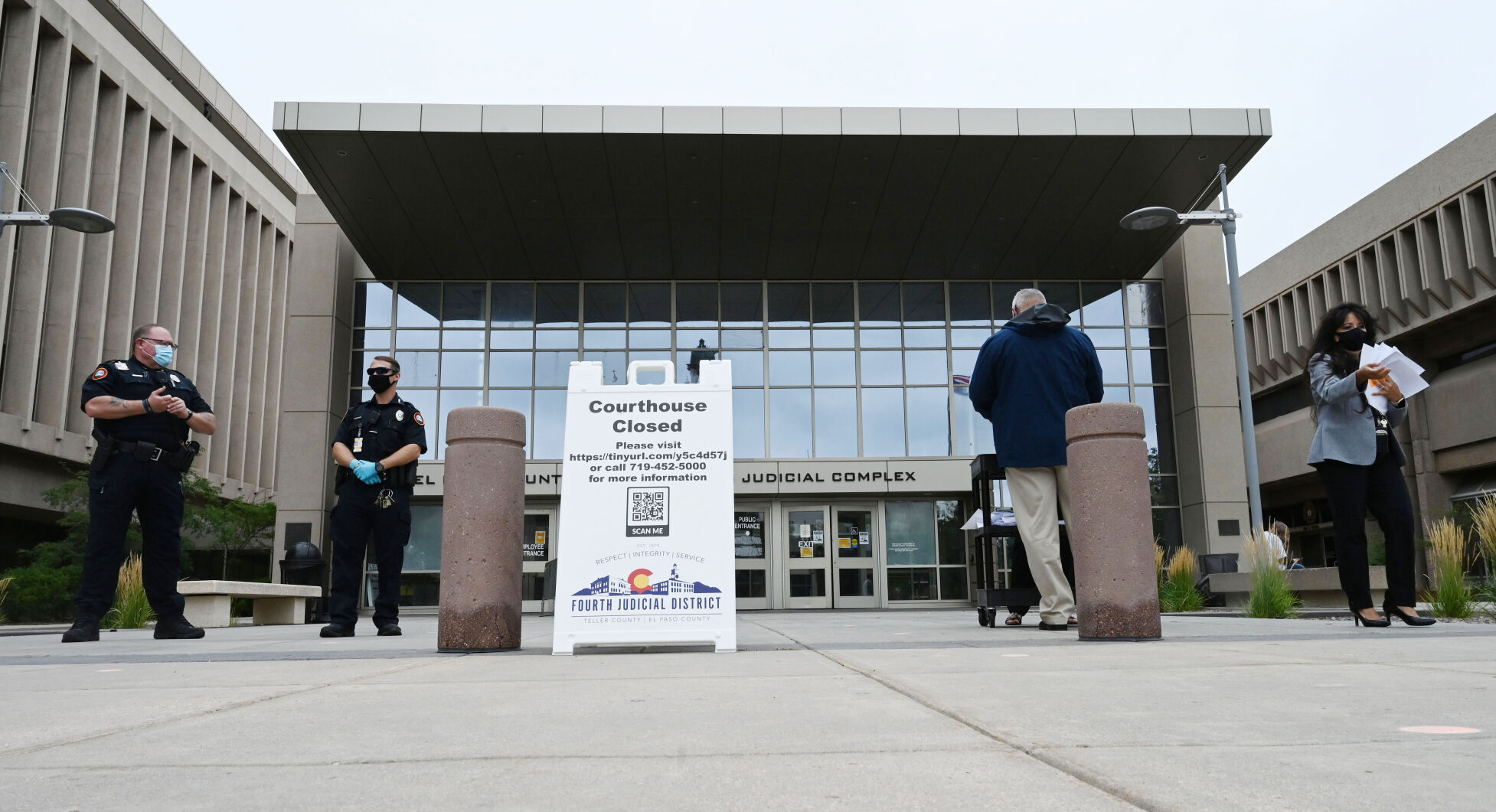
Criminal jury trials largely ceased in Colorado during the COVID-19 pandemic as in-person gatherings posed a risk to public health. During that time, prosecutors cut generous plea deals, dismissed charges or sought to extend defendants’ trial dates.
Those facts are undisputed. But just like in a courtroom itself, prosecutors and defense attorneys are now claiming to the General Assembly that two starkly different scenarios exist as pandemic restrictions lift. Lawmakers, as de facto jurors, are consequently in the awkward position of deciding whom to believe.
“We are drowning in cases,” Beth McCann, the district attorney of Denver, testified last month. “My attorneys, they’re having anxiety attacks, migraines. They have trials set every month for the next six months, and that is untenable.”
Public defenders, by contrast, reported the opposite was true: in many places, a backlog of cases simply does not exist.
“The vast majority of these trials that are set will resolve by pleas or by dismissal,” said Justin Bogan, head of the public defender’s Durango office.
At issue is House Bill 1309, which the House Judiciary Committee considered on May 18, but did not vote on. The legislation as written would allow prosecutors to request a six-month delay for certain criminal trials if no courtroom is available due to the pandemic backlog. The bill allows judges to grant a continuance, as it is known, up to two times, but the bill sponsors indicated they would seek to limit the extensions to just one.
The Sixth Amendment provides criminal defendants the right to a speedy trial, and the Colorado constitution mirrors that language. But defining what “speedy” means has fallen to the General Assembly. Currently, the government must bring a defendant to trial within six months of a not guilty plea. Although there are reasons for both the prosecution and the defense to extend that window, if the government fails to honor the deadline, the legislature has provided one consequence: release the defendant from custody and drop the charges, with no re-prosecution for the same offense.
With support from the Judicial Department and the state’s district attorneys, HB 1309 may turn out to be a temporary fix to a once-in-a-lifetime, global disruption, and will ensure victims achieve justice in their cases. But its opponents characterize it as undermining a constitutional right, and doing so in a manner that does not even effectively address any backlog.
“Those individuals who are [in jail] and are not guilty, or you can’t prove they’re guilty, effectively get nothing out of this,” said Rep. Adrienne Benavidez, D-Adams County, a member of the Judiciary Committee and a lawyer herself. “They’re sitting in jail maybe an extra six months, nine months, and they have just probably lost their jobs, maybe their housing — they’ve lost a lot in that period of time. Speedy trial to me is about helping those individuals.”
For the People
The sponsors of HB 1309, Reps. Dylan Roberts, D-Avon, and Terri Carver, R-Colorado Springs, have called the bill narrowly tailored, and emphasized there would be a hearing within seven days of the speedy trial extension to determine whether a defendant would get out of jail on bond.
On average, Colorado sees 2,716 jury trials per year, most of which are criminal. A nonpartisan fiscal analysis of the bill found only 946 trials occurred in 2020, most of which happened prior to April. Christian Champagne, the district attorney for the Sixth Judicial District in southwestern Colorado, told lawmakers there were in excess of 14,000 criminal and civil cases set for trial as of January.
“Prosecutors have no interest in dragging these cases on. Our cases grow weaker and weaker over time as memories fade, witnesses disappear and victims give up on achieving the justice they deserve,” he said. “Trial backlogs have forced DAs across the state to reduce initial plea offers well below their normal standards in order just to keep the system moving.”
Michael Dougherty, the district attorney for Boulder County, agreed that he had diverted or resolved as many cases as he could.
“It’s not as though the DAs are appearing before you today to say, ‘Give us this unfettered power to delay cases six months,’ ” he said.
The extension has the endorsement of Chief Justice Brian D. Boatright, who asked the legislature for flexibility in his annual address to enable trial courts to function beyond what he called “survival mode.”
In an unusual move, the state judiciary is publicly supporting HB 1309. At the May 18 committee hearing, the Judicial Department’s top employee and the chief judges of two large judicial districts implored representatives — something the department “very, very rarely does,” State Court Administrator Steven Vasconcellos acknowledged — to pass the bill.
“I’ve never seen a crisis like this,” testified District Court Chief Judge Michelle A. Amico of the 18th Judicial District, which includes Arapahoe, Douglas, Elbert and Lincoln counties. She said that seven homicide cases set for two-week trials at the Arapahoe County Justice Center will consume courthouse space for more than a month.
“I guarantee you, we will use the bill only when needed and as appropriate,” Amico added.
Michael A. Martinez, chief judge in Denver, praised the state Supreme Court’s rule change in April 2020 that allowed judges to declare mistrials if there was an inability to safely assemble a jury pool due to the pandemic. A mistrial allows for a three-month speedy trial extension. Martinez said he would always make a prosecutor “tell me why” if they planned to invoke the six-month extension under the bill.
For the defense
The state’s public defenders presented a counterintuitive argument in response: deadlines clear up, not contribute to, a backlog. The closer the parties get to trial, the thinking goes, the more closely both sides will evaluate their evidence, their likelihood of success, and whether they want to actually hold a trial. As such, a backlog on paper is not the reality for many of their offices.
“Adding on an arbitrary six months just gives more time where district attorneys don’t have to take a critical look at their cases and determine whether they actually can proceed, and whether they can prove these cases at trial,” said Sarah Quinn, the head of the public defender’s office in the 17th Judicial District of Adams and Broomfield counties.
Michael Raymonde, 52, was charged with two counts of assault in connection with domestic violence in Douglas County. He pleaded not guilty in October 2019, placing his speedy trial deadline in April 2020. The court first scheduled a trial for February, but that date was pushed back — with several more extensions to follow.
“It was stressful because the speedy trial, I never waived,” Raymonde, who was released on bond at the time, told Colorado Politics. He had to submit to monthly urinalysis testing, which he estimated cost him $200 each time. He also believed the pending charges cost him income.
“I’m a musician and they let me do a couple shows out of state, but I could have had a lot of concerts that I wasn’t able to get OK’d in time,” said Raymonde, who clarified that despite the pandemic he still performed at smaller events, mostly in the South where public health guidelines were more relaxed.
According to his lawyer’s timeline, prosecutors asked for the trial date to be pushed back five times, and the judge declared a COVID-19 mistrial once. In October, the charges were dropped. Raymonde, who now lives in Indiana, said he is opposed to any speedy trial extension.
“There’s probably a bigger percentage of people that aren’t innocent, but there are some innocent people sitting in jail that should not be there for that extra length of time. I don’t think it’s fair and I think it’s unconstitutional, personally,” he explained.
Other public defenders told lawmakers that their cases, like prosecutors’, are also harder to argue with the passage of time. Even if someone is out of jail, there is a “mental health drain” from having charges hanging over one’s head.
“Quite frankly, it’s human nature if you give someone six more months to do something and to make decisions,” said Raymond Torrez of the La Junta public defender’s office. “They’re going to take those six months.”
“One-sided”
During the committee hearing, Rep. Kerry Tipper, D-Lakewood, expressed concerns about whether anyone would actually be released from jail on bond as a result of the extension. Benavidez also spoke critically of the proposed solution.
“This seems like a one-sided resolution. It helps the court. It helps your offices,” she told the district attorneys.
Thirty-two states set a limit of days or months to bring a defendant to trial. Colorado would not be the first state to tinker with its speedy trial deadlines with legislation. In May, Georgia’s governor signed Senate Bill 163, which permits chief judges to extend the speedy trial deadline by up to eight months after making certain logistical findings, such as total caseloads and space limitations.
There, as with here, the chief justice backed the measure. And like Colorado, Georgia’s defense lawyers advocated for a different solution.
“We agree with your Colorado [public defenders] that deadlines move cases, and the consequences of removing those deadlines is as they state,” said Jill Travis, executive director of the Georgia Association of Criminal Defense Lawyers.
Colorado’s proposal would only apply to driving under the influence and serious crimes including murder, sexual assault and robbery. The legislative session ends in under two weeks, however, and HB 1309 has yet to clear its first committee, casting doubt on its fate.
Tomee Crespin, a former district court judge in Adams County until January of this year who now practices criminal defense, agreed with those who suggested poorer defendants and those of color would likely see a disproportionate impact from a speedy trial extension.
“Court congestion has always been an issue, but aiming to cure court congestion at the expense of delaying an accused’s constitutional rights is a dangerous precedent,” she said.
HB 1309 is scheduled for a vote in the House Judiciary Committee on Wednesday.

Colorado’s Western Slope magistrate judges describe unique role in federal judiciary
Michael Karlik
michael.karlik@coloradopolitics.com
Updated 7 hours ago
Two of Colorado’s federal judges stationed on the Western Slope spoke to lawyers on Wednesday about their unique roles, the ways their workloads differ, and the need for more criminal defense lawyers to take cases outside the Front Range. “Here...
Federal judge rules that request for bond hearing not necessary to challenge immigration detention
Michael Karlik
michael.karlik@coloradopolitics.com
Updated 7 hours ago
A federal judge in Colorado ruled last week that it is not mandatory for a person to seek a bond hearing with an immigration judge before they challenge the lawfulness of their detention in federal court. For the past year,...

Boulder Valley School District introduces new policies following antisemitism lawsuit
Marissa Ventrelli
marissa.ventrelli@coloradopolitics.com
Updated 10 hours ago
The chief of Boulder Valley School unveiled new policies for the 2026-2027 school year following a lawsuit filed on behalf of a student alleging antisemitic harassment. In June, the Anti-Defamation League filed a federal civil rights complaint against the school...

Colorado NRA chapter seeks injunction against new gun‑training requirement
Marissa Ventrelli
marissa.ventrelli@coloradopolitics.com
Updated 9 hours ago
The Colorado chapter of the National Rifle Association is seeking an injunction to stop the state from enforcing a new law that took effect earlier this month. The new law requires anyone buying or selling certain firearms to first complete...
Denver moves to dismiss Trump challenge to ‘assault-style’ weapons ban
Deborah Grigsby
deborah.smith@denvergazette.com
Updated 8 hours ago
Denver has filed a motion to dismiss a lawsuit brought by the Trump administration challenging the city’s ban on “assault-style” weapons and magazines exceeding a 15-round capacity. The U.S. Department of Justice filed a suit in federal court in May,...
Federal judge dismisses ex-Colorado judicial discipline director’s conspiracy lawsuit
Michael Karlik
michael.karlik@coloradopolitics.com
Updated 1 day ago
A federal judge dismissed a lawsuit from Colorado’s former judicial discipline director on Tuesday, finding that he failed to adequately state claims for conspiracy or constitutional violations. Christopher S.P. Gregory, who served as the executive director of the Colorado Commission on Judicial...
Federal judge allows retaliation claims to proceed against prison officials
Michael Karlik
michael.karlik@coloradopolitics.com
Updated 9 hours ago
A federal judge agreed last week that a man incarcerated at Sterling Correctional Facility had credibly alleged that employees retaliated against him for filing grievances, including by taking away his disability accommodations and turning off his electricity. Louis Peoples Jr.,...
U.S. Rep. Lauren Boebert’s son arrested, faces charges of sexual exploitation of minor
Matt Kyle
matt.kyle@denvergazette.com
Updated 2 days ago
U.S. Rep. Lauren Boebert’s son Tyler Jay Boebert has been arrested and accused of recording and sharing a video depicting himself having intercourse with a minor, according to court records. The case originated in Garfield County in Western Colorado and...
Adams County water district may proceed with cost-recovery lawsuit against Denver for contamination
Michael Karlik
michael.karlik@coloradopolitics.com
Updated 2 days ago
A federal judge rejected Denver’s arguments last week for pausing or dismissing a lawsuit brought by an Adams County special district seeking to recover its costs for addressing water contamination as a result of Denver firefighting activities. In January, the...
Federal judge declines to dismiss First Amendment retaliation claim against prison official
Michael Karlik
michael.karlik@coloradopolitics.com
Updated 2 days ago
A federal judge agreed last month that an incarcerated Native American woman may pursue her claim of First Amendment retaliation against a prison official who allegedly interfered with her religious exercise. Yvonne Peterson resided at Buena Vista Correctional Facility for...
PREV
PREVIOUS
Court grants injunction in Coffman’s lawsuit against Aurora over campaign finance law
An Arapahoe County District Court judge has granted a preliminary injunction in Aurora Mayor Mike Coffman’s lawsuit against the city, claiming that a new campaign finance law violates his freedom of speech. The lawsuit alleges the law, passed by the City Council last year, prohibits former and future candidates from pushing for ballot issues or […]

Supreme Court to address fallout from DUI decision by answering double jeopardy question
The Colorado Supreme Court will likely answer a question it generated last fall when it set off a wave of reversals for felony drunk driving convictions: Does prosecuting those offenses again violate the prohibition on double jeopardy? Last month, the Court directed the state to respond to an appeal out of Jefferson County from Kevin […]