

Denver City Council proposal would allow hybrid model for in-person, remote meetings

An ordinance making its way through the Denver City Council would allow remote options for participating in council meetings after the meetings revert back to in-person when the COVID-19 pandemic ends.
The ordinance, sponsored by Councilwoman Amanda Sawyer, was approved by the City Council governance committee Tuesday and will now go to the full council for a vote.
If approved, the council will be required to provide the public with the ability to watch and participate in in-person City Council meetings via methods like Zoom.
“The world has changed,” Sawyer said. “COVID has created a very different way of doing business that was adopted much more quickly than it probably ever would have been … and there’s a real understanding that that’s okay.”
City workers, including the City Council, began working remotely during summer 2020 due to the COVID-19 pandemic, moving City Council meetings to Zoom for the first time.
An online survey of 329 Denver residents found that 51.67% of respondents want City Council meetings to return to in-person after the pandemic ends; however, 90.27% want the meetings to continue to provide remote options.
Sawyer said the closed captioning and translation services provided by the council’s current Zoom meetings allow more residents to participate, in addition to providing access for residents who live far from the City Council building, don’t have transportation and/or have to care for their children.
And, by restarting in-person meetings as well, the City Council is also opening participation up to people without access to technology, including homeless residents.
“We really found that this remote option has increased accessibility to our citizens,” Sawyer said. “On the other hand, people feel really removed without the personal interaction. So, the best option would be to find something in the middle.”
Under the ordinance, City Council members will also be able to participate in meetings virtually in the case of general or personal emergencies.
During general emergencies – defined as disaster or emergency declarations like severe weather or public health orders – all City Council member will operate remotely, like they are doing now. In this case, notice would be provided on the city website within 48 hours of the meeting.
During personal emergencies – including work travel and personal or medical emergencies – only the member experiencing the emergency will attend the meeting remotely.
When operating virtually, council members must appear live on camera when establishing quorum, speaking and voting. Council members are not allowed to use their phones for meetings and their votes will not be counted if they are not appearing on video when casting the vote.
The ordinance does not apply to executive sessions, which will only be held in person with no electronic participation of any kind after the pandemic due to confidentiality concerns, Sawyer said.
During Tuesday’s meeting, Councilwoman Candi CdeBaca discussed amending the ordinance to include collective bargaining as an open meeting.
Sawyer declined to support the change, saying it should’ve been brought up before the outreach process so they could’ve included those stakeholders. CdeBaca did not officially propose the amendment.
In addition to the survey, outreach included seven working group meetings, four technology service meetings, two rounds of one-on-one meetings with each council member and six group feedback sessions with developers, business owners, city staff and board and commissions members.


Colorado GOP plays with fire as primary approaches | Dick Wadhams
Dick Wadhams
dick-wadhams@coloradopolitics.com
Updated 2 days ago
Over the next several weeks, the Colorado Republican Party will make consequential decisions that will determine just how relevant it will be in 2026 and beyond. The 600-member Colorado Republican State Central Committee will meet on May 30 to elect...

Public Lands Rule rescinding keeps public lands in public hands | Rachel Gabel
Rachel Gabel
rachel-gabel@coloradopolitics.com
Updated 2 days ago
The Public Lands Rule has been rescinded. The rule, first proposed in 2023, would have complicated the balanced partnership between federal agencies and all multiple uses on those public lands. In 2024, the Bureau of Land Management made the rule...

America wrestles with its ‘Leaving MAGA’ phase | Miller Hudson
Miller Hudson
miller-hudson@coloradopolitics.com
Updated 2 days ago
For those Americans who glance at President Donald Trump and only see a raving lunatic, little is more confounding than the millions of MAGA adherents who discern a force for good. Reconciling these differing viewpoints feels nearly impossible. Dismissing this...

Questions for Mike and Phil | Jon Caldara
Jon Caldara
jon-caldara@coloradopolitics.com
Updated 3 days ago
If you’re a fan of the old Seinfeld TV show, you might remember the fat postman, Newman, being asked why postal workers “go postal”? “Because the mail never stops. It just keeps coming and coming and coming! There’s never a...

Development fees not limited to brand new construction, Colorado court rules
Michael Karlik
michael.karlik@coloradopolitics.com
Updated 2 days ago
Colorado’s second-highest court ruled last month that local governments’ ability to impose fees on “new development” is not limited solely to construction projects that occur on empty land. Under state law, local governments that issue development permits are empowered to...
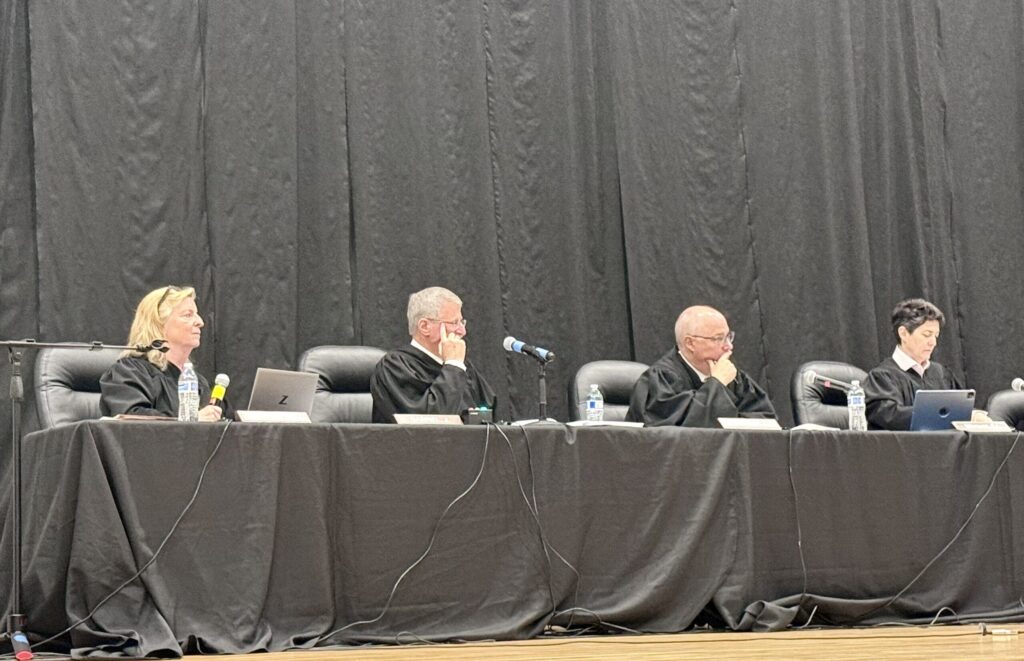
Colorado justices consider whether fraud claims belong in corporate dispute
Michael Karlik
michael.karlik@coloradopolitics.com
Updated 2 days ago
The Colorado Supreme Court considered on Tuesday whether it is possible for a corporate plaintiff to pursue fraud claims over conduct that could be covered by a contract or by a set of interrelated business agreements leading up to the...

State legislator seeks to criminalize display of sexually explicit material to children | A LOOK BACK
Rachael Wright, Special to Colorado Politics
rachael.wright@coloradopolitics.com
Updated 5 days ago
by Rachael Wright Forty-Five Years Ago This Week: Legislation sponsored by Rep. Bev Scherling, R-Aurora, sought to prohibit sexually explicit material from being distributed to minors. Scherling’s House Bill 81-1310 stated that the “sale, loan, or display to persons under...

Colorado Politics Calendar May 18-24
Rachael Wright, Special to Colorado Politics
rachael.wright@coloradopolitics.com
Updated 5 days ago
CoPo’s weekly political calendar helps you find political and public policy events throughout Colorado. It includes candidate and issue campaign events, public policy meetings, court hearings, state and local party conventions, assemblies, debates, rallies, parades, speaking engagements, traveling dignitary appearances,...

Colorado county Republican chair arrested in sting on allegations he tried to pay for sex with a child
Ernest Luning
ernest.luning@coloradopolitics.com
Updated 2 days ago
Hunter Rivera, the 24-year-old chairman of the Weld County Republican Party, was one of two men arrested Thursday on suspicion of trying to buy sex from Larimer County Sheriff’s Office investigators who posed as minors as part of an operation...
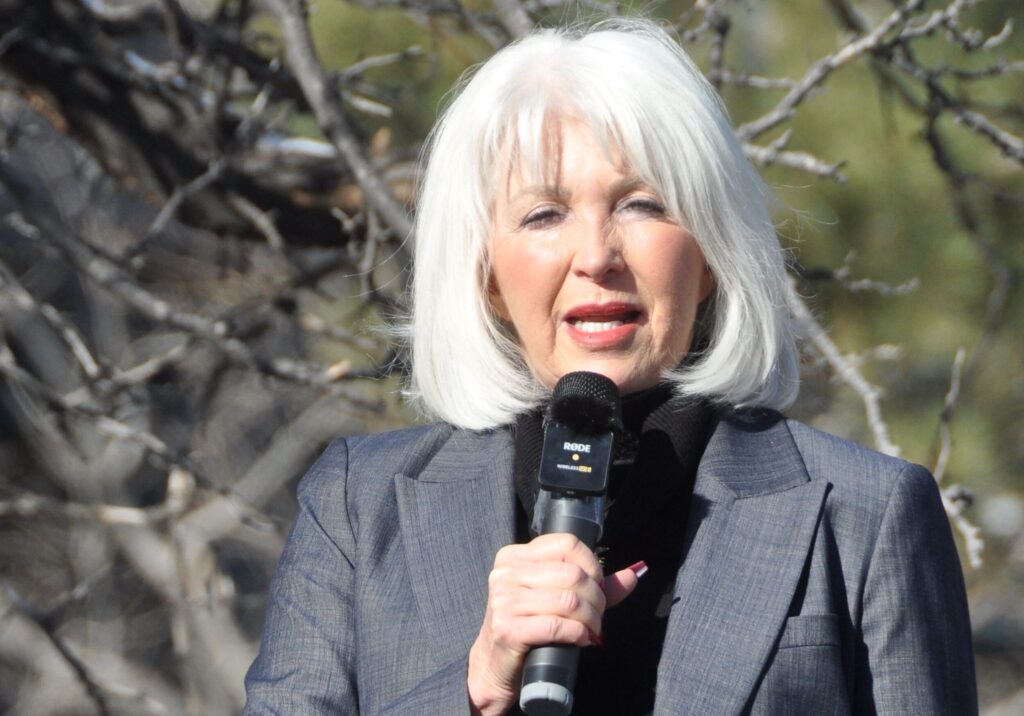
Colorado Gov. Jared Polis grants clemency to Tina Peters, makes her eligible for release from prison
Ernest Luning
ernest.luning@coloradopolitics.com
Updated 3 days ago
Colorado Gov. Jared Polis on Friday granted clemency to Tina Peters and made the former Republican county clerk eligible for release from state prison as soon as early June, capping months of speculation that the Democratic governor would shorten a...