

THE PODIUM | Lawmakers will squander windfall


Ben Murrey

The latest economic forecast and revenue projections released by Colorado Legislative Council staff, along with billions of dollars in coronavirus-related federal aid, eliminate any threat of the impending fiscal emergency feared at the onset of the COVID-19 pandemic last year.
The state’s $13.7 billion in General Fund revenue for 2020 exceeded those of the previous calendar year by nearly $900 million, according to Department of Revenue data. Revenue for FY 2019-2020 came in at just 1% below pre-pandemic expectations.
While the current fiscal year has not yet ended, the March economic forecast published by Legislative Council shows nearly a 20% increase in General Fund revenue over their forecast last May, from $11.4 to $12.6 billion. These figures hardly denote the budget crisis predicted last year.
Some still argue that the improved revenue does not make up for the increased cost of safety-net programs such as unemployment benefits and housing assistance provided by the state during the pandemic.
Aid from the federal government, however, has provided generous safety net funding, already totaling triple the state’s annual general fund revenues, with more to come. These funds come in excess of normal state revenue.
The federal Coronavirus Aid, Relief, and Economic Security (CARES) Act, signed by President Trump last March, allocated about $2.2 billion to Colorado with approximately $1.7 billion for the state government specifically. Congress restricted those funds for certain pandemic-related expenditures.
The American Rescue Plan Act (ARPA) signed by President Biden last month will send $5.8 billion dollars into the state this year and next, with $3.9 billion for state government and $1.9 billion for local governments. Unlike CARES Act dollars, these funds come with very few strings attached, leaving lawmakers with broad discretion on how to spend the money.
Between the CARES Act and ARPA alone, the state can expect to fill its coffers with a handsome $5.6 billion in addition to normal state revenues. This only accounts for funds over which Gov. Polis and state lawmakers have direct control, however, not total federal coronavirus aid to Colorado.
In addition to funds going directly to the state, other major line items under ARPA include about $6 billion in direct payment “stimulus checks” to Coloradans and $2 billion for education and childcare, to name just a few.
To date, nearly $40 billion in federal aid has already been airdropped into Colorado from Washington, D.C., for COVID-19 relief, according to data collected by the Peter G. Peterson Foundation. This amount includes economic impact payments to individuals, the Paycheck Protection Program, funding for vaccine distribution, infrastructure grants, Medicare and Medicaid assistance, education support, rental assistance, and more.
As the federal government continues to administer the relief legislation, billions more will flow into the state. The Common Sense Institute, a Colorado-based non-partisan research organization, reports that Colorado’s share of the three pandemic-related federal relief packages will total approximately $65.2 billion all told.
Because the legislature set last year’s budget based on the bleak May 2020 revenue forecast, the improvement to General Fund revenues over expectations has left the state with a surplus going into the upcoming fiscal year, which starts July 1. That on top of the billions in federal funds puts the state in a phenomenal fiscal posture. Unfortunately, lawmakers have proved more interested in increasing spending on pet projects than on securing a sound fiscal future for the state.
Rather than paying back the more than $800 million in federal loans used to maintain solvency for Unemployment Insurance Programs, for example, Democrat legislators plan to send $40 million to Colorado’s so-called “Green Bank,” a not-for-profit financial institution established under Gov. Hickenlooper to finance “clean energy projects.” Democrats blocked an amendment introduced by Senator Ray Scott (R-Grand Junction) that would require the organization to report how it spends the money, according to a story in Colorado Politics. They also plan to allocate an additional $5 million for renewable energy grants through the Department of Local Affairs.
In February, the Joint Budget Committee rejected a Department of Housing request to save taxpayers $4.5 million “[d]ue to the increased availability of overall funding for affordable housing.” The agency’s budget ballooned from $68 million in fiscal year 2019-2020 to over $550 million in the current fiscal year due to mostly to an influx of federal dollars. Even with the increased demand for housing programs, the agency had so much money that they requested a small funding reduction. Legislators rejected the request.
Examples of the mismanagement of this great influx of cash could go on, but the lesson is clear: Colorado lawmakers will find a way to spend every dollar they get, in good years and in bad.
The legislature spent over $27 billion in last year’s “Long Bill,” the annual appropriations legislation which funds state government activities. In the current fiscal year, they will spend $32.2 billion. The current draft of this year’s Long Bill is set to appropriate nearly $36 billion for the coming fiscal year. This does not include the $3.9 billion from ARPA.
Their problem is not lack of money, as we’re so often told, but lack of fiscal restraint.
With the improved revenue forecasts and tremendous windfall from the feds, there’s no reason the state legislature should not be able to adequately fund essential government services without raising taxes. Instead, perhaps we should consider letting taxpayers keep a little more of their own money.
Ben Murrey is fiscal policy center director at the Independence Institute, a free market think tank in Denver. @benamurrey


Processing plants are an important piece of the ag puzzle | Rachel Gabel
Rachel Gabel
rachel-gabel@coloradopolitics.com
Updated 13 hours ago
Concrete barricades blocked the entrance to the Cargill beef plant in Ft. Morgan, Colo., on May 20. About 1,700 workers had been locked out by the company after months of contract negotiations ended with workers voting to reject the company’s...

As AI advances, are the accompanying AI advances for the better? | Miller Hudson
Miller Hudson
miller-hudson@coloradopolitics.com
Updated 13 hours ago
You may have noted Elon Musk was in court suing Sam Altman of OpenAI. If you were praying there was a way both of these greed bros could lose, you nearly got your wish. Emails exchanged between the parties reflect...

Too much Tina | Jon Caldara
Jon Caldara
jon-caldara@coloradopolitics.com
Updated 4 days ago
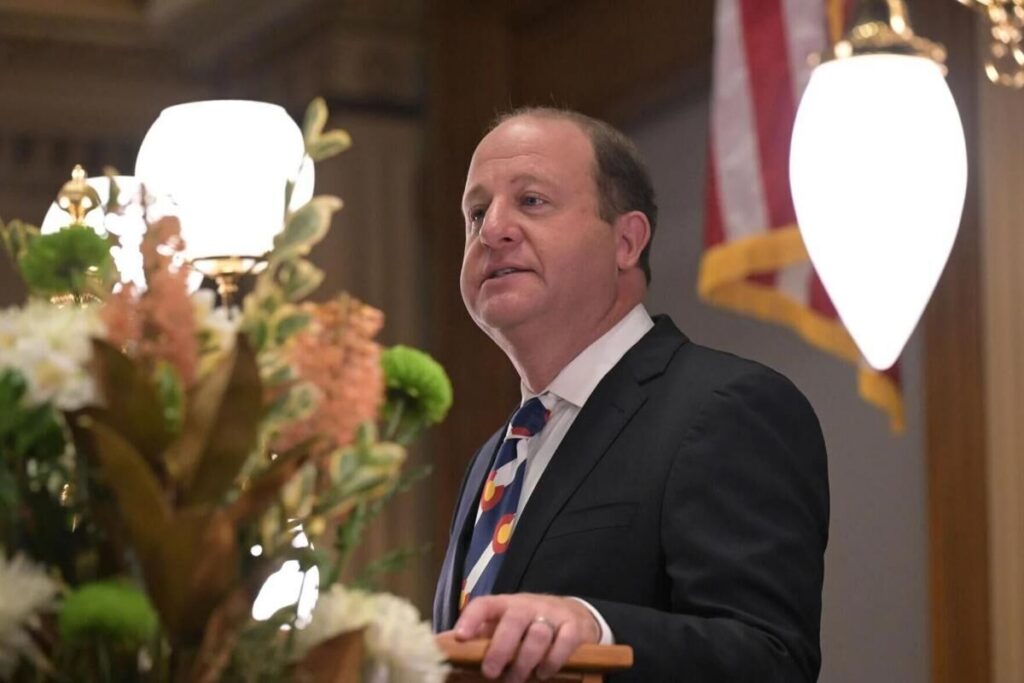
Really? This much hullabaloo over Tina Peters? We enjoy being distracted by the silliest things, don’t we? Our governor’s commutation of Peters’ sentence is just that — a silly thing. Just as it was nonsensical for the “Free Tina Peters”...
A mistaken commutation and an over-the-top reaction | SONDERMANN
By Eric Sondermann
by-eric-sondermann@coloradopolitics.com
Updated 4 days ago
It seemed an itch that Gov. Jared Polis just had to scratch. After months of hints and speculation, Polis put his signature on a commutation of the prison sentence of Colorado’s election-denying queen, former Mesa County Clerk Tina Peters. True,...

Colorado is too wealthy to keep cutting basic services | GUEST COLUMN
Colorado Politics
colorado-politics@coloradopolitics.com
Updated 4 days ago
By Kathy White and Lydia McCoy Colorado is a wealthy state. It may be hard to believe right now because so many of us are feeling the strain. Costs are high. Many families are struggling to keep up. There is...
Polis’ — and the replacement candidates’ — positions on Colorado’s most contested 2026 legislation | Paula Noonan
Paula Noonan
paula-noonan@coloradopolitics.com
Updated 4 days ago
The knock on the word “assume” is it can make an “a**” out of “(yo)u” and “me.” Let’s nevertheless assume the 2026 General Assembly addressed big problems facing the state. Let’s further assume the current governor can move on these...
SPONSORED: What you’re missing about housing — an open letter to all of Colorado’s candidates for governor
Colorado Politics
colorado-politics@coloradopolitics.com
Updated 5 days ago
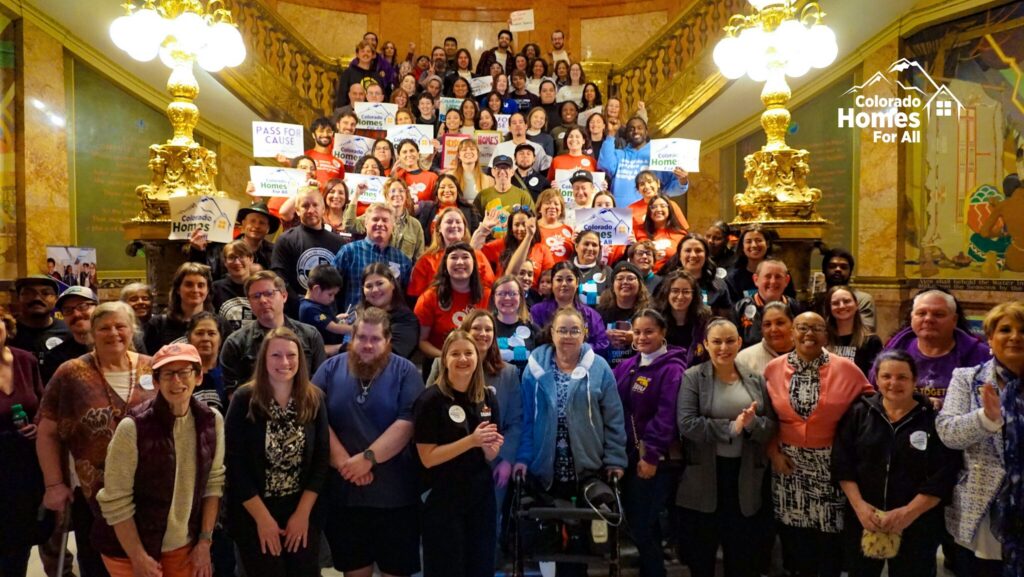
By Colorado Homes For All You say affordable housing, we say housing we can actually afford. As working-class people from across the state who are renters, we are struggling to keep up with our housing costs and we are being...

Colorado’s prisons are underfunded, not overcrowded | PODIUM
Colorado Politics
colorado-politics@coloradopolitics.com
Updated 5 days ago
By John Kellner The state does not have a “prison crowding” problem. It has a prison under-capacity problem. This is a crucial distinction for lawmakers and the public to understand. If it is not properly understood, the state risks falling...

DJ Summers dives into the costlier state of Colorado | The OpEdge Podcast
Tony Olivero
tony.olivero@gazette.com
Updated 6 days ago
Common Sense Institute’s Director of Communications & Research Operations DJ Summers dives deep with The OpEdge Podcast host and investigative columnist Jimmy Sengenberger regarding Colorado’s drop in the institute’s Free Enterprise Competitive Index. Summers shares shrewd insights regarding Colorado’s curious,...
Sorry, Governor — you are wrong on this one | Hal Bidlack
Hal Bidlack
hal-bidlack@coloradopolitics.com
Updated 7 days ago
If you have read even a handful of my several hundred columns during the past few years, you likely ran across me saying nice things about Gov. Jared Polis. I genuinely like the guy, whom I met during our mutual...
PREV
PREVIOUS

SENGENBERGER | Guv’s EV goals are going nowhere
Jimmy Sengenberger I’ll cut to the chase: Gov. Jared Polis’s goal of one million electric vehicles (EVs) on the road by 2030 is unserious, unrealistic and unsmart. Full stop. Pursuing massive greenhouse gas reductions in Colorado (i.e., down 50% by 2030 and 90% by 2050, relative to 2005 levels), Polis set an “ambitious” target for […]

Our cash-bail justice system is out of touch
Joyce Akhahenda We all like to say that people’s lives are priceless. Or that we value the presumption of innocence. But that’s just lip service unless we pass SB21-062. In Colorado, and in practice, life and liberty comes with a price tag. In Michael Marshall’s case it came down to $100. Mr. Marshall’s story, from […]