

Appeals court reinstates Colorado inmate’s claim against nurse for refusing to treat injuries

The Denver-based federal appeals court has reinstated the civil rights claim of an incarcerated man in Colorado who alleged a prison nurse refused to examine his injuries, which later turned out to require medical intervention.
The decision of the three-member appellate panel reversed a lower court judge who determined there was no evidence the nurse, Mary Cardinas, was aware of and disregarded the potential risk of harm to Chester Lee Reneau.
Reneau resided at the Crowley County Correctional Facility in March 2017 when he fell while climbing down from his bunk bed. He allegedly landed on the table and bench that were bolted into his cell’s wall, and fractured his lower leg and tore the rotator cuff in his left shoulder.
According to Reneau’s complaint, he went to the medical clinic to receive treatment, but Cardinas asked him which injury he wanted her to examine. When Reneau indicated he wished her to examine his leg, shoulder and wrist, she allegedly responded, “Well, it’s not going to work that way.” After Reneau threatened her with a civil rights lawsuit if she did not look at all of the injuries, Cardinas reportedly called a security guard to escort Reneau to his cell.
Reneau returned to the medical unit on two subsequent days, when different nurses examined him. He received an X-ray seven days after the initial injury (the facility only performed X-rays weekly), confirming a leg fracture. A prison doctor gave Reneau a pain-relieving injection for his shoulder and rejected Reneau’s request for an MRI scan. After Reneau transferred to a different prison, he reportedly received an MRI which showed a probable tear in his shoulder. A doctor recommended surgery nearly three years after the original fall, in February 2020.
The 10th Circuit panel on Wednesday agreed that Reneau’s claim against the doctor did not amount to a constitutional violation under the Eighth Amendment. While the amendment explicitly prohibits cruel and unusual punishment, the right also encompasses humane conditions of confinement, part of which forbids medical professionals’ deliberate indifference to serious medical needs.
In Reneau’s case, the doctor had used his judgment to provide some forms of treatment to Reneau while denying others, and that did not indicate he acted unreasonably, the judges concluded.
However, the panel decided Reneau should be allowed to proceed with his constitutional allegation against Cardinas.
“A prisoner has a constitutional right to medical care for his serious medical needs,” wrote Judge Gregory A. Phillips in the March 31 opinion. “It follows that if a prisoner suffers multiple serious injuries, he has a right to medical treatment for each such injury. The facts recited by Mr. Reneau, if believed, establish that at the outset of the March 8 visit, Nurse Cardinas refused or declined to examine all of Mr. Reneau’s asserted injuries.”
Previously, U.S. District Court Chief Judge Philip A. Brimmer dismissed Reneau’s claim against Cardinas in May of last year. In his reading of the evidence, Cardinas did not disregard any “remarkably obvious” risks of harm to Reneau as a result of seeing his bruises.
“These facts alone are not sufficient to demonstrate that Ms. Cardinas drew the inference that plaintiff was seriously injured. Bruises can be caused by injuries less serious than broken bones and torn rotator cuffs,” Brimmer wrote.
Attorneys for Cardinas agreed their client had not shown deliberate indifference to Reneau’s needs, especially considering “his dispute with her prevented her from ever examining him.” By contrast, Reneau believed Brimmer had neglected to give more weight to his allegations, as is required given Reueau’s self-represented status.
“The District Court even admits that evidence in the record demonstrates that Nurse Cardinas was aware of facts to draw the inference that Reneau was injured,” Reneau argued to the 10th Circuit. “Instead the District Court chose to play advocate and credit her version of how her examination of Reneau actually happened on March 8, 2017.”
The appeals panel sided with Reneau, finding it reasonable that Cardinas’ actions caused an unnecessary delay in Reneau receiving medical treatment.
“It is a reasonable inference that, had she assured him she would in fact examine all his injuries, the examination would have proceeded without further incident,” Phillips wrote. “At a minimum, Mr. Reneau left the clinic on March 8 with a fractured fibula bone, and without any pain-relieving medication.”
Lawyers for Cardinas did not immediately respond to a request for comment on the ruling. A spokesperson for the Department of Corrections said the Crowley County Correctional Facility is under the operation of the privately-owned CoreCivic company, and their staff are not DOC employees.
The case is Reneau v. Cardinas et al.
This story has been updated to reflect comments from the Department of Corrections.

Judicial fees, furniture under scrutiny as Colorado lawmakers consider budget request
Michael Karlik
michael.karlik@coloradopolitics.com
Updated 14 hours ago
Members of the legislature’s Joint Budget Committee expressed concerns last week about aspects of the judiciary’s requested $845 million budget for courts and probation, while also hearing about the Judicial Department’s relatively restrained spending over time. “If you adjust for...

Colorado Supreme Court approves tenant-friendly rule change, broadens professional discipline for sexual misconduct
Michael Karlik
michael.karlik@coloradopolitics.com
Updated 12 hours ago
The Colorado Supreme Court approved a set of rule changes last week that will make it easier for tenants facing eviction to respond to and learn about their landlord’s initial court filing, and for lawyers to be held professionally accountable...
Colorado commission makes new access-to-justice recommendations after renewed listening tour
Michael Karlik
michael.karlik@coloradopolitics.com
Updated 5 hours ago
Adding judges to handle caseloads. Expanding authority for paraprofessionals in civil cases. Allowing self-represented litigants to file electronically. Making the judiciary’s website user-friendly. Those were among the recommendations advanced by the Colorado Access to Justice Commission in a report released Friday,...
‘Deep source of pride’: Federal judge speaks about first year on bench, how he spends his time
Michael Karlik
michael.karlik@coloradopolitics.com
Updated 2 days ago
One of Colorado’s newest federal judges spoke on Thursday about his first year on the bench, his philosophy behind facilitating case settlements and how his background as a public defender informs his current role. “Most of my career, I represented...
Trump says he has ‘pardoned’ Tina Peters
Wire Services
wire-services@coloradopolitics.com
Updated 4 days ago
President Donald Trump on Thursday said he is “pardoning” Tina Peters, though that won’t free the former Colorado elections administrator as she was convicted under state laws of a security breach of her office’s voting equipment. Trump’s pardon power does...
Man set for plea deal in Evergreen shooting
Sage Kelley
sage.kelley@denvergazette.com
Updated 4 days ago
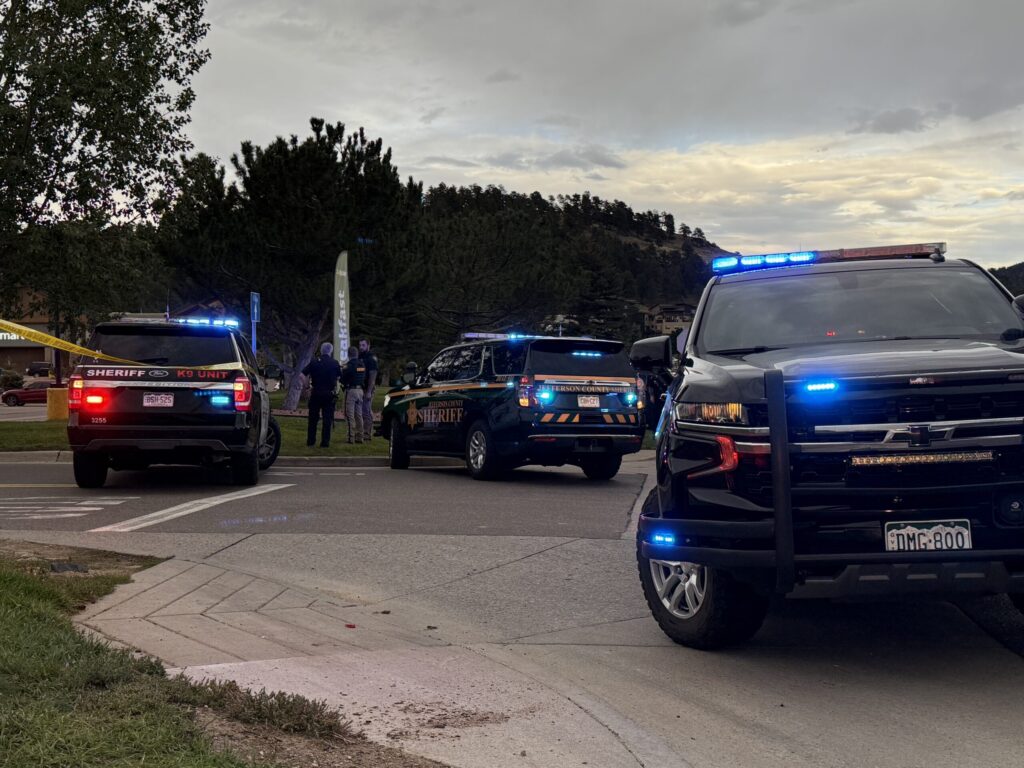
A Lakewood man may be on his way to a plea deal after allegedly ramming police vehicles at the Evergreen Walmart just a day after the Evergreen High School shooting. Tyler Young, 33, waived his right to a preliminary hearing...
Appeals judge believes revised ‘reasonable doubt’ definition is unconstitutional
Michael Karlik
michael.karlik@coloradopolitics.com
Updated 3 days ago
Although Colorado’s second-highest court has issued multiple decisions in recent months upholding a revised definition of “reasonable doubt” from three years ago, an appellate judge became the first on Thursday to argue that a key phrase violates defendants’ constitutional right...
CDOT did not violate constitutional rights of outdoor advertising company, appeals court says
Michael Karlik
michael.karlik@coloradopolitics.com
Updated 4 days ago
Colorado’s second-highest court concluded last month that the Colorado Department of Transportation did not violate the constitutional rights of an outdoor advertising company by denying two permits for billboards in Adams County. StreetMediaGroup, LLC argued CDOT violated its right to...

Family files lawsuit over 2023 Jeffco inmate death
Sage Kelley
sage.kelley@denvergazette.com
Updated 4 days ago
The family of 27-year-old Ashley Jo Raisbeck filed a lawsuit against the Jefferson County Sheriff’s Office nearly two years after the woman died in custody. Jaime Raisbeck, Ashley’s mother, stood outside of the Alfred A. Arraj Courthouse Wednesday morning, a...

Colorado Supreme Court’s opinion output drops by two-thirds amid justice’s absence
Michael Karlik
michael.karlik@coloradopolitics.com
Updated 6 days ago
The Colorado Supreme Court has released significantly fewer new opinions in recent months compared to the previous two years, even as the judicial branch insisted that a member’s open-ended absence is not causing delays. Justice Melissa Hart has been on...
PREV
PREVIOUS

'The Chief,' Mary Mullarkey, remembered for her compassion and legal expertise
Mary J. Mullarkey, the first female chief justice of the Colorado Supreme Court and its longest-serving, has died at age 77. Many of her former law clerks on Wednesday spoke of how “the Chief,” as they called her, was beloved and humble, even as she led the state’s judicial system and held the power to […]

Judge nixes wildlife-killing project in Colorado after agency failed to follow law
A federal agency improperly green-lit two proposed research projects to kill wildlife in Colorado by failing to separately study and solicit public comment in an attempt to speed the projects along, a federal judge ruled on Tuesday. U.S. District Court Senior Judge Marcia S. Krieger sided with a trio of nonprofit groups that sued the […]