

SONDERMANN | Two weeks in China — 24 months later


In the spirit of reflection which seems to dominate these weeks, let me harken back not one year but two in order to recall and think again of a trip we took to China in March 2019.
From early on, my wife and I have eschewed fancy cars and other luxuries in favor of travel and seeing various parts of our world. Of the places we have visited, no country or culture grabbed me and provoked my thinking as did our time in China. 24 months later, the interest and intrigue remain.
In ruminating upon this, I think it was a function of three factors. First is simply the immense number of people. For every American, there are well over four Chinese. Second, one cannot look at the world as it is and as it is likely to unfold without grasping China’s front and center role. Third, to be an American in China is to be in a quite foreign place with very different customs and concepts of rights and responsibilities.
Of course, we saw the highlight attractions – Tiananmen Square and the Forbidden City; the Great Wall; the Terracotta Warriors archeological site; and others. Those sites are truly can’t-miss. But the compelling allure was in trying to understand, even a bit, the culture, the abundant contradictions and the powerful global implications.
The country’s ruling elite is known as the Chinese Communist Party. However, the “communist” moniker is quite the misnomer. This is not a “communism” that Marx or Engels, or even Stalin or Mao, would remotely recognize.
Rather, the China of today is a fiery consumer-driven nation, far more entrepreneurial than communist, but with a heavy overlay of authoritarianism.
The evidence of that centralized, totalitarian control is everywhere. Foreigners come to see the Great Wall, but Chinese citizens live daily with the “Great Firewall” that prevents access to a slew of western websites – Facebook and Twitter for sure, but also Google and Yahoo, Instagram, YouTube, Wikipedia, Amazon, even Netflix and Pinterest. Of course, China has its own version of all these sites, but with a strong hand of government censorship.
We got only the thinnest glimpse of China’s surveillance technology, but it is substantial and pervasive. At the end of our trip, as we went through the final check at the Shanghai airport, we could see bits of the screen at which the Chinese immigration officer was looking, complete with photos of each of us captured at various times over the preceding weeks.
This facial recognition capability is but one tool Chinese authorities use in their ever-expanding system of “social credit” which is essentially a national blacklist based on each citizen’s social and economic standing, and an assessment of their trustworthiness and loyalty. Increasingly, it impacts the daily life of far too many, including the ability to simply rent an apartment or board a plane. Scary, big-brother stuff, indeed.
And all this says little of the country’s genocidal treatment of its Uighur population as well as that of other ethnic and religious minorities.
Life is a series of tradeoffs. Nowhere is that more true than in contemporary China. The prevailing ethos, especially among the younger, seems one of gladly trading political freedoms for material consumption. Our guide introduced himself as Wang Chen, but then immediately told us to call him “Kobe” in honor of his twin loves of steak and basketball. When asked about China’s one-child policy (now modified to two children), Kobe replied that he and his wife did not want a second child, just permission for a second car.
The remnants of that one-child dictum are also evident. There are currently 118 men for every 100 women in China. This translates into 180 million single men with limited marital prospects. Think about that number which equates to 55 percent of America’s population. How exactly is that a formula for social contentment and cohesion?
The evidence is also there in the attention, let’s call it spoiling, heaped on all those only children. We came across an entire floor of a large shopping mall dedicated to every conceivable type of child activity. Including a baby spa.
One cannot escape the overwhelming numbers. New York City leads our population list at something over 8.3 million (before COVID). There is a seemingly endless list of Chinese cities larger than that, including many of which most Americans have never heard. Shanghai and Beijing are each home to well north of 20 million. Chongqing, high up on the Yangtze and from which many of your Apple products originate, tops the charts at 31 million.
After time in Beijing, arriving in Xi’an felt like going to a village. Its population count is only 7.9 million. Here at home, the construction of one 40-story apartment building is notable. In Chinese city after city, one witnesses complexes of two dozen such high-rises going up.
The mass of people led me to develop my own pop psychological theory for the Chinese fondness for selfies which are taken everywhere at all times. Could it be a cry for attention; for standing out; for a momentary bit of self-expression in a crowded, regimented life?
One of their mega-cities is Wuhan where we disembarked from a ship we had taken much of the way down the Yangtze River. It is a beautiful place, often called “the Chicago of the Orient.” We broke away from our group for a nighttime stroll along the waterfront. Little could we have known that the whole world would be talking about Wuhan and its wet markets some nine months later.
For the past decade or longer, the big question in the West has been whether China’s economic prosperity would lead necessarily to an opening-up and expansion of political liberties. Many smart people thought it inevitable.
These days, that prediction seems anything but sure. As consumerism and China’s distinctive form of capitalism have ramped up, so has political repression. The two seem attendant rather than antithetical. A whole lot of Chinese appear to accept the bargain. Or do a mighty fine job of masking their feelings.
Of course, the only lens we have is our own. For a Westerner, such as myself, to try to make sense of such a different place in just a few weeks is akin to a Chinese person touring a handful of American cities and claiming to have figured out what makes us tick.
Back to tour guide Kobe, he commented that if New York is the Big Apple, then Beijing is the Big Onion in that there are layers and layers to peel back in order to understand the place. So it is with the entire country.
Upon our reluctant departure and now in looking back two years later, my takeaway is one of continuing fascination and of witnessing a country of newfound confidence and ebullient energy thinking this is its ascendant moment as it tries to do what no other society has done in world history. That being to reclaim its role as a great and dominant civilization for a second time.



Colorado NRA chapter seeks injunction against new gun‑training law
Marissa Ventrelli
marissa.ventrelli@coloradopolitics.com
Updated 50 minutes ago
The Colorado chapter of the National Rifle Association is seeking an injunction to stop the state from enforcing a new law that took effect earlier this month. The measure requires anyone buying or selling certain firearms to first complete a...

Trump’s approval rating sinks to new low at 33%
Molly Parks
molly.parks@washingtonexaminer.com
Updated 3 hours ago
President Donald Trump’s approval rating has reached a new low, sitting at 33% approval and 62% disapproval, according to the latest YouGov/Economist poll. The one-third approval standing in early August is the lowest net job approval Trump has seen across...
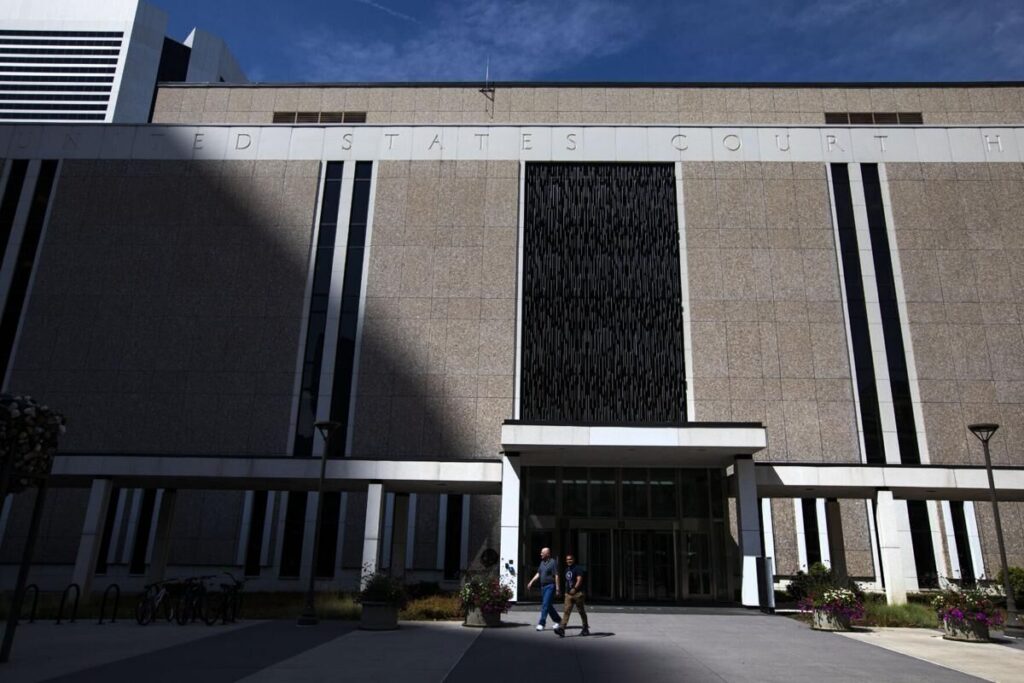
Federal judge dismisses ex-Colorado judicial discipline director’s conspiracy lawsuit
Michael Karlik
michael.karlik@coloradopolitics.com
Updated 19 hours ago
A federal judge dismissed a lawsuit from Colorado’s former judicial discipline director on Tuesday, finding that he failed to adequately state claims for conspiracy or constitutional violations. Christopher S.P. Gregory, who served as the executive director of the Colorado Commission on Judicial...
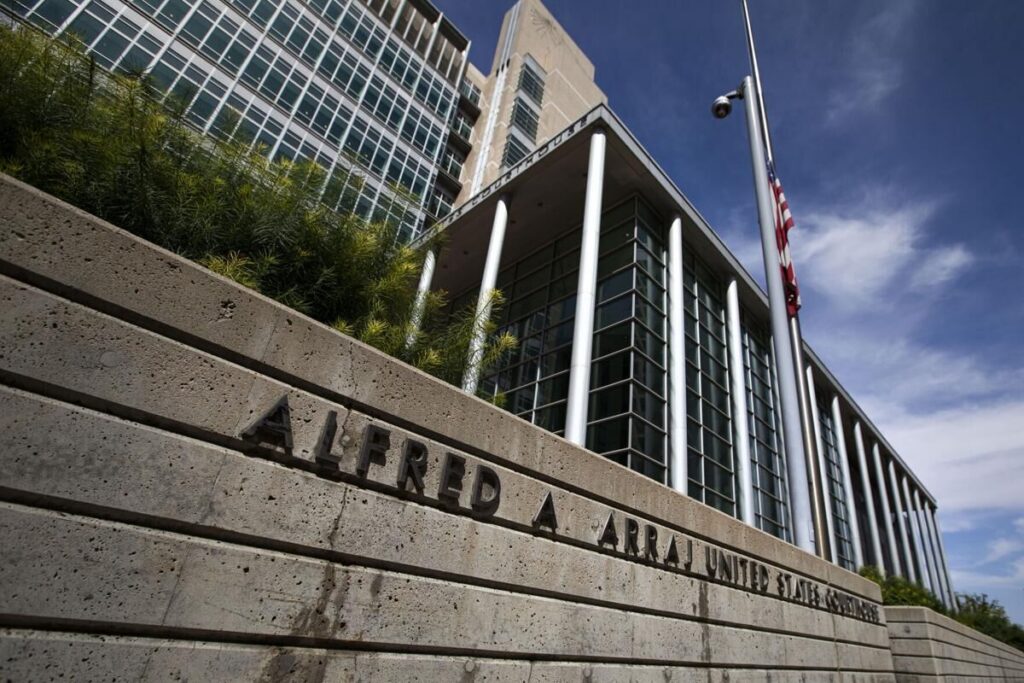
Federal judge allows retaliation claims to proceed against prison officials
Michael Karlik
michael.karlik@coloradopolitics.com
Updated 18 hours ago
A federal judge agreed last week that a man incarcerated at Sterling Correctional Facility had credibly alleged that employees retaliated against him for filing grievances, including by taking away his disability accommodations and turning off his electricity. Louis Peoples Jr.,...
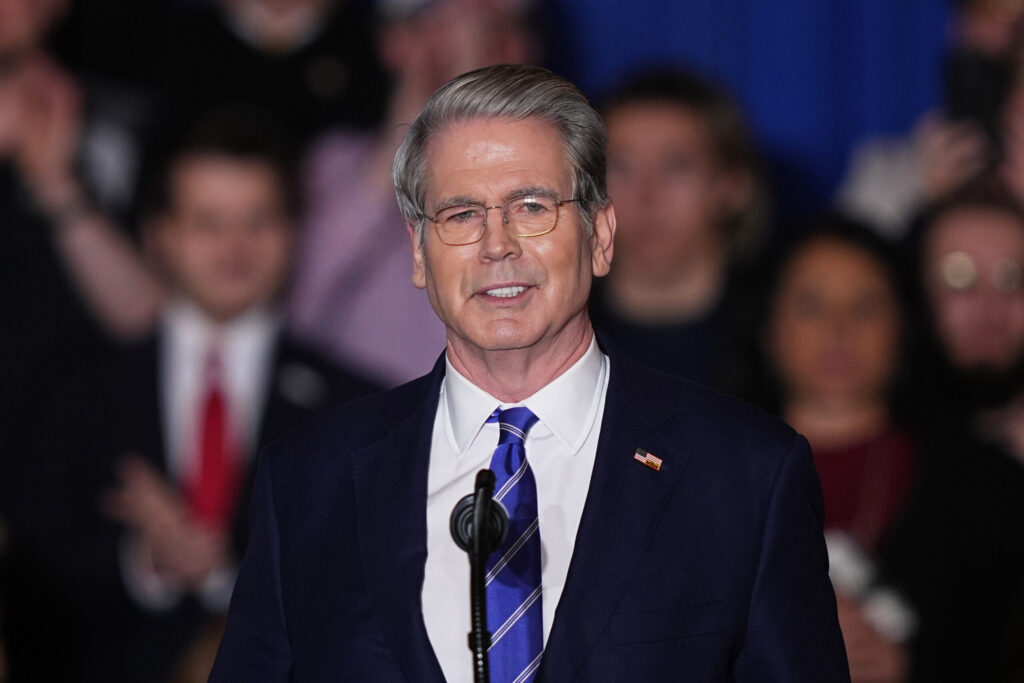
Treasury releases five-step guidance for employers to make contributions to Trump Accounts
Christian Datoc
christian-datoc@coloradopolitics.com
Updated 1 day ago
Treasury Secretary Scott Bessent published new guidance Tuesday outlining the specific steps employers must take to contribute to employee Trump Accounts. The accounts, one of the most popular provisions included in President Donald Trump’s One Big Beautiful Bill Act, are...

Denver schools to refinance bonds to create capacity for future borrowing
Nico Brambila
nico.brambila@denvergazette.com
Updated 21 hours ago
Less than two years after voters approved a record $975 million school bond, Denver Public Schools is refinancing older debt — a move district officials say will save taxpayers money while creating capacity for another bond election. The district has...

Russia frees imprisoned US Marine over health concerns
Brady Knox
brady-knox@coloradopolitics.com
Updated 1 day ago
Russia freed former U.S. Marine Robert Gilman upon the urging of U.S. officials so he could receive medical care in the United States. Gilman, 32, was released after 1,666 days in prison, having been arrested on Jan. 17, 2022. Eric...

Colorado students push AI task force as schools navigate new tech era
Marissa Ventrelli
marissa.ventrelli@coloradopolitics.com
Updated 18 hours ago
A group of students is urging lawmakers to establish a task force on artificial intelligence in education to advise districts on how to ensure that pupils and educators use the technology effectively without becoming overly reliant on it. The students...

Parker data center could get $19M tax rebate from Douglas County
Nicholas Fogleman
nicholas.fogleman@denvergazette.com
Updated 1 day ago
At a time when Denver and Front Range governments are restricting or banning data center development, Douglas County commissioners are poised to approve a $19.3 million tax rebate agreement Tuesday for a new data center under construction in Parker. The...

Denver City Council rejects contract that would have given video maker 8-year deal
Deborah Grigsby
deborah.smith@denvergazette.com
Updated 1 day ago
Denver’s Office of Human Resources will have to get creative to attract new city employees and place them in “hard-to-fill” jobs after a proposed five-year contract extension, valued at $600,000, failed to gain favor with the Denver City Council. The...
PREV
PREVIOUS
Hundreds gather in front of Coors Field Saturday for 'Stop Asian Hate' candle light vigil
On the corner of 20th and Blake streets in front of Coors Field, hundreds of people of all ages, genders, races, religions and socio-economic status gathered Saturday in solidarity. Some people held signs bearing phrases such as #StopAsianHate,” “Fight Racism!” and “Protect Asian Lives.” Others clapped, some cried, and many carried lit candles while over […]

OUT WEST ROUNDUP | Grisham wants drilling policies offset; Navajo businesses start to reopen
NEW MEXICO Governor seeks to offset Biden’s oil policies New Mexico could lose nearly three-quarters of $1 billion over the next few years if it sees even a modest reduction of oil and gas production due to the federal government’s actions to curb leasing on public lands, Gov. Michelle Lujan Grisham warned in a letter […]