

INSIGHTS | In a state that gets voting right, Colorado politicos see plenty to fix
There was a notable pause during a legislative committee hearing I was listening to on Tuesday afternoon. You don’t get many of those under the gold dome of cynicism at Colfax and Lincoln.
The instance of golden silence came 51 minutes into a 71-minute hearing aimed at the stamping out what was billed as the best opportunity for election cheats in Colorado, the unverified witness signature when a voter signs an X for their name.
Sen. Rob Woodward, a Larimer County Republican, sponsored the bill. He said county election officials told him that unverified witness signatures were “one of the biggest loopholes in the process.” He didn’t raise the issue before the November election, he said, because he didn’t want to give fraudsters any ideas.
Paul Lopez, Denver’s city clerk, said that when the rules make it harder for people to vote, fewer people vote. The bill proposed witnesses live in the same county as the voter and provide a voter ID number. Lopez said he didn’t know his voter ID number, and he was willing to bet most people don’t know theirs or where to find it.
During the hearing Tuesday there were several attempts to ascertain how big a problem this really is. Lopez checked with his office.
Out of 398,535 ballots cast in Denver last November, a stunning 25 voters used a witness signature to verify their vote.
The 14-second pause was palpable. Silence is what happens when a group of people realize they’re chasing a ghost.
That’s 25 who needed a witness, because of a disability, not 25 who cheated.
Elections director Peg Perl said Arapahoe County had fewer than 100 out of about 360,000 votes. She volunteered that ballot forgery is already a felony, suggesting a high risk for one vote.
None were flagged as suspicious, but that was the point of the bill: nobody checks the witness’ signature.
After some robust back-and-forth about making it harder for older people and people with disabilities to vote, the bill died on a party-line vote.
Woodward said he was toting water for past elections.
“Fraud doesn’t require Chinese hackers, Dominion voting machines, suitcases of ballots,” he said citing popular election conspiracies. “All it requires is a pen.”
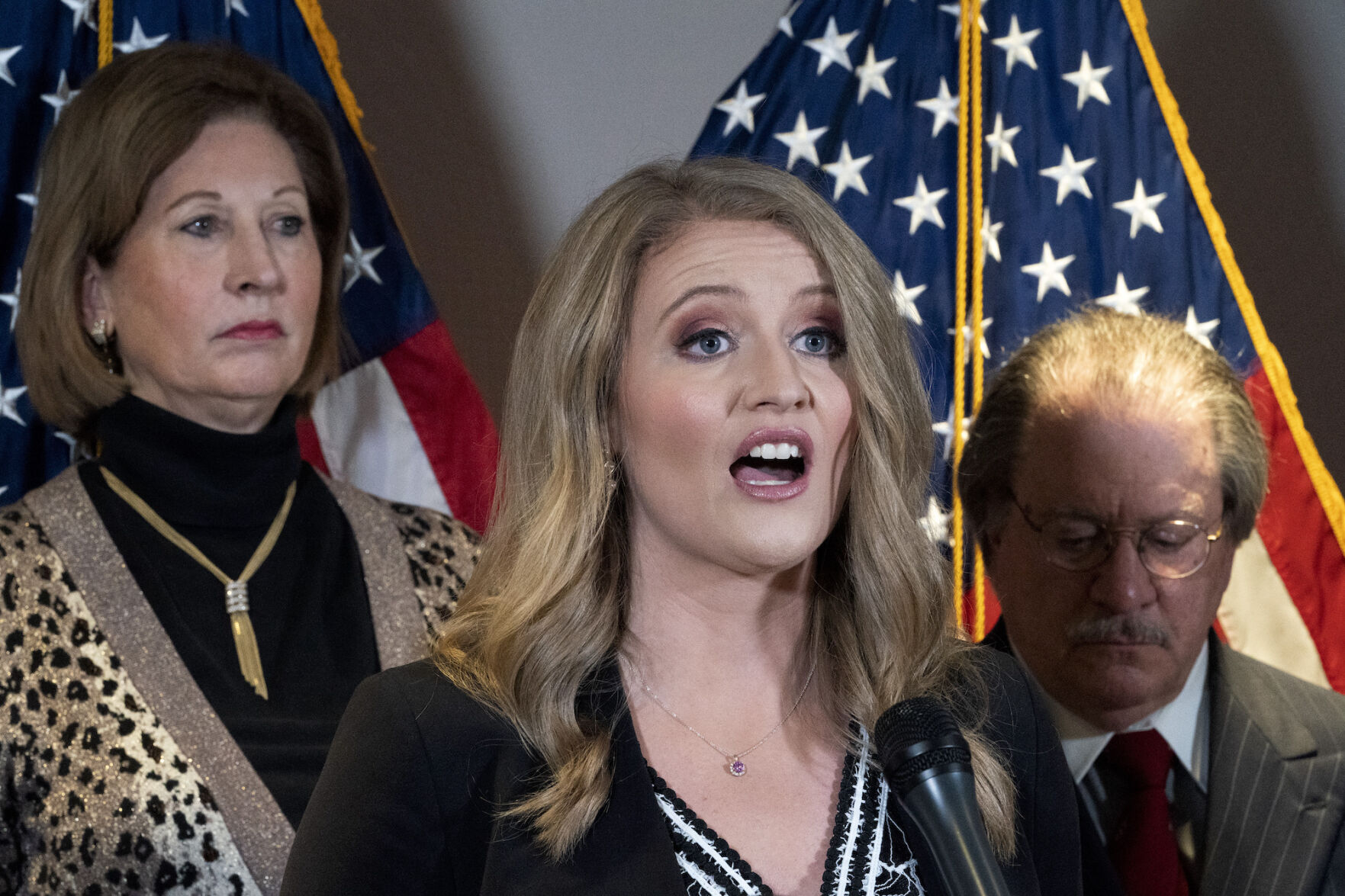
Back in December, Republican legislators brought Trump lawyer Jenna Ellis, a Coloradan, to testify in an election integrity hearing before the Legislative Audit Committee, a day of sound and fury but little to show for it in the Democrat-led statehouse.
The point below the surface is to create a shadow of a doubt about the system. Spending so much time on so small a doubt – 25 out of 398,535 is .006% – there’s still an unshakable whiff something isn’t quite right.
Colorado Republicans this session also propose:
- House Bill 1086 to require proof of citizenship for in-person voting. The bill is sponsored by freshman Rep. Stephanie Luck of Penrose.
- House Bill 1088 to require an annual audit of the statewide voter registration system. This bill also was sponsored by a new lawmaker, Rep. Andres Pico of Colorado Springs.
- House Bill 1053 to allow any registered voter to request a manual recount of paper ballots, as long as they pay the cost. They also would have the right to challenge the way the recount is being conducted. Legislative analysts noted it would still increase the workload on the trial courts. The bill is sponsored by Rep. Dave Williams of Colorado Springs.
All three bills are scheduled to be heard by the same House committee next Monday afternoon, where all three will die. That’s right, I’m clairvoyant now. See if I’m wrong. The committee is referred to as the “kill committee,” so that’s a pretty good head start on where this is going.
Republicans across the country are running election bills this year to shake up the rules on elections.
The Washington Post reported last week that GOP lawmakers have proposed at least 250 laws in 43 states to restrict voting by mail, early in-person and Election Day voting, tougher ID requirements and a higher bar to vote by absentee, as of Feb. 19 with more proposals introduced since then.
In red states, they’ll win. In blue states, they’ll make a lot of noise, and that’s its own kind of victory.
You don’t usually rob a snack machine with one push. You have to rock it back and forth a few times and hope the Cheetos fall your way. Politics is more like robbing a snack machine than you probably know.
Republicans were proud fathers back three years ago when Wayne Williams, a rising GOP star, ran the state election office, and Colorado was deemed to have the safest elections in the country.
In politics it’s a cold fact that you help others by helping yourself first.
Democrats have their own agenda, with the majority firepower to get it done this session: ranked-choice voting for cities and towns, local independent panels to draw district boundaries for county commissions and multilingual ballot access.
Both sides seem convinced, rightly and wrongly, that the other side can only win by cheating, but the votes they fight hardest for will be their own.
At the Colorado Capitol, some days you make a change and some days you make a difference. They’re not always the same days.

Federal judge blocks evidence from Aurora police’s unconstitutional search
Michael Karlik
michael.karlik@coloradopolitics.com
Updated 17 minutes ago
A federal judge ruled last month that prosecutors cannot use firearm evidence against a defendant because Aurora police searched him without having any reasonable basis to believe he was armed or dangerous. In evaluating the constitutionality of the search, U.S....

Public comment period opens as federal review targets Colorado’s wolf reintroduction program
Marianne Goodland
marianne.goodland@coloradopolitics.com
Updated 31 minutes ago
Federal wildlife officials have opened a formal review of Colorado’s wolf reintroduction program, launching a public comment period to assess how the state has handled rising conflicts between wolves and livestock. A notice from the U.S. Fish and Wildlife Service...

Denver to mull $6.9M East Colfax BRT extension, police union deal
Deborah Grigsby
deborah.smith@denvergazette.com
Updated 1 day ago
Denver’s councilmembers will consider several items during Monday’s regular meeting, but the most notable is a resolution to overhaul contract review rules, requiring draft agreements to be shared with the Council before being heard at committee meetings. Council Resolution 26-0329...

Colorado justices confirm lawyers may ‘borrow’ allegations from elsewhere
Michael Karlik
michael.karlik@coloradopolitics.com
Updated 14 hours ago
The Colorado Supreme Court ruled on Monday that plaintiffs’ lawyers can use allegations made elsewhere to bolster their own clients’ claims, so long as the attorney first performs some degree of investigation into the “borrowed” assertions. Under Colorado’s rules for...
Colorado legislators propose $46.8 billion budget, driven by Medicaid costs
Marianne Goodland
marianne.goodland@coloradopolitics.com
Updated 17 hours ago
The six-member panel of legislators in charge of crafting the state budget has now turned over its plan to the Colorado legislature, proposing to spend $1.5 billion more for the Medicaid program. The increase is driven by Medicaid costs, which...
Governor signs bill expanding who can petition for weapons restrictions
Marissa Ventrelli
marissa.ventrelli@coloradopolitics.com
Updated 18 hours ago
Gov. Jared Polis on Monday signed a bill into law expanding who can ask a judge to temporarily restrict a person’s access to firearms. Established in 2019, 0Colorado’s extreme risk protection law (ERPO) initially allowed a family member or law...

Colorado justices restore RTD subcontractor’s award, reject ‘drastic’ view of public works law
Michael Karlik
michael.karlik@coloradopolitics.com
Updated 19 hours ago
The Colorado Supreme Court on Monday restored a $5.7 million award to a company that helped build a commuter rail line and, in doing so, rejected a view of state law that would nullify a subcontractor’s entitlement to any compensation...
As Colorado passes 6 million residents, housing initiatives take center stage
Marianne Goodland
marianne.goodland@coloradopolitics.com
Updated 18 hours ago
New Census data confirming Colorado’s population has topped six million is fueling renewed debate over Gov. Jared Polis’ housing agenda, as he tied the population increases to home construction. The governor said the counties experiencing the largest increases in new...

Congress urged to open antitrust investigation into Apple and OpenAI over ‘left-leaning bias’
Kaelan Deese, Washington Examiner
kaelan.deese.washington.examiner@gazetteedit.wpenginepowered.com
Updated 20 hours ago
A conservative legal group founded by senior White House adviser Stephen Miller is urging Congress to investigate a partnership between Apple and OpenAI, arguing the companies have effectively locked millions of people into a single, politically biased artificial intelligence system....

Trump threatens jail time over downed US fighter jet ‘leak’
Christian Datoc and Mabinty Quarshie, Washington Examiner
christian.datoc.and.mabinty.quarshie.washington.examiner@gazetteedit.wpenginepowered.com
Updated 20 hours ago
President Donald Trump threatened jail time Monday for the journalist who first reported that an airman was still missing after a fighter jet went down in Iran last week. The high-risk and eventually successful attempt to rescue the weapons officer...
PREV
PREVIOUS

Full slate of Colorado Democrats' state party officers running unopposed for another term
The Colorado Democrats are holding party officer elections Saturday, but there won’t be any suspense about the results. That’s because all of the current statewide officers are running unopposed for an additional term, and the party is creating new offices to accommodate two other Democrats who also want to serve. Following the Democrats’ second cycle […]
Colorado Option Health Benefit bill introduced to cheers and jeers
The Colorado Option Health Benefit bill, scheduled for introduction Thursday afternoon, is now on its journey through the legislative process. The 2021 version is sponsored by Reps. Dylan Roberts, D-Eagle and Iman Jodeh, D-Aurora; and in the Senate by Sen. Kerry Donovan, D-Vail. Roberts and Donovan sponsored the 2020 version that went by the wayside because […]