

NONPROFITS | Fundraising in a virtual world may be here to stay, for awhile
The tagline on a recent John Tobey Events newsletter advises that “small is the new big.” Add “virtual is the new reality,” and you’ve nailed the outlook for charitable fundraising events in 2021.
Denver seated events are currently capped at 150 attendees indoors and 175 for outdoor events, but if COVID-19 positivity rates take a dip from the present 7.5%, it may not be long until hotel ballrooms buzz with the movers, shakers and policymakers who dutifully donned tuxedos and ball gowns to sip, sup and raise big bucks for hundreds of worthy Colorado causes before the pandemic hit.
Don’t get ahead of yourselves, though, warned those in the know. Just because venue capacity is increased one day, things can and do change, often on a day’s notice.

“I’m prepared for all events in 2021 to be virtual,” said former Denver Bronco running back Reggie Rivers who since leaving the gridiron has forged a career as one of the region’s most popular auctioneers and masters of ceremony. In 2020, Rivers, founder and president of The Gala Team, conducted 61 virtual auctions; 84 are already on his calendar for 2021.
“I don’t think I’ve ever been busier,” added Kelli Kindel, founder, guru and chief go-fer of Kelli Kindel Events. In her 38 years as an event planner, Kindel produced high-revenue fundraisers for such prominent clients as Children’s Hospital Colorado, the Children’s Diabetes Foundation and the Dumb Friends League.
“Everybody is feeling super optimistic about a return to things as we once knew them, but honestly, we are living in a pandemic world and have to keep people’s safety in mind. And for that reason alone, virtual and/or hybrid events are here to stay,” she said.
Which isn’t a bad thing, Kindel said, because virtual events by and large are less expensive to produce. For example: Firefly Autism saved $65,000 in catering costs alone when its signature event, Laugh Yourself Blue, went virtual in 2020.
“That’s not so good for our wonderful friends in the catering business,” Kindel admitted, “but it makes a big difference for the nonprofit’s bottom line.”
Other examples: Hope House Colorado, an Arvada-based nonprofit serving teen moms, raised $405,000 from its virtual Maskerade 2020, a $110,000 increase over 2019’s in-person version. The Eating Disorder Foundation, a longtime John Tobey client, spent about $80,000 to produce its annual pre-pandemic Icebreaker Gala, a dinner and auction whose proceeds account for 51.1% of the EDF’s annual budget. Tobey said that by switching to virtual status in 2020, production expenses were cut by half, enabling the Denver nonprofit to net $208,000.
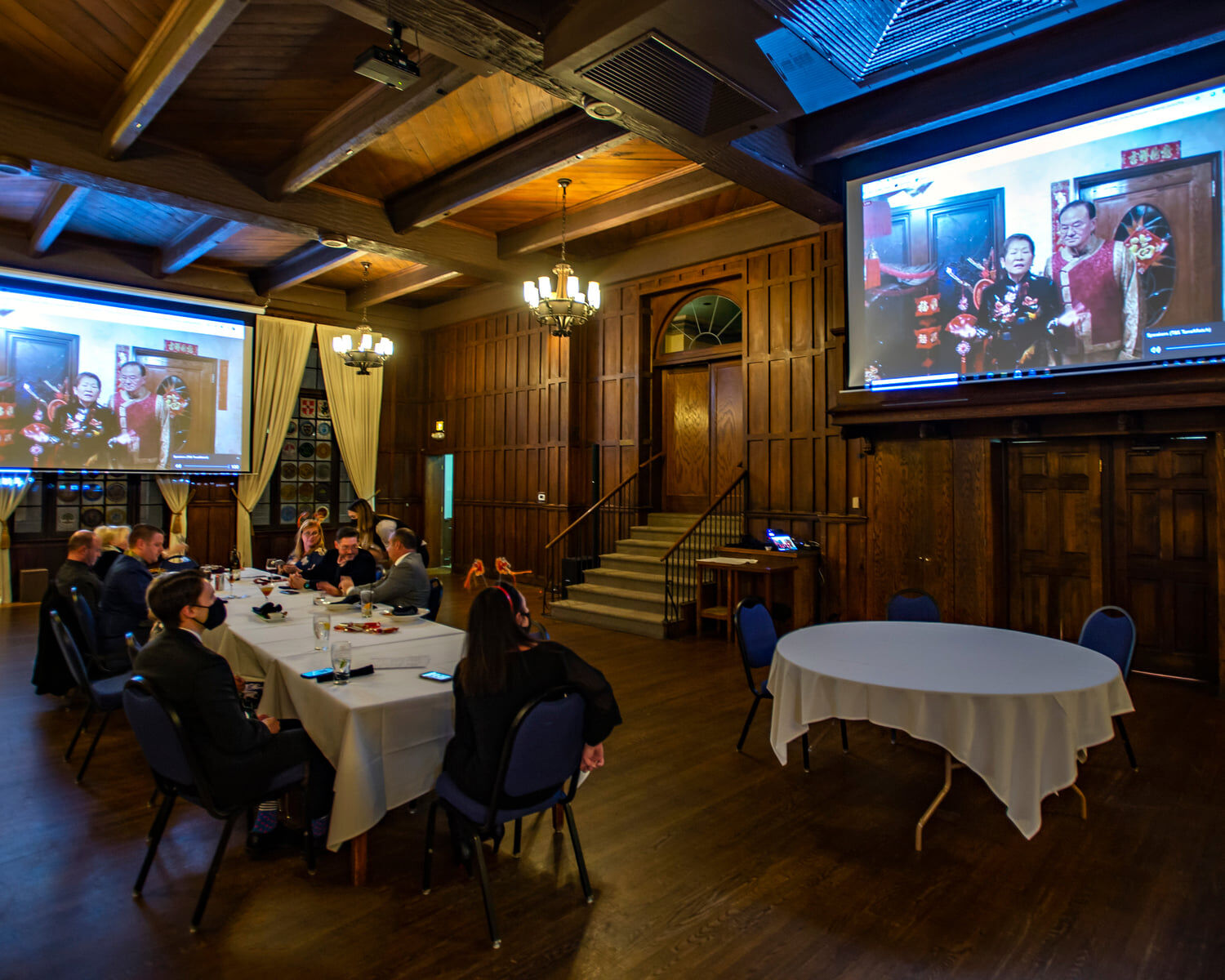
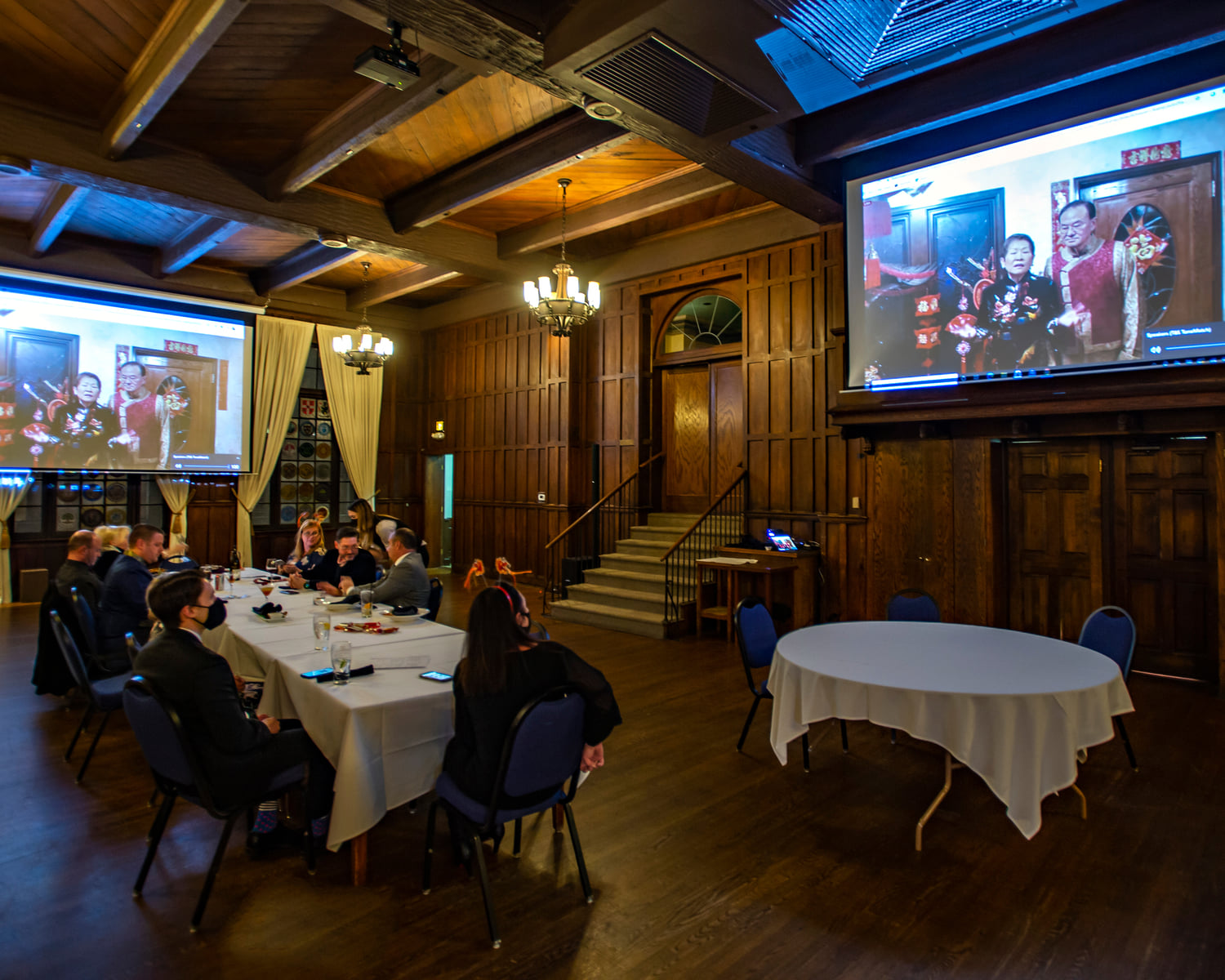
Diana Backstrom, an executive clinical account manager for the international biopharmaceutical company Sobi, chaired the Nathan Yip Foundation’s 2021 Chinese New Year Gala and found it easier and less expensive to execute than an in-person event.
The foundation’s executive director, Tarika Cefkin, engaged Rivers, Kindel and Rollins Productions to give the virtual audience the feeling of being at an in-person event, which made the chairwoman’s job “Pretty much of a breeze. We didn’t have to deal with collecting and transporting auction items to the venue and working with the chefs to be sure we had a terrific Chinese menu for the dinner,” Backstrom said. Also, all correspondence – save-the-date notices, invitations and reply cards and a frequently asked questions list – were done via email, which eliminated printing and postage costs.

Another advantage to virtual events, according to Backstrom, is that participation isn’t limited to venue capacity. “We had people logging in from Australia, Palm Springs and New York City, just to name a few. A virtual event literally opens our doors to the world.”
Literally, indeed. The 2020 Carousel of Hope Ball attracted a worldwide audience pegged at 2 million, thanks to People magazine streaming recorded-for-the-occasion songs and messages from celebrities ranging from Rod Stewart and Jennifer Hudson to George Clooney and Dionne Warwick on PEOPLE.com, YouTube, Facebook and Twitter. The production raised $1 million for the Barbara Davis Center for Diabetes on the Anschutz Medical Campus in Aurora.
Still, Kindel and Tobey advised groups to be mindful of the elements involved in staging a virtual fundraiser and to not “wing it.”
“Last April, when virtual events were new, you could get away with something simple, like a Zoom setup and no fancy backgrounds, just a lot of faces on little squares on your computer screen and a single camera pointed at the host, speakers and auctioneer,” she said. “Today you need to give your audiences more.”
Which means broadcasting from a studio with professional sound, lighting, cameras and more, such as Rollins Productions, JSAV Denver, CEAVCO and Seawell Ballroom in the Denver Center for the Performing Arts.
National Jewish Health, for example, is featuring entertainment by the Broadway cast of “The Prom” for its virtual Beaux Arts Ball on March 6. Western Fantasy 2020, benefiting Volunteers of America, treated its viewers to a virtual concert by country music’s Lee Brice, and Firefly Autism’s 2020 Laugh Yourself Blue featured comedian Michael Jr., a veteran of “The Tonight Show,” Comedy Central shows and “Jimmy Kimmel Live!”
2021, John Tobey said, “is going to be all about utilizing innovative spaces and (an event planner’s) creativity.” As attendance restrictions loosen, Tobey and Kindel predicted an increase in “hybrid” or tiered events, where a limited number of people gather in person while others access it virtually.
“Whatever the state says we can have, we will have,” Kindel said, adding that “nontraditional” venues such as tents, parks and beautifully landscaped back yards are bound to be popular going forward. Organizations opting for indoor spaces will choose their venue based on such features as updated air-flow systems and how meals are plated and served.
“Right now you can’t have cocktail hours with passed hors d’oeuvres, buffets where guests serve themselves or entrees that aren’t pre-plated and covered,” Tobey pointed out. But that doesn’t mean masked and gloved waiters handing out plates with soggy food covered in Saran wrap. Tobey recently did a wedding where, instead of one large dance floor, he set up several small ones. He also had the chef prepare individual wedding cakes served in domed containers. “When someone says you can’t do something I follow the rules – but I make it cool.”
One of 2021’s first hybrid events was Arrupe Jesuit High School’s annual fundraiser, where 119 VIPs were grouped throughout several of the school’s classrooms to enjoy a pre-plated dinner, program and auction while an additional 285 VIP ticketholders had dinners delivered to their homes. Five hundred others tuned in to the virtual presentation for free.
The biggest stumbling blocks for in-person events revolve around mask wearing and whether guests need to provide proof of their COVID vaccination. Those are “sticky situations,” Rivers admitted. “The organizations aren’t going to want to nag people and risk alienating a donor. And what liability would the host, the venue or the committee have should there be an outbreak?”
His suggestion: A “third-party enforcer” for mask compliance. “The vaccination question,” Kindel added, “raises huge questions of equity and fairness, but it’s something we have to address. No organization or venue wants to be the lead story on the 10 o’clock news.”
Another concern with a hybrid event is determining who gets to be there in person. Kindel said she is already working on solutions for dealing with the people who want to attend the live event but aren’t one of the organization’s higher-end donors. “Maybe it’s a production like ‘America’s Got Talent,’ where the camera follows the host around as he or she gives a running, behind-the-scenes commentary so those participating from home feel like they’re getting something those in the actual venue aren’t privy to. It isn’t going to be easy, but we’ll figure it out.”
Still – and no judgement as to whether it’s right or wrong – there will always be organizations that do not embrace the virtual world and will continue to fundraise the old-fashioned way: by making direct appeals to their donors via snail mail.

Colorado’s government spending has outpaced inflation, analysis finds
Marissa Ventrelli
marissa.ventrelli@coloradopolitics.com
Updated 32 minutes ago
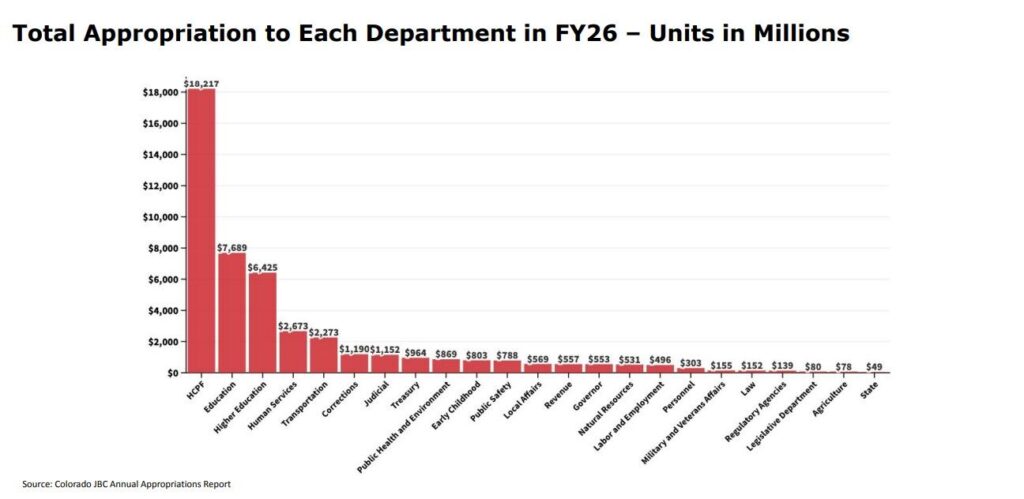
Colorado’s per-person spending has increased by 31% over the last two decades despite slowed population growth, according to a new analysis by the Common Sense Institute. The annual report compares state spending by department over the last 20 years, tracking...

OMB directs AI vendors seeking government contracts to measure their model’s political bias
NAOMI LIM Washington Examiner
naomi-lim-washington-examiner@coloradopolitics.com
Updated 43 minutes ago
The White House Office of Management and Budget has amplified President Donald Trump‘s actions regarding artificial intelligence by directing AI vendors to measure and disclose political bias in their models when seeking contracts with the federal government. OMB Director Russell...
Abrego Garcia vows to ‘fight’ against Trump administration as judge prohibits further detention
David Zimmermann Washington Examiner
davidzimmermannwashingtonexaminer@wpstage.coloradopolitics.com
Updated 52 minutes ago
Kilmar Abrego Garcia vowed to “fight” against the Trump administration on Friday, one day after a federal judge ordered Immigration and Customs Enforcement to release him from custody. The once-detained Salvadoran national appeared outside an ICE field office in Baltimore,...

House Republicans want to show voters they can get things done. Can they?
Kevin R. Kosar, Washington Examiner
kevin.r.kosar.washington.examiner@gazetteedit.wpenginepowered.com
Updated 1 hour ago
The House has spent much of the last two months of this year trying to catch up on its work. It passed 22 bills in one recent day and held 13 committee meetings and hearings the day after. All told,...

Unique, affordable gifts to be featured at art center’s Winter Market | NONPROFIT REGISTER
Joanne Davidson Special to Colorado Politics
joanne-davidson-special-to-colorado-politics@coloradopolitics.com
Updated 2 hours ago
REDLINE CONTEMPORARY ART CENTER Denver News: Unique and affordable gifts created by a host of Denver-area artists will be featured at RedLine Contemporary Art Center’s annual Winter Market. The Dec. 13 event will be held at RedLine, 2350 Arapahoe St., Denver, and admission is...

Trump pardons Tina Peters, but Colorado officials say he can’t reverse state convictions | TRAIL MIX
Ernest Luning
ernest.luning@coloradopolitics.com
Updated 3 hours ago
President Donald Trump said late on Dec. 11 that he had issued a pardon for Tina Peters, the former Mesa County clerk convicted of orchestrating a scheme to breach secure election equipment, though Colorado officials and legal experts immediately countered...

Two Denver sheriff’s deputies arrested on suspicion of assaulting at-risk adult
Michael Braithwaite
michael.braithwaite@gazette.com
Updated 2 hours ago
Two Denver sheriff’s deputies were arrested Thursday on suspicion of felony assault of an at-risk adult. Sgt. Carla Gentempo and Deputy Jason Gentempo were arrested by Denver police on suspicion of third-degree assault, a class six felony, according to a...

‘Deep source of pride’: Federal judge speaks about first year on bench, how he spends his time
Michael Karlik
michael.karlik@coloradopolitics.com
Updated 3 hours ago
One of Colorado’s newest federal judges spoke on Thursday about his first year on the bench, his philosophy behind facilitating case settlements and how his background as a public defender informs his current role. “Most of my career, I represented...

Colorado’s snowpack to suffer as bone dry conditions, more wind forecast for high country; where’s the snow?
Jonathan Ingraham
jonathan.ingraham@denvergazette.com
Updated 2 hours ago
Dry conditions will prevail for another six or seven days as Colorado’s high country continues to experience a dry fall heading into mid December. Colorado’s snowpack remains growing inconsistently, marking the third year in last five to start below median...

Trump signs executive order to block state AI regulations
Wire Services
wire-services@coloradopolitics.com
Updated 16 hours ago
President Donald Trump signed an executive order Thursday aimed at blocking states from crafting their own regulations for artificial intelligence, saying the burgeoning industry is at risk of being stifled by a patchwork of onerous rules while in a battle...
PREV
PREVIOUS

El Paso County commissioner calls on Colorado Attorney General to investigate COVID-19 vaccine discrepancy
El Paso County Commissioner Longinos Gonzalez has taken the fight for COVID-19 vaccines to the Colorado Attorney General’s Office, he announced Tuesday, five weeks after local officials first raised concerns over the disproportionate number of vaccines the county was receiving. Gonzalez said he submitted a complaint Tuesday morning to Colorado Attorney General Phil Weiser requesting […]

No additional South African COVID cases found in Colorado
Colorado officials have not found additional cases of the COVID-19 South African variant identified last week in a state prison, they said Tuesday, but samples from other inmates will be fully processed in the coming days to make sure. None of the three people at the Buena Vista prison – two staff members and one inmate – […]