

Arvada police officer conducted unconstitutional seizure when impounding vehicle, court rules

Police in Colorado do not have the automatic power to impound a vehicle when the driver is arrested and no one else is around to take possession of it, the Court of Appeals ruled on Thursday.
In reaching this decision, a three-judge panel found that an Arvada police officer who arrested a man six blocks from the man’s home committed an unconstitutional seizure when he ordered a tow of the vehicle, then found drugs and weapons inside.
“Our country was founded on a belief that authorities can’t just take people’s possessions or rummage through their belongings unless they have a valid search warrant,” said Tristan Gorman, legislative policy coordinator with the Colorado Criminal Defense Bar.
Officer Brandon Valdez pulled over Kyle Christopher Thomas on a traffic violation six blocks from Thomas’s home. Valdez discovered Thomas had an outstanding warrant for failure to appear in court and arrested him.
There was conflicting testimony between the two men about whether Thomas had requested to call his wife to pick up the nearby vehicle, but the court concluded she was never given the opportunity.
The Arvada Police Department had a policy stating that when the driver of a vehicle is arrested, “the officer will have the vehicle towed unless a properly licensed driver authorized by the vehicle owner is readily available to take control of the vehicle.” Valdez interpreted the directive to mean he needed to tow the vehicle because there was no authorized driver present when he arrested Thomas.
As part of the tow procedure, Valdez conducted an inventory of the vehicle, whereupon he found a handgun, methamphetamine and a knife. Jefferson County prosecutors charged Thomas with possession of a controlled substance with intent to distribute, possession of a weapon by a previous offender, possession of an illegal weapon, and traffic violations. A jury convicted him.
The trial court judge had denied the defense’s request to suppress the evidence. Thomas contended the impoundment and search of his vehicle was unreasonable because his wife was nearby and could have retrieved the vehicle. Also, the car was on a residential street in his neighborhood, and therefore not an impediment to traffic. Prosecutors countered that Arvada’s policy required the tow.
Under the Fourth Amendment, illegally-obtained evidence is excluded from trials, but there are exceptions to the prohibition on warrantless searches. One such allowance is the community caretaking exception, which the U.S. Supreme Court applied to vehicles in 1973 by reasoning that officers are acting to safeguard the community when responding to vehicles that are disabled, involved in accidents or “vulnerable to intrusion by vandals.”
A subsequent decision arising from Colorado established that police who act in good faith to secure the property of motorists do not violate the Fourth Amendment.
The Court of Appeals considered whether prosecutors had proven Valdez was performing a community caretaking function while searching Thomas’s vehicle, instead of merely following departmental protocol. The appeals panel found they had not.
“Thomas’s vehicle was legally parked on a residential street. The evidence did not show that the street was busy, that the vehicle was obstructing traffic, that it was dangerous or disabled, or that it was blocking any driveway,” wrote Judge Anthony J. Navarro in the panel’s opinion. “The prosecution presented no evidence that it was illegal, hazardous, or even unusual to leave a vehicle parked in that location. Without such evidence, the prosecution did not demonstrate any interest in public safety or convenience that justified removing Thomas’s vehicle.”
To the suggestion that Valdez needed to impound the vehicle to protect against vandalism, the panel found no grounds to believe that police may always tow a car if it would be left unattended. Nor was there proof that leaving Thomas’ car in that specific residential neighborhood overnight created a risk of vandalism or theft – especially if his wife could travel the six blocks to retrieve it.
“We do not suggest that Officer Valdez was required to wait with the vehicle until Thomas’s wife appeared,” Navarro explained. “We note merely that the officer had reason to believe that the vehicle would not be left unattended for long if he simply left it locked and legally parked.”
The panel ruled that the trial court should have suppressed the evidence from the unconstitutional seizure. It reversed Thomas’ convictions.
Gorman, with the criminal defense bar, said it was common for police departments to have policies like Arvada’s, but the Court of Appeals had not weighed in on whether the policy itself had sufficient limits on officers’ discretion or whether Valdez followed the policy.
“It’s really less of a question of rewriting existing policies. The real question is making sure that our law enforcement officers receive training that’s required of anyone who’s authorized to enforce the law,” she said.
A spokesperson for the First Judicial District Attorney’s Office said prosecutors could not comment on open cases, but in general, “we work with all law enforcement agencies to ensure that searches and seizures comply with applicable laws.”
The Arvada Police Department did not immediately respond to a request for comment.
The case is People v. Thomas.


‘Deep source of pride’: Federal judge speaks about first year on bench, how he spends his time
Michael Karlik
michael.karlik@coloradopolitics.com
Updated 60 minutes ago
One of Colorado’s newest federal judges spoke on Thursday about his first year on the bench, his philosophy behind facilitating case settlements and how his background as a public defender informs his current role. “Most of my career, I represented...
Trump says he has ‘pardoned’ Tina Peters
Wire Services
wire-services@coloradopolitics.com
Updated 18 hours ago
President Donald Trump on Thursday said he is “pardoning” Tina Peters, though that won’t free the former Colorado elections administrator as she was convicted under state laws of a security breach of her office’s voting equipment. Trump’s pardon power does...
Man set for plea deal in Evergreen shooting
Sage Kelley
sage.kelley@denvergazette.com
Updated 4 hours ago
A Lakewood man may be on his way to a plea deal after allegedly ramming police vehicles at the Evergreen Walmart just a day after the Evergreen High School shooting. Tyler Young, 33, waived his right to a preliminary hearing...
Appeals judge believes revised ‘reasonable doubt’ definition is unconstitutional
Michael Karlik
michael.karlik@coloradopolitics.com
Updated 6 hours ago
Although Colorado’s second-highest court has issued multiple decisions in recent months upholding a revised definition of “reasonable doubt” from three years ago, an appellate judge became the first on Thursday to argue that a key phrase violates defendants’ constitutional right...
CDOT did not violate constitutional rights of outdoor advertising company, appeals court says
Michael Karlik
michael.karlik@coloradopolitics.com
Updated 20 hours ago
Colorado’s second-highest court concluded last month that the Colorado Department of Transportation did not violate the constitutional rights of an outdoor advertising company by denying two permits for billboards in Adams County. StreetMediaGroup, LLC argued CDOT violated its right to...

Family files lawsuit over 2023 Jeffco inmate death
Sage Kelley
sage.kelley@denvergazette.com
Updated 20 hours ago
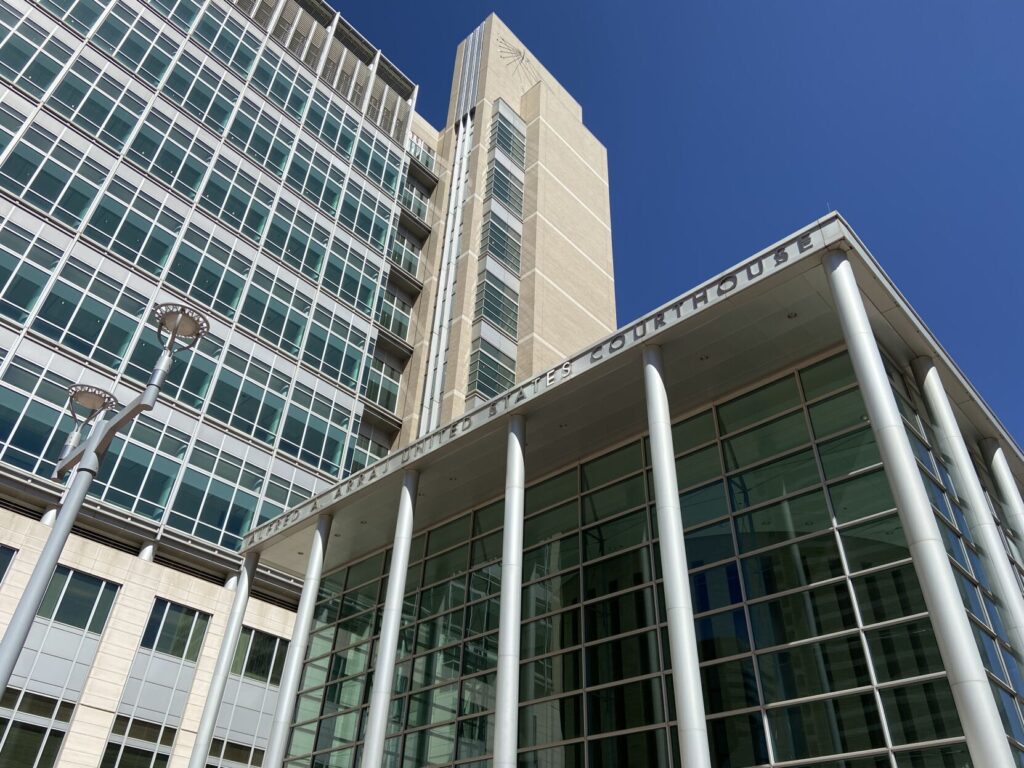
The family of 27-year-old Ashley Jo Raisbeck filed a lawsuit against the Jefferson County Sheriff’s Office nearly two years after the woman died in custody. Jaime Raisbeck, Ashley’s mother, stood outside of the Alfred A. Arraj Courthouse Wednesday morning, a...
Colorado Supreme Court’s opinion output drops by two-thirds amid justice’s absence
Michael Karlik
michael.karlik@coloradopolitics.com
Updated 3 days ago
The Colorado Supreme Court has released significantly fewer new opinions in recent months compared to the previous two years, even as the judicial branch insisted that a member’s open-ended absence is not causing delays. Justice Melissa Hart has been on...

Divided 10th Circuit rules bank customer must arbitrate discrimination-related claims
Michael Karlik
michael.karlik@coloradopolitics.com
Updated 3 days ago
The Denver-based federal appeals court ruled on Monday that a mandatory arbitration clause in the fine print of a customer’s bank account agreement prohibited her from pursuing claims of racial discrimination in court. Jeanetta Vaughn filed suit against JPMorgan Chase...
Colorado’s federal trial court denies admission to lawyer owing tens of thousands in dues, penalties
Michael Karlik
michael.karlik@coloradopolitics.com
Updated 2 days ago
Colorado’s U.S. District Court declined last month to allow an attorney to practice before the court due to his failure to pay enrollment fees and penalties to another state’s bar association for years. The federal trial court requires attorneys to...

Federal judge labels appeal ‘frivolous,’ state Supreme Court to hold arguments | COURT CRAWL
Michael Karlik
michael.karlik@coloradopolitics.com
Updated 3 days ago
Welcome to Court Crawl, Colorado Politics’ roundup of news from the third branch of government. A federal judge deemed a government defendant’s appeal “frivolous,” and the state Supreme Court will have an abbreviated oral argument schedule next week. Heard on...
PREV
PREVIOUS
Hancock unveils Denver's three-pronged vaccine distribution plan
Denver will deploy a three-pronged vaccine distribution approach with city leaders stressing the importance of equity. Vaccine equity has long been a stated priority for Mayor Michael Hancock, who said at a press conference Thursday that Denver would be establishing permanent vaccine clinics in underserved areas. Data analyzed by the Gazette last week, along with […]

Coronavirus in Colorado: The latest numbers
There are now 28,397,735 coronavirus cases in the U.S. and 507,806 deaths, according to Johns Hopkins University. The latest COVID-19 numbers in Colorado (Updated on Feb. 25): – 424,677 cases, including 59,086 in Denver County – 2,558,435 people tested – The number of deaths directly caused by COVID is 5,860 while the number of deaths […]