

House opening day, part two: speeches, pomp and a special announcement
“Hard start!”
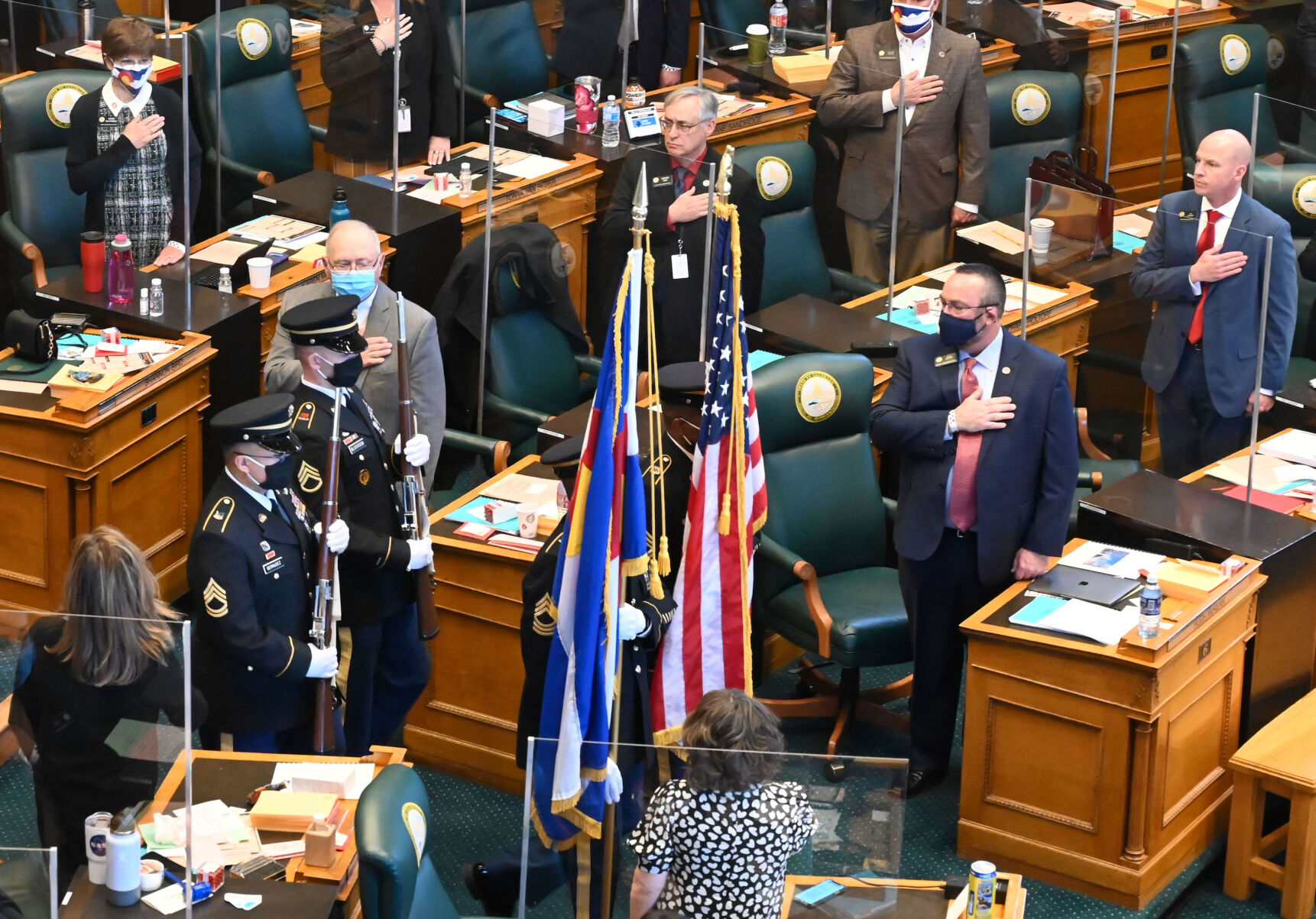
That’s how first-year Rep. David Ortiz, D-Littleton, described Tuesday’s fourth day of the General Assembly session, although it was much more like opening day, with speeches, color guards, special guests and an unexpected announcement by the new Speaker of the House, Rep. Alec Garnett, D-Denver.
The 73rd General Assembly convened on Jan. 13 and worked for three days to pass time-sensitive legislation, either correcting errors or dealing with pandemic issues. They then recessed for the next 34 days, to let the peak of the virus pass and for vaccines to knock a dent in the threat to the Capitol. However, lawmakers worked remotely during that time on committee hearings for state agencies, as well as the Joint Budget Committee.
In the House Tuesday, three front-line employees from Denver Health sang the National Anthem.
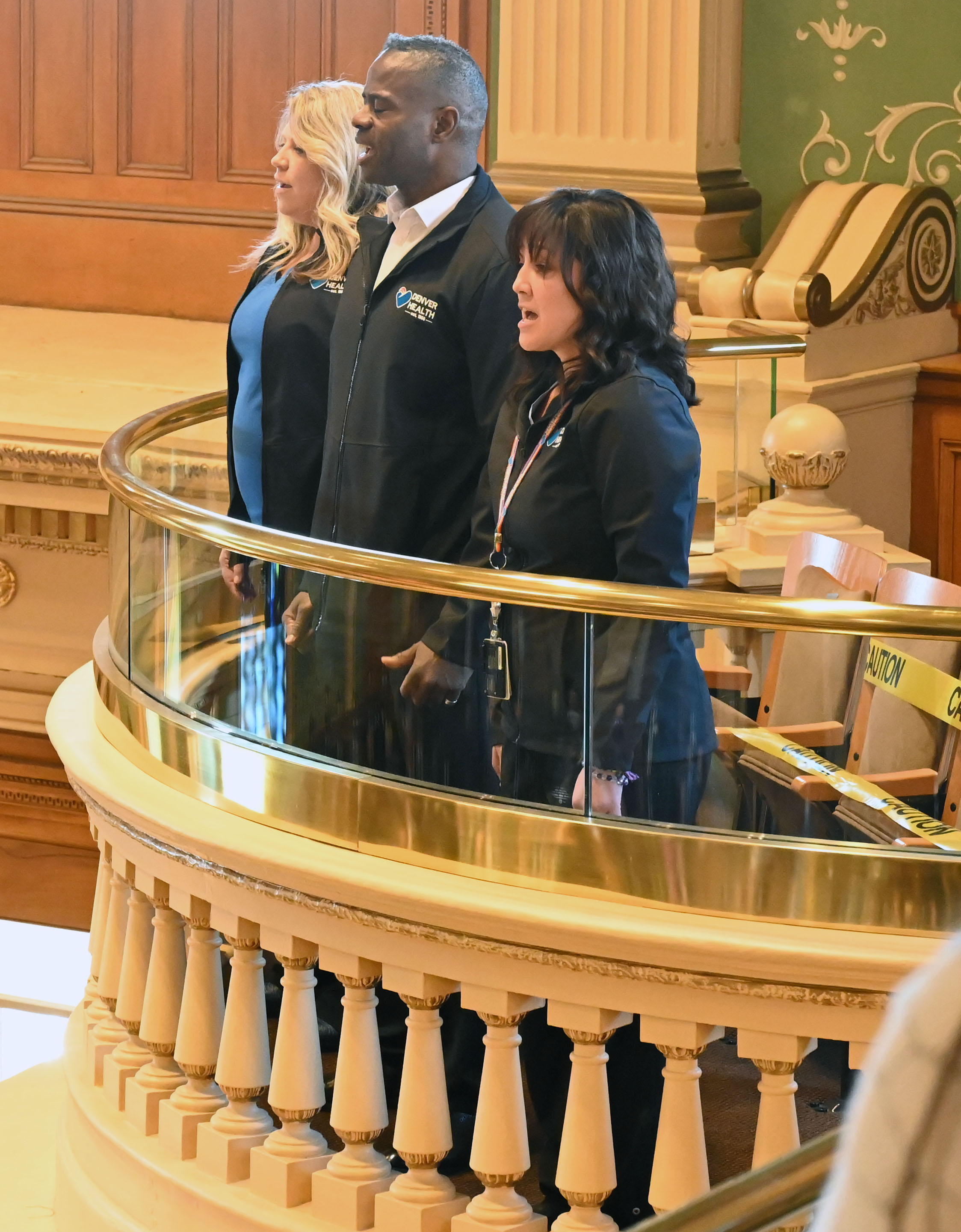
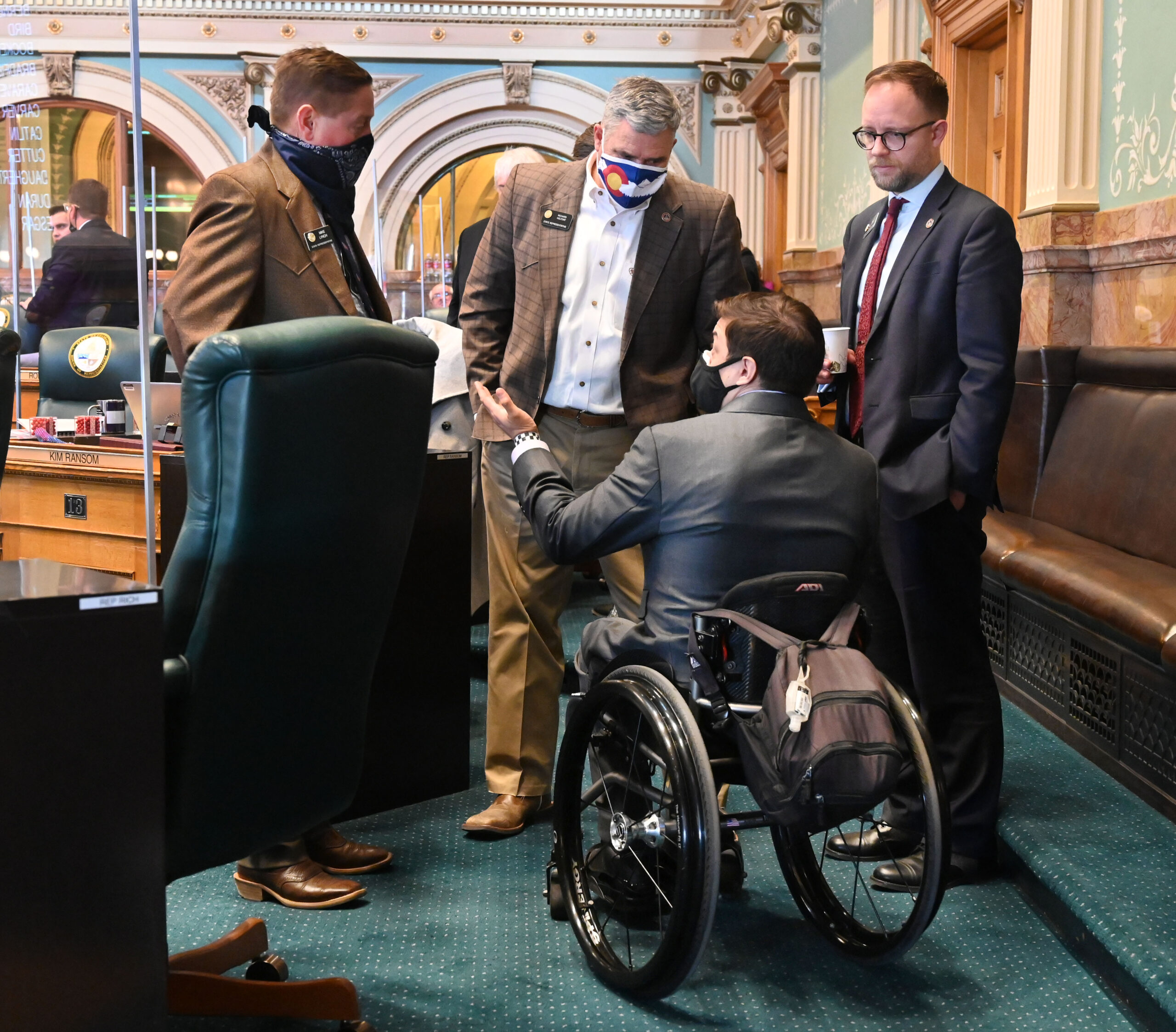
That earned them rousing cheers from the House and guests. Just three members of the House participated remotely; many lawmakers have now been vaccinated against COVID-19, although mask-wearing is still de rigueur for most members (and yes, about half the Republican caucus still refuses to wear them).
Cost of COVID-19
Besides masks, the Plexiglas barriers between House desks are still in place, but with most lawmakers present Tuesday, it had just that tiny little feel of normal.
State Rep. Monica Duran, D-Wheat Ridge, commented that since people have been wearing masks for a year, it feels normal, but Tuesday’s festivities made the day feel like old times.
“I’m excited to be back and to see everyone,” she told Colorado Politics.
First business of the day was to adopt the joint resolution (with a loud and jolly “NO!” from Rep. Patrick Neville, R-Castle Rock) that allows the governor to address a joint session of the General Assembly on Wednesday. That, too, is a little different; usually the governor gives his annual State of the State address on the second day of the session, but conceding the still-present threat of the pandemic, held off until this week.
Bouncing back
Speaker of the House Alec Garnett, D-Denver, in his first address to the chamber in his new job, spoke of unity and plans to provide economic relief to those impacted by the pandemic.
“Our job as legislators this year is to level the playing field and give Coloradans the tools and resources they need to forge this recovery on their own,” he said.
To do that will require a just post-pandemic economy “so every Coloradan has a fair shot at success,” the House Speaker said.
He spoke of those who have been hit the hardest, deciding between keeping their jobs to support their families or give them up because of the health risk.
The Western Slope and Eastern Plains were not affected the same way, just as the southern Front Range and northern Front Range weren’t.
“Let’s get to work,” he said, enunciating each word slowly.
Garnett called on the General Assembly to build on the progress they made last year and create additional economic stimulus that is “precise and boosts our economy in the complex situations we face.”
He said he had talked to Republicans and fellow Democrats about ways to create jobs, help small businesses, housing, rural economic development and child care, among other issues on the table this session.
“Now it’s time to put commonsense ideas into real tangible change for hard-working families across this state,” Garnett said.
Two members of the House: Reps. Yadira Caraveo, D-Thornton, a pediatrician and Kyle Mullica, D-Northglenn, a registered nurse, also were saluted for their work on the frontlines of the pandemic. Mullica spent a month at the Cook County Jail during the spring, helping to quell one of the nation’s worst early outbreaks.
The Speaker acknowledged that the pandemic and ensuing recession have affected rural and urban Colorado in different ways. Rural areas and urban centers were not affected in the same way. “It’s our job to make right by every one of these communities. Let’s get to work.”
K-12 challenges
But COVID is not the only issue the House speaker hopes to tackle in 2021.
Garnett also called for reducing the state’s debt to K-12, known as the budget stabilization factor, a term he coined a couple of years ago, and took an especially strong stand on transportation. “I’m not the first Speaker in recent memory to stand here and say this will be the year we get transportation done, but with your help and hard work, I’m determined to be the last one.”
Other issues include reducing the cost of health care, including insurance and prescription drugs; addressing wildfire mitigation and prevention (a bipartisan issue), and work toward a clean energy economy (which is not).
Garnett was one of the sponsors of the 2018 law creating the Extreme Risk Protection Order, known as the red flag law, and called for more efforts to reduce gun violence, which earned him applause from his caucus and stony silence from the Republican side of the aisle.
He also addressed the 2020 police accountability law. “I’m proud of say Black Lives Matter but it must be more than a slogan. It must be a policy priority,” although Garnett did not indicate what he would propose.
“This may be the most consequential year for this General Assembly in recent memory. But as I look out onto this body and at each of you here today, I’m confident that we’re the right bunch to get it done.”
Minority report
McKean focused his remarks on trust. “Trust is the most important commodity that we have, trust that we make decisions in this building that are good for ALL of Colorado.”
He started by telling the House he missed former Rep. Jim Wilson, R-Salida, whom he called a man of integrity.
“When I tell you I love you all, I mean it with his voice,” McKean said. “You sit at the same desks as the legislators in 1901, the chandelier casts the same light over our work and we look out onto the Front Range of Colorado, seemingly unchanged from over a hundred years ago. But much HAS changed.
“The desks have a few cracks and the spittoons have been replaced by filing cabinets, which are increasingly replaced by iPads. The chandelier is no longer a gas light but now shines with electrons harvested from the wind and the sun and sometimes coal. The Front Range is still there but isn’t always as clearly visible as before as the numbers of people who populate the Front Range of Colorado grows and grows.”
Highlighting diversity
He applauded the diversity of the House chamber, noting that 100 years ago there were few women and only one African-American man, elected in 1881.
“It’s taken a long time to have the kind of diversity that we see in this room today. And we should be proud of where we are,” McKean said.
Diversity also applies to perspective, McKean explained “It takes all of our voices to make what we do here matter.”
McKean noted that every current House Democrat has always served in the majority, and each Republican has always served in the minority.
“What becomes important, especially since we lack many of those shared struggles, is the absolute need to have that other voice in the room,” McKean said.
McKean said he is proud to be a Republican, and “incredibly proud to lead this caucus because we have a message, more than ever before, in how we recover from this last year.”
The minority leader also pointed to efforts outside the General Assembly to push that recovery forward, such as the Five Star program, started in Grand Junction; and the work of local public health departments to vaccine thousands of Coloradans.
He called the vaccine efforts a “shining example of the value of free enterprise and the symbiotic response of those in government and private companies that could develop and distribute a world-saving vaccine through Operation Warp Speed.
“We hope to put COVID in our rear view mirror soon and, in so doing, we are focused on the road ahead for our state,” McKean said.
Roads and climate change
The GOP leader pleaded for a transportation solution that can pass voter muster.
“We stand for the expansion of commerce that more road capacity will create,” he said. “And we stand for our voters. We must undertake the solution to our concrete and asphalt problems with the voters in mind, voters who only 105 days ago told us they want a voice on fees imposed on them.”
But McKean rejected the possibility of an increase in the gas tax, or a “fee,” which he said would be a failure “in the most important job we all have, to live up to the trust voters have placed in us.”
“Take this issue to them and be prepared to make the best case for why we need to solve our transportation problems today and what it will cost. ” Share a 10-year plan, show and the progress on that plan. “It is the only way to rebuild the trust with the people who have been so failed by a congested and dangerous transportation system.”
McKean also noted that the recent cold snap resulted in a call from northern Colorado energy providers to reduce energy use because there wasn’t enough sun or wind to produce electricity.
“All of the lofty goals of having 100% renewable energy were not sufficient to both provide the electricity we all demand as well as the heat for our homes,” he said. “We should never have to make those choices, especially on the coldest day in recent history. The 21st Century should not hallmark a return to the candles and wood stoves of the 19th. We deserve better and must work for an energy future that includes an “all of the above” approach, including nuclear and fossil fuels and pumped hydro.”
Garnett also spoke of transportation and energy, calling for meaningful action this session.
He noted he’s not the first speaker to make that promise. “But with your help and work, I’m determined to be the last,” Garnett said, “at least for a little while.”
He also called for investing in local multimodal transportation. addressing rural roads and funding the state highway department’s 10-year plan, which will call for an additional $500 million from the state budget each year.
The state also needs to prepare for the market shift to electric vehicles.
“We literally have no time to waste.” Garnett said.
No time to spare also applied to climate change, the House speaker said.
“The effects of a changing climate are no longer a hypothetical threat,” Garnett said. “They are a devastating reality.”
More than 625,000 acres burned across Colorado last year, taking homes and threatening rural communities and cost taxpayers about $200 million for firefighting.
He called for bipartisan work for a solution.
“The cost of inaction on climate change is far greater than facing the problem head-on and making lasting change,” Garnett said.
Working together
Garnett pledged to have an open-door policy, and encouraged the members to “put aside any cynicism you have faced, any fear that you can’t make a difference, any belief that our tools are too limited, too short-lived, too temperamental, and instead to step up.”
Garnett said the House’s top priority our top priority is “to see our state out of the public health crisis and to work to usher in a swift economic recovery for Colorado’s hardworking families and small businesses.”
Garnett took everyone by surprise when he went off-script to tell a story about a trip to Israel a couple of years ago. The trip included House Minority Leader Hugh McKean, R-Loveland; House Majority Leader Daneya Esgar, D-Pueblo, and Rep. Park Neville, R-Castle Rock. As they arrived, his wife, Emily, found her bags had disappeared.
“We walked in late, to a big ballroom, in our sweats,” Garnett said. “I was super nervous, ashamed of how looked.” Emily stood up, introduced herself and announced she was six weeks pregnant, which took her husband by surprise.
She later told him, “If we want to get everything out of this trip, we have to be open and vulnerable and bring everyone together.”
Garnett then announced Emily is now expecting their third child.
The chamber applauded, and some, including McKean, turned to face Emily Garnett high above the floor in the gallery to applaud, a warm smile beamed from McKean’s face, despite his mask, his clasped hands raised as high as his face.
Garnett followed the applause by saying, “My point, other than being a proud father, is we can find ways to build lifelong relationships with people in this building. Don’t be afraid to bring them in, to trust, to listen. Coloradans expect that, as they should.”
Restoring trust
McKean returned to the issue of trust, this time among lawmakers from both sides of the aisle. “I am here to present the case for why it matters that there are Republicans in this room, much as the Majority Leader would propose why it’s so important for there to be Democrats. But in the end the letters by our names are less important than the ideas we have.”
Garnett, too, called for cooperation.
“The question isn’t if we can make a difference,” Garnett said. “We absolutely can. The question is how we make a difference.”
He said the formula to creating change is listening to others.
Garnett said some of his best friends work in the Capitol, and some of them oppose every policy position he has.
“And I oppose basically all of theirs,” Garnett said. “But that doesn’t mean we can’t work together respectfully. That doesn’t mean we can’t work together where we can get big things done for the people of Colorado.”
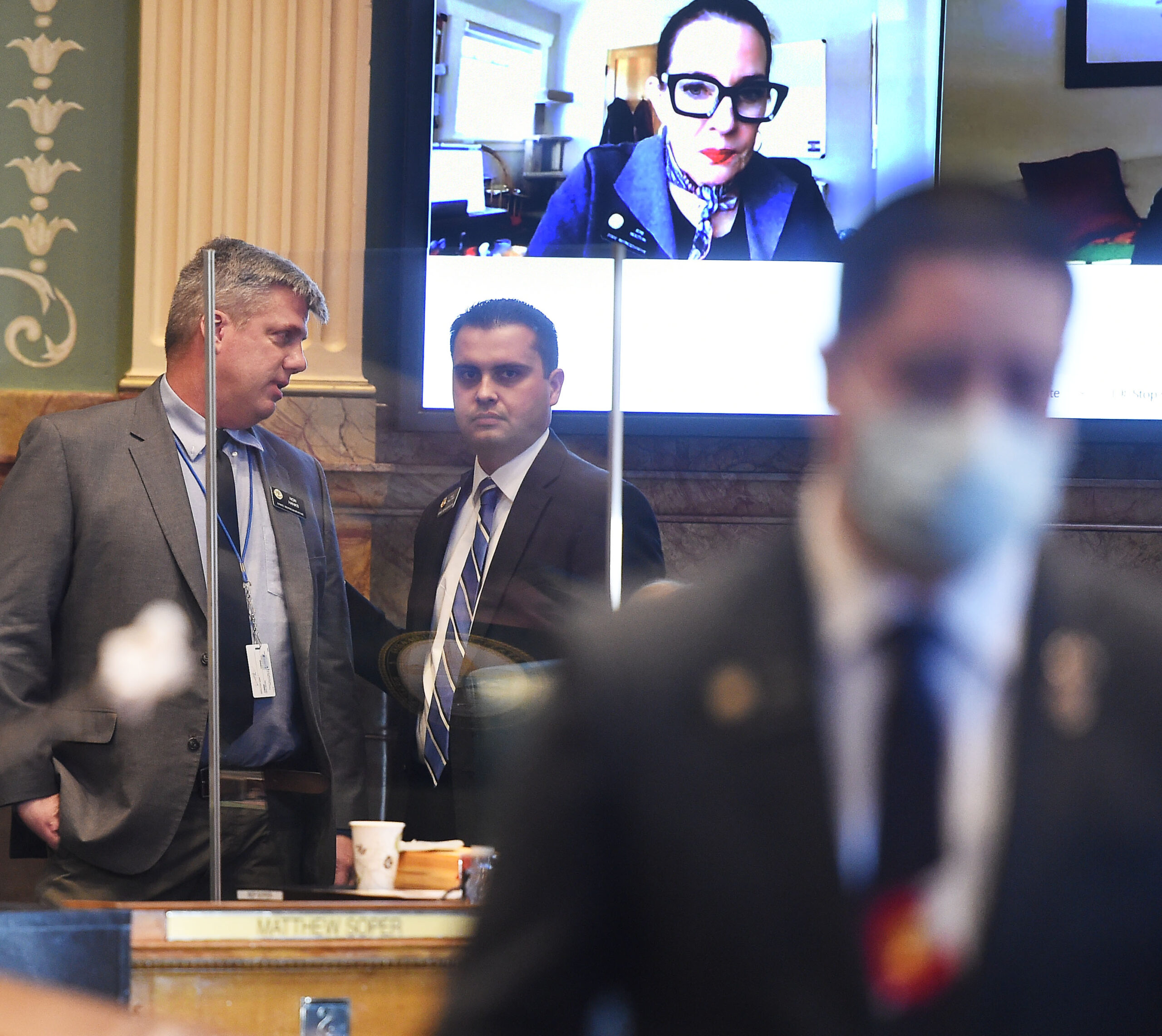
The morning’s session ended on a sour note, when Rep. Don Valdez, D-LaJara*, asked for a moment of personal privilege. That’s usually reserved for personal stories, and Valdez shared that his father had recently died from COVID. But the remarks took a turn when Valdez called out Rep. Ron Hanks, R-Penrose, who was in Washington, D.C., for the Jan. 6 insurrection. Valdez called for Hanks to be removed from committees, and that’s when the hissing started. He then said Hanks should be expelled from the General Assembly, and that’s when Garnett gaveled him out of order.
Correction: Valdez was misidentified in an earlier version as a Republican.


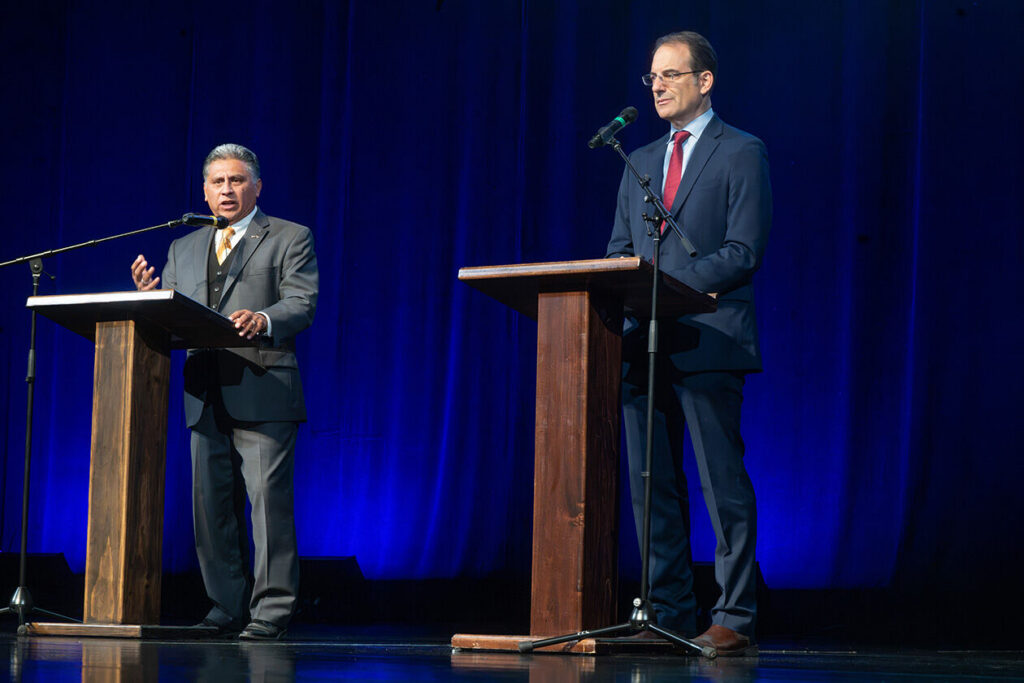
Gubernatorial candidates Phil Weiser, Greg Lopez spar, as Marx skips debate
Deborah Grigsby
deborah.smith@denvergazette.com
Updated 5 hours ago
Two of the candidates for Colorado governor squared off in a televised debate on Thursday night, when Attorney General Phil Weiser, the Democratic nominee, and former U.S. Rep. Greg Lopez, an unaffiliated candidate, delved into issues of affordability, data center...
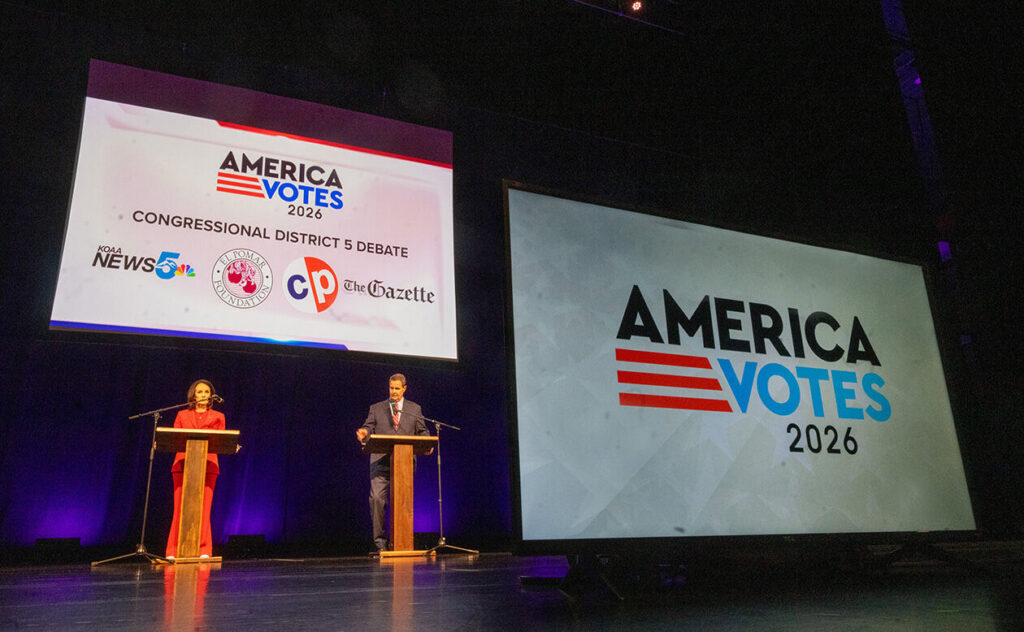
Troops, taxes, war dominate Colorado’s 5th CD debate between Jeff Crank, Jessica Killin
Deborah Grigsby
deborah.smith@denvergazette.com
Updated 7 hours ago
Republican U.S. Rep. Jeff Crank and Democratic challenger Jessica Killin on Thursday night clashed over the war in Iran, the federal budget and healthcare when they took the stage in Colorado Springs for a sold-out debate in the race to...
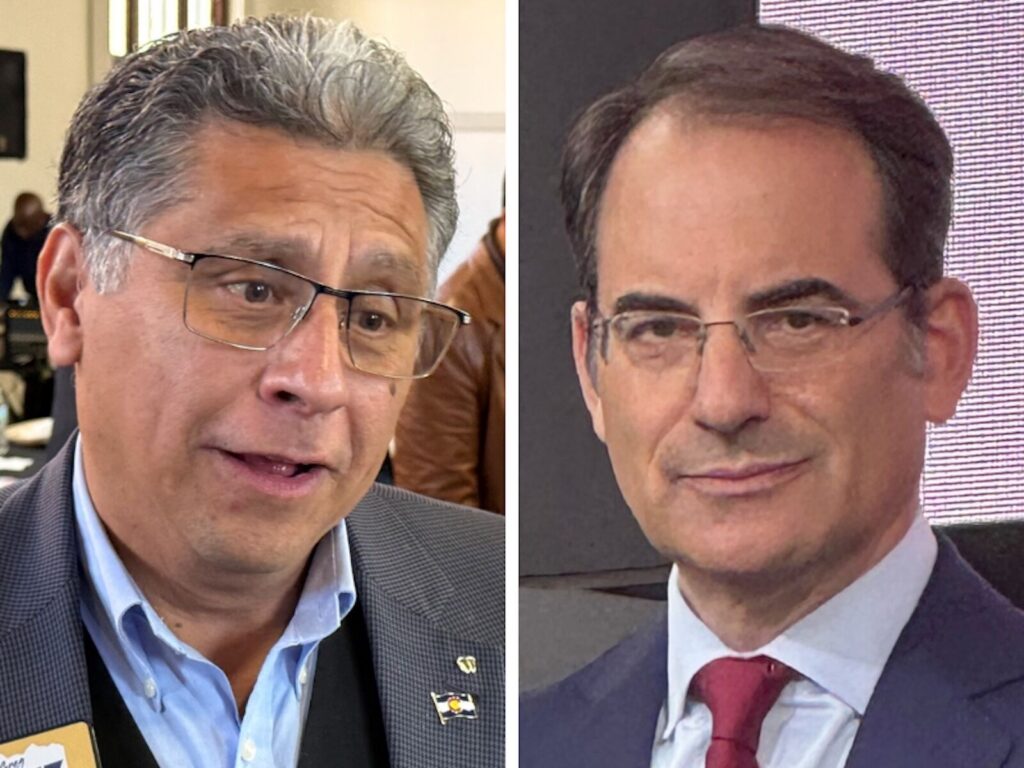
WATCH: Colorado gubernatorial candidates Phil Weiser, Greg Lopez face off Thursday in televised debate
Ernest Luning
ernest.luning@coloradopolitics.com
Updated 8 hours ago
Two of the candidates for governor of Colorado are set to square off in a televised debate for the first time Thursday night, when Attorney General Phil Weiser, the Democratic nominee, and former U.S. Rep. Greg Lopez, an unaffiliated candidate,...
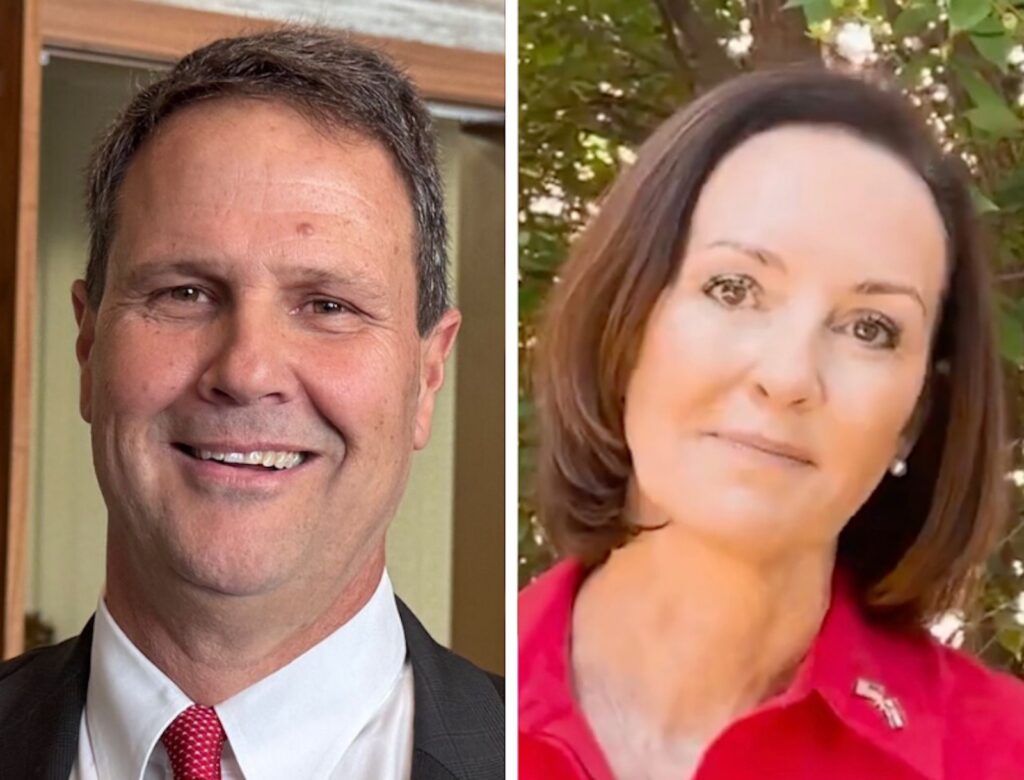
WATCH: Republican US Rep. Jeff Crank, Democratic challenger Jessica Killin debate in Colorado’s 5th CD
Ernest Luning
ernest.luning@coloradopolitics.com
Updated 9 hours ago
Republican U.S. Rep. Jeff Crank and Jessica Killin, his Democratic challenger, are scheduled to meet for a televised debate in the race to represent Colorado’s 5th Congressional District on Thursday night. The candidates are set to take the stage at...
Colorado officials warn of e-bike safety amid increase in serious youth injuries
Matt Kyle
matt.kyle@denvergazette.com
Updated 5 hours ago
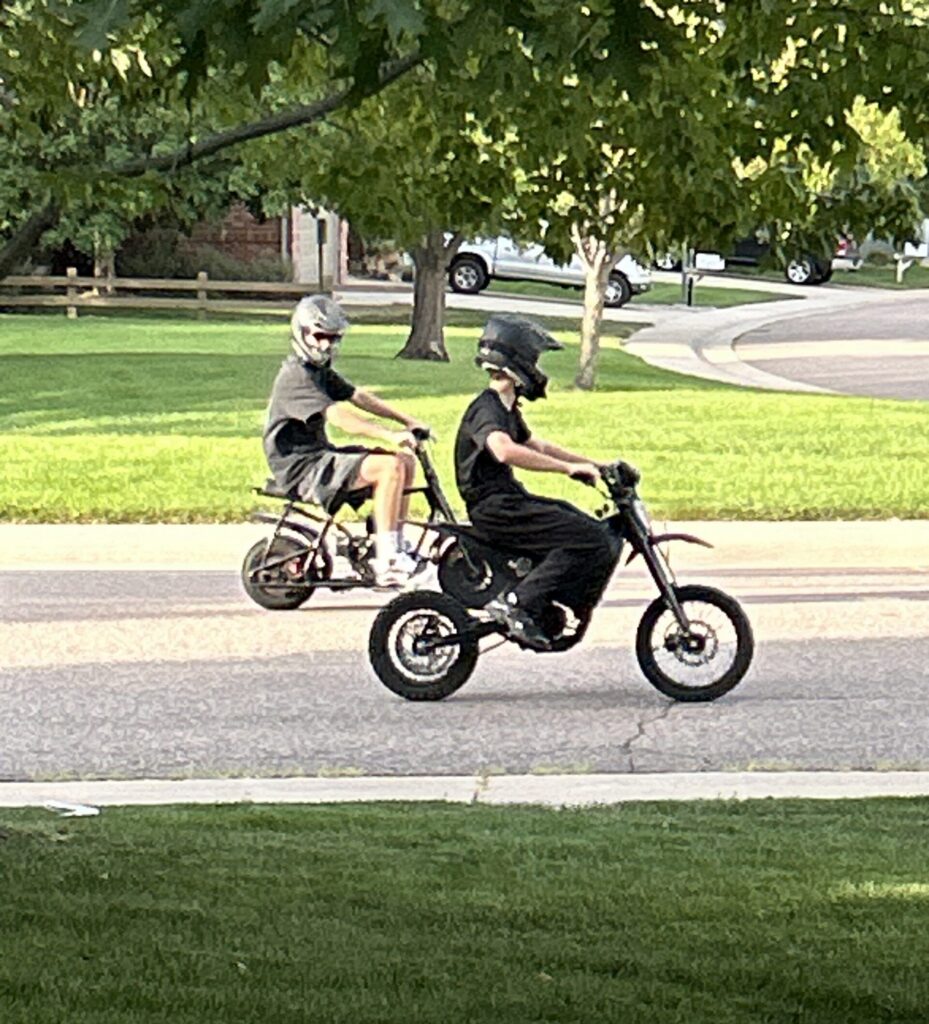
Serious injuries involving e-bikes, e-scooters and children have risen significantly in Colorado over the past year and a half. Traumatic injuries involving e-bikes have risen 184%, according to Alicia Melven, Colorado injury prevention and outreach specialist for Children’s Hospital Colorado’s...
Colorado State Fair youth golf tournament celebrates 11 years
Marianne Goodland
marianne.goodland@coloradopolitics.com
Updated 11 hours ago
Twenty-eight teams tee off Friday at Walking Stick Golf Course in Pueblo for a tournament supporting 4-H, Future Farmers of America and capital improvements at the Colorado State Fair. Now in its 11th year, the Partners of Youth in Ag...

Controversial two-bag furbearer limit heads to CPW meeting under legal threat
Marianne Goodland
marianne.goodland@coloradopolitics.com
Updated 12 hours ago
Next week’s Colorado Parks and Wildlife Commission meeting in La Junta is likely to open under the cloud of threatened legal action. Safari Club International and the Sportsmen’s Alliance Foundation warned the commission this month that its July vote imposing...
Democratic-aligned poll shows big majority of swing-seat voters support routine childhood vaccines
Ernest Luning
ernest.luning@coloradopolitics.com
Updated 14 hours ago
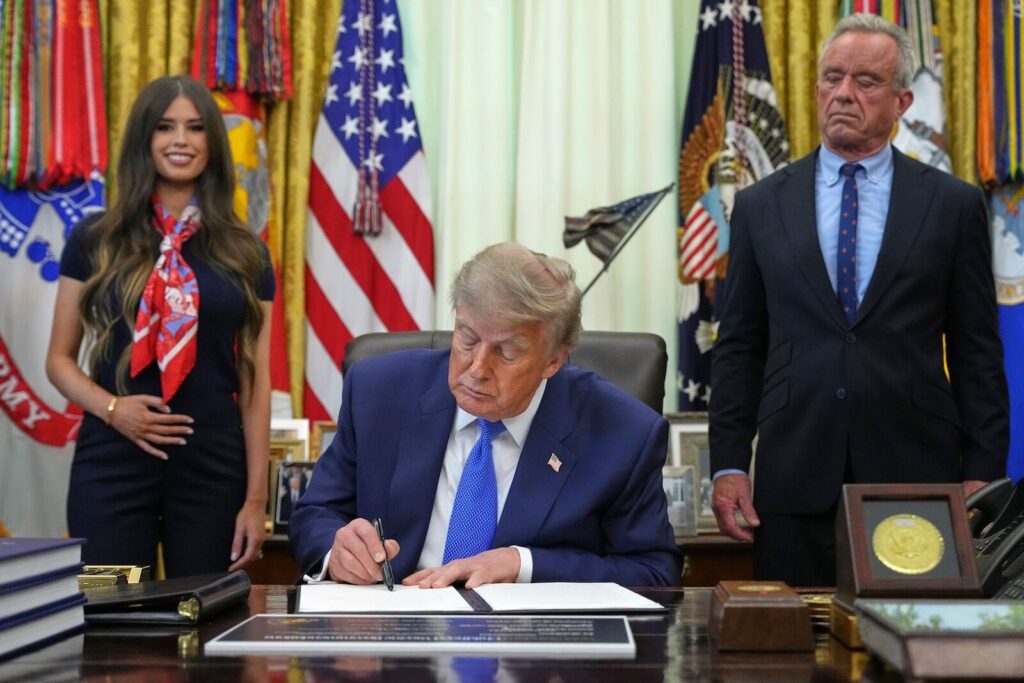
A new poll conducted by Democratic-aligned groups found that voters in competitive U.S. House districts — including a battleground seat in Colorado — support routine childhood vaccinations by a wide margin and oppose a recent order by President Donald Trump...
Some Colorado hunters oppose measure establishing constitutional right to hunt, fish proposal, group says
Marissa Ventrelli
marissa.ventrelli@coloradopolitics.com
Updated 8 hours ago
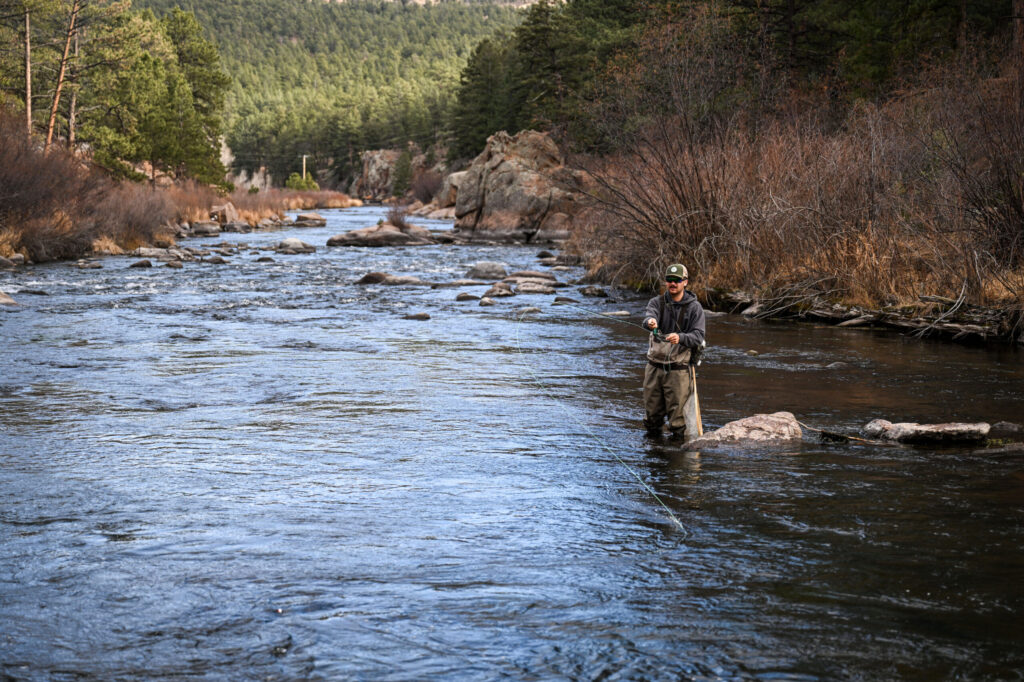
A group that says it represents hunters and anglers from across Colorado announced its opposition to a ballot measure that would establish the right to hunt and fish in Colorado’s constitution, saying it could result in the overturning of bans...
Coalition drops Colorado transportation ballot measure after securing deal
Marissa Ventrelli
marissa.ventrelli@coloradopolitics.com
Updated 10 hours ago
The proposed constitutional amendment seeking to dedicate all transportation-related revenue to Colorado’s roads and bridges will no longer appear in this November’s ballot after its proponents reached an agreement with lawmakers following months of negotiations. Initiative No. 175, backed by...
PREV
PREVIOUS
Garcia, Holbert prioritize different goals but pledge to work together toward recovery in delayed 'opening day'
Colorado state Senate leaders pledged to work together to rebound from the COVID-19 pandemic but offered different priorities as lawmakers gear up for this year’s legislative session. In an address to the chamber after lawmakers returned to the state Capitol after a five-week hiatus on Tuesday, Senate President Leroy Garcia called on members to use […]
El Paso County commissioners oppose proposed legislation banning county commissioners from serving on health district boards
El Paso County commissioners unanimously passed a letter to state lawmakers Tuesday that opposes a bill expected to come before the Legislature to ban commissioners from serving on a health district board. The letter comes on the day Colorado’s 73rd General Assembly returned to the state Capitol after a five-week hiatus because of the coronavirus […]