

Larimer County court rules it’s unconstitutional to prosecute Fort Collins’ camping ban

On a cold night in September 2018, Fort Collins resident Adam Wiemold had nowhere to go.
Wiemold had been homeless for two years and the only shelters for men in the area were full.
Even if they had space, Wiemold was prohibited from staying in them because he worked as a supervisor at one of the shelters and it would violate company policy.
Out of options, Wiemold drove to a designated rest stop and spent the night sleeping in his car. That night, he was woken by police officers and later prosecuted for illegal camping.
After more than two years of legal battles, the Larimer County District Court has ruled Fort Collins violated the U.S. Constitution by prosecuting Wiemold when he had nowhere else to go.
Salvation Army takes leadership in homeless shelter at Denver Coliseum
“As a matter of basic human dignity, it is just wrong to criminalize a homeless person sleeping on public property when they have nowhere else to go,” said ACLU attorney Adam Frank, who defended Wiemold in the trial.
Fort Collins has a “camping ban” ordinance that forbids sleeping outdoors on public property, an ordinance frequently deployed against homeless residents.
During the trial, Frank argued the city was selectively enforcing the camping ban against homeless individuals without enforcing the ban for truck drivers who regularly sleep in the rest stop’s parking lot. Selective enforcement violates the 14th Amendment.
Frank also said prosecuting people for sleeping outdoors when there is no shelter available violates the Eighth Amendment which prohibits punishing an involuntary act if it is the unavoidable consequence of one’s status.
“Everyone has to sleep,” Frank said. “If someone is going through homelessness and can’t access shelter, they have to sleep outside.”
By ruling in favor of Wiemold and the ACLU, the Larimer County District Court protects homeless individuals from prosecution when shelters are full or unavailable.
In addition, ACLU said the ruling also protects those who cannot use shelters because of shelter policies.
According to ACLU, the decision should protect people who reject shelters, like couples who cannot shelter together, those with mental illnesses who can’t stay in confined spaces and those suffering from substance addiction who aren’t allowed in shelters.
Colorado expands housing program for homeless residents with mental health issues
“For people in these situations, indoor shelter is not available and prosecution for sleeping outdoors is cruel and unusual punishment, in violation of the Constitution,” said Mark Silverstein, legal director of ACLU of Colorado.
Silverstein said this is the first time a Colorado appellate court has adopted this reasoning.
This ruling from the Larimer County District Court reverses the municipal court’s conviction of Wiemold, dismissing all charges against him.
“It’s great to know that I won’t have to have this on my record based on what I was going through in my life at that time,” Wiemold said. “I’m happy that this case could potentially help other people who are experiencing homelessness.”


Trump’s 10th Circuit nominee recuses from cases against federal government without explanation
Michael Karlik
michael.karlik@coloradopolitics.com
Updated 1 day ago
President Donald Trump’s nominee to fill a vacancy on the Denver-based federal appeals court recused himself without a clear explanation from nine cases against the executive branch while he was undergoing vetting by the White House this spring. U.S. District...
Adams County murder conviction reversed due to faulty jury instruction
Michael Karlik
michael.karlik@coloradopolitics.com
Updated 1 day ago
Colorado’s second-highest court overturned an Adams County defendant’s murder conviction last month because the instruction provided to the jury about a trespasser’s right to use self-defense did not accurately reflect Colorado law. A person is justified in using force to...
Colorado court upholds murder conviction despite jury disobeying instructions
Michael Karlik
michael.karlik@coloradopolitics.com
Updated 2 hours ago
Colorado’s second-highest court upheld an Arapahoe County defendant’s murder conviction last month, even though jurors found he was not the one who shot the victim and the evidence suggested he was not present for the shooting. A three-judge Court of...
Divided appeals court reverses conviction after judge declined to define ‘bludgeon’
Michael Karlik
michael.karlik@coloradopolitics.com
Updated 2 hours ago
Colorado’s second-highest court reversed a Jefferson County defendant’s felony menacing conviction on Thursday, concluding that the trial judge’s failure to define “bludgeon” for jurors may have affected the outcome. A three-judge Court of Appeals panel divided in unusual ways in...
10th Circuit dismisses Tina Peters’ challenge to confinement as moot
Michael Karlik
michael.karlik@coloradopolitics.com
Updated 2 days ago
The Denver-based federal appeals court granted the state’s unopposed request on Wednesday to dismiss former Mesa County clerk Tina Peters’ challenge to her confinement as moot. Although Peters received a commutation of her prison sentence last month from Gov. Jared...
Federal judge declines to recuse from death penalty case after Supermax visit
Michael Karlik
michael.karlik@coloradopolitics.com
Updated 2 days ago
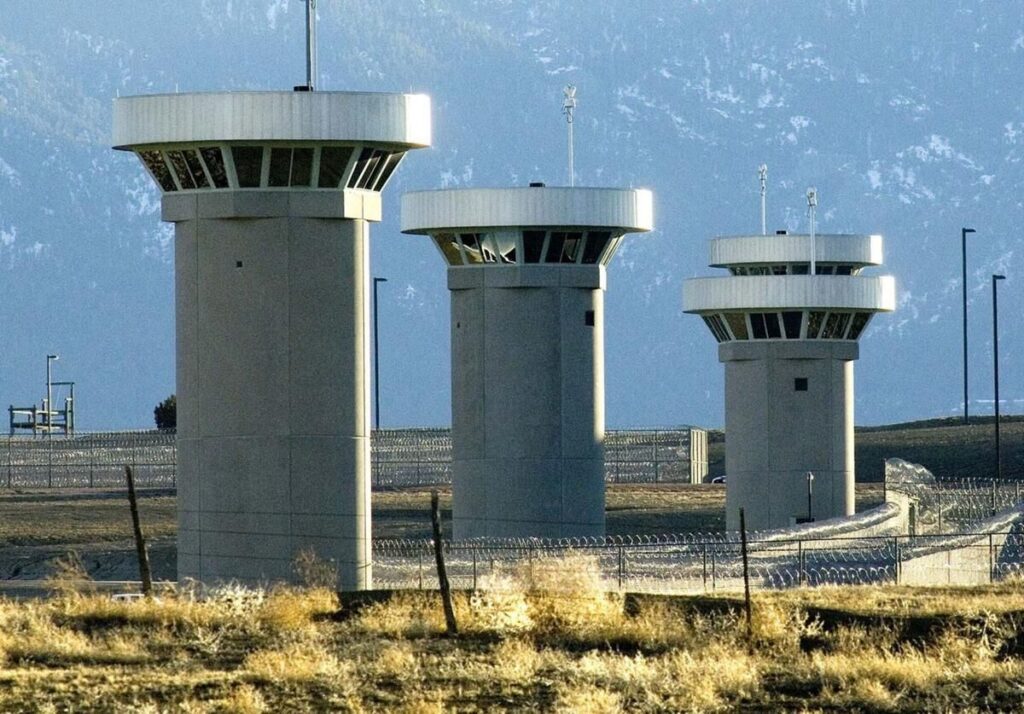
A federal judge declined to recuse herself last month from a death penalty case arising out of Colorado’s “Supermax” prison, finding that her tour of the facility earlier this year did not bias her decision-making. U.S. District Court Judge Charlotte...
Appeals court clarifies offense of impersonating a peace officer
Michael Karlik
michael.karlik@coloradopolitics.com
Updated 3 days ago
Colorado’s second-highest court clarified this month that a person commits the offense of impersonating a peace officer if they engage in “any conduct” while pretending to be law enforcement. In a case out of El Paso County, Richard James Coulier...
Colorado Supreme Court reverses 2 Chaffee County judges for imposing fee on habeas petitioner
Michael Karlik
michael.karlik@coloradopolitics.com
Updated 4 days ago
The Colorado Supreme Court rejected two separate appeals earlier this month from an incarcerated defendant seeking immediate release from prison, but concluded that two Chaffee County judges incorrectly required him to prepay filing fees for his cases. David J. Gottorff...
Weld County judge wrongly denied bail to murder defendant in gap between law change
Michael Karlik
michael.karlik@coloradopolitics.com
Updated 4 days ago
Colorado’s second-highest court ruled this month that a Weld County judge was wrong to deny bail to a murder defendant in the window between the state Supreme Court’s recognition of the right to bail and the voters’ subsequent overruling of...
Defendants acquitted by insanity are eligible for records-sealing, appeals court says
Michael Karlik
michael.karlik@coloradopolitics.com
Updated 3 days ago
Colorado’s second-highest court clarified last month that defendants who are found not guilty by reason of insanity are eligible to have their criminal records sealed from public view. Judges must seal criminal records if, among other things, a defendant is...
PREV
PREVIOUS

Salvation Army takes leadership in homeless shelter at Denver Coliseum
The Salvation Army is taking over leadership at a homeless shelter operation taking place at the Denver Coliseum. Denver’s Department of Housing Stability will work in partnership with the Salvation Army to assist at least 300 men each night who are experiencing homelessness. In the event the Coliseum at 2222 Lawrence St. gets full, officials […]

Polis throws cold water on Denver's request for increased vaccine priority to homeless
Gov. Jared Polis essentially ruled out giving more vaccine priority to those experiencing homeless, just 24 hours after Denver leaders again asked the state to allow them to dole out vaccines in shelters. Polis has consistently eschewed changes to the state’s vaccine priority that would give added emphasis to Coloradans living in congregant settings such […]