

State Supreme Court rejects lower threshold for proving child prostitution offense
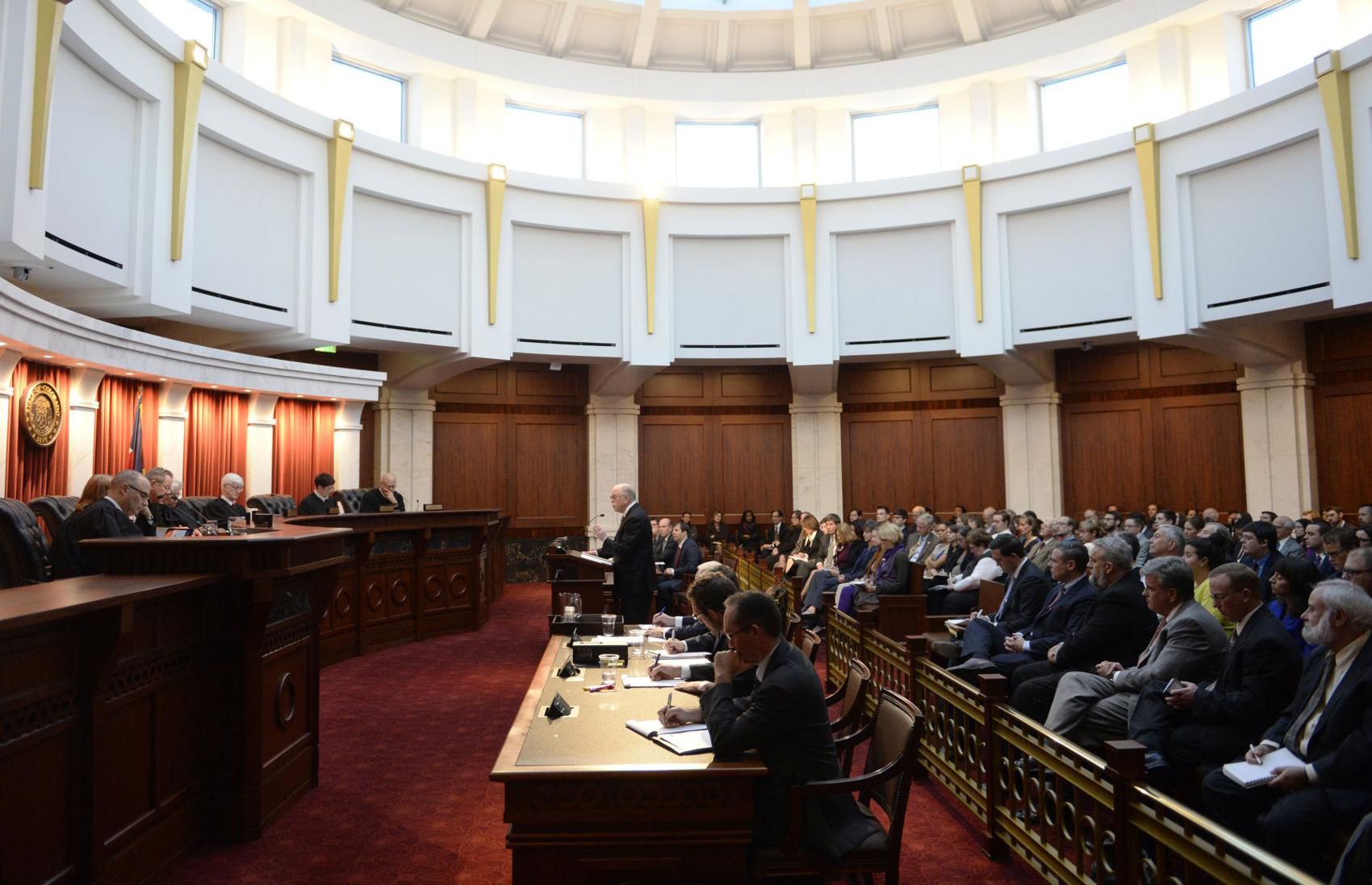
A person must intend to enter into prostitution specifically with a child in order to be charged with the offense, the Colorado Supreme Court ruled on Monday in rejecting prosecutors’ arguments for a more permissive legal standard.
The case centered around an interpretation of the felony crime of soliciting for child prostitution, which requires that there be “the purpose of prostitution of a child or by a child.” However, the question for the justices was whether the person committing the offense necessarily had seek out a child.
“The conduct that is being prohibited here is a certain kind of solicitation: soliciting for prostitution,” Johanna Coats with the Denver District Attorney’s Office told the justices at oral argument in November. “And the additional circumstance has to be present: that the victim is a child.”
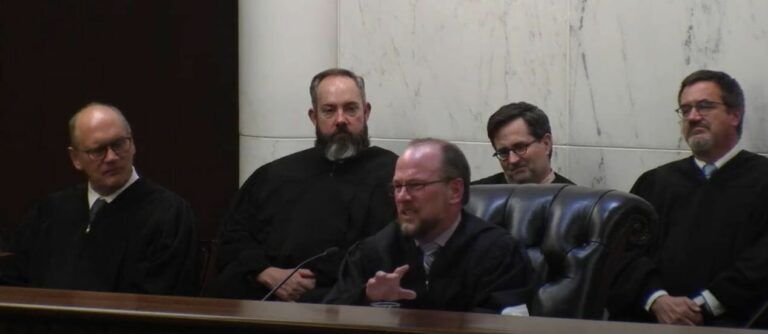
In writing for the Court, Justice Carlos A. Samour, Jr. rejected that lower threshold, concluding that “simply proving that the defendant’s purpose was prostitution in general, not child prostitution specifically, cannot suffice – even if there is eventually prostitution of or by a child.”
Phillip L. Ross responded to an Internet advertisement for prostitutes involving women at least 19 years of age. The girls with whom he texted, however, were both under 18, unbeknown to Ross. Prosecutors subsequently charged him with soliciting for child prostitution.
The trial court judge found the Denver District Attorney’s Office failed to show Ross intended to enter into prostitution with a child for one of the girls, and dismissed those charges. The Supreme Court in its opinion upheld that decision.
However, the lower court judge allowed the charges involving the other girl to proceed to trial. Those proceedings ended in a mistrial, and Ross pleaded guilty to a misdemeanor of soliciting another for prostitution.
Under the law, it is not a defense to not know the age of the child or to believe that they are of age. However, the Court of Appeals decided upon reviewing Ross’s case that prosecutors still had to prove a defendant was soliciting for the purpose of child prostitution.
The Supreme Court agreed with that understanding of the law.
“We saw a tension in the two underlying statutes and sought the court’s guidance to resolve them. We are grateful to the justices for providing clarity on the elements that we must prove in order to convict a person of solicitation for child prostitution,” said Carolyn Tyler, a spokesperson for the district attorney’s office. Ross’s lawyer declined to comment on the ruling.
Justice Monica M. Márquez did not participate in the case. Her father, retired Judge Jose D.L. Márquez, served on the panel that reviewed Ross’s appeal.
The case is People v. Ross.


New rules for private judges in Colorado include discipline oversight, campaign contributions
David Migoya
david.migoya@gazette.com
Updated 10 hours ago
The Colorado Supreme Court recently determined the state’s private judges — retired jurists appointed to oversee civil cases that rarely get public scrutiny — can now make political contributions freely and without reserve, overruling a prohibition that had been in...
Appeals court finds Prowers County judge incorrectly analyzed firetruck collision lawsuit
Michael Karlik
michael.karlik@coloradopolitics.com
Updated 15 hours ago
Colorado’s second-highest court directed a Prowers County judge last month to take a second look at whether a firetruck operator and the county itself can be held liable for a collision with a motorist. Donald Williamson was driving through a...
Appeals court reverses assault convictions after jury received no definition of ‘harm’
Michael Karlik
michael.karlik@coloradopolitics.com
Updated 16 hours ago
Colorado’s second-highest court reversed an Arapahoe County defendant’s assault convictions last week, concluding the trial judge neglected to define a key, ambiguous term for jurors. Police officers arrested David Cristobal Aragon at a house party for allegedly violating a restraining...
Colorado counties cannot challenge state law restricting immigration contracts, appeals court says
Michael Karlik
michael.karlik@coloradopolitics.com
Updated 12 hours ago
Colorado’s second-highest court ruled on Thursday that counties lack standing to challenge a 2023 state law that restricts their ability to contract with the federal government or private entities for immigration detention. A three-judge Court of Appeals panel agreed with...

Colorado lawmakers propose changes to family court procedures | Bills in Brief
Marissa Ventrelli
marissa.ventrelli@coloradopolitics.com
Updated 1 day ago
Colorado lawmakers introduce hundreds of bills each year. Bills in brief cuts through the noise by explaining which proposals matter, what’s at stake, and how decisions at the Capitol could affect everyday life across the state. Colorado lawmakers from both parties are...
Federal judge partially allows second World Cup trafficking lawsuit to move forward
Michael Karlik
michael.karlik@coloradopolitics.com
Updated 2 days ago
A federal judge allowed some claims to move forward last month against companies operating out of Colorado that allegedly participated in a human trafficking venture involving Filipino laborers who constructed facilities for the 2022 World Cup in Qatar. There are...
Federal judge dismisses lawsuit seeking to force Colorado secretary of state to screen out scam filings
Michael Karlik
michael.karlik@coloradopolitics.com
Updated 1 day ago
A federal judge dismissed a lawsuit last week that sought to require Colorado’s secretary of state to verify corporate filings in the state’s database to reduce the risk of future fraud. Bernard Butts of Florida, who was 83 when he...

Federal judge finds no constitutional violation by Huerfano County well inspectors
Michael Karlik
michael.karlik@coloradopolitics.com
Updated 1 day ago
A federal judge concluded last month that two Huerfano County employees did not engage in an unconstitutional search when they approached the plaintiffs’ camper within 40 feet to investigate a potential code violation. In July 2021, the county’s building inspector,...

Federal judge warns of increasingly inadequate immigration bond hearings
Michael Karlik
michael.karlik@coloradopolitics.com
Updated 10 hours ago
A federal judge ordered the immediate release of a man in immigration custody last week and, seemingly for the first time in Colorado, warned that the government is increasingly conducting inadequate bond hearings for detainees. Colorado’s federal trial court is facing...

10th Circuit upholds dismissal of Barry Morphew’s civil lawsuit against prosecutors, investigators
Michael Karlik
michael.karlik@coloradopolitics.com
Updated 2 days ago
The Denver-based federal appeals court agreed on Monday that Barry Morphew, who now stands accused for a second time of murdering his wife, failed to state viable claims against the government officials involved in his first, unsuccessful prosecution. Morphew was...
PREV
PREVIOUS

State Supreme Court rules against Polis, declines to remove him from transgender inmate lawsuit
The Colorado Supreme Court rejected a request from Gov. Jared Polis to be dropped as a defendant in a lawsuit that alleges the state’s prison system allows transgender inmates to be subjected to rape, trafficking and harassment. “The people we elect to those offices have to be held accountable for some of the most critical […]

Common Sense Institute's Dickhoner named the first Mike A. Leprino Free Enterprise fellow
Dr. Brenda Bautsch Dickhoner is the first Mike A. Leprino Free Enterprise fellow, the Common Sense Policy Institute announced Monday. Leprino was a Colorado dairy industry icon behind Leprino Foods that started out with an Italian grocery store in Denver. The fellowship was created by Laura and Matthew Leprino in honor of their late father […]