

Denver plans to achieve ‘net zero energy’ in all new buildings and homes by 2030

Denver officials published a plan this week to reduce natural gas emissions and achieve “net zero energy” in new homes and buildings by 2030.
The city defines net zero energy as a building or home that is “highly” energy-efficient, completely powered by renewable energy, all-electric and a provider of demand flexibility for the power grid.
“Reducing emissions in new buildings and homes is a critical component to addressing climate change in Denver,” the city’s Office of Climate Action, Sustainability and Resiliency (CASR) stated in a news release.
Buildings and homes made up 63% of all greenhouse gas emissions produced in Denver in 2019, the climate action office estimates. The Net Zero Energy New Buildings and Homes Implementation Plan, released Tuesday, aims to lower these pollutants by updating building codes to require net zero energy in all-electric new homes by 2024 and in all-electric new buildings by 2027. New buildings will be required to “perform as designed” by 2030.
“Through extensive stakeholder input from the Net Zero Energy Stakeholder Advisory Groups and feedback from the community, Denver’s NZE New Buildings Implementation Plan details the targets, supports, and considerations needed to reach net zero energy by 2030 in support of net zero emissions,” CASR Executive Director Grace Rink said.
The goals outlined in the implementation plan will move forward in the Denver Code Adoption process, according to CASR, and will be incorporated into the Denver Building and Fire Code.


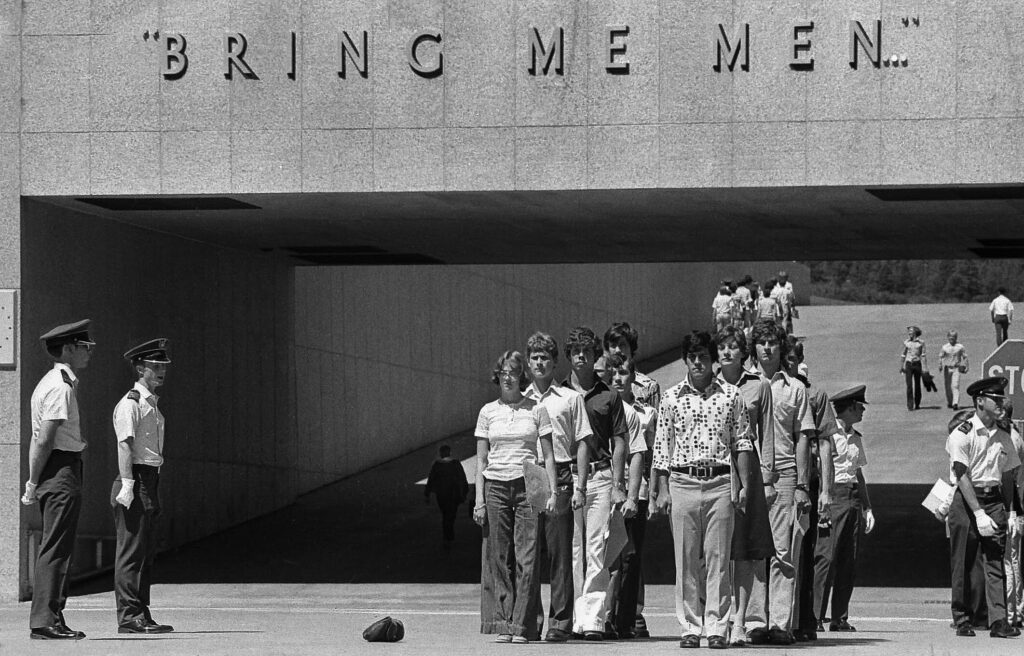
Fifty years later, women reflect on first coed class at the Air Force Academy, struggle for equality
Mary Shinn
mary-shinn@coloradopolitics.com
Updated 2 days ago
When the first female Air Force Academy cadets arrived 50 years ago this summer, they stood in front of an enormous sign on campus that read “Bring me men.” In the shadow of that sign, Kathleen Utley Kornahrens, one of...

As Lake Powell shrinks, marinas are having to adapt to dwindling water levels | OUT WEST ROUNDUP
The Associated Press
the-associated-press@coloradopolitics.com
Updated 5 days ago
ARIZONA Reservoirs near record lows PAGE — The Colorado River’s Lake Powell, the second largest reservoir in the U.S., is shrinking. A record-dry winter and extreme heat — as well as decades of overuse, chronic drought and climate change —...

A new day? Colorado’s troubled guardianship office pursues ‘cultural reset’
Marianne Goodland
marianne.goodland@coloradopolitics.com
Updated 4 days ago
Colorado’s guardianship program, long criticized for mismanagement and high staff attrition, is undergoing a “cultural reset,” as its new director works to repair partnerships and prepare for a major expansion under recent legislation. Created by lawmakers in 2017, the Office...
U.S. Senate OKs funding bill to avoid government shutdown
Wire Services
wire-services@coloradopolitics.com
Updated 2 days ago
Hemp provision became point of contention WASHINGTON • The U.S. Senate in an overnight vote Saturday approved a short-term measure to fund federal agencies into early December and avoid a government shutdown during the middle of campaign season. The late-summer...

The relevance of Watergate more than a half-century later | SONDERMANN
By Eric Sondermann
by-eric-sondermann@coloradopolitics.com
Updated 5 days ago
It was the scandal for which all other scandals are now named. In June 1972, a small group of Cuban burglars with high-level connections broke into the headquarters of the Democratic National Committee. Those headquarters were located in the Watergate...

Wirth downplays Social Security disaster talk | A LOOK BACK
Rachael Wright, Special to Colorado Politics
rachael.wright@coloradopolitics.com
Updated 4 days ago
Forty-five years ago this week: “As time goes on,” said Democratic U.S. Rep. Tim Wirth, of the 2nd Congressional District, “we are finding that the safety net, which was proposed earlier this year, has some very large holes in it,”...

Colorado Politics Calendar Aug. 10-16
Rachael Wright, Special to Colorado Politics
rachael.wright@coloradopolitics.com
Updated 4 days ago
CoPo’s weekly political calendar will help you find political and public-policy events throughout Colorado. It includes candidate and issue campaign events, public policy meetings, court hearings, state and local party conventions, assemblies, debates, rallies, parades, speaking engagements, traveling dignitary appearances,...

Democratic group aims Spanish-language TV ad at Gabe Evans in Colorado’s battleground 8th CD
Ernest Luning
ernest.luning@coloradopolitics.com
Updated 2 days ago
A national group tied to House Democratic leadership launched a six-figure Spanish-language TV ad in Colorado this week targeting Republican U.S. Rep. Gabe Evans and the GOP’s signature budget legislation. The 30-second spot is part of $15 million in new...

Colorado School of Mines lands major share in Trump’s $100M mining-education plan
Thelma Grimes
thelma.grimes@coloradopolitics.com
Updated 2 days ago
President Donald Trump on Friday named the Colorado School of Mines among roughly a dozen institutions that will share in a $100 million commitment “to train the next generation of American miners.” Paul Johnson, the university’s president, said he is...
Local party leaders, incoming judge among members of judicial performance commission that violated law
Michael Karlik
michael.karlik@coloradopolitics.com
Updated 2 days ago
A local Democratic leader and 2024 presidential elector. A legislative aide and leader in the Young Republicans. An incoming county court judge freshly appointed by the governor. They are among the eight members of the northeastern Colorado judicial performance commission...
PREV
PREVIOUS

Mass event at Coors Field in Denver to vaccinate 10,000 seniors this weekend
Up to 10,000 elderly Coloradans could get a COVID-19 shot at a mass vaccination at Denver’s Coors Field this weekend. The setting: a mile and a half stretch of parking lot, 10 lanes wide. In a series of heated tents, preregistered patients will receive the potentially life-saving vaccine and be monitored for a reaction, all […]

Vaccinated Colorado teachers won’t have to quarantine, governor says
After Colorado teachers and child care workers are fully vaccinated, they will no longer have to quarantine after exposure to COVID, Gov. Jared Polis and State Epidemiologist Rachel Herlihy said Tuesday. It’s still not entirely clear when educators will be vaccinated on a large scale. The Denver Post reported Monday that Colorado National Guard Brig. […]