

Auditor: Mass transit tax deduction likely not meeting its purpose
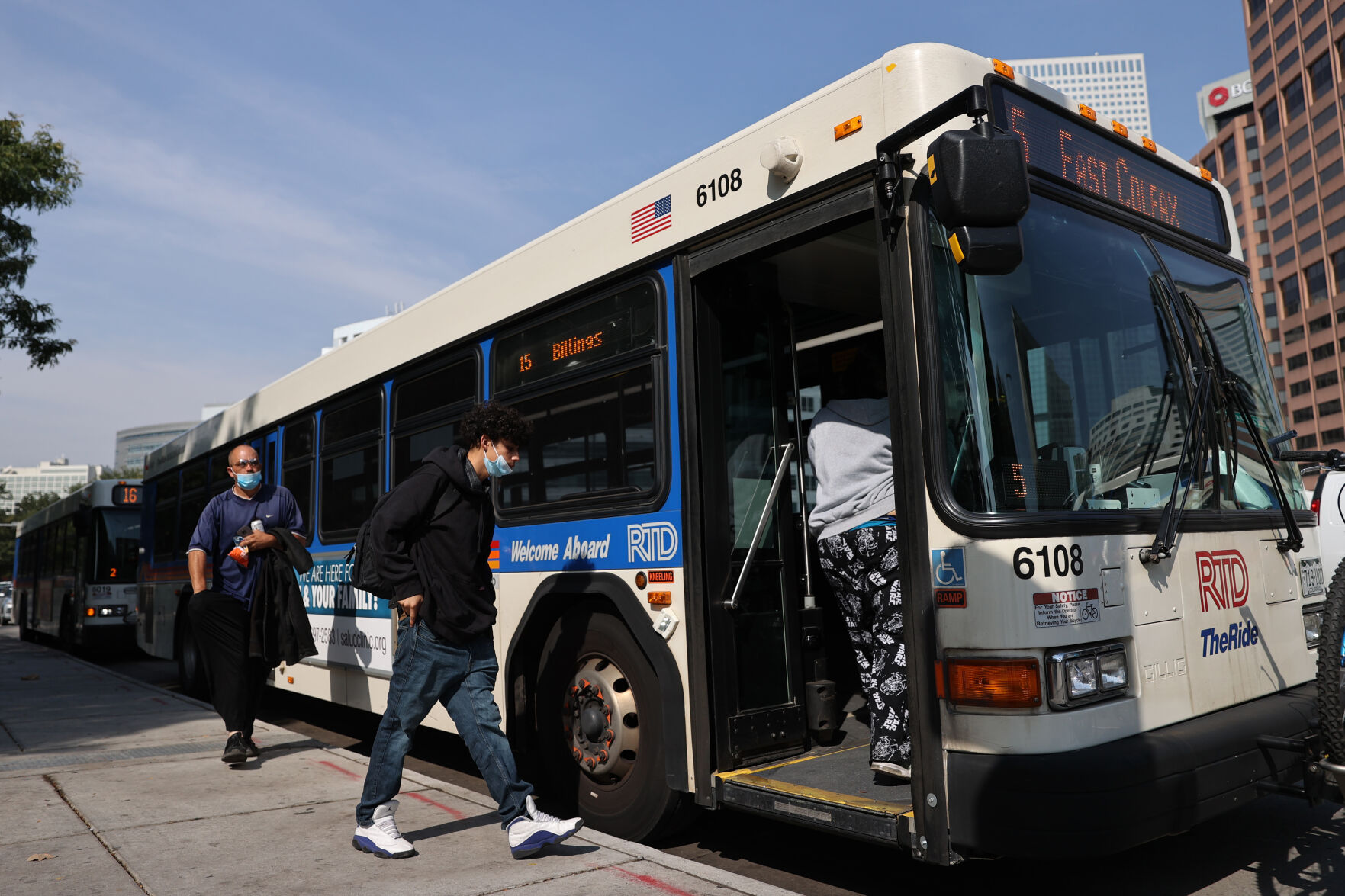
A tax deduction for employers covering mass transit and ridesharing expenses has not likely had a major effect due to lack of awareness – even among Colorado’s transit agencies.
That finding from the Office of the State Auditor came from its analysis of the mass transit and ridesharing expenses deduction, which has existed since 1979. The office “could not definitively determine” whether the tax expenditure is meeting its original goal. In large part, that was because the General Assembly failed to state a purpose in the 41-year-old policy, but also, “it is not likely that many taxpayers are using the deduction.”
An additional hindrance to the tax deduction was the disallowance, prior to 2018, of employers claiming a state deduction because a federal tax expenditure was also available. That changed following the 2017 tax law that the Trump Administration and congressional Republicans passed, but even so, the auditor’s office found awareness to be low of the state deduction.
“Specifically, none of the Colorado transit agencies that we consulted were aware of the deduction, including those that regularly have contact with employers and had informed employers about the federal deduction when it was available,” the report indicated.
Auditors estimated that the state tax deduction could save employers $50 to $87 per employee per year, substantially less than the EcoPass program of the Regional Transportation District, which could amount to up to $1,800 in savings. Compared with six other states that offer a similar policy, Colorado’s was the least generous.
“Ridesharing” under the law means travel to or from a workplace in a vehicle not operated for profit – meaning carpools or vanpools. The deduction is also only available to “C corporations,” or those who are taxed separately from their owners.
Although the 1979 General Assembly appeared to have been acting out of a desire to decrease single-occupant vehicle commuting, auditors estimated that ridesharing may have become less common since then, with ridesharing amounting to only 0.3% the number of transit trips. Because the law does not encompass the modern understanding of ridesharing – that is to say, through for-profit companies like Lyft or Uber – the report suggested the law’s definition of ridesharing may be obsolete.
One transit agency indicated to auditors that the deduction “may be a useful tool” in speaking with employers about transportation options for workers, now that the agency is aware of it.

Federal judge blocks evidence from Aurora police’s unconstitutional search
Michael Karlik
michael.karlik@coloradopolitics.com
Updated 12 minutes ago
A federal judge ruled last month that prosecutors cannot use firearm evidence against a defendant because Aurora police searched him without having any reasonable basis to believe he was armed or dangerous. In evaluating the constitutionality of the search, U.S....

Public comment period opens as federal review targets Colorado’s wolf reintroduction program
Marianne Goodland
marianne.goodland@coloradopolitics.com
Updated 26 minutes ago
Federal wildlife officials have opened a formal review of Colorado’s wolf reintroduction program, launching a public comment period to assess how the state has handled rising conflicts between wolves and livestock. A notice from the U.S. Fish and Wildlife Service...
Denver to mull $6.9M East Colfax BRT extension, police union deal
Deborah Grigsby
deborah.smith@denvergazette.com
Updated 1 day ago
Denver’s councilmembers will consider several items during Monday’s regular meeting, but the most notable is a resolution to overhaul contract review rules, requiring draft agreements to be shared with the Council before being heard at committee meetings. Council Resolution 26-0329...

Colorado justices confirm lawyers may ‘borrow’ allegations from elsewhere
Michael Karlik
michael.karlik@coloradopolitics.com
Updated 14 hours ago
The Colorado Supreme Court ruled on Monday that plaintiffs’ lawyers can use allegations made elsewhere to bolster their own clients’ claims, so long as the attorney first performs some degree of investigation into the “borrowed” assertions. Under Colorado’s rules for...
Colorado legislators propose $46.8 billion budget, driven by Medicaid costs
Marianne Goodland
marianne.goodland@coloradopolitics.com
Updated 17 hours ago
The six-member panel of legislators in charge of crafting the state budget has now turned over its plan to the Colorado legislature, proposing to spend $1.5 billion more for the Medicaid program. The increase is driven by Medicaid costs, which...

Governor signs bill expanding who can petition for weapons restrictions
Marissa Ventrelli
marissa.ventrelli@coloradopolitics.com
Updated 17 hours ago
Gov. Jared Polis on Monday signed a bill into law expanding who can ask a judge to temporarily restrict a person’s access to firearms. Established in 2019, 0Colorado’s extreme risk protection law (ERPO) initially allowed a family member or law...

Colorado justices restore RTD subcontractor’s award, reject ‘drastic’ view of public works law
Michael Karlik
michael.karlik@coloradopolitics.com
Updated 19 hours ago
The Colorado Supreme Court on Monday restored a $5.7 million award to a company that helped build a commuter rail line and, in doing so, rejected a view of state law that would nullify a subcontractor’s entitlement to any compensation...
As Colorado passes 6 million residents, housing initiatives take center stage
Marianne Goodland
marianne.goodland@coloradopolitics.com
Updated 18 hours ago
New Census data confirming Colorado’s population has topped six million is fueling renewed debate over Gov. Jared Polis’ housing agenda, as he tied the population increases to home construction. The governor said the counties experiencing the largest increases in new...

Congress urged to open antitrust investigation into Apple and OpenAI over ‘left-leaning bias’
Kaelan Deese, Washington Examiner
kaelan.deese.washington.examiner@gazetteedit.wpenginepowered.com
Updated 20 hours ago
A conservative legal group founded by senior White House adviser Stephen Miller is urging Congress to investigate a partnership between Apple and OpenAI, arguing the companies have effectively locked millions of people into a single, politically biased artificial intelligence system....

Trump threatens jail time over downed US fighter jet ‘leak’
Christian Datoc and Mabinty Quarshie, Washington Examiner
christian.datoc.and.mabinty.quarshie.washington.examiner@gazetteedit.wpenginepowered.com
Updated 20 hours ago
President Donald Trump threatened jail time Monday for the journalist who first reported that an airman was still missing after a fighter jet went down in Iran last week. The high-risk and eventually successful attempt to rescue the weapons officer...
PREV
PREVIOUS

Colorado Parks and Wildlife commission votes to create wolf management plan
The Colorado Parks and Wildlife Commission has directed its staff to create an adaptive management plan for the reintroduction of gray wolves, following Colorado voters’ narrow approval of Proposition 114 in the general election. “This authorizes us to move forward in a phased approach that will allow us to be both efficient and flexible as […]
Q&A with Chief Justice Brian Boatright | Ushering the Supreme Court to post-pandemic practices
FAST FACTS: Brian D. Boatright is the chief justice of the Colorado Supreme Court, who took over the role on Jan 1. Then-Gov. John Hickenlooper appointed him to the High Court in November 2011. Prior to joining the court, he was a judge in the First Judicial District in Jefferson County since 1999. Boatright was […]