

A LOOK BACK | Whistleblower outs alleged Department of Revenue fraud

A weekly dive into the pages of Colorado Politics’ predecessor, The Colorado Statesman, which started in 1898:
Forty Years Ago This Week: Whistleblower George Lanes, a former employee of the Colorado Department of Revenue, wrote publicly about the personal fallout he had experienced after spotlighting revenue officials’ failure to deposit tax funds.
Lanes wrote to The Colorado Statesman, “Some may argue that corruption in government is a victimless crime, but that’s not true for me.”
Prior to entering government in 1977, Lanes was a much sought-after management specialist. In early 1978, he presented evidence to state auditors that Colorado Department of Revenue officials were involved in fraud.
In 1979, the Colorado General Assembly ordered an investigation into the matter, but Lanes said the probe was a sham.
In a serious allegation involving top-level officials, including State of Colorado Auditor Robert J. Scott, Lanes said Scott and others had convinced the Legislature to instead spend 1980 prosecuting him for his “insubordination rather than protecting me for whistling for help as the law would seem to prescribe.”
That year (1980), the 52nd General Assembly had revised the criminal code (C.R.S. 18-8-115) that required citizens to report crime wherever found – making it stronger and more clear – and passed protective legislation (C.R.S. 24-50.5-101) that made it safe for state employees to report what they observed within government.
But these statutory moves had not gone far enough to offer him protection, Lanes claimed. He closed a letter to the media with a plea to the 53rd General Assembly to grant him and his family emergency relief, because he had been “blocked from drawing unemployment,” he wrote, and had been “blackballed from other government jobs, discredited from obtaining non-government jobs” and was, as a result, unable to pay his bills.
Twenty Years Ago: In a sobering report, the Governor’s Civil Justice Reform Task Force concluded that the state’s civil justice system was “approaching crisis” due to overloaded court dockets.
Gov. Bill Owens said, “Case filings in Colorado’s trial courts have grown by 85% since 1980, yet the number of new district judges has increased only 12%.” While a trial judge had been able to devote an average of 58 minutes to each case in 1980, this had dwindled to a mere 42 minutes in 2001.
“Reversing this trend is a matter of simple fairness,” Owens said.
Sen. Ed Perlmutter, D-Golden, and Rep. Shawn Mitchell, R-Broomfield, sponsored Owen’s bipartisan task force legislation to add 24 new district court judges at the cost of $2.2 million to the state.
Owens announced he was also working with the Colorado judiciary on pilot projects to establish a specialized business court system and to expand the use of alternative dispute resolution techniques, like mediation and arbitration, to further reduce the strain on the courts.
Fifteen Years Ago: With the general election 10 months away – a blink of an eye in campaign season – Denver Mayor John Hickenlooper was telling sources that he was getting pressure from all sorts of people to run for governor.
“People have been throwing money at me to run, Republicans as well as Democrats,” Hickenlooper said. “But I’m just not there yet.”
As precinct caucuses were scheduled to begin in early March and county assemblies shortly thereafter, any candidate seeking to grab the nomination via the caucus route was under a time crunch.
Colorado’s head of the AFL-CIO, Steve Adams, said the timetable was a huge concern.
“If Hickenlooper doesn’t get into the race very soon,” Adams warned, “we’re going to endorse Ritter at the end of this month.”
Former Denver District Attorney Bill Ritter announced his candidacy in late 2005 and had already raised half a million dollars, but a large portion of pro-choice Democrats weren’t keen on his candidacy. While generally popular, Ritter’s anti-abortion stance prevented him from landing universal Democratic support.
Democrats were also eying House Majority Leader Rep. Alice Madden, D-Boulder, as a potential candidate, but Madden shrugged them off, saying she was too busy with other aspects of her life.
Ritter, however, remained unfazed, according to his campaign’s spokesman, Evan Dreyer.
“His eye is on the horizon and he’s not distracted about who’s getting into the race,” Dreyer said. “Bill has the thickest skin of anyone I’ve ever met. His spirits are extremely high. We are moving forward towards November.”
Rachael Wright is the author of the Captain Savva Mystery series, with degrees in Political Science and History from Colorado Mesa University, and is a contributing writer to Colorado Politics and the Colorado Springs Gazette.

Colorado measure adding ID checks to mail-in voting qualifies for ballot
Marissa Ventrelli
marissa.ventrelli@coloradopolitics.com
Updated 11 hours ago
A ballot initiative that would require voters to include additional information on mail-in ballots has qualified for the November election, according to the Secretary of State’s Office. Backed by El Paso County Treasurer Chuck Broerman and former Deputy Secretary of...
Colorado election website error exposes personal data of confidential voters
Marissa Ventrelli
marissa.ventrelli@coloradopolitics.com
Updated 12 hours ago
A system update accidentally lifted protections on confidential records in Colorado, exposing dozens of voters’ personal information, according to the Secretary of State’s Office. The limit that normally blocks access to confidential voter profiles was inadvertently disabled during an update...
PUC adds weekly comment after killing private talks
Scott Weiser
scott.weiser@gazette.com
Updated 12 hours ago
The Colorado Public Utilities Commission will take public comment at the start of every commissioner’s weekly meeting beginning Sept. 9 as part of its new transparency mandate, the commission announced, expanding a slot previously limited to the second Wednesday of...
10th Circuit overturns framework for sentencing probation violators by 11-1
Michael Karlik
michael.karlik@coloradopolitics.com
Updated 13 hours ago
In a rare decision by all 12 of its full-time judges, the Denver-based federal appeals court ruled in a lopsided vote on Friday that one of its members created a sentencing process for probation violators that was out of step...
Federal judge dismisses excessive force lawsuit against Colorado Springs, officer
Michael Karlik
michael.karlik@coloradopolitics.com
Updated 11 hours ago
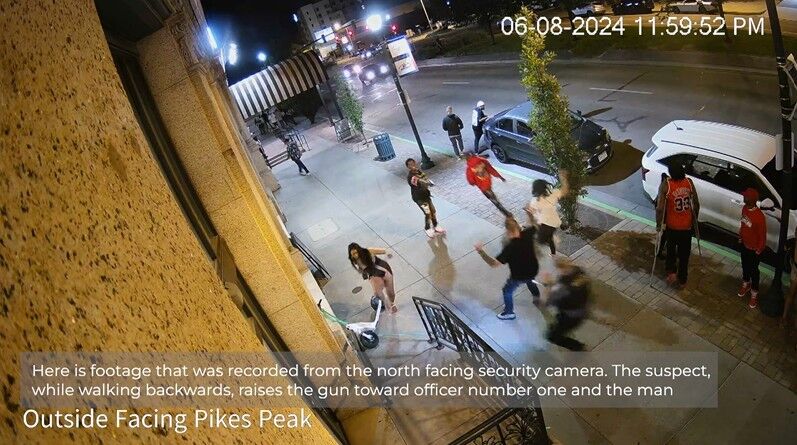
A federal judge concluded last week that a Colorado Springs police officer could not be held liable for shooting a suspect three times after the man menaced two victims with a gun and fled the scene. Al’morion Germany was involved...

DeFlock started from one man’s curiosity — now Flock cameras are a midterm issue
Claire Carter
claire.carter@washingtonexaminer.com
Updated 15 hours ago
Will Freeman wasn’t looking to start a national movement when he launched DeFlock after noticing Flock Safety’s automatic license plate readers along the side of the road. The software engineer was driving across the country in 2024 when the cameras...

Aurora student journalist cleared of disciplinary charges after ignoring ‘gag order’
Kyla Pearce
kyla.pearce@gazette.com
Updated 12 hours ago
A Community College of Aurora student who accused the college of putting an “unconstitutional gag order” on his student-run publication was cleared of disciplinary charges against him. CCA student Andrew Green tried to register his independent student publication, called “FoxTalk,”...
Colorado leaders cheer court decision to block Trump’s mail ballot order in a ruling that’s likely to be swiftly appealed
Thelma Grimes
thelma.grimes@coloradopolitics.com
Updated 13 hours ago
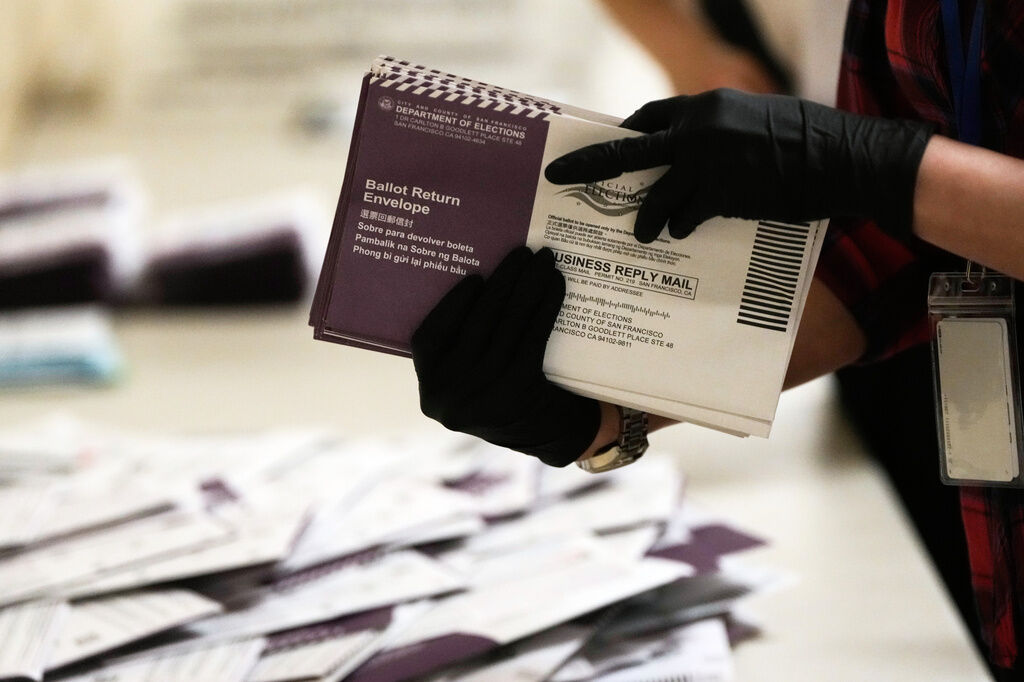
A federal judge on Thursday halted — at least for now — attempts to implement President Donald Trump’s executive order that seeks to restrict the mailing of ballots to American citizens on an eligible voters list. The move stalled the...

Healthcare Freefall: AI arms race hits rural healthcare as hospitals fight to keep up
Thelma Grimes
thelma.grimes@coloradopolitics.com
Updated 17 hours ago
Editor’s Note: Colorado’s healthcare system is entering a period of accelerating instability — a “tsunami,” as multiple leaders describe it — driven by collapsing hospital finances, shrinking Medicaid reimbursements, disappearing services and a political fight over who is responsible for...

House will vote to denounce socialism
Lauren Green
lauren-green@coloradopolitics.com
Updated 20 hours ago
The House of Representatives is set to vote next week when lawmakers return to condemn and denounce “socialism in all its forms,” specifically pointing to the growing Democratic Socialists of America organization. The House voted to condemn socialism last year,...
PREV
PREVIOUS

Court: Temporary tags must go in same location as permanent license plates
Temporary license plates must be in the same location as permanent tags, not elsewhere on the vehicle, the Colorado Court of Appeals ruled for the first time on Thursday. Colorado law requires that, as of July 1, 2016, the Department of Revenue must manufacture temporary tags that comply with requirements for permanent rear license plates. […]

Colorado COVID-19 vaccination questions answered: When? Where? How?
After Gov. Jared Polis’ update Wednesday, Coloradans age 70 and up are now a part of Phase 1B of the COVID-19 vaccine distribution plan, joining moderate risk health care workers, first responders and frontline essential workers. Coloradans age 70 and older represent 78% of all COVID-19 deaths in the state, making it vital for them […]