

Court rules Fruita officer’s use of drug-detection dog unlawful

For the second time in under two years, a court has found a Fruita police officer deployed her drug-detection dog during a traffic stop without probable cause, obtaining evidence unconstitutionally.
According to court records, Mesa County Sheriff’s Sgt. Justin Bynum observed an apparent transaction between Arlene A. Coglietti and a man, and alerted dispatch. He did not mention anything about the exchange of drugs.
Police Officer Cheryl Yaws was nearby and followed Coglietti’s car, eventually pulling her over for speeding. Yaws recognized Coglietti from a prior drug arrest, and Coglietti denied she was still using narcotics.
Yaws told Coglietti she intended to use her drug-detection dog, Talu. Coglietti denied having marijuana, methamphetamine, cocaine or heroin in the car. Talu, performing a “free air sniff,” alerted Yaws to something at the passenger side door.
After a search, Yaws found a purse with methamphetamine in the car.
Mesa County District Court Judge Lance P. Timbreza agreed that Yaws did not have reasonable suspicion to use the dog, but also the officer did not need it in this instance. Because Coglietti denied possessing marijuana, “there was no reason to believe Talu would alert to anything other than contraband,” said Timbreza, whom the Colorado Supreme Court suspended last year for driving under the influence.
Coglietti appealed her conviction for unlawful possession of a controlled substance with the intent to distribute. On Dec. 17, a three-member appellate panel agreed with her.
The Colorado Supreme Court in 2019 ruled that because the possession of small amounts of marijuana is constitutional, a free air sniff from a detection animal does not only indicate unlawful activity. As such, law enforcement needs probable cause before deploying the animal.
“While Ms. Coglietti’s speeding was enough to initiate the traffic stop, there is nothing in the record to suggest that Ms. Coglietti possessed contraband before or at the time of the stop,” wrote Judge Rebecca R. Freyre. She added that Coglietti showed no signs of intoxication nor did Bynum report seeing drugs in his initial surveillance of Coglietti.
To Timbreza’s ruling that Coglietti’s denial of marijuana was an invitation to perform a search, “Ms. Coglietti did not lose her expectation of privacy by denying possession of marijuana, methamphetamine, cocaine, or heroin,” Freyre pointed out.
Yaws and Talu were previously the subject of a 2019 appeal to the Colorado Supreme Court. Law enforcement pulled over a car with a missing front license plate twice within the span of a few days. During the second stop, a sheriff’s sergeant asked the driver if there was any marijuana in the car.
After the driver answered in the negative, Talu sniffed around the car and indicated the presence of contraband. Officers found methamphetamine in that instance, too. A majority of the Supreme Court determined law enforcement lacked probable cause for the search, similarly observing the driver did not forfeit her right to privacy by denying the presence of narcotics.
Daniel P. Rubinstein, the district attorney for Mesa County, said Yaws is now retired and none of the current drug-detection dogs in the jurisdiction is trained to alert to the odor of marijuana.
“I applaud the creativity of Officer Yaws in believing that if a suspect has told her that the vehicle did not contain any marijuana, and has thus ruled out any lawful reason for an alert by her dog, that it would be ok to rely on the defendant’s assertion,” he said. “An officer relying on a suspect’s assertions does not seem like unreasonable police conduct.”
Rubinstein added that his office does not currently plan to appeal Coglietti’s case to the Supreme Court.
This article and headline have been updated to correct that Officer Cheryl Yaws worked for the Fruita Police Department.


Colorado lawmakers push reforms for handling defendants deemed incompetent
Marissa Ventrelli
marissa.ventrelli@coloradopolitics.com
Updated 9 hours ago
Colorado lawmakers from both parties are backing a bill that would reshape how the state handles defendants found incompetent to stand trial and unlikely to regain competency, aiming to fill long-standing gaps in treatment and placement. Sponsors of Senate Bill...

Colorado title board rejects government transparency measure, backers plan appeal
Marianne Goodland
marianne.goodland@coloradopolitics.com
Updated 8 hours ago
A broad coalition’s push for stronger government transparency hit a major setback last week when Colorado’s title board rejected a proposed ballot measure that would allow more public access to most legislative deliberations. The three‑member title board on April 15...
Colorado body reviews redistricting proposals as battle heats up nationwide
Marianne Goodland
marianne.goodland@coloradopolitics.com
Updated 8 hours ago
With 60 proposals on the April 15 agenda, Colorado’s title board wrapped up its final initial hearing for the 2026 election cycle, sending forward a slate of measures that could reshape workers’ compensation and reignite partisan battles over congressional redistricting....

Colorado title board rejects government transparency measure, backers plan appeal
Marianne Goodland
marianne.goodland@coloradopolitics.com
Updated 10 hours ago
A broad coalition’s push for stronger government transparency hit a major setback last week when Colorado’s title board rejected a proposed ballot measure that would allow more public access to most legislative deliberations. The three‑member title board on April 15...

What we know about nearly a dozen scientists who went missing, died, or were murdered
Emily Hallas, Washington Examiner
emily.hallas.washington.examiner@gazetteedit.wpenginepowered.com
Updated 8 hours ago
The Trump administration is probing concerns surrounding nearly a dozen scientists said to be connected to highly secretive space research whose deaths and disappearances are under increasing scrutiny. President Donald Trump called the situation “pretty serious stuff” last Thursday, revealing...

Businesses can claim refunds starting Monday for Trump tariffs declared unconstitutional
Mae Anderson
mae.anderson@associatedpress.com
Updated 16 hours ago
NEW YORK (AP) — A refund system for businesses that paid tariffs which the U.S. Supreme Court ruled President Donald Trump imposed without the constitutional authority to do so is scheduled to launch Monday. Importers and their brokers will be...
U.S. Supreme Court will hear challenge from Colorado Catholic preschools on state funding exclusion
Lindsay Whitehurst
lindsay.whitehurst@associatedpress.com
Updated 10 hours ago
WASHINGTON (AP) — The Supreme Court will hear from Catholic preschools that say Colorado violated their religious rights by excluding them from a state-funded “universal” pre-kindergarten program over their admission policies. The court agreed on Monday to take up the...
Trump rejects energy secretary’s claim about gas prices staying high: ‘Totally wrong’
Molly Parks, Washington Examiner
molly.parks.washington.examiner@gazetteedit.wpenginepowered.com
Updated 13 hours ago
President Donald Trump rejected Energy Secretary Chris Wright’s statement that gas prices may not fall below $3 before 2027, remaining confident that prices will drop once hostilities cease between the United States and Iran. Trump told the Hill that gas...
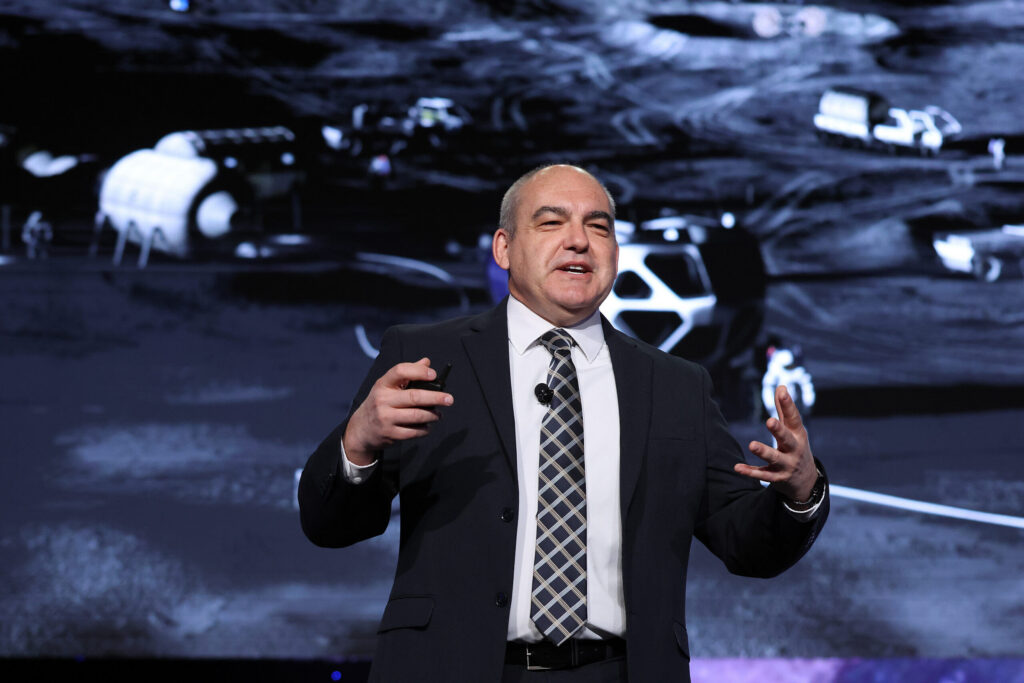
Colorado company ready to build the lunar base, provide ‘lunar mobility’
alex-edwards
alex.edwards@gazette.com
Updated 13 hours ago
Original concepts for a moon base ranged from believable to outlandish. Following the success of Artemis II, which launched four astronauts around the moon over the course of 10 days, NASA is looking ahead as it attempts to take another...
DougCo commissioners challenging open meetings violation
Nicholas Fogleman
nicholas.fogleman@denvergazette.com
Updated 11 hours ago
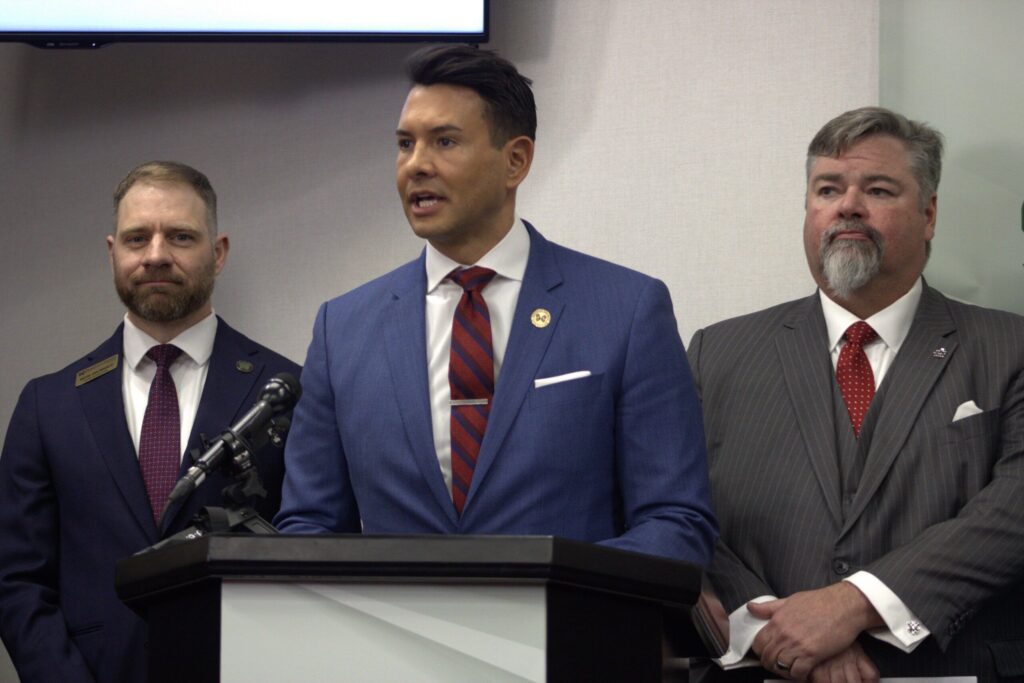
The Douglas County Board of Commissioners is challenging a recent court decision that found the board violated Colorado Open Meetings Law. County commissioners filed a petition Thursday seeking a rehearing from the Colorado Court of Appeals. On April 2, the...
PREV
PREVIOUS

Colorado’s election security team wins U.S. Attorney Award of Excellence
The Secretary of State’s election security unit was presented with the Award of Excellence from the U.S. Attorney’s Office for the District of Colorado for the unit’s role in safeguarding the 2020 general election. The award was presented to State Elections Director Judd Choate and Department of State Chief Information Officer Trevor Timmons. “Coloradans can […]

Colorado state officials consider public school funding amid first enrollment drop in decades
The state’s public school funding is at risk as COVID-19 has pushed Colorado students to homeschool and other alternatives, leading to the first state-wide enrollment decrease in more than 30 years. Enrollment has dropped by 3.3%, or nearly 30,000 students, compared to 2019, according to the Colorado Department of Education. Typically, the state reduces funding mid-year […]