

Q&A with Denise Maes | Her accomplishments follow her determination

FAST FACTS
- Immediate family: Proud mom to pups Abby and Frida
- Favorite song: Today, I love “Hey, Look Ma I Made It,” (by Panic! at the Disco), but really the best song EVER is “With or Without You” by the best band ever, U2.
- Special skill: Throwing a good party. I love gatherings with good people.
- Favorite places to be: Taos, the Capitol and the patio at Raleigh Street with good people and a glass of wine
- Proudest accomplishment: Professionally at the ACLU, it’s definitely the role, albeit small, I played in helping to end Colorado’s death penalty. Personally, it’s the good people in my life and the mentorship I’ve offered to younger Latinas. Girls/women cannot be what they cannot see. I want them to soar.
- Education: Graduate of the University of New Mexico School of Law and a first-generation college graduate in her family.
From Denver Water to the White House, from a childhood in Taos to an office high above 17th Street, from the trenches of civil liberties to a future Walmart greeter, Denise Maes continues to put down indelible marks on the world, especially in her adopted Colorado.
Where to begin? She was the first woman to serve as board president for the state’s largest utility. She also chaired the Denver Hispanic Chamber of Commerce as it rose in prominence. She was a norm-breaking shareholder in the powerhouse Denver firm of Berenbaum Weinshienk & Eason, specializing in environmental law and land-use regulation and litigation.
In 2009, she was named one of the top seven women lawyers by Law Week Colorado, and in 2010 Maes was celebrated as “Barrister of the Year” by The Gay, Lesbian, Bisexual and Transgender Community Center of Colorado. Then, Maes was the director of operations for then-Vice President Joe Biden and acted as general counsel to the Office of Administration for Barack Obama.
After her detour to the nation’s Capitol, she came back to Colorado in 2011 to become policy director for the ACLU, helping overturn Colorado’s death penalty and being a remarkable and forceful voice against police profiling, among her causes.
Colorado Politics could keep going, but you get the picture: Denise Maes is a real big deal.
Colorado Politics: Most people know what a lawyer does, but what does a policy director do?
Denise Maes: As the public policy director for the ACLU of Colorado, I oversee and advance policies that promote civil liberties as well as directing the fight against policies that take our liberties backward. I do this work at the Colorado State Capitol, as well as at city council and county commissioner chambers across the state. A public policy director advocates for change, lobbies for that change and drafts what that change looks like.
CP: What got you interested in law and how did it pivot to public service?
Maes: I think the opposite is more accurate. I’ve always had an appetite for public service and pivoted to law school to fulfill that appetite. At the end of the day, much kudos to lawyers that advance civil liberties; I’m just more suited to working those issues from a policy perspective. Also, I’m a political junkie. I love politics, follow it and am drawn to it. I have never wanted to run for political office. Public service in other ways fulfills my need to be of some value to making my community a better place to live.
CP: What would the world be like if nobody took up unpopular fights, the way the ACLU does?
Maes: Sadder. Less free. Less inclusive and there would be a quieter and smaller voice for those that are already forgotten or voiceless. The ACLU has to bring a voice to those not often heard — the incarcerated, people experiencing homelessness, those whose children were separated from them at the border and so many others.
CP: If it isn’t bad intent, then what is it when the government, the courts or businesses violate people’s rights?
Maes: Ignorance. I honestly believe that for the most part, policy makers sometimes advance issues without regard to civil liberties and not because of ill intent. They didn’t give thought or consideration to the consequences of their policy ideas. That’s why the ACLU is here. We are here to help them navigate those waters. And then there’s bad intent.
CP: Are individual rights more important than the common good?
Maes: They’re the same thing. This question assumes they’re in conflict, but we don’t achieve the common good without recognizing equity for all people and that’s why individual rights are so important. We must work together toward solutions, otherwise we fail as a society. Collaborating as a community will bring great harvest to each and therefore, to all.
CP: You used to work for Joe Biden. What do you know that voters should know?
Maes: I want voters to know that Joe Biden is the person you see in ads and in interviews. He is a genuine and caring person; smart, respected by international leaders and can unite this country through empathy and goodwill. And he will be forthright and remain always ethical. His presidency, much like his campaign, will be about us and not about him.
CP: If you retired from the public spotlight, where would you go and what would you do?
Maes: Work at Walmart as a greeter — Bienvenidos a Wal-Mart! OK, seriously, I don’t know. I hope I have a few more years left in me to advance my community and promote those that do the same. And maybe more time to think of my epilogue. I would love to spend more time in Taos, my birthplace, mi querida. It really is the most beautiful place on Earth.
CP: Growing up in Taos, what was your oddest odd job?
Maes: So, perhaps, a bit unlike most Mexican-American families in urban centers, my mom didn’t allow us to work while in school. But having said that, during some summers, I worked at a hair salon alongside my mom. I swept up cut hair and my mom managed the appointment book. The salon owner was my mom’s friend. She smoked non-stop. The good ol’ days! I always went home smelling like cigarettes.
Colorado Politics Must-Reads:


Colorado board permits state to appeal injunction against arthritis drug price cap
Marissa Ventrelli
marissa.ventrelli@coloradopolitics.com
Updated 13 hours ago
A Colorado board voted Friday to allow the Attorney General’s Office to fight an injunction against a price cap on a drug that treats arthritis. A U.S. district court judge had granted the company Amgen a preliminary injunction, temporarily blocking...

Federal judge rejects constitutional claims, ‘expressions of hatred’ by Club Q defendant
Michael Karlik
michael.karlik@coloradopolitics.com
Updated 13 hours ago
A federal judge rejected a defendant’s claims that he received constitutionally ineffective assistance of counsel while facing federal hate crime and firearms charges for murdering five people at a Colorado Springs LGBTQ nightclub in 2022. Anderson Lee Aldrich is serving...

Divided 10th Circuit upholds Colorado congestion fee on car rentals
Michael Karlik
michael.karlik@coloradopolitics.com
Updated 10 hours ago
The Denver-based federal appeals court concluded on Monday that a 2024 “congestion impact fee” that lawmakers imposed on short-term vehicle rentals did not conflict with a federal prohibition on certain airport-related charges. Beginning in the 1970s, Congress began limiting the...

Space Force should measure workforce needs as it prepares to double in size, GAO report says
Mary Shinn
mary-shinn@coloradopolitics.com
Updated 19 hours ago
The Space Force needs more people. It’s just not precisely sure how many more. A Government Accountability Office report released earlier this month found that the youngest and smallest military branch does not have a process to consistently or accurately...

Colorado schools receive $24 million for free meals program
Marissa Ventrelli
marissa.ventrelli@coloradopolitics.com
Updated 13 hours ago
The Colorado Department of Education is providing Colorado schools with nearly $24 million in grant funding to implement a free lunch program. Approved by voters in 2022, the Healthy School Meals for All provides free breakfast and lunch to all...

Secret Service agent placed on administrative leave after arrest for near-deadly hazing ritual
Claire Carter
claire.carter@washingtonexaminer.com
Updated 21 hours ago
A Miami Secret Service agent in Florida was placed on administrative leave following his arrest on Sunday in connection with a near-deadly hazing incident at a University of Miami fraternity. Marquez Christopher Pinder, 29, was arrested alongside two other individuals...
Forest fire west of Sedalia prompts evacuations in Douglas County
Nicholas Fogleman
nicholas.fogleman@denvergazette.com
Updated 23 hours ago
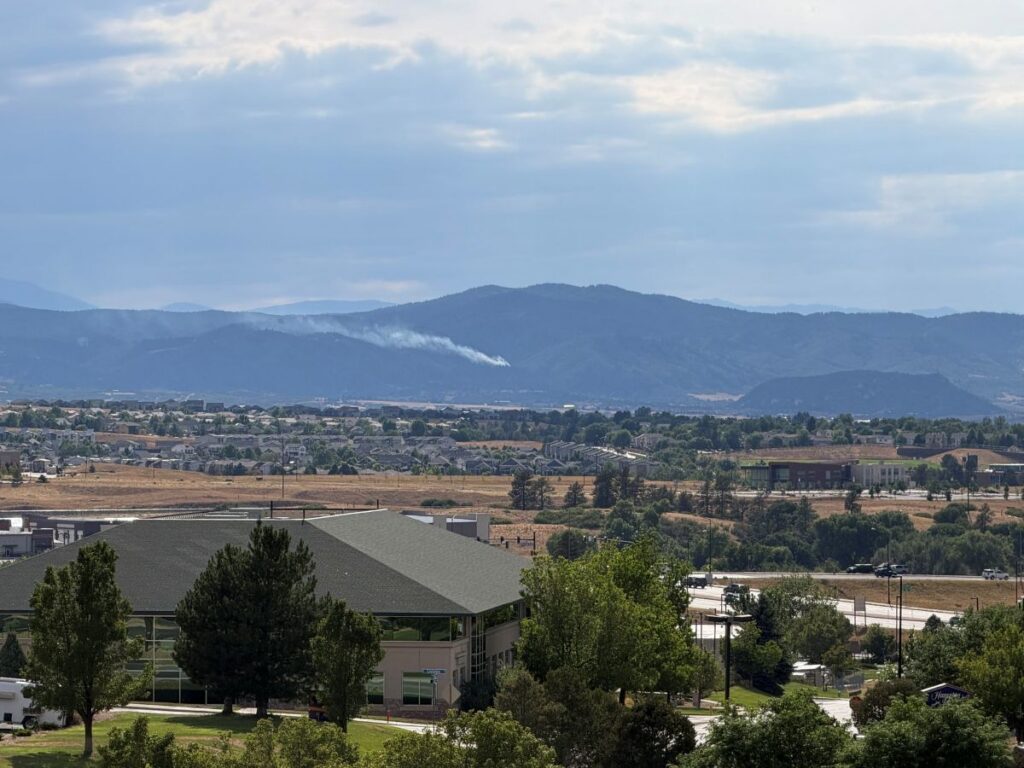
Emergency crews are responding to a forest fire burning west of Sedalia, prompting evacuation orders for nearby residents Sunday afternoon. At about 5 p.m. Sunday, the Douglas County Sheriff’s Office issued an evacuation order for residents within a 2-mile radius...

Airstrikes have paused and talks are pressing forward. But can the US and Iran take the off-ramp?
The Associated Press
the-associated-press@coloradopolitics.com
Updated 23 hours ago
WASHINGTON (AP) — The U.S. military has paused its airstrikes on Iran after nearly two weeks of intensifying bombing, while diplomatic efforts have pushed forward to try to avert a return to all-out war. But it remains to be seen...
Penrose fortune paved the way for Colorado Springs to be a military, space and sports town
Mary Shinn
mary-shinn@coloradopolitics.com
Updated 23 hours ago
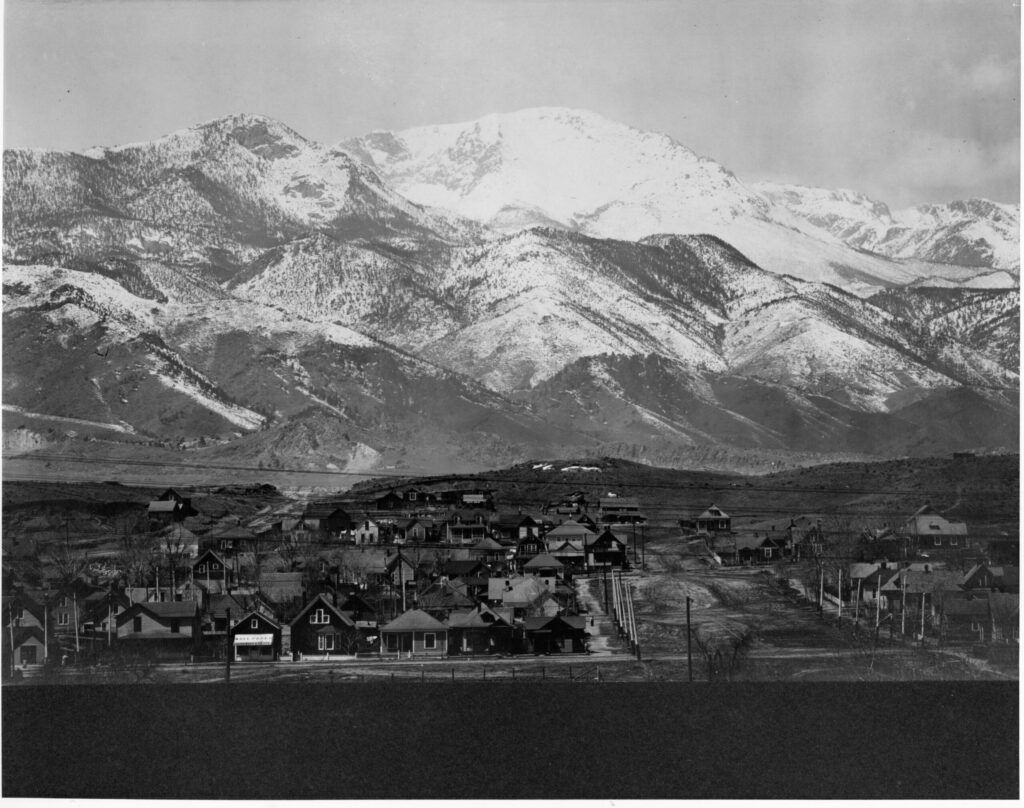
Colorado Springs is always working to catch the next big economic wave. “We’re always trying to figure out what the next thing is going to be,” explained Matt Mayberry, director of the Colorado Springs Pioneers Museum. In the early days,...

Colorado Politics Calendar July 27-Aug. 2
Rachael Wright, Special to Colorado Politics
rachael.wright@coloradopolitics.com
Updated 6 days ago
CoPo’s weekly political calendar will help you find political and public-policy events throughout Colorado. It includes candidate and issue campaign events, public policy meetings, court hearings, state and local party conventions, assemblies, debates, rallies, parades, speaking engagements, traveling dignitary appearances,...
PREV
PREVIOUS

Colorado child care centers see rise in COVID-19 outbreaks as cases increase across metro area
The rate of COVID-19 outbreaks in Colorado child care centers more than tripled in October, prompting reminders from the state about key health and safety precautions. State officials tallied around three dozen outbreaks in child care programs in October, compared with 10 in September. There were a dozen outbreaks Denver, with smaller numbers in Adams, […]

Judge allows political retaliation lawsuit against El Paso County sheriff to proceed
A federal judge last week allowed multiple claims to proceed against El Paso County Sheriff Bill Elder for allegedly retaliating against two employees while forbidding office staff from being “outwardly critical of me.” Keith Duda worked at the sheriff’s office from 2006 to 2018 and his daughter, Caitlyn Duda, started as a security technician in […]