

Government transparency coalition report says Colorado open records law is ‘unbalanced’
A new report published by a government transparency coalition in Colorado describes the state’s open records law as “unbalanced,” saying it negatively impacts those who work for the public good by allowing custodians to impose exorbitant fees to produce public records.
University of Denver law student Justin Twardowski, who compiled the report for the Colorado Freedom of Information Coalition (CFOIC), found that while the Colorado Open Records Act (CORA) doesn’t specify fees for records requests, courts have allowed custodians to charge “nominal” fees for research and retrieval, a right Twardowski argues state agencies abuse continuously, resulting in exorbitant fees being charged for simple and narrowly-tailored requests.
In 2014, state lawmakers attempted to reign-in some of the exorbitant fees charged to research and retrieve documents by capping the maximum hourly fee at $30.00 per hour. Fees are adjusted each year in conjunction with the inflation rate. The current CORA fee is $33.58 per hour.
However, this didn’t stop government agencies from charging the maximum allowable under the law, Twardowski argues. Some examples include the Department of Revenue charging The Denver Post $10,000 for information on state marijuana businesses and History Colorado charging 9News over $2,200 for 120 redacted pages of state archaeological documents.
“Six years later, it is clear that CORA’s fee provision can be used to make public records so cost prohibitive they effectively are off limits to the public,” Twardowski states.
“CORA’s fee provision is unbalanced, negatively affecting those who work for the public good,” he concludes in the report.
The report recommends several ways state lawmakers could reform CORA, among them a provision to bar government agencies from charging requesters “for personnel time spent researching and retrieving records,” and another that would require agencies to provide requesters with itemized receipts for charges.
Steve Zansberg, a First Amendment lawyer in Denver, described the report as “a clarion call to the General Assembly to restore a proper balance to CORA.”
“Mr. Twardowski’s thorough report presents compelling proof that Colorado open records law, as currently configured, allows custodians to impose unreasonable fees that thwart the public’s right to access their records,” Zansberg said.
Colorado Politics Must-Reads:

U.S. Senate OKs funding bill to avoid government shutdown
Wire Services
wire-services@coloradopolitics.com
Updated 16 hours ago
Hemp provision became point of contention WASHINGTON • The U.S. Senate in an overnight vote Saturday approved a short-term measure to fund federal agencies into early December and avoid a government shutdown during the middle of campaign season. The late-summer...

The relevance of Watergate more than a half-century later | SONDERMANN
By Eric Sondermann
by-eric-sondermann@coloradopolitics.com
Updated 3 days ago
It was the scandal for which all other scandals are now named. In June 1972, a small group of Cuban burglars with high-level connections broke into the headquarters of the Democratic National Committee. Those headquarters were located in the Watergate...

Wirth downplays Social Security disaster talk | A LOOK BACK
Rachael Wright, Special to Colorado Politics
rachael.wright@coloradopolitics.com
Updated 3 days ago
Forty-five years ago this week: “As time goes on,” said Democratic U.S. Rep. Tim Wirth, of the 2nd Congressional District, “we are finding that the safety net, which was proposed earlier this year, has some very large holes in it,”...
Colorado Politics Calendar Aug. 10-16
Rachael Wright, Special to Colorado Politics
rachael.wright@coloradopolitics.com
Updated 3 days ago
CoPo’s weekly political calendar will help you find political and public-policy events throughout Colorado. It includes candidate and issue campaign events, public policy meetings, court hearings, state and local party conventions, assemblies, debates, rallies, parades, speaking engagements, traveling dignitary appearances,...

Democratic group aims Spanish-language TV ad at Gabe Evans in Colorado’s battleground 8th CD
Ernest Luning
ernest.luning@coloradopolitics.com
Updated 1 day ago
A national group tied to House Democratic leadership launched a six-figure Spanish-language TV ad in Colorado this week targeting Republican U.S. Rep. Gabe Evans and the GOP’s signature budget legislation. The 30-second spot is part of $15 million in new...

Colorado School of Mines lands major share in Trump’s $100M mining-education plan
Thelma Grimes
thelma.grimes@coloradopolitics.com
Updated 1 day ago
President Donald Trump on Friday named the Colorado School of Mines among roughly a dozen institutions that will share in a $100 million commitment “to train the next generation of American miners.” Paul Johnson, the university’s president, said he is...
Local party leaders, incoming judge among members of judicial performance commission that violated law
Michael Karlik
michael.karlik@coloradopolitics.com
Updated 11 hours ago
A local Democratic leader and 2024 presidential elector. A legislative aide and leader in the Young Republicans. An incoming county court judge freshly appointed by the governor. They are among the eight members of the northeastern Colorado judicial performance commission...
Judge dismisses lawsuit seeking records from Colorado Democratic group
Marianne Goodland
marianne.goodland@coloradopolitics.com
Updated 1 day ago
A lawsuit seeking to obtain records from Democratic lawmakers affiliated with a caucus has been thrown out by a Denver District Court judge. On July 17, Judge Ericka Englert dismissed the April lawsuit filed by progressive activist Derrick Blanton, who...
DOJ official decries ‘nonsense’ in Jeffco schools at fundraising gala
Matt Kyle
matt.kyle@denvergazette.com
Updated 17 hours ago
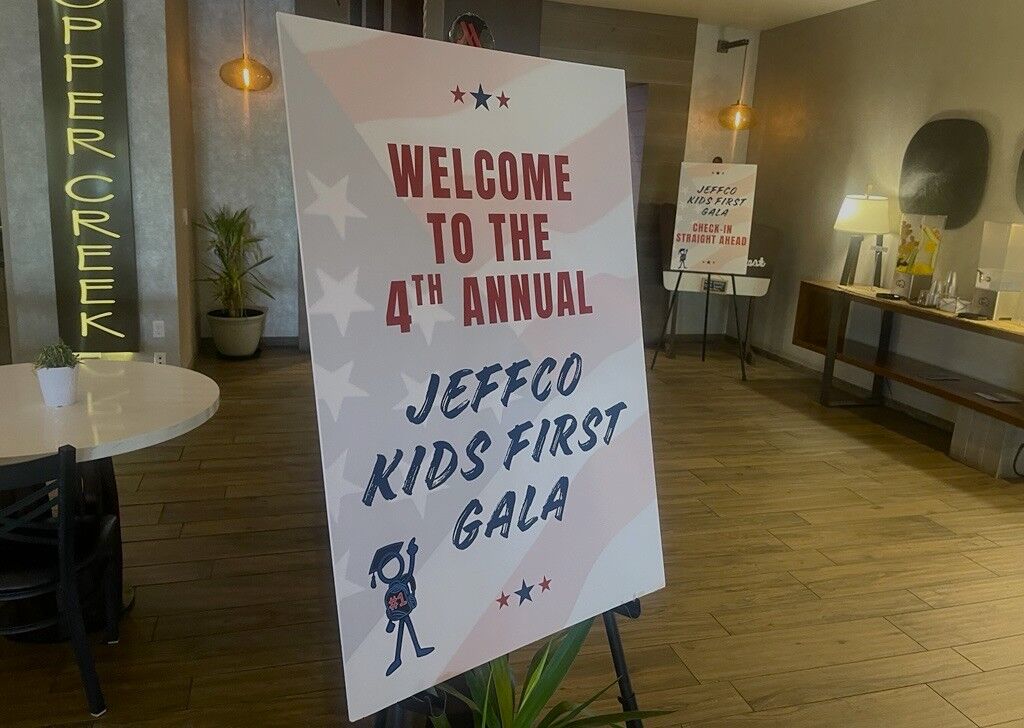
Amid a legal battle between Jeffco Public Schools and the federal government, a Department of Justice official spoke at a fundraising gala and decried “crazy stuff” and “nonsense” in the school district. The gala was for Jeffco Kids First, an...
Colorado Springs mother Deborah Nicholls’ murder conviction overturned
Nick Smith
nick-smith@coloradopolitics.com
Updated 2 days ago
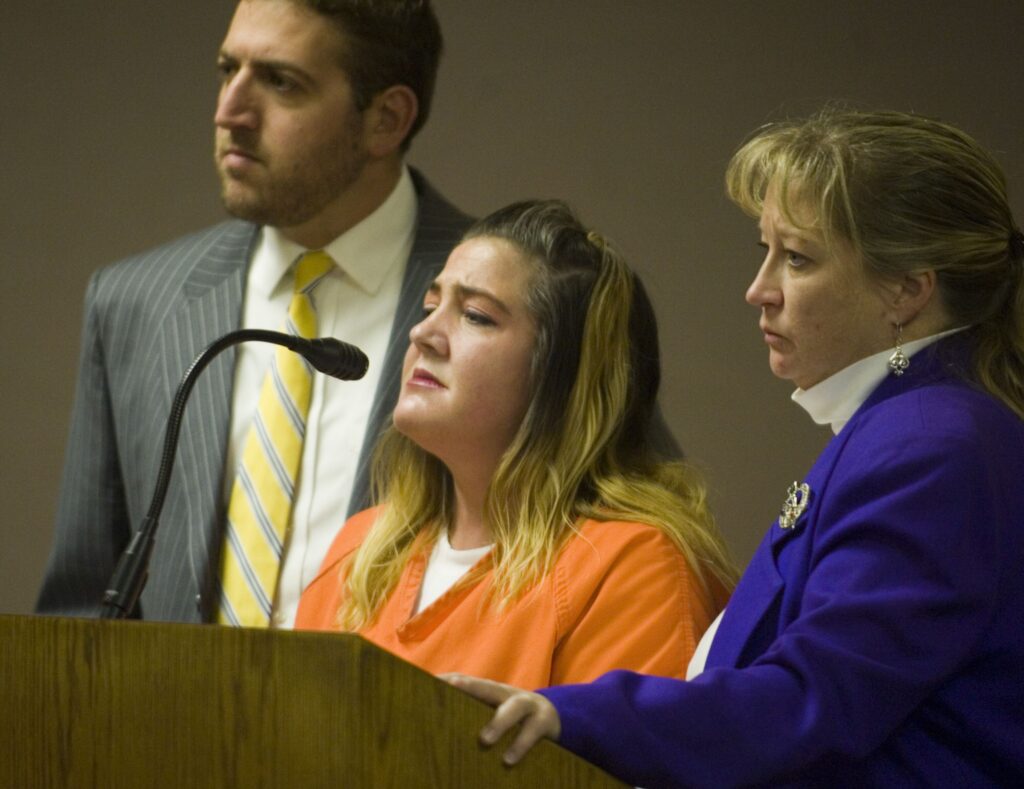
A Colorado Springs mother convicted in 2008 of murdering her three children in a house fire might get a new trial after a judge ruled that prosecutors withheld key evidence that could have impacted the jury’s verdict. Deborah Nicholls, whose...
PREV
PREVIOUS

Grand County allows for partial re-entry from East Troublesome fire evacuations
Re-entry plans for Grand County began Monday following emergency evacuations as a result of the East Troublesome fire. The plans are for areas on the east side of Highway 34, the Grand County Sheriff’s Office said. The Sheriff’s Office opened all areas south of the intersection of Highway 34 and County Road 6 east and […]

Denver clarifies security guard license requirements after Matthew Dolloff shooting
The Denver Police Department and Denver Excise and Licenses released comprehensive licensing requirements for Denver security guards in a press release Monday. In Denver, to provide security services an individual must be employed by a private security employer licensed to operate in the City and County of Denver. Individuals must also possess a valid individual […]