

OPINION | All abortion bans are about controlling women
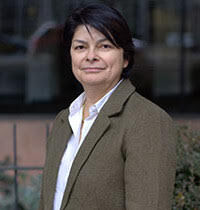
Denise Maes
Picasa

Justice Ruth Bader Ginsburg was one of American Civil Liberties Union’s (ACLU) most illustrious alumni. She founded the ACLU’s Women’s Rights Project and in the weekend following her passing, the ACLU renamed its Center of Liberty to the Ruth Bader Ginsburg Center of Liberty.
When Justice Ginsburg embarked on her legal career at the ACLU, there were hundreds of laws on the books that discriminated on the basis of sex. Ironically, these laws were predicated on “protecting women.” For example, women were prohibited from jobs that required them to work at night or to work where she would be required to carry or lift more than 15 pounds.
Before Justice Ginsburg, arguments to get rid of sex discrimination never prevailed in the court. She changed that; she changed history. In her short tenure at the ACLU, Justice Ginsburg played a significant role in 34 Supreme Court cases. She argued six cases before the court herself and prevailed in five of them. In her first oral argument before the Supreme Court, there was not one single question from any of the nine justices. Many observers described the justices as “transfixed.”
Justice Ginsburg was a person ahead of her time — a visionary architect of legal protection for women’s rights and gender equality. She possessed the then-radical belief that laws steeped in gender stereotypes hurt both women and men. Laws derivative of patriarchal notions of what it means to be a man or a woman deprive us all of the freedom to control our own lives. Significantly, she viewed reproductive freedom as a necessary component of true gender equality and dedicated her life’s work to ensuring law was used as a tool to advance equality.
Like many, I thought that between her work ethic, her workout routines and the many health bouts where she came out ahead, Justice Ginsburg would live longer than she did. Her loss comes at a pivotal time for reproductive freedom, in particular, as opponents of reproductive freedom and gender equality work strategically to roll back abortion rights nationally and here in Colorado. If Republicans retain control of the nomination and confirmation process, Justice Ginsburg’s replacement will without doubt wear their hostility to reproductive rights as a badge of honor. The recently named nominee, Judge Amy Coney Barrett, has vowed to overturn Roe v. Wade if confirmed. And a newly configured Supreme Court won’t stop there. Health care, climate protection, voting rights, and immigrant rights all hang in the balance now that Justice Ginsburg is no longer on the bench.
Here in Colorado, we are fighting our own reproductive freedom battle at the ballot: Proposition 115. This measure bans abortion later in pregnancy and denies women the ability to make their own personal medical decisions. The proponents of this initiative are clear — they want to force a woman to continue a pregnancy with no exceptions for health or individual circumstances — even in cases of rape, risks to the woman’s health, or a lethal fetal diagnosis. Prop 115 is a one-size-fits-all mandate that fails to acknowledge that every pregnancy is unique and shows no compassion for Colorado women and families faced with unimaginably complicated circumstances.
Let me be clear: all abortion bans — whether in Alabama or Colorado — are political attacks. They are not about health or medicine. They are about controlling women and taking away decision-making power. This is evidenced by the fact that Proposition 115 is being pushed by many of the same politicians and groups who have tried — and failed — to ban abortion altogether in Colorado every year for the last decade. If Proposition 115 succeeds in Colorado this November, it will embolden the proponents to pursue bans even earlier in pregnancy, with the ultimate goal of restricting all abortion access in Colorado and across the country.
In the landmark 1973 Supreme Court case Frontiero v. Richardson, the then-ACLU attorney and future Justice Ginsburg argued in favor of striking down a law that prevented women in the military from receiving dependent benefits for their husbands. Quoting famed abolitionist and equal rights advocate Sara Grimke, Ginsburg said “I ask no favor for my sex. All I ask of our brethren is that they take their feet off our necks.” Proposition 115 bestows no special right or favor for women, but it certainly advocates controlling women’s choices and constraining their autonomy.
These are the freedoms that Justice Ginsburg worked tirelessly to achieve for the last half-century. Now that she is gone, let us honor her legacy by fighting to protect gender equality and reproductive rights. Vote “NO” on Proposition 115.
Denise Maes is public policy director of the American Civil Liberties Union in Colorado.

Colorado’s precarious position protecting from wildfires | Paula Noonan
Paula Noonan
paula-noonan@coloradopolitics.com
Updated 6 hours ago
Fourteen firefighters died in the Storm King Mountain fire west of Glenwood Springs in 1994 when 2,115 acres burned. In August 2020, the Grizzly Creek fire burned 32,631 acres along the Interstate 70 corridor east of Glenwood causing mudslides from flooding...

We must deliver on cost of living | GUEST COLUMN
Colorado Politics
colorado-politics@coloradopolitics.com
Updated 18 hours ago
By Ryan Gonzalez Insurance premiums are on the rise. Property taxes are increasing. Groceries are becoming more expensive. Gas prices are reaching record levels. Housing costs are becoming unsustainable. These are the concerns I hear from people in my district....

Dan Haley on the role of oil and gas in Colorado’s energy future | The OpEdge Podcast
Tony Olivero
tony.olivero@gazette.com
Updated 1 day ago
Dan Haley, executive director of Coloradans for Responsible Energy Development, joins The OpEdge to discuss the role of oil and natural gas in Colorado’s energy future amid the state’s aggressive push toward “net zero.” Haley tells host and investigative columnist...

Rural hospitals don’t want special treatment, just a chance to care for locals | PODIUM
Colorado Politics
colorado-politics@coloradopolitics.com
Updated 6 hours ago
By Kevin Stansbury As chief executive of Lincoln Health, my responsibility is simple: ensure the people of eastern Colorado have access to high-quality healthcare close to home when they need it most. That mission has never been easy. Rural hospitals...
Blue states should avoid disasters | Hal Bidlack
Hal Bidlack
hal-bidlack@coloradopolitics.com
Updated 2 days ago
Back when I was teaching political science at the U.S. Air Force Academy (and amazingly to me, a week from this column’s publication will mark 20 years since my retirement from active duty. Where the heck did that time go?)...

Right-to-hunt ballot measure’s a cruel, anti-wildlife solution to a nonexistent problem | GUEST COLUMN
Colorado Politics
colorado-politics@coloradopolitics.com
Updated 3 days ago
By Eric Washburn I love to hunt. Every year I try to hunt big game in Colorado and waterfowl in Louisiana. This year, I applied for five Colorado big game licenses — elk, deer, pronghorn, moose and bighorn sheep. I...

Jena Griswold’s record: corruption, incompetence | Dick Wadhams
Dick Wadhams
dick-wadhams@coloradopolitics.com
Updated 6 hours ago
There is no statewide elected official going back decades who is as breathtakingly corrupt and incompetent as Secretary of State Jena Griswold, who is now running for attorney general of all things. And compliant ruling Democrats know it. Their silence...

Kiros exudes why Colorado’s political times are a-changin’ at annual Denver Dems gala | Miller Hudson
Miller Hudson
miller-hudson@coloradopolitics.com
Updated 6 days ago
Among Colorado’s few remaining bipartisan rituals are county and state party dinners. I was particularly intrigued by last week’s Denver Democratic Party’s 2026 Annual Gala, a “New Deal for a New Era.” Their glossy program featured an artist’s Technicolor rendering...

Livestock grazing regulations need flexible updates | Rachel Gabel
Rachel Gabel
rachel-gabel@coloradopolitics.com
Updated 6 days ago
The Bureau of Land Management last updated their livestock grazing regulations the year I graduated from high school. I am 49. Assessing rangeland health can’t be done once and not revisited. This year is a prime example that managers must...

Taxpayers donate to tax increase campaign | Jon Caldara
Jon Caldara
jon-caldara@coloradopolitics.com
Updated 7 days ago
Give the man his due. President Donald Trump has undeniable talents. Colorado politicians are learning. Chief among The Don’s skills is taking the self-serving, ethically dubious behavior of previous politicians and putting it on steroids. Or, to borrow from the...
PREV
PREVIOUS
NOONAN | A good first step by oil & gas regulators
Paula Noonan It’s time to give some props to the Colorado Oil and Gas Conservation Commission and the Colorado Department of Public Health and Environment. The COGCC is approving a rule to require a 2,000-foot setback from the edge of an oil and gas well pad to a residential property line for well drilling, with […]

OPINION | Preserving our voices on power supply matters
Jack Johnston Electric Cooperatives are part of rural Colorado. We been intertwined with our communities for over 80 years and until recently were able to do so without oversight outside of the communities we serve. Therefore, it may come as a surprise that we sought federal regulation over the rates of our cooperative power supplier, […]