

SLOAN | DA races loom large as anarchists run amok
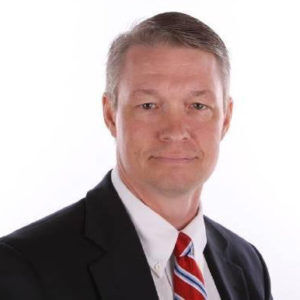

Kelly Sloan

This is a busy election year, and, judging by the length of the ballot going out to them, the plebiscitary demands on the voters in Colorado are considerable. Expectantly, the contests for president, Senate, and certain ballot measures are receiving the bulk of the limelight, but considerable attention ought to be paid to local district attorney races.
DA elections are perennially underrated, but they take on a particularly grave importance this year. One risks courting hyperbole with such statements, but even a cursory review of the contemporary scene suggests the importance of electing the right people for the top law enforcement posts in the state.
The convulsive events of the past summer have generated cries from some noisy corners for various iterations of criminal justice reform, generally translated as antagonistic efforts directed against police, and enforcement of the law in general. It stands to reason, to the extent that reason is employed in such endeavors, that that antagonism would extend to the prosecutorial arm.
At its extremes, left-wing ideology views the entirety of society as a massive system of oppression — labeled variably as capitalism, systemic racism, patriarchy or what have you — liberation from which is the sole purpose of being. Society’s laws are, therefore, necessarily a construct and tool of the oppressive system, designed to keep whichever oppressed class down; as opposed to, say, provide for order and safety and a framework allowing us all to live together in peace. This is the message of the bottle-throwers in the streets, if you can get past the vulgarity and misspelling of their signs and graffiti (grammar and spelling are also oppressive tools of the bourgeoisie).
This is on the fringes, yes, but the thought behind the ideology is infectious, and creeps into the mainstream, where variants of it are displayed in the platitudes offered in support of the demonstrators’ demands, and against the police trying to restore order and protect the public, not to mention in the proposals being irresponsibly floated about, and in some cases implemented, under the aegis of “police reform,” or “criminal justice reform.”
It is not mere happenstance that the appetite for militant criminal justice reform among Democratic civil leaders coincides with the enormous increase in crime being experienced in Denver, as in other cities across the nation, murder and other violent crime especially. To be sure, the crime rate in Denver has been steadily climbing for about the past seven years, and the increase is not exclusively due to the recent embrace of anti-police policy, but there is no question that Denver is suffering a record spike in crime this year, and the official tolerance for law-breaking and the general environment of disorder it engenders is a significant contributor. We are beginning to see a return, here and elsewhere, to the bleak days of the 1970s, when many inner cities were rendered virtually unlivable by the prevalence of crime. The improvements that we saw starting in the late 1980s and 1990s, brought about by adjustments in our approach to crime control, are now at serious risk as au courant ideological fetishes continue to exert dominance over regard for order and public safety.
The state’s district attorney races are in many ways the front line of this philosophical battle. The contest for the 1st Judicial District DA, in Jefferson and Gilpin counties, is probably the most prominent and, given its size and location in the state, consequential example. The Republican candidate running to succeed the highly esteemed Peter Weir is Matthew Durkin, a bright, experienced, and highly competent prosecutor whose ideas for addressing the growing crime problem and its underlying issues are realistic and workable.
A recent case from that district serves a useful illustration. On April 29, a hit-and-run left Mr. Lakhwant Singh severely injured and hospitalized. The ensuing investigation was complicated by the COVID-19 hospital quarantine measures, but in due course his assailant, Eric Breeman, was charged with 17 counts, including attempted murder and bias-motivated crime.
Well before the investigation was completed, activists, led by Durkin’s opponent, Alexis King, clamored and petitioned for bias-motivated crime charges to be prematurely leveled. That those charges were only filed after a proper and thorough investigation was evidently a problem for King and the activists. This suggests two things: a) King’s concerns lie with optics over process, and b) she believes that mob cries ought to be a basis for filing charges. This brings to mind visions of Robespierre and his guillotine during the heady days of the French Revolution.
Yes, that is perhaps something of an allegorical stretch. But, as we are witnessing, ideological extremism has a nasty habit of infiltration, which is why it must be kept as far from the district attorney’s office as possible.

Read Michener’s ‘Centennial’ | Jon Caldara
Jon Caldara
jon-caldara@coloradopolitics.com
Updated 3 days ago
If you’ve been reading my columns, you’ve noticed I’m basically illiterate. I blame my dyslexia and public education, but my Olympic-level laziness could be the driving factor. Anyway, I basically can’t read (and, still, I graduated from CU Boulder, so...
Giving credit to Polis where credit is due | SONDERMANN
Eric Sondermann
eric-sondermann@coloradopolitics.com
Updated 4 days ago
It is an understatement to suggest that Gov. Jared Polis has had a tough couple of months. The bloom was already off the rose and Coloradans were paying far more attention to the choice of his replacement than they were...
Will one unqualified AG replace another? | George Brauchler
George Brauchler
george-brauchler@gazette.com
Updated 3 days ago
Colorado Democrats are poised to nominate another attorney general candidate with de minimis relevant credentials or experience. Far from disqualifying, Colorado’s recent voting history mirrors that of America in favoring biography over experience, partisanship over policy, and emphasizing what divides...
Pueblo’s mayor keeps stirring the pot | Dennis Maes
Dennis Maes
dennis-maes@coloradopolitics.com
Updated 3 days ago
Pueblo Mayor, Heather Graham, has clearly proven to be a disciple of the Donald Trump school of governance. And, like her mentor, she is experiencing the same catastrophic results. The format is to ignore what the electorate approved and expects...
The perils of Colorado’s unregulated abortions | GUEST COLUMN
Colorado Politics
colorado-politics@coloradopolitics.com
Updated 3 days ago
By Tom Perille How did the movement which grew out of a genuine concern for the health and safety of women become the same movement that undermines women’s health and safety today? Despite good intentions, it was a long route...
Sans seniors, what does Colorado’s uninterested early turnout say about our disengaged electorate? | Paula Noonan
Paula Noonan
paula-noonan@coloradopolitics.com
Updated 4 days ago
This primary election is poorly attended. Evidence is in the numbers. About 10% of active registered voters are deciding this year’s primaries with seven days to go. If that number triples by June 30, only 30% of voters will decide...
Who gets to decide Colorado’s economic future? | GUEST COLUMN
Colorado Politics
colorado-politics@coloradopolitics.com
Updated 4 days ago
By Sarah Blackhurst Colorado’s prosperity depends on industries that grow our food, build our future and power our homes. But today, these sectors face an invisible threat from 5,000 miles away: the European Union’s Corporate Sustainability Due Diligence Directive (CS3D)....
We have the chance to change Colorado’s cancer outcomes | PODIUM
Colorado Politics
colorado-politics@coloradopolitics.com
Updated 4 days ago
By Erika Hanson Brown Colorado ranks among the healthiest states in the nation by nearly every measure. Yet even here — amid the Rocky Mountains and our deeply rooted culture of health and activity — cancer casts a long and...

Colorado has a playbook for youth mental health — our next governor must use it | GUEST COLUMN
Colorado Politics
colorado-politics@coloradopolitics.com
Updated 6 days ago
By Karen Ron-Li Liaw From the rural communities on the western slope to the eastern plains, to the major urban regions on the Front Range, Colorado families are navigating an all-too-familiar crisis: kids are struggling, and Colorado’s mental health system...
Pigs engineered to fight alpha-gal syndrome | Rachel Gabel
Rachel Gabel
rachel-gabel@coloradopolitics.com
Updated 6 days ago
If I were an evil genius trying to hamstring animal agriculture, I would create a fly that eats livestock alive and a tick whose bite and spit causes some people to have an allergic reaction to meat. (Insert evil laugh...
PREV
PREVIOUS

THE PODIUM | After hard time, I value my vote
Jeff Johnson As the summer draws to an end, voting has been the topic of conversation across the United States, and Colorado is no exception. In 2019, Colorado passed a law to re-enfranchise people convicted of felonies who are out on parole, giving more than 11,500 Coloradans their right to vote back. Yet, many people […]
NOONAN | A good first step by oil & gas regulators
Paula Noonan It’s time to give some props to the Colorado Oil and Gas Conservation Commission and the Colorado Department of Public Health and Environment. The COGCC is approving a rule to require a 2,000-foot setback from the edge of an oil and gas well pad to a residential property line for well drilling, with […]