

‘Logically inconsistent’ jury verdict legal nonetheless, high court determines

A majority of the Colorado Supreme Court decided it was legal to simultaneously convict a man on separate assault convictions, two of which required acting intentionally and the other required his lack of awareness.
“[E]ven if each of the guilty verdicts for second degree assault is logically inconsistent with the guilty verdict for third degree assault,” wrote Justice Carlos A. Samour, Jr. in the opinion released Monday, “no legal inconsistency exists.”
Derek Michael Rigsby went to a bar with his girlfriend and another couple in September 2014. After two other men began speaking to the women on the dance floor, a confrontation erupted in which Rigsby struck the victim in the face with a glass.
Boulder County prosecutors charged Rigsby with three counts of felony second-degree assault, which involved acting recklessly or with intent to cause bodily injury. A jury convicted him on two counts, but on the third they decided he was guilty of third degree assault, a misdemeanor.
In doing so, they acquitted him of the last second-degree assault charge, as the misdemeanor requires “acting with criminal negligence,” defined as a failure to perceive risk.
Rigsby appealed, arguing the result was mutually exclusive: he had to act intentionally and be aware of the risk of bodily injury for the felonies, but at the same time be unaware of the same risks under a criminal negligence standard.
In December 2018, a three-member panel of the Court of Appeals agreed with Rigsby and ordered a new trial.
“We cannot determine the jury’s intent because the verdicts are logically and legally inconsistent,” wrote then-Judge Daniel M. Taubman.
Samour disagreed, drawing a diagram to interpret Colorado’s standards for culpable mental state. In his telling, criminal negligence was a common denominator for all higher culpability standards.
“It follows that by returning a guilty verdict on count 1 and finding that Rigsby acted with intent, the jury, as a matter of law, necessarily found that he acted with criminal negligence,” Samour explained, “and by returning a guilty verdict on count 2 and finding that Rigsby acted recklessly, the jury, as a matter of law, necessarily found that he acted with criminal negligence.”
He acknowledged that such a hierarchy was not necessarily logical, but the General Assembly intended for less-culpable mental states to be included in any higher degree of culpability. Samour added that for a verdict to be mutually exclusive, an element of one charge has to negate an element of the other.
Justice Richard L. Gabriel dissented, writing that “although the majority perceives no legal inconsistency in the verdicts at issue, it never explains how a jury can find — either factually or legally — that a defendant both knew of a risk of injury to a victim and did not know of that same risk at the same time and based on the same conduct.”
He pointed to the court’s 2016 decision in a case where the justices reversed a jury’s conviction of a man for both robbery, which requires a use of force, and theft, which requires a lack of force. Gabriel believed that had Rigsby’s jury received an instruction on the hierarchy of culpability that Samour outlined, that could have explained the inconsistent verdicts — but they did not.
The majority did side with Risgby in concluding his multiple sentences for the assault charges should be merged so as not to violate constitutional guarantees against double jeopardy. In particular, because the misdemeanor was a lesser offense of second degree assault, Rigsby received more than one punishment for the same criminal conduct. The justices ordered the trial court to merge his sentences into a single, five-year term for felony assault.
Gabriel also disagreed with that finding, maintaining that double jeopardy was not the issue here. Instead, he believed Rigsby’s rights to due process of law, a fair trial and to be found guilty beyond a reasonable doubt were compromised. He indicated he would have upheld the Court of Appeals’ order of a new trial.
The case is People v. Rigsby.


What courageous citizenship really looks like | Vince Bzdek
Vince Bzdek
vince.bzdek@gazette.com
Updated 9 hours ago
By Vince Bzdek What exactly is courage? Ernest Hemingway famously called it grace under pressure. Mark Twain wrote that “courage is resistance to fear, mastery of fear — not absence of fear.” C.S. Lewis refined that even more: “Courage is...
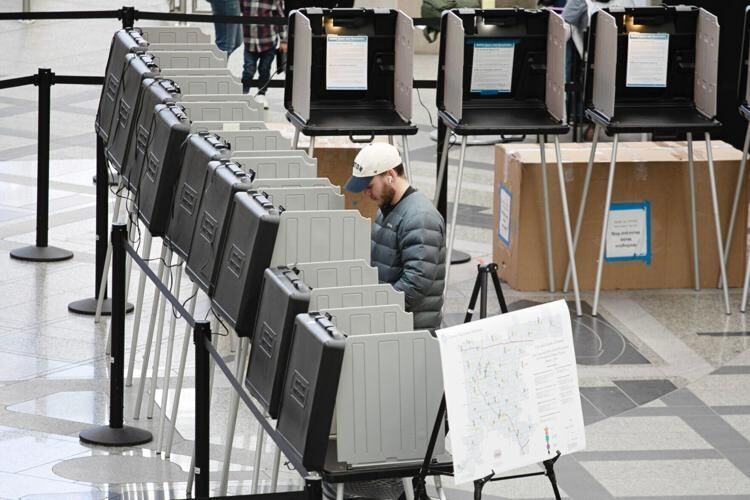
The coming election and mischief in the making | SONDERMANN
Eric Sondermann
eric-sondermann@coloradopolitics.com
Updated 3 days ago
America’s tribalism is such these days that we struggle to even agree on the basic rules. Elections have always been hotly contested. As the saying goes, “Politics ain’t beanbag.” The process has long involved elements of nastiness and underhanded conduct....
Colorado Politics Calendar Aug. 31-Sept. 6
Rachael Wright, Special to Colorado Politics
rachael.wright@coloradopolitics.com
Updated 3 days ago
CoPo’s weekly political calendar will help you find political and public-policy events throughout Colorado. It includes candidate and issue campaign events, public policy meetings, court hearings, state and local party conventions, assemblies, debates, rallies, parades, speaking engagements, traveling dignitary appearances,...
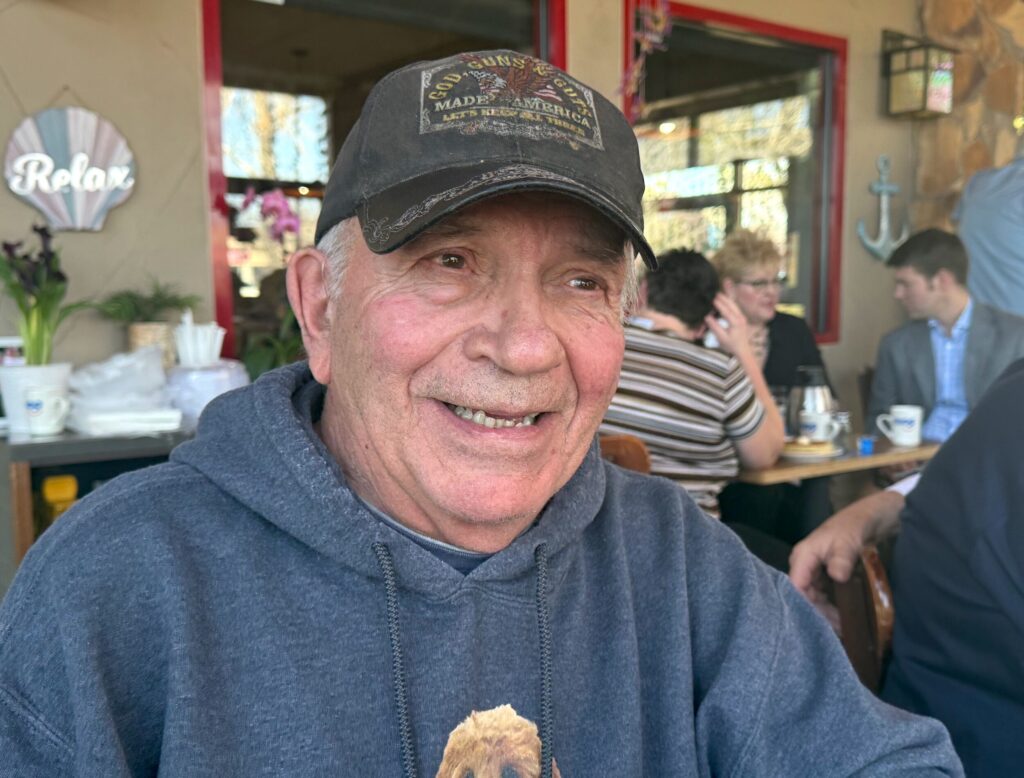
Tancredo in Running for Dept. of Ed. Position | A LOOK BACK
Rachael Wright, Special to Colorado Politics
rachael.wright@coloradopolitics.com
Updated 3 days ago
Forty-five years ago this week: “I know that my name has been placed before the Secretary of Education, and I know that I’m one of three or four being considered for the Department of Education’s Region 8,” said state Rep....
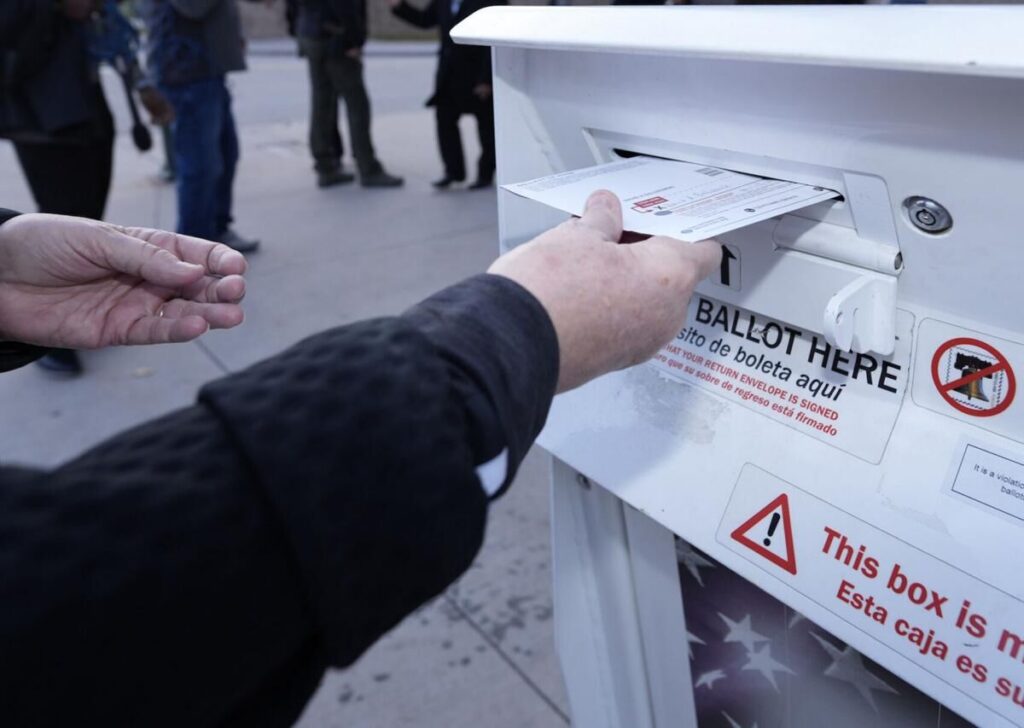
Colorado measure adding ID checks to mail-in voting qualifies for ballot
Marissa Ventrelli
marissa.ventrelli@coloradopolitics.com
Updated 1 day ago
A ballot initiative that would require voters to include additional information on mail-in ballots has qualified for the November election, according to the Secretary of State’s Office. Backed by El Paso County Treasurer Chuck Broerman and former Deputy Secretary of...
Colorado election website error exposes personal data of confidential voters
Marissa Ventrelli
marissa.ventrelli@coloradopolitics.com
Updated 1 day ago
A system update accidentally lifted protections on confidential records in Colorado, exposing dozens of voters’ personal information, according to the Secretary of State’s Office. The limit that normally blocks access to confidential voter profiles was inadvertently disabled during an update...

PUC adds weekly comment after killing private talks
Scott Weiser
scott.weiser@gazette.com
Updated 1 day ago
The Colorado Public Utilities Commission will take public comment at the start of every commissioner’s weekly meeting beginning Sept. 9 as part of its new transparency mandate, the commission announced, expanding a slot previously limited to the second Wednesday of...
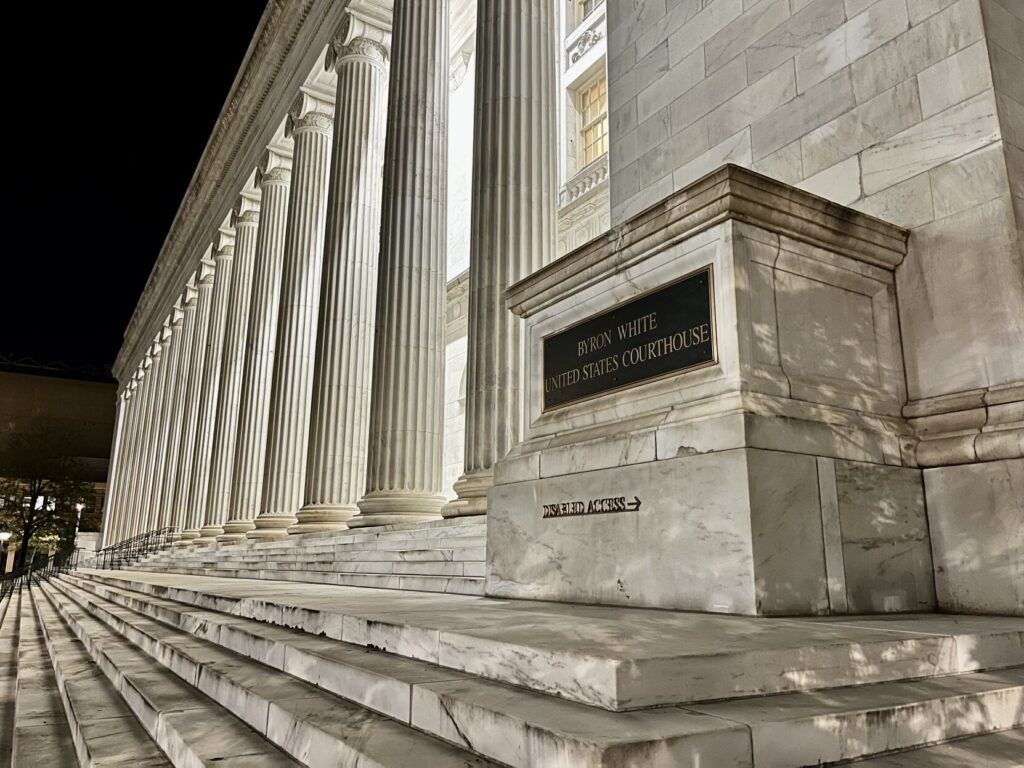
10th Circuit overturns framework for sentencing probation violators by 11-1
Michael Karlik
michael.karlik@coloradopolitics.com
Updated 8 hours ago
In a rare decision by all 12 of its full-time judges, the Denver-based federal appeals court ruled in a lopsided vote on Friday that one of its members created a sentencing process for probation violators that was out of step...
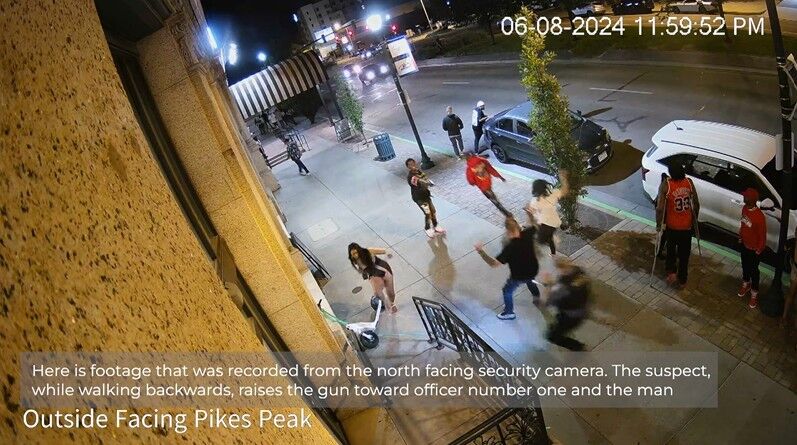
Federal judge dismisses excessive force lawsuit against Colorado Springs, officer
Michael Karlik
michael.karlik@coloradopolitics.com
Updated 12 hours ago
A federal judge concluded last week that a Colorado Springs police officer could not be held liable for shooting a suspect three times after the man menaced two victims with a gun and fled the scene. Al’morion Germany was involved...

DeFlock started from one man’s curiosity — now Flock cameras are a midterm issue
Claire Carter
claire.carter@washingtonexaminer.com
Updated 1 day ago
Will Freeman wasn’t looking to start a national movement when he launched DeFlock after noticing Flock Safety’s automatic license plate readers along the side of the road. The software engineer was driving across the country in 2024 when the cameras...
PREV
PREVIOUS

A timeline of COVID-19 in Colorado
A timeline of COVID-19, through the list of major orders and decisions by Gov. Jared Polis. The Governor has issued 190 “D” executive orders, with all but a handful related to the state’s handling of the COVID-19 pandemic. Many of these orders have been extended past their original implementation date. March 5: First announced case […]
Department of Labor and Employment to hold rulemaking on minimum wage increase
Colorado’s minimum wage will hike to $12.32, beginning Jan. 1, 2021. And the Colorado Department of Labor and Employment is seeking public input on that change and several others in the coming weeks. According to a statement Monday, the department’s Division of Labor Standards and Statistics (DLSS) announced the proposed new Colorado minimum wage, currently […]