

Oil and gas commission begins first day of hearings on mission change
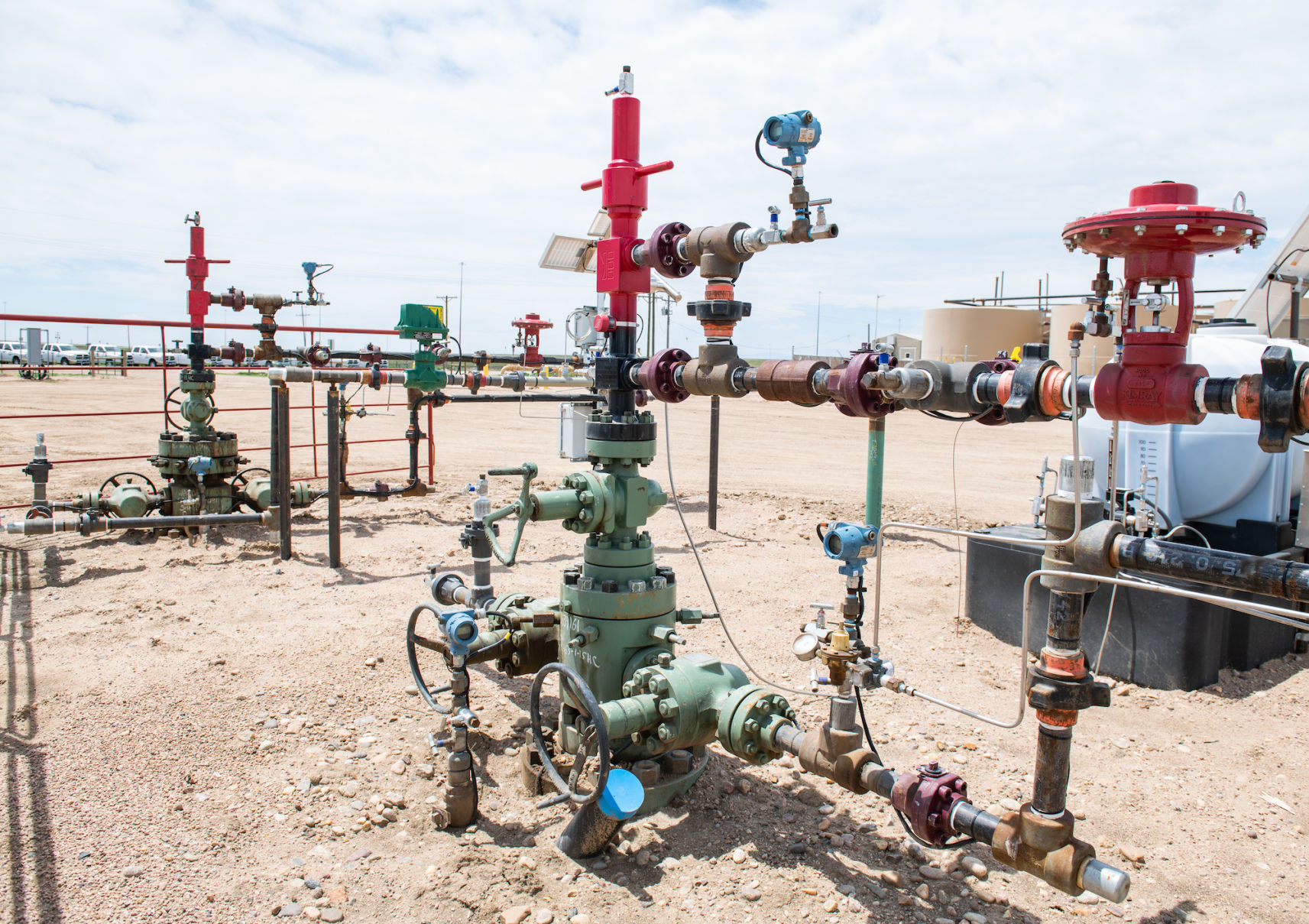
Over the next 10 days, the Colorado Oil and Gas Conservation Commission will hold hearings on rules intended to dramatically change how it does business.
The hearings on mission change, alternative location analysis and cumulative impacts of oil and gas activity will continue throughout the fall.
Up until last year, the job of the COGCC was to foster oil and gas development. Under Senate Bill 19-181, the COGCC is now required to regulate oil and gas in a manner that protects public health, safety, welfare, wildlife and the environment.
The rulemaking on mission change will be the first for the newly reconstituted commission, which went from a volunteer board to a professional, full-time paid group on July 1. The prior commission began working on those rules last year.
Monday’s hearing kicked off with public comment from the four Democratic lawmakers who sponsored Senate Bill 19-181. And they came ready for battle.
Senate Majority Leader Steve Fenberg of Boulder challenged prehearing statements submitted by the Colorado Oil and Gas Association on just who controls oil and gas decisions: the COGCC or local governments.
COGA’s statement, submitted July 31, claims the draft rules on mission change “violate the intent and language of SB 19-181” by allowing the COGCC to “override a local government’s siting decision and its regulation of the surface aspects of oil and gas development.”
COGA’s statement claims that under SB181, local government land use regulation of oil and gas is not preempted by state regulation in the same area. The law also “re-emphasized local government’s primary authority over land use issues.”
Not so, said Fenberg. The draft rules on mission change “capture the spirit and intent” of SB181 but COGA’s statement runs counter to that, he said.
The industry’s claim that SB181 grants local government exclusive authority is incorrect, Fenberg explained. The section of law referred to by COGA is not intended to give local governments that authority. Instead, the law makes it clear that state regulations are the “floor,” and local governments can exceed those regulations if they so choose.
Fenberg pointed out that some of those who objected to SB181 during its passage last year objected on those very grounds. He cited the testimony of Weld County Commissioner Barb Kirkmeyer, who said that if the state government wanted local governments to have more control lawmakers would have written it into the bill.
An Aug. 14 letter submitted by House and Senate Democrats said both the COGCC and local governments had “independent and coequal land use authority over oil and gas development.” The law allows local governments to have stronger regulations than the state but does not allow those local governments to set up weaker regulations. “Oil and gas development must satisfy both local and state regulations in order to proceed.”
The letter was signed by 17 of the Senate’s 19 Democrats and 24 of the House’s 41 Democrats.
On the other side Monday: county commissioners and town managers from oil and natural gas-producing counties that claim they should have more authority on land use decisions, their fears about the future of the industry and what it could do to an economy already hard hit by COVID-19.
Rose Pugliese, a Mesa County commissioner, said the duty of elected officials is to protect public health, safety, welfare and the environment, but they need a good balance between the high-paying jobs that support the community and protecting the environment.
“We are in the best position to understand our local communities and how to work with our neighbors,” she told the commission.
Several testified about the tax revenue that oil and gas produces for their counties, even in counties where agriculture dominates. Others asked the commission to consider that a “one-size-fits-all” approach doesn’t work for rural communities that don’t struggle with the kinds of air pollution problems experienced by those who live on the Front Range.
Yuma County Commission Chair Trent Bushner pointed out that 54% of the assessed valuation in his county comes from oil and gas, despite the fact that Yuma County is the second highest agriculture-producing county in the state.
“Cows don’t care where oil and gas is sited,” Bushner told the commission. In Phillips County, in northeastern Colorado, 22% of the tax revenue comes from oil and gas, according to Commissioner Terry Hofmeister.
Lisa Piering is town manager for Rangely, home to the Rangely oil field, one of the oldest in the state. Oil and gas has supplied a great life for local families, she told the commission. Oil and gas has coexisted with her town for 55 years without difficulty or any safety concerns. “We love our way of life and what we have,” which includes air cleaner than what’s found on the Front Range, she said.
“We are not the Front Range, we don’t have the huge population and shouldn’t be governed by those policies.”
Ed Ingve from Renegade Oil and Gas challenged the authority of the commission to even hold the hearings, pointing out that the commission’s make-up doesn’t fully follow the law. SB181 requires that no more than three appointees can be members of the same political party, and that membership shall be appointed taking into account “geographical representation of areas of the state with high level of current or anticipated oil and gas activity.”
The commission has no representation from counties with substantial oil and gas activity, much less the state’s biggest oil and natural gas producing counties, Weld and Garfield, Ingve noted. Weld County, according to the US Energy Information Administration, produces nine out of 10 barrels of oil in the state.*
Polis has also left out Republicans. Three of his five appointed members are Democrats, the other two are unaffiliated.
It wasn’t all positive from those who support the changes, either. Several mentioned that the law doesn’t establish a setback distance from oil and gas activity and want the commission to take a tougher stance on that issue, perhaps as much as 2,000 feet.
But there was also plenty of support for the new commission and for making the changes mandated by SB181. Elise Jones, a Boulder County commissioner who spoke on her own behalf, said oil and gas development has changed greatly in the past decade, with fracking activity coming much closer to homes, schools and neighborhoods. Drilling sites are ballooning, she said, to include dozens of wells. There are health risks associated with how close those sites are to homes, Jones said. That’s what drove the passage of SB181.
The hearing continues Monday evening with more public testimony. Tuesday will feature presentations from the oil and gas industry, environmental groups, local government representatives and wildlife organizations.
Correction: a previous edition incorrectly stated the commission had nine members; that was its membership prior to July 1.


Trump lowers flags to half-staff for Dolly Parton: ‘The World loves you’
Naomi Lim
naomi-lim@coloradopolitics.com
Updated 16 hours ago
President Donald Trump is honoring the life of country music legend and philanthropist Dolly Parton by ordering federal buildings across the country to lower flags to half-staff for a week. “Very sad to report that Dolly Parton, one of the...
Ted Cruz suggests GOP realignment coming after Trump leaves office
Emily Hallas
emily-hallas@coloradopolitics.com
Updated 16 hours ago
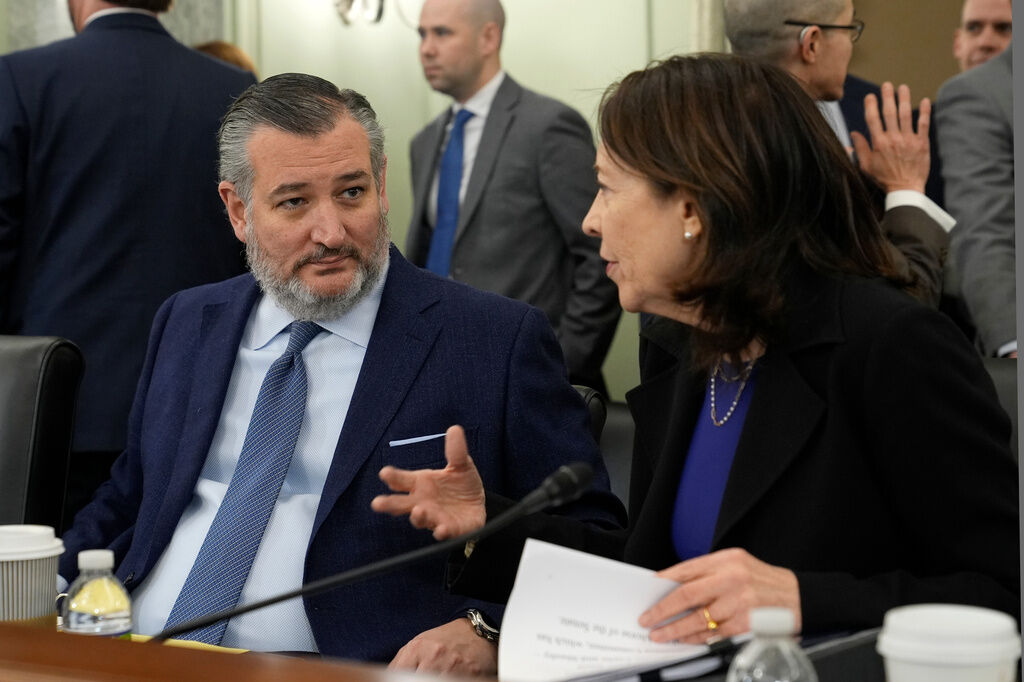
Sen. Ted Cruz (R-TX) on Monday suggested the Republican Party could embrace a directional shift after President Donald Trump leaves office, a transition that promises to leave a gaping hole in the GOP. Cruz is known as a critical ally...
2 Colorado State troopers shot near Woodland Park; suspect killed
DEBBIE KELLEY
debbie-kelley@coloradopolitics.com
Updated 16 hours ago
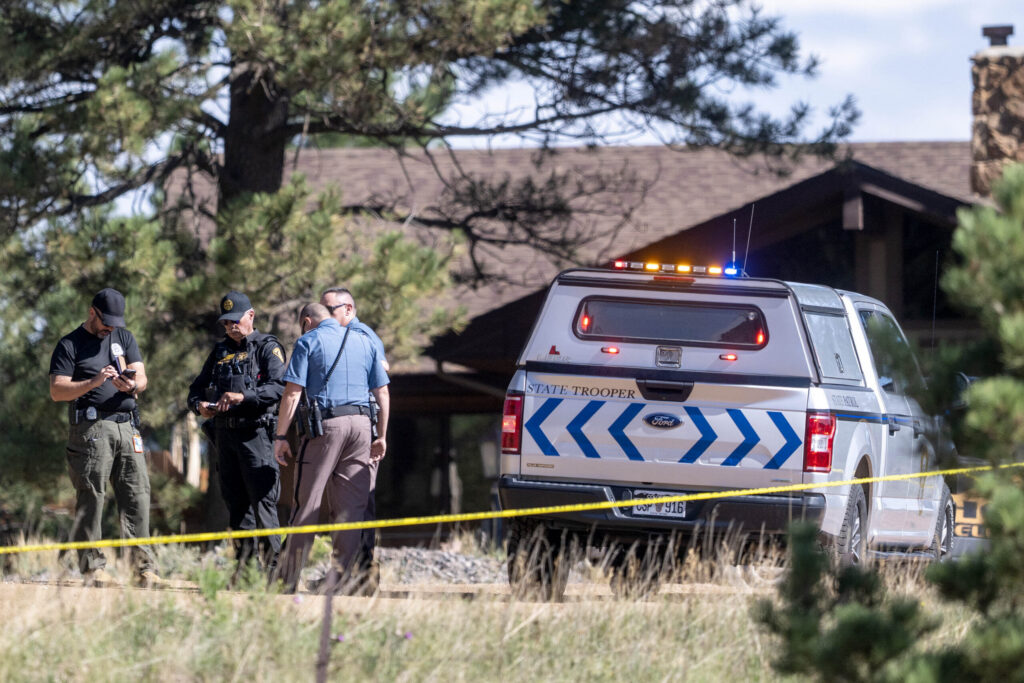
Two Colorado State Patrol troopers were hospitalized, and a suspect is dead after a shooting during a traffic stop Tuesday. The initial incident happened at about 7:15 a.m., when a resident reported suspicious activity in the area near milepost 286...

Aurora moves forward with data center regulations
Kyla Pearce
kyla.pearce@gazette.com
Updated 16 hours ago
The Aurora City Council approved moving forward with two new regulations on data centers and directed staff to come back at the next study session with others. At a council meeting in early August, council members directed city management to...

Aurora City Council considers stricter food truck regulations
Kyla Pearce
kyla.pearce@gazette.com
Updated 16 hours ago
The Aurora City Council is considering passing laws to limit the number of food trucks on properties in the city and how and when they operate. Councilmember Angela Lawson, who sponsored the ordinance, said she understands the importance of food...

Denver murder conviction reversed for incomplete self-defense instruction
Michael Karlik
michael.karlik@coloradopolitics.com
Updated 14 hours ago
Colorado’s second-highest court reversed a defendant’s murder conviction last week because a Denver judge gave an incomplete instruction to the jury about the man’s right to self-defense. Donald R. Gonzales and Gary McLaughlin met up in a Capitol Hill parking...
Colorado lawmaker, House leaders named in workplace-retaliation lawsuit
Marianne Goodland
marianne.goodland@coloradopolitics.com
Updated 17 hours ago
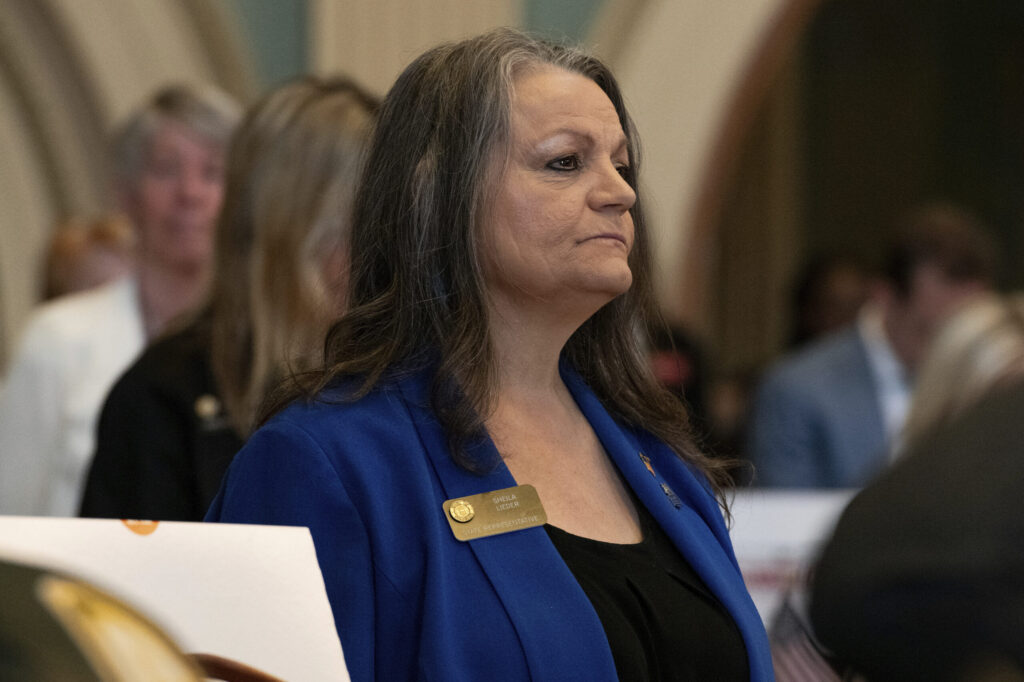
A former legislative aide has filed a lawsuit alleging she was mistreated, illegally directed to perform campaign work and harmed by a House leadership structure she charged was fragmented, politicized and ineffective at protecting employees. The lawsuit, filed by Jennifer...

Secret Service confirms awareness of Iranian state media video threatening Barron Trump’s life
The Associated Press
the-associated-press@coloradopolitics.com
Updated 22 hours ago
WASHINGTON (AP) — The U.S. Secret Service has confirmed it is aware that Iranian state media has aired a video that appears to threaten the life of Barron Trump, President Donald Trump’s youngest son. “The U.S. Secret Service is aware...
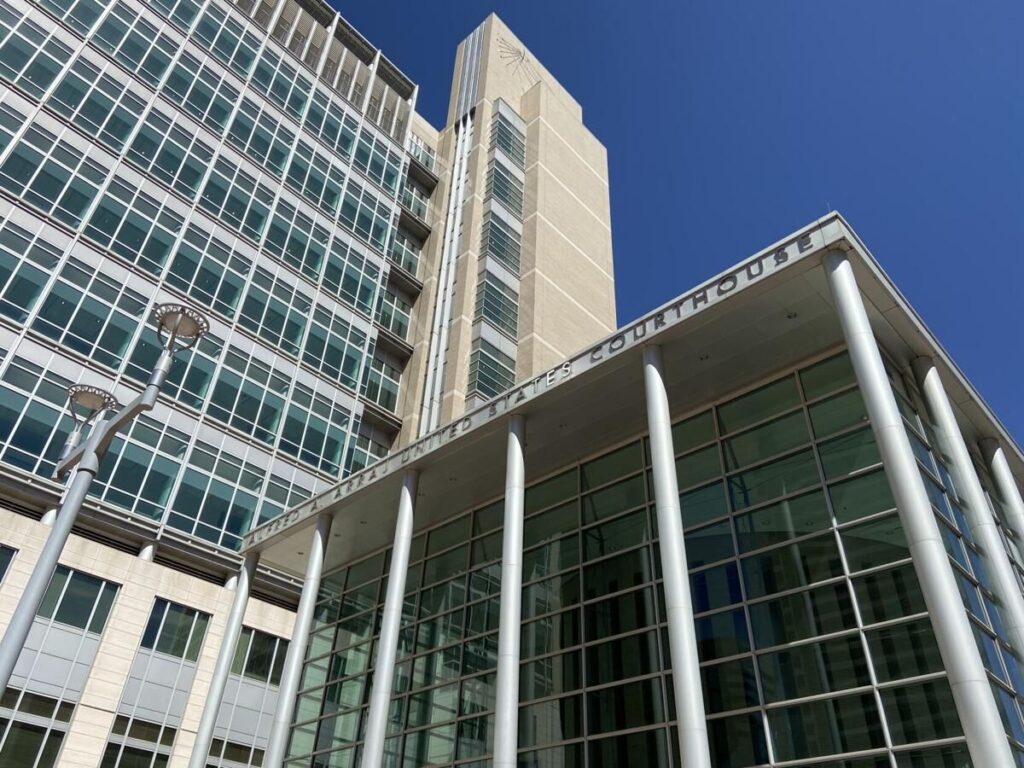
Federal judge hears arguments about Colorado’s 3-day gun purchase waiting period
Michael Karlik
michael.karlik@coloradopolitics.com
Updated 22 hours ago
A federal judge heard arguments on Monday about the constitutionality of a 2023 Colorado law that generally imposes a three-day waiting period on firearm purchases after the initiation of a background check. The test that the U.S. Supreme Court created...

Denver auditor finds oversight failures in $175.6M 16th Street project
Nico Brambila
nico.brambila@denvergazette.com
Updated 16 hours ago
Surprise historic sewer discovery delayed completion a year, cost $18M The Denver Auditor recently found significant oversight and contracting problems with the $175.6 million 16th Street Improvement Project, including an $18 million contract increase and a nearly one-year extension that...
PREV
PREVIOUS

Ethics commission releases final report on Hickenlooper complaints
The Colorado Independent Ethics Commission has released its final report on the 2018 ethics violations committed by former Democratic Gov. John Hickenlooper The commission found Hickenlooper, a Democratic candidate for U.S. Senate, violated the state’s ethics law, Amendment 41, while he was governor and on two separate occasions out of six they reviewed. They fined […]
Colorado Wildfires | A look at the fires burning in the state
Interstate 70 through Glenwood Canyon opened briefly Monday but closed again before re-opening Monday night as the Grizzly Creek fire flared up. Here’s a look at the size and other stats about Colorado’s wildfires, including the new Thorpe fire in Park County. Grizzly Creek fire Acres/Location: 30,719 acres/Glenwood Canyon Containment: 33% Started: Aug. 10, human […]