

Colorado to start differentiating between COVID-19 deaths, other conditions
Beginning Friday, Colorado will differentiate between coronavirus deaths caused directly by COVID-19 and those in which the person had the disease, but didn’t die from it, the Colorado Department of Public Health and Environment said at a briefing.
Data from the state health department Friday showed 21,232 positive cases statewide and 1,150 deaths. Of those, 878 were directly attributed to the coronavirus. More than 220 outbreaks were reported at long-term care facilities.
In previous reporting, the state health department hasn’t distinguished the deaths of those who died from COVID-19 from those who died from other causes but tested positive for COVID-19, health officials said, and reported them together as COVID-19 deaths.
In El Paso County, the state reported 83 coronavirus deaths. State health officials did not immediately respond to whether the department would begin identifying how many deaths can be directly attributed to the disease on a county level, too.
“We’ve been doing this to align with the recommendations from the Centers for Disease Control (and Prevention),” said Dr. Eric France, Chief Medical Officer at CDPHE. “Doing it for public health surveillance allows us to do the kind of apples-to-apples comparisons across states or cities where everybody’s using the same definition.”
Including on a death certificate that a person tested positive for COVID-19, even though they ultimately died of other causes, is “important,” said Kirk Bol, head of the department’s statistics branch.
COVID-19: Colorado COVID-19 death reporting
“We do rely on our death certifiers … and their best medical judgment and professional opinions and the information available to them to determine the cause of death and report it through the death certificate,” Bol said. “We would emphasize that COVID-19 should not be reported on the death certificate if it did not contribute or was related to the cause of death.”
State health officials insisted no death certificates have been altered to reflect more fatalities, despite accusations that the department inflates the statistics.
“We do not question the information as reported on the death certificate or change that information,” Bol said. “We take what is reported on the death certificate to us, and then we share that with the CDC and together we process that information to ultimately compile official vital statistics for the state and the country.”
Some Coloradans and Gazette readers have recently accused health officials of purposely augmenting the number of coronavirus deaths to bring in more money for their hospital.
“It is true that recent legislation pays hospitals higher Medicare rates for COVID-19 patients,” wrote a CDPHE spokeswoman in an email. “This legislation stems from the CARES Act. We trust that doctors are doing all they can to take care of patients. There is no evidence to support reports that providers are deliberately miscoding patients as COVID-19 to earn more money for hospitals.”
KUSA obtained a formal letter Thursday night sent by Rep. Mark Baisley, R-Roxborough Park, claiming that CDPHE Executive Director Jill Hunsaker Ryan illegally falsified death records to inflate COVID-19 death totals. He is requesting an investigation and criminal charges by George Brauchler, district attorney for the 18th Judicial District.
In a statement, Brauchler declined to comment whether an investigation had been launched.
Gov. Jared Polis addressed the data collection at a separate briefing Friday, saying Baisley was wrong in accusing Ryan.
“I’ve told the department of health to be very clear in their reporting,” Polis said. “Nobody behind a desk should ever second-guess a coroner or an attending physician that lists the cause of death on a certificate.”
The governor echoed that the state health department was reporting the “higher” numbers to the CDC because of “federal guidelines.” Still, he acknowledged that “what the people of Colorado want to know is not who died with COVID-19, but who died of COVID-19.”
Public health officials said they hope to have the state’s coronavirus data website updated soon showing more distinction between the types of deaths.
Carol McKinley and Evan Wyloge contributed to this report.


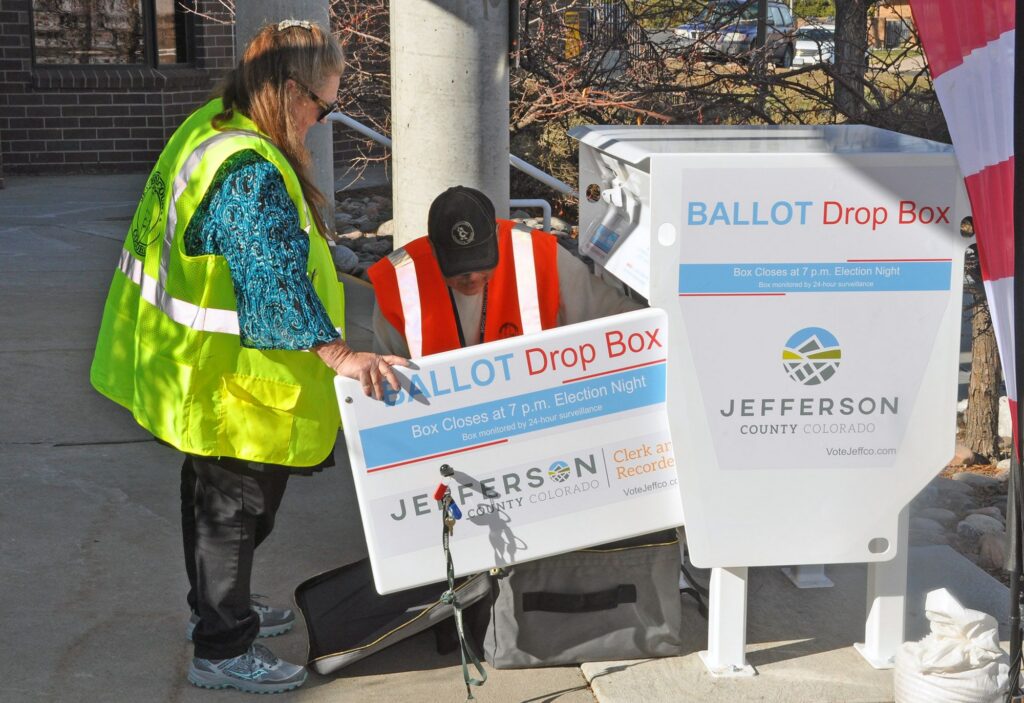
Democratic ballots outpace Republicans’ as Colorado’s primary vote starts to trickle in
Ernest Luning
ernest.luning@coloradopolitics.com
Updated 1 hour ago
With less than two weeks left before ballots are due in Colorado’s primary election, election officials have logged in ballots from just under 6% of the state’s 4 million active, registered voters, the Colorado Secretary of State’s Office said Thursday....
Colorado court upholds murder conviction despite jury disobeying instructions
Michael Karlik
michael.karlik@coloradopolitics.com
Updated 6 hours ago
Colorado’s second-highest court upheld an Arapahoe County defendant’s murder conviction last month, even though jurors found he was not the one who shot the victim and the evidence suggested he was not present for the shooting. A three-judge Court of...

July 1 brings new Colorado rules on ammunition purchases, wildfire‑risk scoring and wildlife enforcement
Marissa Ventrelli
marissa.ventrelli@coloradopolitics.com
Updated 8 hours ago
Colorado will usher in a new set of laws on July 1 that touch everything from ammunition sales to insurance transparency and wildlife trafficking enforcement Here is a look at some of the state’s new laws: Ammunition sales Sponsored by...
Divided appeals court reverses conviction after judge declined to define ‘bludgeon’
Michael Karlik
michael.karlik@coloradopolitics.com
Updated 10 hours ago
Colorado’s second-highest court reversed a Jefferson County defendant’s felony menacing conviction on Thursday, concluding that the trial judge’s failure to define “bludgeon” for jurors may have affected the outcome. A three-judge Court of Appeals panel divided in unusual ways in...

Poll finds majority believe US military action against Iran was a mistake
Brady Knox, Washington Examiner
brady.knox.washington.examiner@gazetteedit.wpenginepowered.com
Updated 10 hours ago
A poll found a wide majority of U.S. voters believed the decision to launch military action against Iran was a mistake. The Beacon Research and Shaw & Company Research poll for Fox News was conducted from June 12-15, meaning many...

For Vance, Iran deal presents opportunity and risk
W. James Antle III Washington Examiner
wjamesantleiiiwashingtonexaminer@wpstage.coloradopolitics.com
Updated 12 hours ago
Vice President JD Vance has a lot riding on the deal to end the war in Iran. The memorandum of understanding between the United States and Iran came together at the outset of Vance’s book tour, but that’s not the...
10th Circuit dismisses Tina Peters’ challenge to confinement as moot
Michael Karlik
michael.karlik@coloradopolitics.com
Updated 1 hour ago
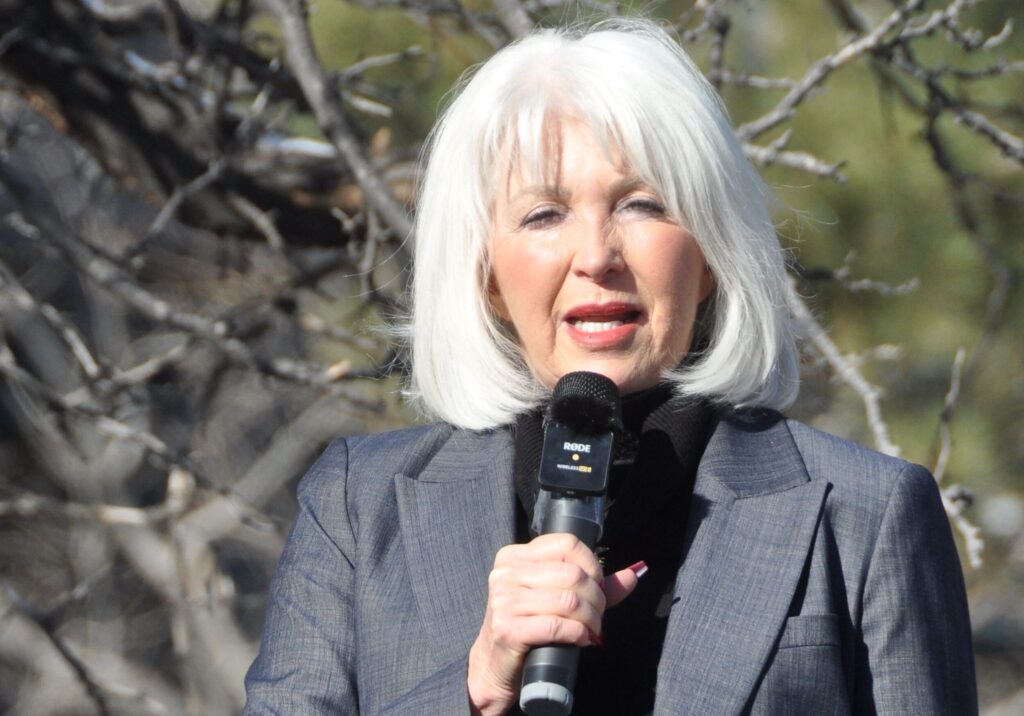
The Denver-based federal appeals court granted the state’s unopposed request on Wednesday to dismiss former Mesa County clerk Tina Peters’ challenge to her confinement as moot. Although Peters received a commutation of her prison sentence last month from Gov. Jared...
Federal judge declines to recuse from death penalty case after Supermax visit
Michael Karlik
michael.karlik@coloradopolitics.com
Updated 4 hours ago
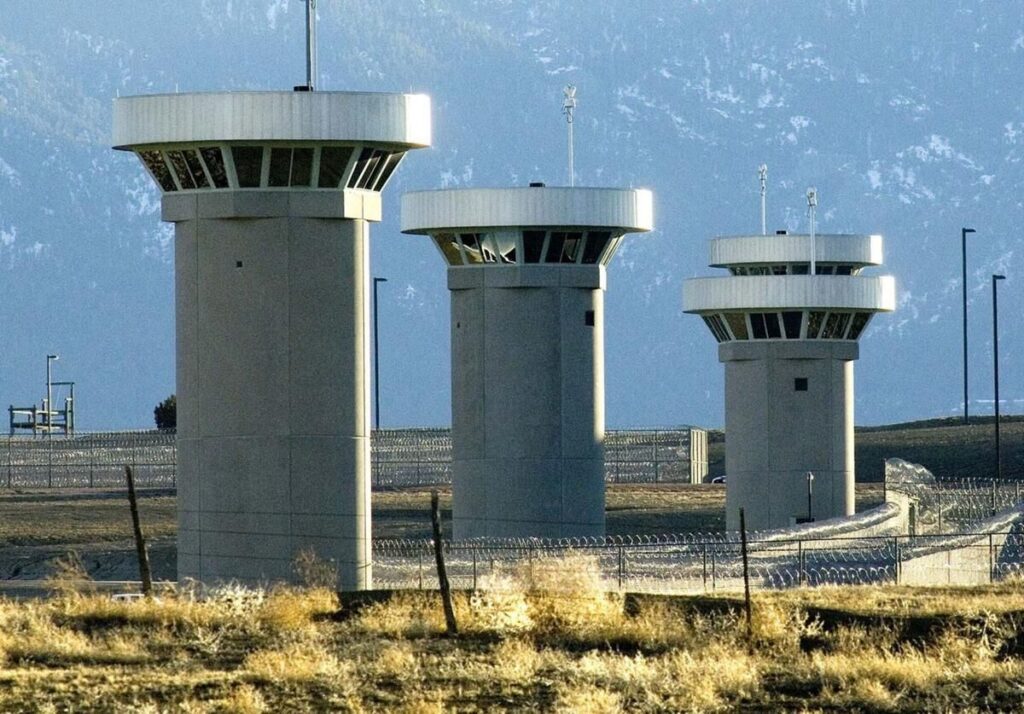
A federal judge declined to recuse herself last month from a death penalty case arising out of Colorado’s “Supermax” prison, finding that her tour of the facility earlier this year did not bias her decision-making. U.S. District Court Judge Charlotte...

Amid public pressure, Colorado candidates tackle social media regulations for minors
Bethany Johnson
bethany.johnson@denvergazette.com
Updated 11 hours ago
Following the accidental overdose of her daughter in 2020, Patti Lujan pursued a lawsuit against Snapchat, the social media platform that, she claimed, connected her daughter with a drug dealer. In a news release announcing the lawsuit, Lujan alleged that...

Denver gets more time to answer FAA questions in probe regarding Key Lime lease denial
Deborah Grigsby
deborah.smith@denvergazette.com
Updated 11 hours ago
The City of Denver has asked the Federal Aviation Administration for additional time to gather information and prepare its response to the federal agency’s investigation of the city’s 2025 denial of a Denver International Airport ground lease expansion for Key...
PREV
PREVIOUS

'The leader we need': Hickenlooper endorses Joe Biden for president
Democratic U.S. Senate candidate John Hickenlooper made his presidential endorsement official Friday when the former Colorado governor announced his support for presumptive nominee Joe Biden. Hickenlooper, who vied with Biden for a share of the moderate vote in the early stages of the Democratic presidential primary, tweeted a link to Biden’s plan to help small […]

Cuts to transportation highlight budget committee's Friday
A ballot measure that would ask voters to approve transportation bonding may have to wait until 2021. The Joint Budget Committee (JBC) voted Friday to draft a bill to postpone the ballot measure, which was due to be referred to the ballot by the General Assembly this year. They also cut funding for the tourism […]