

COVER STORY | The plan for sports wagering to be a salvation is thrown a curve

The proposition was supposed to be simple: legalize and tax sports betting, fund the state water plan and solve a critical growth problem for Colorado.
In the dealer’s choice of taxing and spending, everybody wins.
There are, however, no sure bets in politics and policy.
“The playbook has kind of gone out the window,” said Dan Hartman, director of Colorado’s Division of Gaming.
He said there are too many unknowns right now to predict what, if any, revenue the sports tax might generate this year.
RELATED: Buzzer beater: Prop DD narrowly passes to allow sports betting at casinos
Now gaming officials estimate annual revenue will be as little as $1.5 million, far below the original $9.6 million, which itself was far below the estimated $100 million a year needed to pay for the plan in full.
Moreover, House Bill 1327 last year put aside $1.8 million for the Department of Revenue in the budget year that ends July 1 to pay for launching sports betting.
Colorado voters narrowly passed Proposition DD last November to allow the games to be operated by licensed casinos in the state. Sports wagering started May 1 in Colorado carrying a 10% tax. The historic launch, however, arrived with little fanfare as the state’s gambling houses are temporarily shuttered for the coronavirus pandemic. That’s not expected to change until at least June.
It’s hard to pump out proceeds from a sports-betting tax when COVID-19 has pushed athletes worldwide away from the fields, courts and stadiums where they would normally play. In relation, it’s hard to have players in the wagering game.
But one look at the empty streets and shuttered casinos in Black Hawk and Central City makes clear that the future of sports betting and its promised tax revenues are uncertain at best, at least in the near term.
With a cratering economy, costly questions are yet to be answered about how and when the bet on Proposition DD will begin to pay off.
And that’s a problem for the Colorado Water Plan, a 2015 citizen-backed guide for helping Colorado stave off future water shortages and protect the environment while sustaining agriculture and other heavily water-dependent parts of the economy.
All officials can do now is wait to see if the state can ever pay for the political promise floated by Proposition DD.
“We will have to see how this rolls out and when sports get back to normal and what that looks like,” Hartman said.
Never a jackpot
Skepticism about the salvation that betting offered the water plan have been around for awhile; in December the Joint Budget Committee heard projections already far below what was promised during the campaign for Proposition DD.
The Colorado Division of Gaming, part of the Department of Revenue, released an estimate predicting the tax would generate only between $1.5 million and $1.7 million in the fiscal year that starts on July 1.
RELATED: What’s next for sports wagering in Colorado
Estimates presented to the legislature late last year, after voters approved Proposition DD, indicated that the new tax might generate as much as $9.6 million in its first full year of operation; enough to pay for regulatory and administrative costs, and provide perhaps as much as $6.3 million for the plan itself.
That’s a fraction of the $100 million or more water officials think it would cost to fully fund the plan on an annual basis, but it was an important first step in setting up a sustainable source of revenue.
Now the overall state budget is facing a budget deficit that could exceed $2 billion, roughly twice what it suffered during the Great Recession of 2008 to 2010.
As it turned out, the pot won’t be nearly what was suspected because of the coronavirus pandemic, with a recovery that’s liable to drain the pot more.
The need for tax dollars for water hasn’t been questioned on either side of the aisle. The plan itself notes the state’s explosive growth from about 1 million in 1930 to nearly 5.8 million today.
Like every bet, Proposition DD offered at least some revenue for the statewide water plan created by the Hickenlooper administration to address the state’s dwindling supply against climate change and growth.
RELATED: Colorado regulators approve sports wagering rules, first 7 licenses
The problem with the much-ballyhooed Colorado Water Plan, however, was there was no money to pay for it. The backers left that to future governors and legislators to figure out, then ultimately turned to the voters to cover the wager for water.
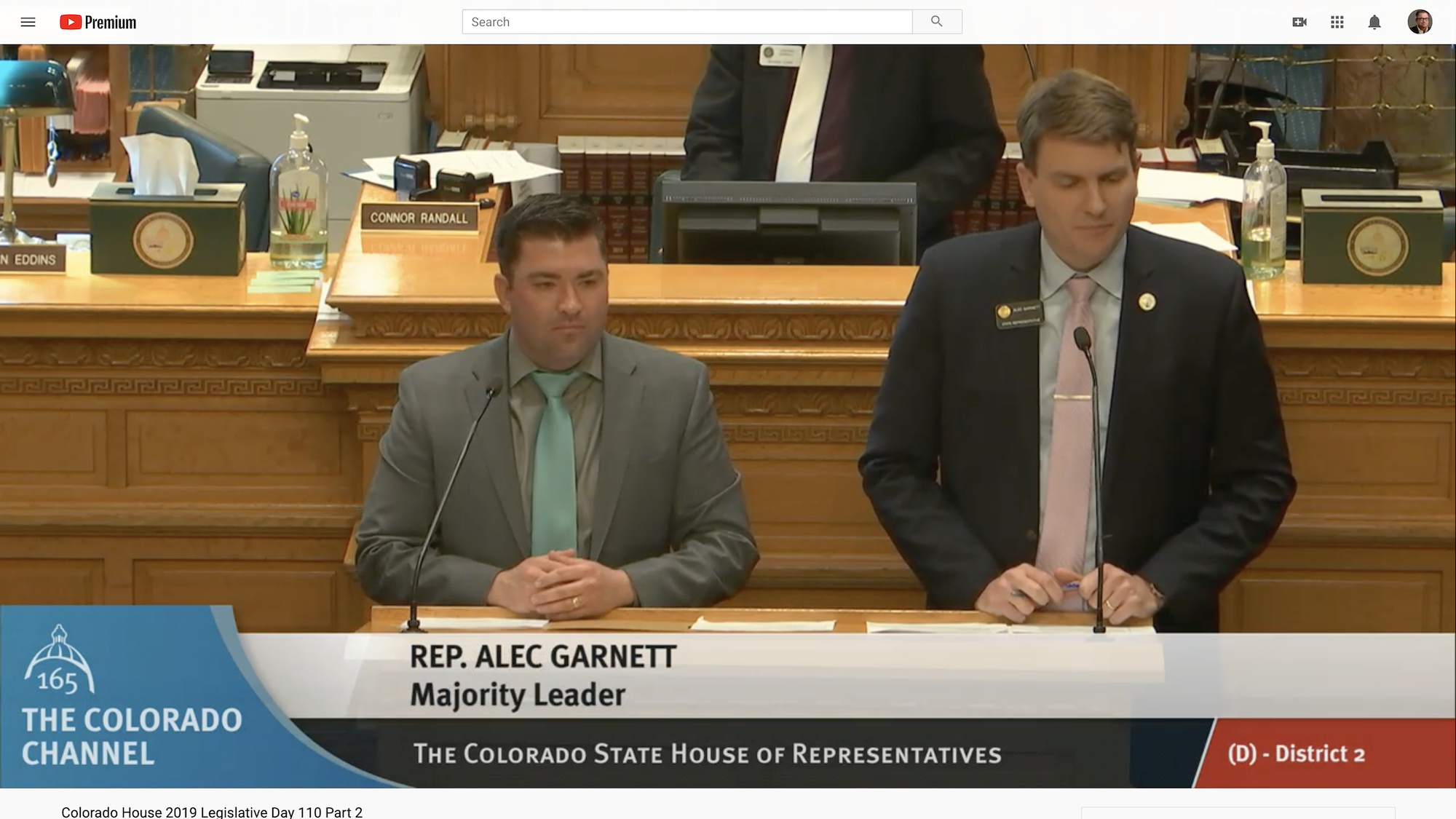
The legislation to put the tax on the ballot sailed through the statehouse with bipartisan support, led by two of the Capitol’s heaviest hitting players: House Majority Leader Alec Garnett of Denver and Republican leader Patrick Neville of Castle Rock, as well as Democratic Sen. Kerry Donovan and Republican Sen. John Cooke, the former sheriff in Weld County.
It was never as simple as it seemed, however.
“This bill has been a beast to work on,” Neville said.
He doesn’t gamble himself, but Neville’s argument hinged on subverting the untaxed, unregulated offshore gambling online while beginning to solve the state’s water problem and putting some money in gambling addiction services.
“I think if we bring it in and regulate it in a decent manner we will eliminate the black market,” he said. “This will actually generate new revenue, and the majority of that revenue will actually go toward funding the Colorado Water Plan.”
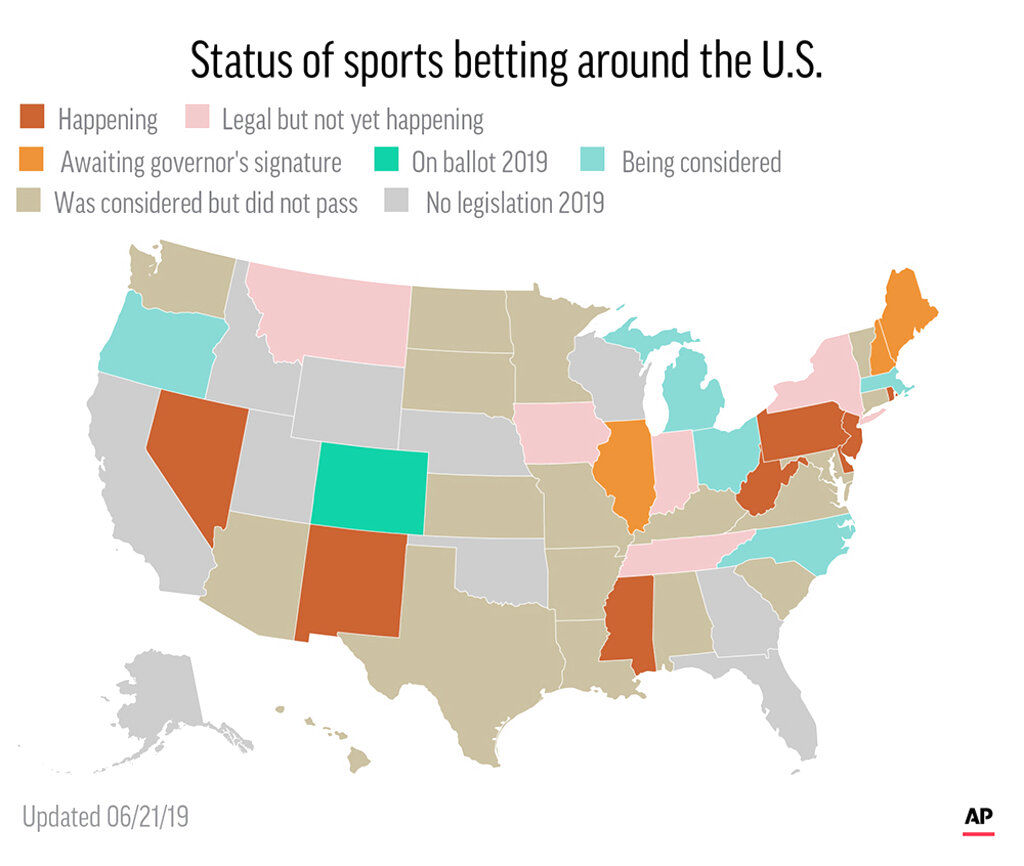
Garnett said 30 other states were doing the same as Colorado: taxing and regulating sports betting.
“I believe we will accomplish our goals, and we will start out on a small enough track that the voters will have confidence that we can regulate this responsibly and we can protect consumers,” Garnett argued. “And we can generate revenue to go to one of our most precious resources, water.”
Colorado’s slow roll
Unlike states such as Mississippi and Louisiana that plunged into no-limits, Las Vegas-style wagering, Colorado has always taken a slow approach on locations and pots.
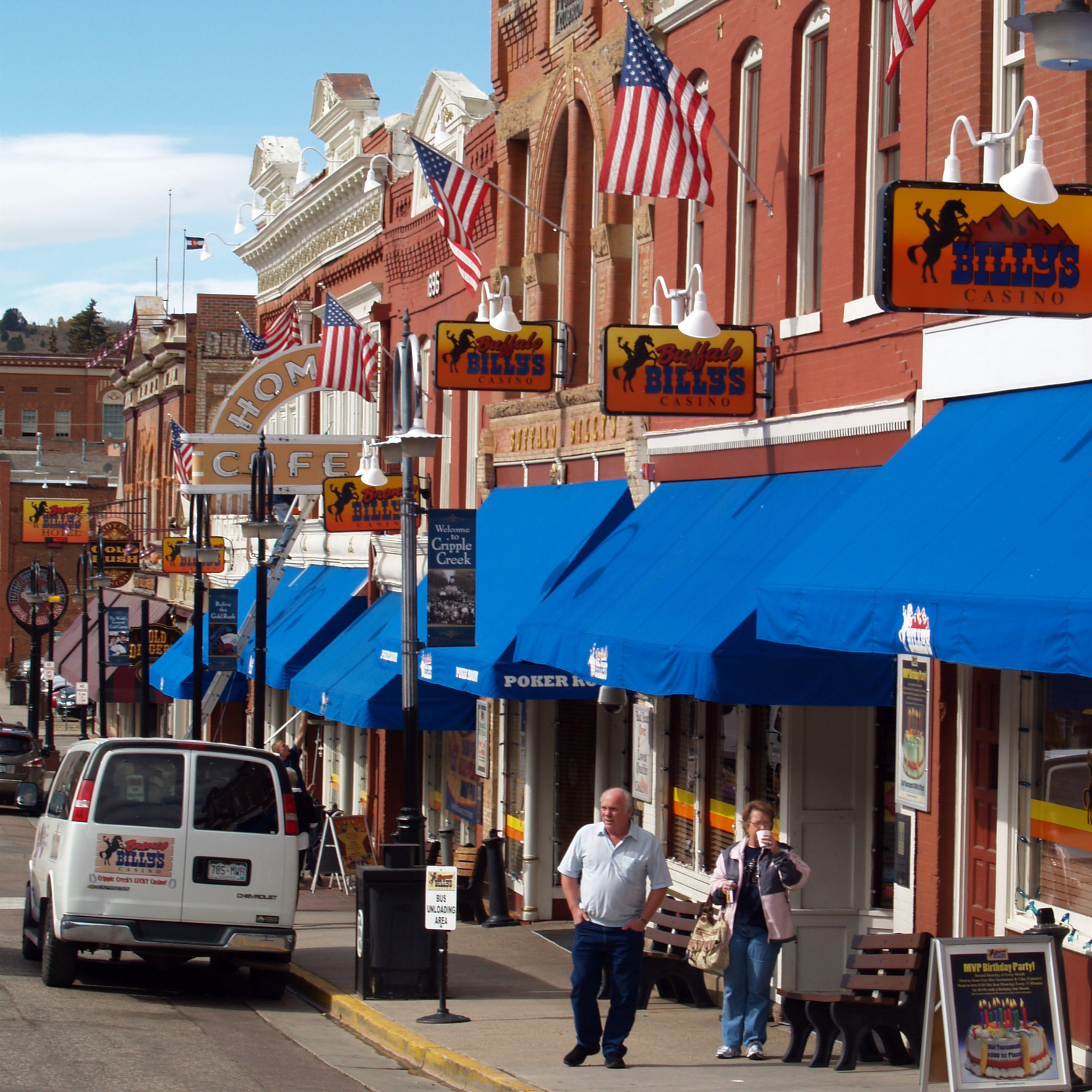
Low-stakes bets of $100 or less are permitted at casinos in Cripple Creek, Blackhawk and Central City that have provided slots, poker, craps and roulette since 1991.
The games pay for a lot of needs, locally and statewide, including historic preservation in gambling towns, community colleges, tourism advertising and help for gambling addiction. American Indian tribes in the towns of Ignacio and Towaoc also profit off casinos.
Because of the coronavirus, however, the rollout of Colorado’s entry into sports betting will have to happen through mobile device applications or online sites.
RELATED: Cripple Creek casinos shut down, fate of workers undetermined
Only four debuted on May 1 with four others planned to launch within days. Bettors had few choices – low-profile sports such as darts, table tennis and a few international soccer leagues – prompting companies offering online betting to debut free games in which customers can place “virtual” $5 bets on politics, entertainment, the weather or which Colorado professional team will next win a championship.
“There’s just nothing to bet on,” said Doug Kemper, executive director of the Colorado Water Congress, a nonpartisan industry group that represents several hundred of Colorado’s key water interests.
Existing daily fantasy sports applications from DraftKings and FanDuel started accepting bets in Colorado on May 1 and sites affiliated with casino giant MGM Resorts (BetMGM) and the Chicago-based Rivers casinos (BetRivers) also launched applications and online betting sites the same day.
At least four other applications, including three affiliated with Cripple Creek casinos, are expected to follow soon. The Colorado Division of Gaming has licensed 17 online wagering operators and 11 sportsbooks that will open inside casinos once those gaming properties can reopen.
“This is a different way of launching than what we thought would happen three months ago, but the whole world has changed since then” with the spread of the coronavirus pandemic that prompted Gov. Jared Polis to order casinos, bars, restaurants and many other businesses to temporarily close in March.
“Some of the operators are looking at this as a soft launch to get the bugs out.”
Colorado still has odds in its favor, Hartman said.
“We have some great operators, an extensive catalog of sports (available for betting), a great landscape to do sports betting and a state that likes sports entertainment,” he said. “(The numbers) will depend on when life gets back to normal.”
Colorado regulators have approved an extensive list of sports on which wagering is allowed, including all major professional, college and Olympic sports and e-sports (video games sanctioned by a league). It also includes less well-known sports like Australian Rules Football, Gaelic Games and pesäpallo (Finnish baseball). The voter-approved law only allows bets on sports (politics, entertainment and the weather are off limits) and does not allow betting on any high school sports, proposition bets (such as who will score first or how many points they will score) on college sports or any other event involving players under 18 years old.
Bettors must be 21 years old and no betting is allowed across state lines, meaning the bettor must be in the state to make a bet with the app or online. Sports betting operators set their own betting limits by sport and league, likely depending on how much betting action is expected on a particular game or league. Operators also will decide to what extent they will accept parlay bets involving multiple games or sporting events .
Operators and investors wait in the wings.
Internet Sports International, for instance, hopes to launch Wildwood Casino‘s mobile application and online betting platform “as soon as possible” and a sportsbook inside the casino’s Woody’s restaurant as soon as casinos are allowed to open, said Matt Andrighetti, general manager of the Cripple Creek gaming property.
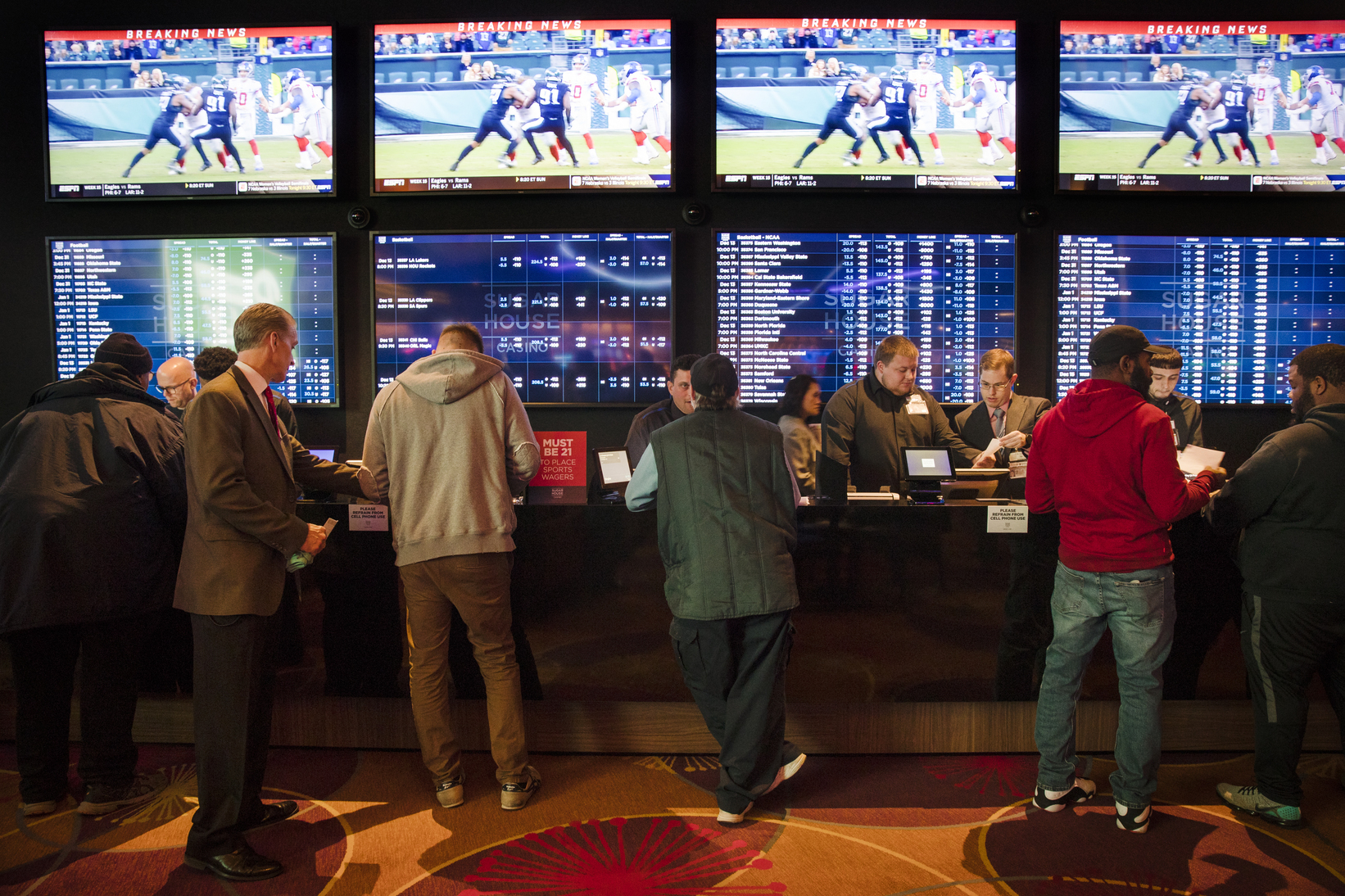
The sportsbook will include a bank of more than 20 television screens showing sports available for betting, he said. ISI also will offer mobile applications for the Colorado Grande and Johnny Nolon’s casinos in Cripple Creek.
Construction continues on a $14 million, 102-room hotel adjacent to the casino with planned opening late in the year despite a few coronavirus-related delays, Andrighetti said.
DraftKings plans to launch its mobile betting application May 1 and plans to open a sportsbook in the Mardi Gras Casino in Black Hawk once casinos are allowed to open, said Matt Kalish, the company’s cofounder and president of its U.S. operations. The company’s daily fantasy sports mobile application has a large base of customers in Colorado who can now bet through the app, he said.
“There are a variety of international sports – table tennis, darts and some soccer – that are opening up and hopefully a month from now we will see major U.S. sports start popping up again,” Kalish said. “Colorado is one of the state’s where our fantasy products have been most successful and it is one of the few states in the western U.S. where sports betting has been legalized. We expect Colorado will be one of the better-performing markets in the U.S.” for sports betting.
FanDuel launched its sports wagering application May 1 and has no plans to open a sportsbook in Colorado, said Mike Raffensperger, the company’s chief marketing officer. The daily fantasy sports giant was attracted to Colorado by a “a phenomenal market with all four major (professional) sports, a reasonably large population, a culture of risk-taking and excitement and an independent spirit,” he said. The first major event Colorado bettors will be able wager on is expected to be mixed martial arts event UFC 249 on May 9, he said.
Circa Sports is expected to launch Century Casino‘s mobile application “pretty soon after” the May 1 statewide sports wagering launch, said Eric Rose, Century’s general manager in Cripple Creek. He said Century’s Colorado Springs-based parent company, Century Casinos, is studying options for a sportsbook, but likely would operate from a kiosk inside the casino, rather than a larger and more elaborate facility.
British sportsbook operator Smarkets plans to launch a mobile application for Bronco Billy’s Casino within days of the May 1 launch and a sportsbook operated by racetrack giant Churchill Downs would debut when the casino reopens, said Baxter Lee, general manager of Bronco Billy’s. A second Bronco Billy’s mobile application is planned later in the year by Las Vegas-based casino giant Wynn Gaming, he said.
Full House Resorts, parent company of Bronco Billy’s, has halted construction on a 400-space parking garage to help weather the shutdown of all of its casinos. The garage is the first phase of a $120 million project consisting of a 150-room upscale hotel, a top-rated restaurant, meeting and event space for up to 1,000 people and an outdoor courtyard for events. The company also plans to rebrand its Christmas Casino, a holiday-themed casino that has remained unprofitable, Lee said.
Officials from Triple Crown Casinos, which owns the Brass Ass, McGrills and Midnight Rose casinos, and the Double Eagle Hotel and Casino, were not available for comment on their sports wagering plans. However, the Double Eagle had earlier announced plans to open a sportsbook and sports betting operation through Australian sports betting operator PointsBet. The PointsBet application is expected to launch within days.
Muddy road to recovery
Colorado casino profits have been climbing on par with the stock market the last few years. The proceeds from 2019 are expected to be robust when they’re officially reported in June, but 2018 was a record year in Colorado and other domestic gambling market. U.S. gross gaming revenue was $41.7 billion in 2018, a 3.5% increase over 2017.
For the first time in 2018, casinos’ electronic gaming devices – bettors’ preferred method of wagering on sports – outpaced the growth from table games.
“Casino gambling expenditures show positive growth during expansions and no growth during recessions,” states a 2012 study in the Journal of Gambling Studies that looked at the economy’s effect on betting.
While gambling proceeds paid a heavy price in the last recession, “[t]here is very little understanding about how the general conditions of the economy influence gambling activities and only very few studies investigate whether and how gambling activities are influenced by the economic crisis,” the study states.
But sports-betting revenue estimates were in trouble even before COVID-19 shut down sports.
By late December, the Department of Revenue had determined that the license fees on which revenue estimates had been partially based originally were set too high and would have to be brought down significantly, from $125,000 to roughly $1,200, according to the Division of Gaming.
“It’s definitely a major blow,” said Floyd Ciruli, a political analyst who followed Proposition DD, and who tracks water issues for the Colorado Water Congress.
Hartman said the Division of Gaming did approve a new operations fee, which will at least cover the cost of overseeing betting.
“While we didn’t get those license fees that were written into statute, we did impose a fee [on operators] that takes the cost of regulation out of the tax money,” Hartman said. “So whatever tax money comes in will all go to the beneficiaries,” including the water plan and gambling addiction programs.
How much state money, if any, can be salvaged elsewhere for the water plan this year isn’t clear.
The Colorado Water Conservation Board, which implements the plan, also receives funding from tax revenues generated by oil and gas production and those funds have helped pay for water plan programs. But that money is drying up as well due to the crash in oil markets. Because those revenues don’t flow to the CWCB in the year in which they’re received, their loss won’t hit the CWCB until the next fiscal year, which begins July 1, 2021, according to the Joint Budget Committee.
State agencies are expected to have a clearer picture of how much cash they will have to operate with once the Joint Budget Committee finishes work on a revised spending plan in early May. Until then each is evaluating various alternatives, officials said.
Becky Mitchell, executive director of the CWCB, said the agency hadn’t planned on big cash from the sports-betting tax anytime soon and that the news wouldn’t deter her staff from continuing to implement the plan.
“Just because we don’t have [that additional] money, doesn’t mean we stop working. It means we up our game,” she said.
Wayne Heilman is a reporter for The Gazette who can be reached at wayneh@gazette.com. Jerd Smith is a veteran Colorado environmental writer who is the editor of Fresh Water News. She can be reached via email at jerd@wateredco.or or @jerd_smith on Twitter. Fresh Water News is an independent, nonpartisan news initiative of Water Education Colorado.
Here’s a glossary of terms for the new sports bettor:
Against the spread: A term’s record against the outcome predicted by the oddsmakers. If the Broncos were forecasted to win three straight games by 4 points and won by 7, 3 and 10 points, respectively, they would be 2-1 “against the spread” despite winning all three games.
Backdoor cover: When a late, sometimes flukey, score changes the outcome of a bet. If the Nuggets were predicted to beat Sacramento by 9, and Jamal Murray was inexplicably fouled just before the buzzer made two free throws of a 110-100 Denver win, Nuggets bettors would have benefitted from a backdoor cover.
Bad beat: When one loses a bet in hard-to-stomach fashion, like Kings bettors in the above hypothetical.
Book, or bookie: The person or party that records,collects and pays out bets.
Buying points: Paying an additional price to alter the point spread.
Chalk: A bet on a predicted winner.
Closing line: The final point spread before the start of a game. Point spreads can move in the hours and days leading up to an event if a majority of the bets come in on the same side.
Cover: This popular sports-betting verb is used when a team outperforms the point spread.
Even money: A rare bet that the book does not charge a tax on because it’s deemed to be a coin flip. The payout is equal to the wager.
Favorite: The predicted winner. People who bet chalk like favorites.
Futures: Bets that won’t be determined for a long time. For example, a wager on the Rockies to win the NL West in 2020.
Handicapper: A highly regarded sports bettor who offers advice, sometimes via subscription, to others.
Hedge a bet: A secondary bet to protect potential winnings. Using the Rockies futures hypothetical, had someone bet on Colorado to win the NL West prior to the season and the Rockies played the Dodgers in the final game with the division on the line, that bettor might consider a wager on Los Angeles to ensure a positive outcome.
In-game/live betting: Wagers on an event while it is going on. Lines and totals are adjusted as the game progresses.
Juice: An additional fee from the book, or house, for processing a bet which also serves as a protective measure.
Line: The predicted margin of victory. If the book projected Denver to beat Kansas City by a field goal, the line would be shown “Denver -3.” The terms “plus” and “minus” are frequently used with the latter referring to the favorite.
Lock: A bet regarded as close to a sure-thing as possible.
Money line: A bet without a line, one simply picks the winner. Betting the favorite pays out less than than the underdog. For the favorite, the line is shown with the number or dollars required to bet to win $100 dollars. A -110 line is closer to a coinflip than a -140 line. For the underdogs, the line is shown what a $100 bet. A +120 line is closer to a coinflip than a +140 line.
Mush: An unskilled bettor, or one believed to be bad luck, possibly both.
Oddsmaker: A very smart person or group of people responsible for determining the line and other totals.
Off the board: Uncertainty sometimes forces the book to make a game unavailable to bet on. If Mikko Rantanen and Nathan MacKinnon came down with an illness on the day of the game, the book might take bets “off the board” until they had a chance to adjust their numbers.
Over/under: A bet on the total number of points/goals/runs scored that has nothing to do with picking the winner. If the Nuggets and Sacramento combined for 210 points, and the over/under line was 205, those who took the over are winners.
Parlay: A custom bet on multiple games that only wins if all results are picked correctly. The more games involved typically results in a higher payout because of the increased difficulty.
Pick ’em: A line for a game determined to have no favorite. The spread is out of play because the teams are considered by the oddsmaker to be even. It’s synonymous with even money.
Prop bet: A bet on something not involving the score or total points scored. Gamblers can wager on the number of statistics a player might accumulate in a given game. At big events, like the Super Bowl, one can bet on things like the length of the national anthem, which team will win the coin toss and what color Gatorade will be poured on the winning coach.
Push: When the final margin of victory matches the line, Bettors get their money back in the event of a push.
Sharp: A skilled or highly successful bettor, the opposite of mush, or a musher.
Spread: synonymous with line.
Taking the points: Betting on the underdog against the spread.
Teaser: Like a parlay, the teaser is a bet on multiple games. Unlike a parlay, you can move the line, or “buy points,” to a preferred team, which adjusts the odds and payout.
Total: synonymous with over/under.
Unit: The typical amount of an individual’s bet. The term, frequently used by handicappers, allows people to express their confidence in a bet without telling people how much to wager. A three-unit bet indicates more confidence than a two-unit bet. A three-unit bet would be $75 for someone who typically puts $25 on a game, while $30 would be a three-unit bet for someone who’s more comfortable betting $10.
Vig: synonymous with juice.


Atop taxes, here’s how much each Colorado resident pays in fees
Marissa Ventrelli
marissa.ventrelli@coloradopolitics.com
Updated 5 hours ago
Each Colorado resident paid nearly $5,000 in state-sanctioned fees last year, according to a report by a policy think tank. The report, which analyzed how fees have affected Colorado’s economy, found that fee revenue has more than tripled since 2008...

Colorado National Guard, Swiss Armed Forces celebrate partnership
Marissa Ventrelli
marissa.ventrelli@coloradopolitics.com
Updated 6 hours ago
Colorado’s National Guard marked a year of partnership with the Swiss Armed Forces at the Governor’s Mansion on Monday. “This anniversary marks one strong year of friendship and collaboration between the State of Colorado and Switzerland,” said Gov. Jared Polis....
Judge allows Trump to refile $15 billion lawsuit against the New York Times
Emily Hallas
emily-hallas@coloradopolitics.com
Updated 6 hours ago
A federal judge declined to dismiss President Donald Trump’s multibillion-dollar lawsuit against the New York Times on Monday, giving him roughly four weeks to amend his case after the outlet moved to toss it on First Amendment grounds. District Judge...

Gov. Polis celebrates Colorado’s first-place education ranking by U.S. News
Marianne Goodland
marianne.goodland@coloradopolitics.com
Updated 4 hours ago
Colorado officials said they have something to celebrate this week, in addition to the state’s sesquicentennial birthday on Saturday. U.S. News & World Report on Tuesday gave Colorado its top ranking for education efforts from pre-K to postsecondary, though it...
Denver detox center did not violate man’s rights with 10-hour hold, 10th Circuit says
Michael Karlik
michael.karlik@coloradopolitics.com
Updated 4 hours ago
The Colorado-based federal appeals court concluded on Tuesday that Denver’s detoxification facility did not violate a man’s rights by holding him against his will for 10 hours until his blood alcohol content was projected to reach zero. Unusually, Brian Garrett’s...

Federal judge clarifies ex-GOP treasurer candidate’s burden to prove defamation claims
Michael Karlik
michael.karlik@coloradopolitics.com
Updated 4 hours ago
A federal judge clarified last week that businessman and former Republican statewide candidate Brian Watson will need to surmount a higher hurdle in proving his claim that a party guest’s alleged description of him as a “criminal” amounted to defamation....

Denver City Council sends Xcel franchise deal to voters
Deborah Grigsby
deborah.smith@denvergazette.com
Updated 9 hours ago
This November, Denver voters will decide whether to renew the city’s longstanding franchise agreement with Xcel Energy. Members of the Denver City Council approved on Monday sending a proposed 20-year franchise agreement with Xcel that would deliver more than $180...
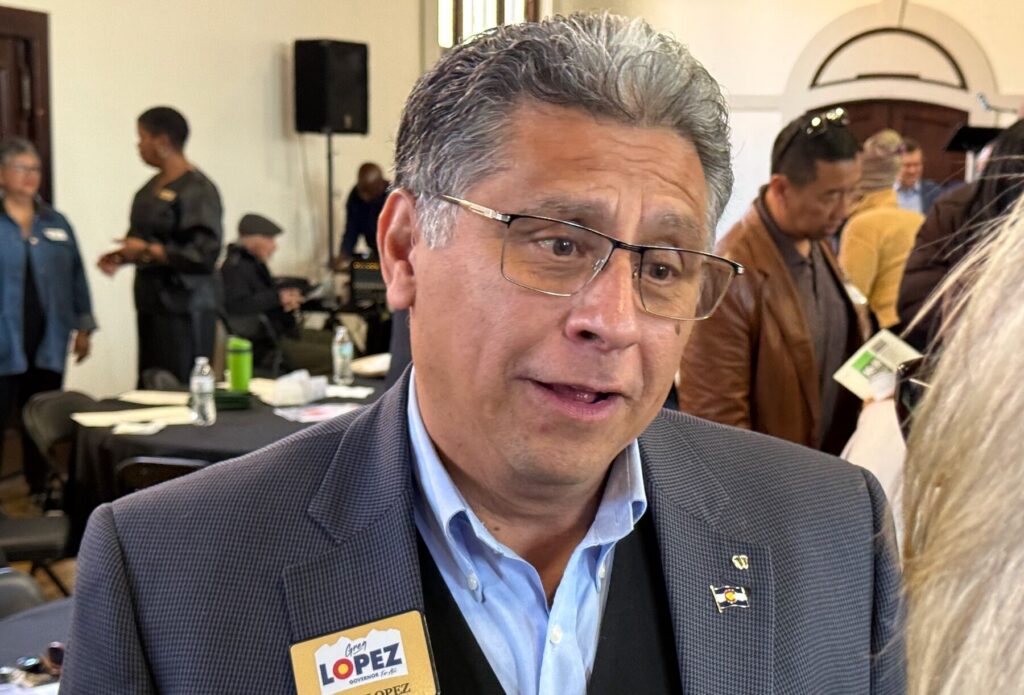
Independent gubernatorial candidate Greg Lopez, a former GOP congressman, qualifies for Colorado ballot
Ernest Luning
ernest.luning@coloradopolitics.com
Updated 4 hours ago
Unaffiliated gubernatorial candidate Greg Lopez, a former Republican congressman from Elizabeth who left the GOP to run as an independent, has qualified for the ballot by submitting enough petition signatures, the Colorado Secretary of State’s Office said Tuesday. He’ll face...
At Colorado’s 150th anniversary, leaders offer birthday wishes
Thelma Grimes
thelma.grimes@coloradopolitics.com
Updated 10 hours ago
As Colorado’s 150th anniversary approaches, leaders from across the state reflect on the spirit that binds the plains, mountains, Western Slope and Front Range — a shared commitment, they underscored, to opportunity, community, stewardship and personal freedom. Their tributes highlight...
Fauci’s private COVID-19 diaries: Six takeaways on fame, prize money and the lab leak debate
The Washington Examiner
the-washington-examiner@coloradopolitics.com
Updated 13 hours ago
Anthony Fauci’s private writings from 2020 and beyond portray a public health official who was fixated on his growing celebrity while privately grappling with a pandemic response he believed was chaotic, leaderless and consumed by internal rivalries. The writings of...
PREV
PREVIOUS

Garcia heading to federal court after Colorado Supreme Court rules she didn't make primary ballot
Democratic U.S. Senate candidate Lorena Garcia says she’s taking her case to federal court after a Colorado Supreme Court decision Tuesday afternoon removed her from the state’s primary ballot. In a brief, unanimous ruling the state supreme court declared that Garcia didn’t submit the required number of valid petition signatures to make the ballot. The […]
New Colorado poll shows Hickenlooper widening double-digit lead over Gardner
Former Gov. John Hickenlooper leads U.S. Sen. Cory Gardner by 18 percentage points in Colorado’s U.S. Senate race, according to a poll from Colorado firms released Wednesday. The Keating-Onsight-Melanson poll of likely voters, made available in advance of its release to Colorado Politics, shows Hickenlooper with 54% support to Gardner’s 36% in a hypothetical head-to-head […]