

Gov. Jared Polis talks Safer at Home and guidelines for local governments
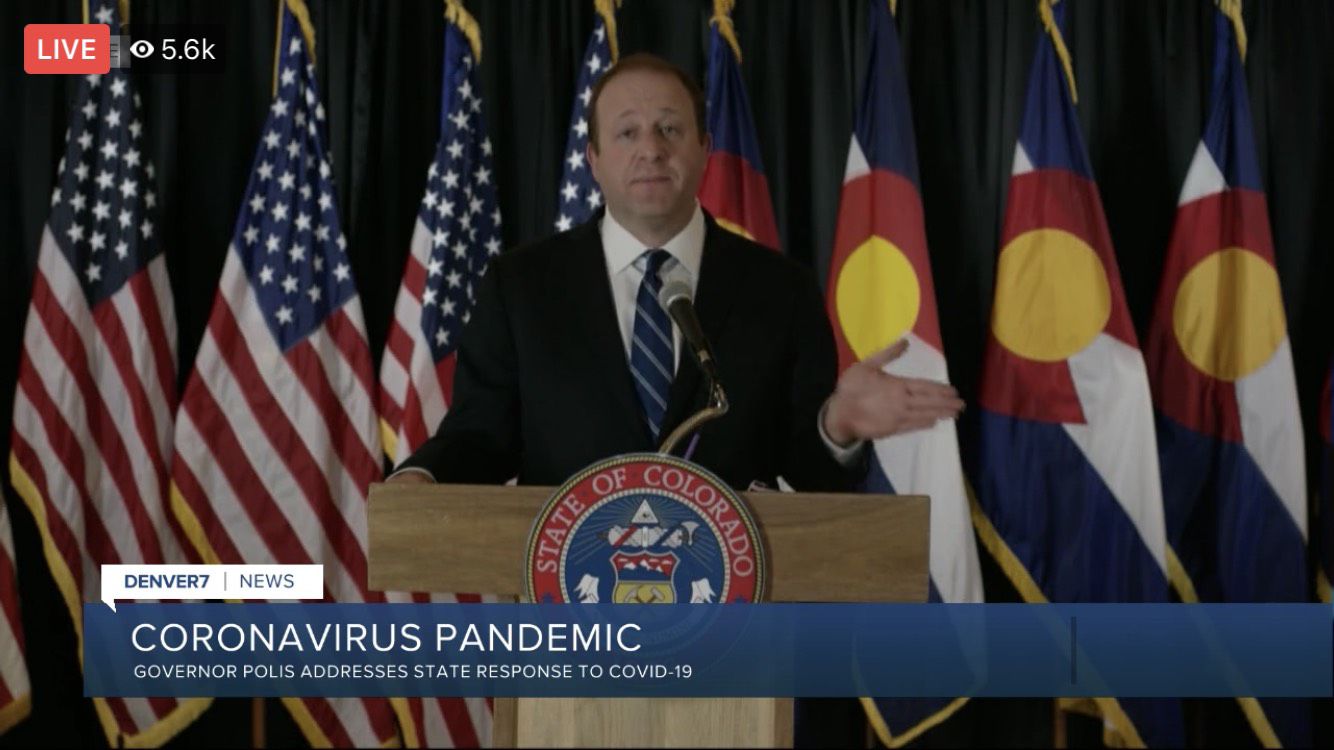
On the first day of “Safer at Home,” Gov. Jared Polis said Monday that Colorado has seen a steady decline in hospitalizations and new cases of COVID-19 that justify moving into a phase that allows Coloradans to begin returning to work.
“We’ve flattened the curve,” Polis said, referring to the rate of hospitalizations that could have overwhelmed Colorado facilities.
The stay-at-home order, announced March 26, gave the state time to build healthcare capacity and to grow testing capacity and obtain supplies, such as personal protective equipment. “We’ve avoided mass loss,” Polis told reporters at the state Capitol.
But if Coloradans drop their guard and stop social distancing and other measures, such as wearing masks, “we will go back to ‘Stay at Home,’ ” the governor warned. However, Polis said he is confident Coloradans will continue to be as vigilant in May as they have been in April. “The people of our great state are what gives me faith that we will be successful [but] we’re not out of the woods yet.”
Polis addressed the patchwork of orders issued by counties and municipalities around stay at home/safer at home Monday, stating local governments have three options, to match state guidelines, offer more protections or impose local flexibility.
Under that local flexibility, local governments must show either a low number of new cases per day or a decline in cases for the past 14 days. In addition, they must include an early warning system to swiftly detect any increase in community spread to prevent a breach of the local health care system capacity. The local governments also need approval from the local public health agency, local hospitals and the county commissions or other county-level governing body. Polis said Mesa and Eagle counties have met the criteria, but Weld County has not yet seen a decline in the number of cases or hospitalizations.
Those that disregard the orders are breaking the law, jeopardizing emergency preparedness grants, putting lives at risk, increasing disruption to businesses and jobs, and spreading the virus, Polis said.
Businesses that violate the public health order could be issued a “cease and desist” order and may have their business licenses revoked, he explained.
For businesses to reopen, they must have distancing in place, regular hand washing and sterilization of surfaces, increased air ventilation, and a requirement that employees wear masks and gloves.
Polis also addressed concerns for employees who either fall into the vulnerable population category or who are struggling to return to work because of lack of childcare and with schools closed for the rest of the school year.
Workers who are vulnerable cannot be compelled to return to work if their work requires them be around others, based on one of the three executive orders Polis issued Monday. Employers must provide remote work options when possible. But if an employer requires a vulnerable employee eligible for paid sick leave to return to work, that would be illegal under state law and the employee should report the employer to the local public health agency, local law enforcement or the attorney general’s office.
For those with childcare issues, the Monday executive order said employers must accommodate those who don’t have childcare because schools are closed. He also pointed out that the federal CARES Act enacted during the pandemic provides up to 12 weeks of paid sick leave at two-thirds the employee’s regular rate of pay and can be paid due to lack of childcare or a school closure.
Earlier Monday, Polis announced Colorado had joined a Western State Pact that will allow for regional cooperation as those states prepare to lift “stay at home” orders. The other states are Nevada, which also joined Monday, California, Oregon and Washington. As for neighboring states, such as Utah and Kansas, Polis said they have similar health and safety regulations and he looks forward to them joining with Colorado.
Polis issued several executive orders Sunday tied to the “Safer at Home” phase, spelling out how non-essential businesses should re-open in the coming week.
The “Safer at Home” order is in effect until May 26, although it can be extended. Polis has said that phase is likely to last for at least two months. If the virus heads into a second spike of cases, he has reserved the right to make adjustments, including returning to a stay-at-home order.
Under “Safer at Home,” gatherings are limited to 10 people or less and retail businesses can open for curbside deliveries. Real estate home showings can resume. And voluntary or elective medical, dental and veterinary procedures can take place under required safety protocols.
While nightclubs and gyms, as well as restaurants and bars, remain closed, personal services can open with strict precautions. That includes one-on-one training in gyms, as well as hair and nail salons, and dog grooming. Limited post-secondary instruction, including technical and vocational programs, can resume.
The guidance on spas, however, was contradictory and was later cleared up by the governor’s office: despite that one part of the presentation said spas could reopen with “strict precautions,” the office later clarified that spas would remain closed.
Next Monday, May 4, offices can reopen at a 50% workforce capacity, with the other 50% telecommuting or in staggered shifts.


Immigration reporting measure fuels debate over Colorado’s role with ICE
Marissa Ventrelli
marissa.ventrelli@coloradopolitics.com
Updated 2 hours ago
A coalition of advocacy groups and several district attorneys rallied outside the Colorado Capitol on Thursday to oppose a ballot measure that, if approved by voters in November, would require state and local law enforcement to cooperate with federal immigration...

Colorado Politics Calendar Sept. 14-20
Rachael Wright, Special to Colorado Politics
rachael.wright@coloradopolitics.com
Updated 3 days ago
CoPo’s weekly political calendar will help you find political and public-policy events throughout Colorado. It includes candidate and issue campaign events, public policy meetings, court hearings, state and local party conventions, assemblies, debates, rallies, parades, speaking engagements, traveling dignitary appearances,...
The African roots of three Colorado leaders | SONDERMANN
Eric Sondermann
eric-sondermann@coloradopolitics.com
Updated 2 days ago
Colorado’s political transformation is measured in many ways. A once reliably red state (with asterisks) became purple and is now a rather deep blue. For better or worse, probably the latter, power is ever more consolidated along the Front Range...
Federal judge green-lights civil trial against ex-Fort Collins DUI officer
Michael Karlik
michael.karlik@coloradopolitics.com
Updated 20 hours ago
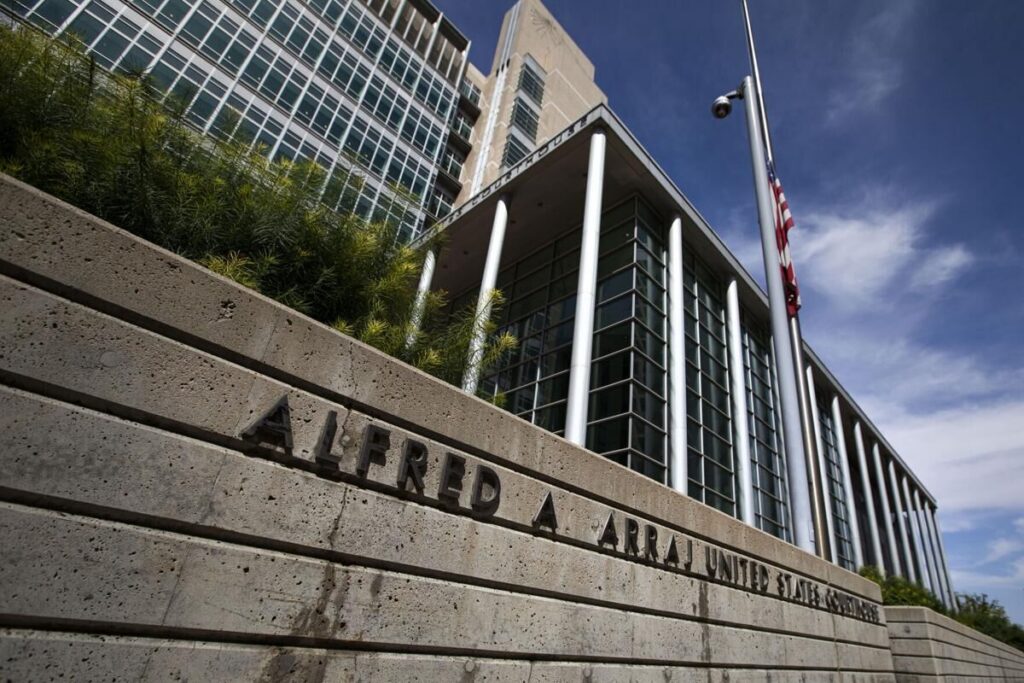
A federal judge ruled on Thursday that Fort Collins’ former “DUI officer” will face a civil trial for allegedly investigating a motorist for impaired driving without any reasonable suspicion to do so. In recent years, several people arrested by Officer...

Denver police reopen 13 sex assault cases after retesting Missy Woods’ CBI work
Jenny Deam
jenny.deam@gazette.com
Updated 18 hours ago
Thirteen previously closed Denver sexual assault cases have been reopened after the city’s crime lab retested DNA evidence once analyzed by former Colorado Bureau of Investigation forensic analyst Yvonne Woods. A police spokesperson told The Denver Gazette the once-closed cases...

Ballot measure aims to shift Colorado sporting-goods tax revenue to land, water and wildfire projects
Marissa Ventrelli
marissa.ventrelli@coloradopolitics.com
Updated 2 hours ago
Colorado voters this November will decide whether to direct a share of sales tax revenue from sporting goods — including bicycles and skiing equipment — toward land and water conservation, wildfire prevention and expanding outdoor recreation. Supporters say the measure...

Colorado Supreme Court suspends Mesa County judge pending misconduct investigation
Michael Karlik
michael.karlik@coloradopolitics.com
Updated 24 hours ago
The Colorado Supreme Court suspended Mesa County Court Judge Michael J. Grattan on Thursday amid a misconduct investigation. The court’s Sept. 10 order gave Grattan 21 days to explain why his paid suspension should not continue through the end of...

Trump honors the fallen of the 9/11 terrorist attacks during Pentagon speech
Mabinty Quarshie
mabinty-quarshie@coloradopolitics.com
Updated 23 hours ago
President Donald Trump and first lady Melania Trump honored the roughly 3,000 Americans killed during the Sept. 11, 2001, terrorist attacks during a ceremony at the Pentagon. The event marking the 25th anniversary of the deadliest attack on American soil...
Colorado Supreme Court changes course, dismisses case about special district bonds
Michael Karlik
michael.karlik@coloradopolitics.com
Updated 19 hours ago
The Colorado Supreme Court declined on Friday to decide a dispute between a large-scale Commerce City development and the various districts financing it, after initially showing interest in the ongoing case. Colorado has roughly 2,800 special districts, which are local...
Colorado leaders express outrage and pain following 9/11 attacks | A LOOK BACK
Rachael Wright, Special to Colorado Politics
rachael.wright@coloradopolitics.com
Updated 1 day ago
Twenty-Five Years Ago This Week: “Responding to the 9/11 terrorist attacks, Colorado Gov. Bill Owens told reporters in a statement, “I join all Coloradans in expressing outrage and horror at the senseless terrorist bombings in New York and Washington D.C....
PREV
PREVIOUS

Colo. Supreme Court to hear case on proving liability for wildlife deaths
The state Supreme Court has announced it will hear a case that calls into question whether the government must prove that an entity knowingly and voluntarily acted illegally to take state property – in this instance, wildlife. 5 Star Feedlot, Inc. operates a feedlot near the South Fork of the Republican River and Hale Ponds, near […]
Aurora Mayor Coffman criticizes Douglas County's exclusion from stay-at-home extension
Aurora Mayor Mike Coffman blasted Douglas County’s exclusion from the Tri-County Health Department’s stay-at-home order, which remains in effect until May 8 for Adams and Arapahoe counties despite the lifting of the statewide directive. “I really don’t understand why @douglascountyco is not included and will be allowed to move from the ‘stay-at-home’ order to the less […]