

As Denver’s stay-at-home order is extended, a patchwork of policies is springing up across the state

Since Gov. Jared Polis announced earlier this week that local municipalities could build their own path toward pandemic recovery, a patchwork of local policies is popping up all over Colorado.
Denver Mayor Michael Hancock confirmed Friday morning that the city’s stay-at-home orders will not be lifted until midnight on May 9, a decision he said most mayors around the region agreed with, including in Jefferson and Boulder counties, which have followed Hancock’s lead.
Weld County, on the other hand, says it will allow any business to reopen next week after the state’s stay-at-home order expires.
Meanwhile, there’s word that the Tri-County Health Department, which serves Adams, Arapahoe and Douglas counties, will extend its orders similarly to Denver. Although those plans are expected to be finalized “by the end of the day,” Adams County Commissioners Eva Henry and Emma Pinter told Colorado Politics in a text message, only Adams and Arapahoe counties currently appear to be sure bets.
Polis “has provided a roadmap forward and given each local municipality the responsibility” to forge ahead as best they see fit, Laura Swartz, a spokeswoman for Denver’s Joint Information Center, told Colorado Politics on Thursday. “This is not unlike the federal government instructing states to set their own guidance for re-opening the economy.”
However, the separate and quickly evolving orders are muddling the operations of local businesses whose owners don’t know whether to follow state or city orders.
“Many businesses in Denver have been confused” between the mayor and governor’s orders, said Felicia Lewis-Dare, a public health investigator for the city’s public health department. Nevertheless, she said, businesses in Denver need to abide by the city’s stay-at-home order.
Influencing Denver’s decision to slow the reopening process is the fact that city health providers have determined residents are not yet “out of the woods,” Hancock said in a Friday press conference announcing his decision to extend the order.
The city currently can’t test enough people or trace the contacts of infected people at a high enough rate. But an extension of the stay-at-home order would give more residents time to get tested and the city more time to train people to conduct testing and contact tracing.
“We know we can bring back the economy. We know that we can rebuild businesses,” Hancock said. “What we cannot do is replace lives that have been lost.”
Hancock was on a conference call earlier this week with hospital providers, including Dr. Reginald Washington, the chief medical officer of Presbyterian/St. Luke’s Medical Center, who told him that the virus “isn’t going away anytime soon.”
That statement, he said, “became very foundational to me in my thinking about our path forward and recognizing that this is going to be a long marathon; one we have to run together.”
In the midst of the pandemic, Denver has had to “grapple with unique challenges,” Hancock said, including its population size, density, demographics, number of businesses and large entertainment venues.
Denver also has the highest number of COVID-19 cases in the state, with more than 2,300 as of Thursday, according to the latest data from Denver Health.
Over the next couple of weeks, the city’s goal, in partnership with Denver Public Health, Denver Health and Hospital Authority and other city agencies, is to achieve 1,000 tests per day, in addition to the testing of residents who are symptomatic, said Bob McDonald, the head of the city’s public health department.
“That’s going to give us great insight into where we are with battling COVID-19,” McDonald said. To carry out the tests, the city is building out a workforce of more than 100 people, he said, who will be trained over the next two weeks in preparation.
Other than the extended timeline, no other details about Denver’s stay-at-home order will change, Hancock said.
The order directs residents to stay home except for essential activities, such as grocery shopping, and for all non-essential businesses to close. The order went into effect March 24 and was set to expire April 11, but was later extended to April 30 after the city’s Office of Emergency Management elevated the coronavirus outbreak situation to “worsening.”
When asked what the city might look like once it reopens May 9, Hancock indicated it would be a slow transition.
“As I’ve said from Day 1, this is going to be baby steps. This is going to be a phased-in process,” he said. “We’ll see where the state is, and we’ll modulate our rollout accordingly. But you can expect, again, this is a marathon – we’re going to be in this for a long haul.”
Join the Colorado Politics twice-daily newsletter for more stories on policy, local elections, state government, the COVID-19 pandemic and bipartisan news.


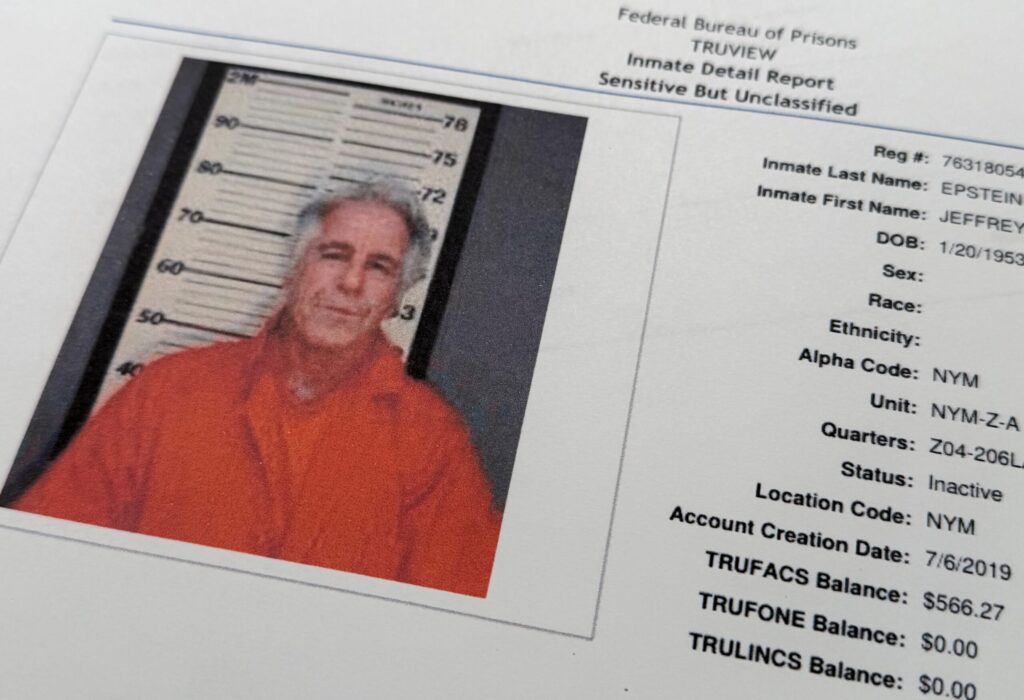
DOJ publishes more Epstein documents mentioning Trump after initial omission
Rena Rowe, Washington Examiner
rena.rowe.washington.examiner@gazetteedit.wpenginepowered.com
Updated 4 hours ago
The Justice Department released additional Epstein files on Thursday, including uncorroborated accusations from a woman claiming she was sexually assaulted by President Donald Trump. Last week, Rep. Robert Garcia (D-CA), the top Democrat on the House Oversight and Government Reform...
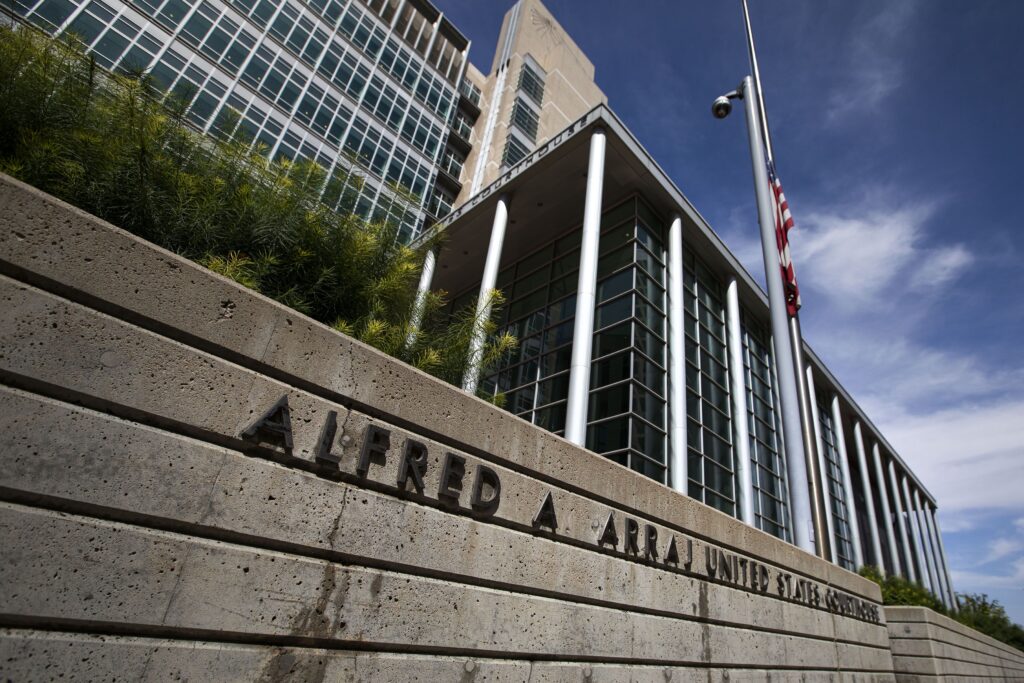
Federal judge dismisses developer’s challenge to Denver affordable housing ordinances
Michael Karlik
michael.karlik@coloradopolitics.com
Updated 5 hours ago
A federal judge dismissed a homebuilder’s constitutional challenge on Tuesday to a pair of Denver ordinances that impose obligations on developers related to the affordable housing demands created by new construction. Two related companies, redT Homes and redT Capital Partners,...
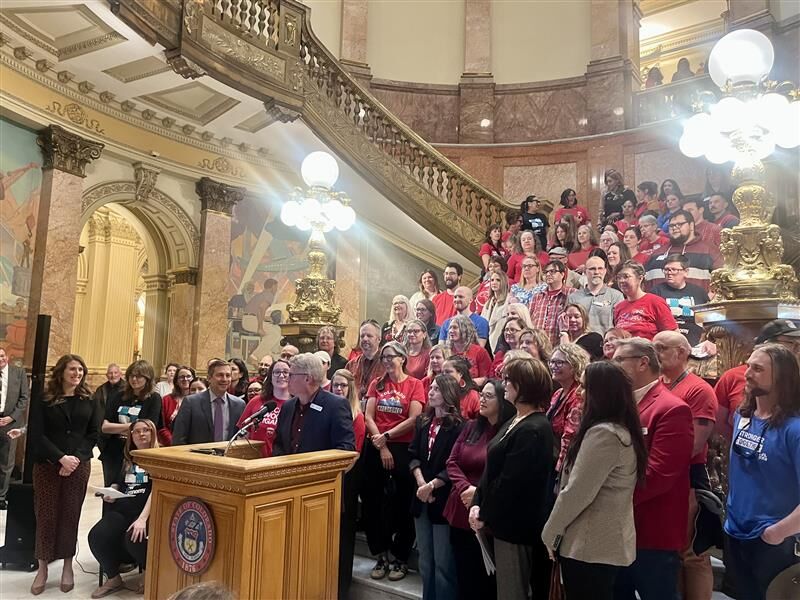
Another TABOR fight: Democrats plan to redirect refunds to Colorado residents
Marianne Goodland
marianne.goodland@coloradopolitics.com
Updated 1 hour ago
Colorado voters could decide this fall whether billions of dollars that would otherwise be returned as refunds under the Taxpayer’s Bill of Rights should instead go to public schools under a ballot measure unveiled Thursday by Democrats. Supporters say the...
Analysis: Colorado legislators introduce 18 energy bills amid debate over emissions goals
Scott Weiser
scott.weiser@gazette.com
Updated 4 hours ago
Colorado legislators have introduced 18 energy-related bills so far in the 2026 session, with Democrats sponsoring 14 and Republicans four, highlighting the sharp partisan split over how aggressively the state should pursue its greenhouse gas reduction goals while protecting affordability...

Colorado House committee advances bills regulating AI in therapy, insurance decisions
Marissa Ventrelli
marissa.ventrelli@coloradopolitics.com
Updated 5 hours ago
Colorado lawmakers are moving to place guardrails on the growing use of artificial intelligence in mental health care and insurance decisions. The House Health and Human Services Committee on Thursday approved two bills that would limit how therapists and insurers...
Colorado Democrats, Republicans fight over ballot fiscal information
Marissa Ventrelli
marissa.ventrelli@coloradopolitics.com
Updated 2 hours ago
Republicans and Democrats clashed anew over legislation that would require identifying which programs would see a funding reduction if a ballot measure passed, with the former saying it’s yet another way for the government to control the campaign narrative and...
10th Circuit distances itself from prior decision making it easier to toss prisoner lawsuits
Michael Karlik
michael.karlik@coloradopolitics.com
Updated 8 hours ago
The Denver-based federal appeals court distanced itself on Wednesday from its own recent decision that made it easier for prison officials to end civil lawsuits by transferring incarcerated plaintiffs between facilities. A three-judge panel of the U.S. Court of Appeals...

Legal war over Trump tariffs still raging despite Supreme Court ruling
Jack Birle, Washington Examiner
jack.birle.washington.examiner@gazetteedit.wpenginepowered.com
Updated 7 hours ago
The war in the courts over tariff refunds took a key step forward this week as President Donald Trump’s newly implemented tariffs are facing a new legal challenge, less than a month after the Supreme Court struck down Trump’s sweeping...

Democrat Dwayne Romero jumps in primary to challenge Republican Jeff Hurd in Colorado’s 3rd CD
Ernest Luning
ernest.luning@coloradopolitics.com
Updated 9 hours ago
The Democrat who has been running for nearly a year to unseat Republican U.S. Rep. Jeff Hurd in Colorado’s 3rd Congressional District got some company in the primary this week. Dwayne Romero, a Snowmass Village business owner and decorated Army...

Proposed changes to wildfire code would add protections to eastern edge of Colorado Springs
Brennen Kauffman
brennen-kauffman@coloradopolitics.com
Updated 11 hours ago
New construction rules may be coming to the higher-risk wildfire areas around Colorado Springs, including the grassland on the city’s eastern side. Colorado Springs Fire Marshal Kris Cooper presented an early draft of the proposed changes to the city’s wildfire...
PREV
PREVIOUS

Declaration calls on Polis to end coronavirus restrictions on Colorado businesses, residents
A former state lawmaker on Friday delivered a declaration signed by thousands of Coloradans calling on Gov. Jared Polis to re-open the state after more than a month of increased restrictions on gatherings and activity to slow the spread of the novel coronavirus. “Based on initial reports, we complied with your stay-at-home order to ‘flatten […]

138 inmates at Sterling Correctional Facility test positive for coronavirus: CDOC
More than half of the inmates who were tested for the coronavirus at the state’s largest prison have tested positive, the Colorado Department of Corrections said Friday. Of the 255 test results that have been finalized, 138 inmates at the Sterling Correctional Facility tested positive, according to a news release. Twelve tests came back with […]