

Improving COVID-19 testing capacity just one issue for Colorado’s high-powered Innovation Response Team

A lack of nasal swabs has rendered Colorado’s 10,000-a-day supply of test kits for determining who has contracted COVID-19 mostly useless.
That problem is one of the top issues a high-powered group of influential business leaders and public officials are helping Gov. Jared Polis tackle as COVID-19 shutters businesses and confines residents to their homes across the state.
Who’s who on the governor’s COVID-19 response teams
Polis created the Innovation Response Team late last month and tasked the group with developing a statewide system for tracking the spread of the virus and supporting the responses of public agencies and institutions. Polis also wants the team to create “a suite of services for citizens under isolation or quarantine.”
The work by that team could help determine whether current social distancing measures Polis has put in place by executive order can be relaxed. Polis has stressed that increasing testing for the virus and contact tracing are among the six key measures needed to stabilize the situation in Colorado.
Sarah Tuneberg, who founded Denver-based Geospiza, a firm that evaluates data to guide environmental disaster response, took over as director of the Innovation Response Team about three weeks ago.
The team is not working on its own, she stressed, and is coordinating efforts with a wide range of academic institutions, private businesses and public agencies.
“We’re part of the soup to get this incredible, important thing done.”
In addition to trying to bolster the state’s virus testing capacity, the team she leads also is helping hospitals locate additional ventilators for critically ill patients, supporting research into whether the plasma of patients who have recovered from COVID-19 might strengthen the immune system of others and working on other thorny issues.
Tuneberg said that the goal of enhancing testing for the virus remains difficult.
“It is almost impossible to get swabs and almost impossible to get certain re-agents to conduct the test,” she said. “I wish, as anyone does, that testing was as simple as pricking a finger.”
Colorado asked the federal government to supply at least a couple hundred thousand nasal swabs, which state officials believe are needed for a robust testing program. Instead, the state received, at most 2,000, Tuneberg said.
“The challenge is the entire world needs this thing that nobody needed before and all at the same time,” Tuneberg said.
The response team has reached out to South Korean and Japanese markets in an attempt to bridge the gap, she said. In addition, it is coordinating efforts with the Colorado State Lab and researchers at Colorado State University to determine whether sterilized Q-tips, which are easier to obtain than nasal swabs, will work with the test kits, Tuneberg said.
The Innovation Response Team also reached out to non-hospital facilities to help find additional ventilators in the state, contacting veterinarians, doctors and other sources, Tuneberg said. That survey found an additional 100 ventilators that hospitals can use if they face shortages.
So far, estimates that the state might need 7,000 additional ventilators haven’t borne out as social distancing measures have helped hospitals maintain capacity to treat COVID-19 patients, Tuneberg said. In addition, the state this week began distributing 100 ventilators to hospitals that it received from the federal government’s national stockpile of medical equipment.
“At this point, we do not have a shortage, and everyone who needs a ventilator is on a ventilator,” Tuneberg said.
Ventilators may be adequate for now, but other issues remain. The Innovation Response Team is working on assessing the needs and gaps in social services now that people are hunkered down in their homes, she said.
“If you do test positive and you do need to stay home, how do we get your needs met?” Tuneberg said is another critical issue that is getting probed.
Whatever the future brings and whatever solutions to COVID-19 the Innovation Response Teams help uncover, Tuneberg is sure of one thing.
“We are in a new world,” she said. “We’re rapidly working on understanding the implications of that and how that changes the fabric of our communities. We won’t ever go back to what we had before.
“We are fundamentally altered.”



Secret Service confirms awareness of Iranian state media video threatening Barron Trump’s life
The Associated Press
the-associated-press@coloradopolitics.com
Updated 55 minutes ago
WASHINGTON (AP) — The U.S. Secret Service has confirmed it is aware that Iranian state media has aired a video that appears to threaten the life of Barron Trump, President Donald Trump’s youngest son. “The U.S. Secret Service is aware...

Federal judge hears arguments about Colorado’s 3-day gun purchase waiting period
Michael Karlik
michael.karlik@coloradopolitics.com
Updated 53 minutes ago
A federal judge heard arguments on Monday about the constitutionality of a 2023 Colorado law that generally imposes a three-day waiting period on firearm purchases after the initiation of a background check. The test that the U.S. Supreme Court created...

US set for largest mass visa revocation in history targeting up to 200,000 foreigners, officials say
The Associated Press
the-associated-press@coloradopolitics.com
Updated 58 minutes ago
WASHINGTON (AP) — The Trump administration is preparing to revoke the business and tourism visas of up to 200,000 foreigners who have applied for or are currently seeking asylum status in the United States. If it happens, the move would...
U.S. Supreme Court clears way for Trump mail voting order in advance of midterms
Wire Services
wire-services@coloradopolitics.com
Updated 16 hours ago
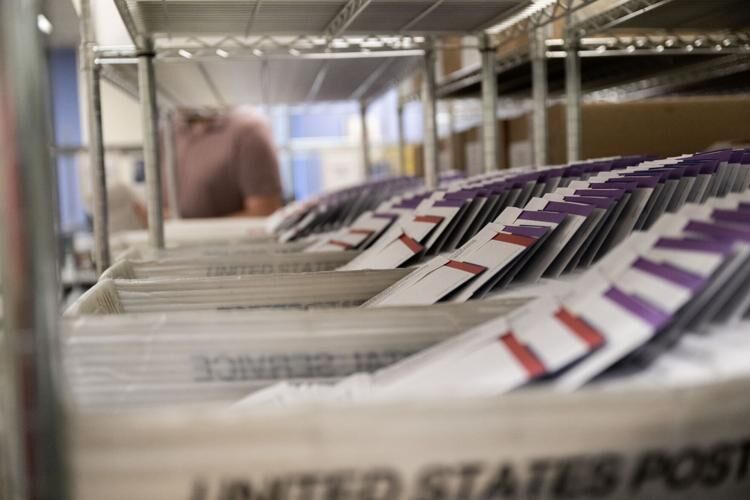
WASHINGTON • The U.S. Supreme Court on Monday cleared the way for President Donald Trump to move ahead with an executive order that seeks to restrict the mailing of ballots to American citizens in an eligible voters list. The executive...
Colorado Supreme Court intervenes in Weld County prosecution dismissed due to Missy Woods misconduct
Michael Karlik
michael.karlik@coloradopolitics.com
Updated 16 hours ago
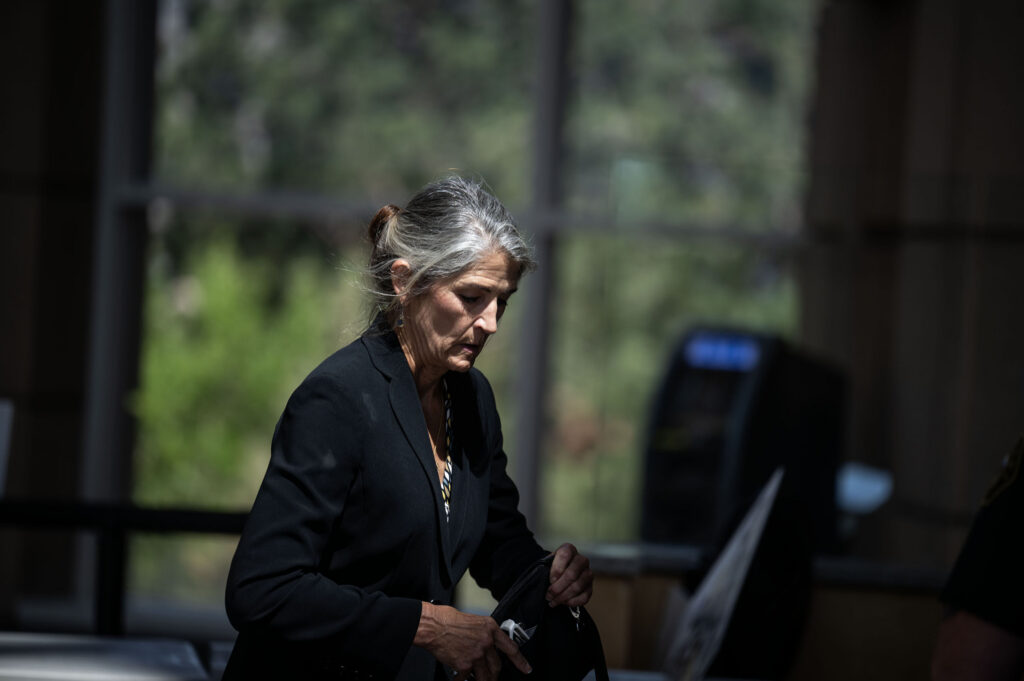
The Colorado Supreme Court ordered a Weld County trial judge last week to respond to the district attorney’s claim that he improperly dismissed a criminal case because of “outrageous” conduct by the Colorado Bureau of Investigation. Daniel Lee Eatinger stood...

Trump opens ‘economic D-Day’ offensive against Iran as war nears six-month mark
Christian Datoc
christian-datoc@coloradopolitics.com
Updated 21 hours ago
President Donald Trump is seeking to increase the financial pressure on Iran with new secondary sanctions on nations and foreign actors propping up the regime’s economy as the war between the United States and Tehran nears the six-month mark. Treasury...

Trump announces 50% tariffs on Canadian cars, auto parts, and steel
Naomi Lim
naomi-lim@coloradopolitics.com
Updated 21 hours ago
President Donald Trump escalated the trade war with Canada after talks collapsed last week, announcing Monday that the United States would impose 50% tariffs on cars, trucks, automotive components, and steel starting Jan. 1, 2027. “Canada has been ripping off...

Iran puts out propaganda video tracking Barron Trump’s location, offering $10 million for his assassination
Timothy Nerozzi
timothy-nerozzi@coloradopolitics.com
Updated 22 hours ago
The Islamic Revolutionary Guard Corps is putting a hit out on President Donald Trump’s son, Barron Trump, with an inflammatory video claiming to track his location. State-run television in Iran is broadcasting a propaganda video claiming to show the locations...
Nevada sues Trump administration over Colorado River cuts
Marianne Goodland
marianne.goodland@coloradopolitics.com
Updated 15 hours ago
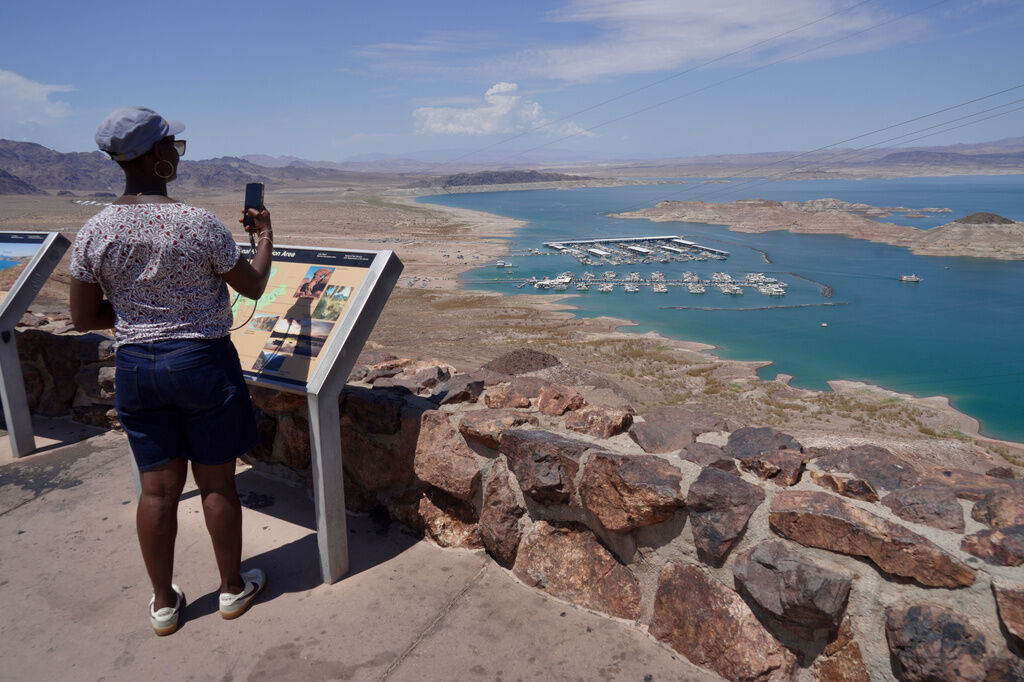
On Monday, the state of Nevada filed a lawsuit against the Trump administration and Interior Secretary Doug Burgum, seeking to block the Colorado River management plan. On Friday, Burgum released a “record of decision” that would reduce water allocations to...

Healthcare Freefall: Longer drives, fewer options for maternity care in Colorado
Thelma Grimes
thelma.grimes@coloradopolitics.com
Updated 1 day ago
Editor’s Note: Colorado’s healthcare system is entering a period of accelerating instability — a “tsunami,” as multiple leaders describe it — driven by collapsing hospital finances, shrinking Medicaid reimbursements, disappearing services and a political fight over who is responsible for...
PREV
PREVIOUS

Gov. Jared Polis reveals plans to reopen state economy
Sporting a Denver Broncos face mask, Gov. Jared Polis said on Monday that he intends to allow the stay-at-home order to expire on schedule – Sunday – and that some businesses will be able to work on reopening. “We have cabin fever and we’re ready to move on,” Polis said in a Monday afternoon news […]

Romanoff challenges Hickenlooper to 7 debates ahead of Colorado's US Senate primary
Democratic U.S. Senate candidate Andrew Romanoff on Monday challenged John Hickenlooper to a series of seven debates before voters pick a nominee to challenge U.S. Sen. Cory Gardner, the Republican incumbent, in Colorado’s June 30 primary. With mail ballots set to go out to most state voters starting on June 9, that would amount to […]