

SONDERMANN | How will we transition to a post-COVID society?


Mark the date: Thursday, March 12, 2020.
As I write this column, that is 20 days in the past. It will be closer to 24 days as you read it. Here’s betting it seems a lot longer ago than that.
March 12 is when the United States began to temporarily shut down. Professional basketball had made its announcement the night before. On the morning of the 12th, the NCAA canceled its March Madness tournaments; Major League Baseball called off spring training and postponed the opening of the season; and the National Hockey League put its schedule on ice.
At the K-8 school at which my wife teaches, the conversation quickly evolved from a morning plan to add an extra week to the coming spring break to an afternoon decision to shutter the place indefinitely in favor of an online program.
That evening, the two of us along with our daughter in town for a visit, decided to venture out to our favorite Thai restaurant, disinfectant wipes in hand, knowing it might be a last indulgence for a long while.
Similar scenes were playing out in schools, workplaces and homes across America. Here, there and everywhere, our individual worlds were changing and narrowing in real time and in high anxiety.
Yes, we will get back to “normal” at some point, hopefully not that far into the future. Though that will be a new and changed normal in some ways we can anticipate and others we can’t yet imagine. Just as life was different in the aftermath of the Great Depression than before. The same being the case in the wake of World War II and following the horror of 9/11.
But what lies between here and there? Between this moment three or four weeks in and that reopening, even if only partial, some undetermined weeks or months hence after this interlude of isolation and quarantine?
Vast discussion has focused on the viral curve and how to keep that only slightly rounded so that the health care system can continue to function. It is that curve that is driving the changed lives all of us are living. However, let’s examine here the other health curve, that being the indicators of mental health and how all of us might emotionally cope.
What happens when the novelty wears off and the adrenaline wanes? When we start measuring this in months instead of weeks?
Ours is a culture increasingly defined by short-term gratification. And one not all that familiar with sacrifice. This virus is going to require traits, both individual and societal, that are not all that highly evolved in many of us.
How do we react when stir-craziness sets in? When the end of winter gives way to glorious spring and even summer, and every urge is to be active, outdoors, communal and going places? When those hunkered down solo are overcome by loneliness? Or when those doing so in close quarters with a spouse or partner have had more than enough togetherness?
How do we fare when our worst selves emerge? When social pathologies ramp up, whether in the form of alcohol abuse or opioid reliance or domestic violence?
How do we treat the neighbor, or the stranger exposed on the local news, who is not adhering to the protocols? The history of plagues is not exactly a tale of people’s better selves emerging. They have been periods of darkness due as much to fear and despair as to the disease itself.
How do we manage when the financial pressure builds? When the stimulus check is slower to arrive than advertised and the too meager savings of too many Americans are depleted? When the mortgage or rent payment comes due for the third consecutive month without the prospect of meaningful income? When the long-planned retirement account withers to complete inadequacy?
Can we resist being torn apart by the false choice between preserving public health and jump-starting the economy? Can we maintain our collective center even if our leader-in-chief struggles to keep his?
The world has seen pandemics before. But not in a time of ubiquitous news and social media. How do we process death and despair on the scale quickly coming? Presented dramatically on our high-definition, flat-screen televisions? And getting closer to home on our Facebook feeds?
How do we cope when those deaths become personal? An aunt or uncle; God forbid, a grandparent or parent, or even worse a child; a longtime neighbor; a close friend? And when we can’t even congregate to pay respect and say goodbye. Zoom is a terrific platform, but I am not prepared to use it for a memorial service.
If the projections are to be believed – and I dare say they may be conservative estimates – all of us are likely to be touched by the loss of someone we know. Please let me be wrong.
What happens when, inevitably, another crisis layers on top of this one? Whether a seasonal flood or tornado; or another fire season; or, please not, an act of political violence or terrorism?
Or, most tellingly, how do we get by when puzzle assembly gives way to carpal tunnel syndrome? Or when, in the words of a friend, we finish Netflix?
While many of us consider it an accomplishment to get off the couch, we are, culturally, a nation of sprinters being called on to run a marathon. That is a wholly different pursuit and we may be still only a handful of miles into the course.
It is de rigueur to remark that our nation has been tested before. But for many, many Americans, those tests were just chapters in a history book. This is our exam and the chance to prove our mettle.
What grade will history assign us? Not only for conquering the virus, but for weathering the storm and taking care of ourselves and each other?
Eric Sondermann is a Colorado-based independent political commentator. His column appears regularly on Sundays in ColoradoPolitics. Reach him at EWS@EricSondermann.com; follow him at @EricSondermann

Colorado House ethics committee issues ‘stern letter’ to Democrat over caucus funds mismanagement
Marianne Goodland
marianne.goodland@coloradopolitics.com
Updated 5 hours ago
The Colorado House ethics committee on Friday voted unanimously to issue a “stern letter” to Rep. Mandy Lindsay, D-Aurora, regarding her mismanagement of House Democratic caucus funds. The committee further voted to request that Lindsay resign as Democratic Caucus co-chair...
Appeals court confirms Colorado judges can compel electronic records from out of state
Michael Karlik
michael.karlik@coloradopolitics.com
Updated 8 hours ago
Colorado’s second-highest court clarified on Thursday that judges are empowered to compel out-of-state companies to produce electronic records under state law. El Paso County jurors convicted Mischa Jargowsky on three counts of money laundering and one violation of Colorado’s organized...

Federal judge extends block on Trump executive order seeking to limit mail voting in the midterms
The Associated Press
the-associated-press@coloradopolitics.com
Updated 8 hours ago
A federal judge on Friday extended her prohibition against the U.S. Postal Service implementing President Donald Trump’s executive order seeking to limit mail voting during the midterms, putting another major obstacle in the way of the administration as the first...
Mullin asks DOJ to review voter data sharing tied to Zuckerberg-funded nonprofit group
Kaelan Deese
kaelan-deese@coloradopolitics.com
Updated 8 hours ago
Homeland Security Secretary Markwayne Mullin asked the Justice Department this week to review whether election-related nonprofit groups, some with multimillion-dollar backing from a Mark Zuckerberg-linked nonprofit, improperly received sensitive state motor vehicle and voter-registration data. In a letter sent Wednesday...
Colorado secures FEMA support for wildfire, flooding and mudslide recovery
Marissa Ventrelli
marissa.ventrelli@coloradopolitics.com
Updated 4 hours ago
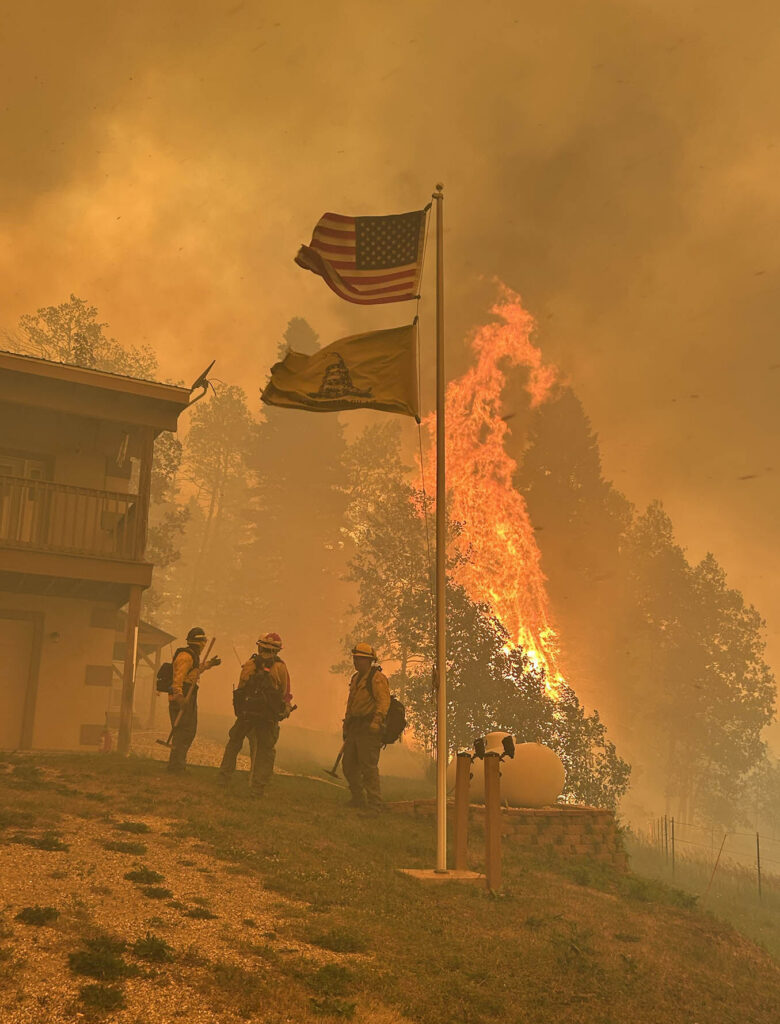
Federal authorities on Friday approved Colorado’s request for federal public assistance to help communities devastated by the Aspen Acres and Gold Mountain Fires. The Federal Emergency Management Agency did not announce how much the state would receive but confirmed that...

State seeks $50K penalty against GOP candidate Victor Marx over alleged campaign finance violations
Deborah Grigsby
deborah.smith@denvergazette.com
Updated 8 hours ago
Republican gubernatorial candidate Victor Marx is looking at more than $50,000 in fines in what the Elections Division of the Office of the Secretary of State calls “unprecedented” campaign finance violations. The state has not imposed that fine yet, and...

Judge puts Colorado Libertarians’ secretary of state candidate on ballot after party’s 1st nominee drops out
Ernest Luning
ernest.luning@coloradopolitics.com
Updated 3 hours ago
A Denver judge ruled Friday that the Colorado Libertarian Party’s pick for secretary of state will appear on the November ballot after the party’s original nominee withdrew one day after the deadline to replace minor party candidates. Following a hearing...
10th Circuit upholds finding of no racial discrimination against family at Denver Chili’s
Michael Karlik
michael.karlik@coloradopolitics.com
Updated 4 hours ago
The Denver-based federal appeals court agreed on Wednesday that a Black plaintiff failed to show that a Chili’s manager’s request for her family to provide valid payment at the outset of their meal amounted to racial discrimination. Markesha Futrell-Smith filed...
Regulators knew this marijuana product was harming people. It stayed on shelves for more than a year
Christopher Osher
chris.osher@gazette.com
Updated 6 hours ago
Colorado’s Marijuana Enforcement Division can take months or even years to issue formal safety warnings about marijuana products even when it receives reports that the products are harming people’s health, The Denver Gazette and ProPublica found. This article was produced...
Douglas County commissioners reject challenge to ballot language for 3 to 5 petition
Nicholas Fogleman
nicholas.fogleman@denvergazette.com
Updated 7 hours ago
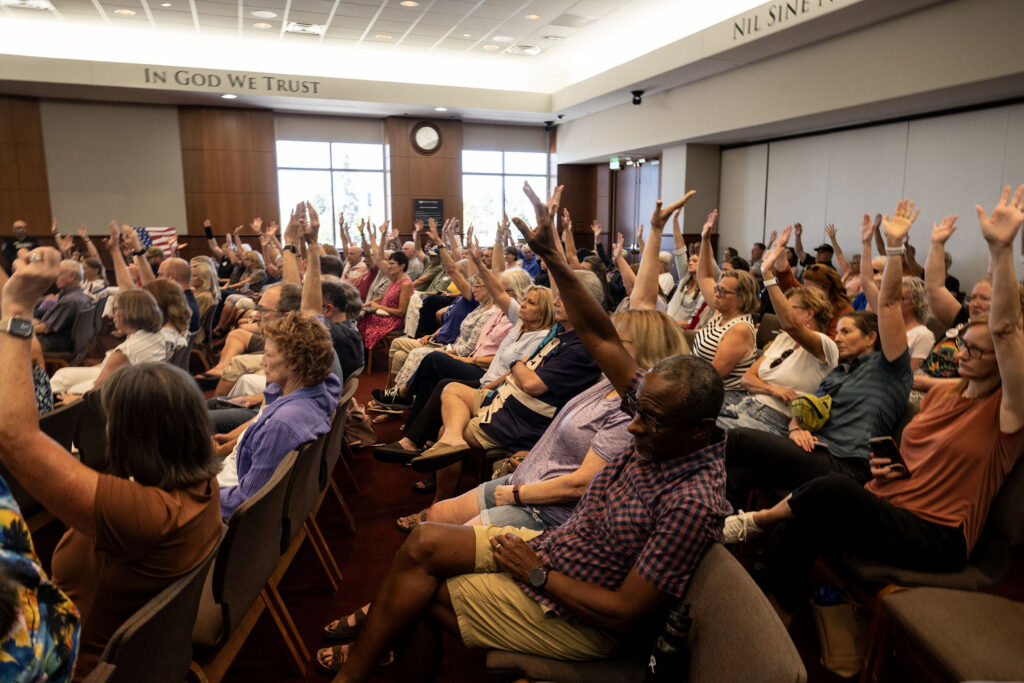
Douglas County commissioners denied a challenge Thursday to the language of a ballot initiative that would expand the board from three to five members. Following a contentious hearing that saw multiple audience members escorted out by police for disruptions, commissioners...
PREV
PREVIOUS

Coronavirus case update for April 3: 4,173 cases, 823 patients hospitalized, 111 deaths
The Colorado Department of Public Health and Environment on Thursday updated its COVID-19 case numbers to 4,173 cases, with 823 patients hospitalized and 111 deaths. The virus has spread across 53 counties in the state, with 27 outbreaks at residential and non-hospital health care facilities. Denver County has the most cases, with 716. El Paso and Weld counties have both experienced […]
Coronavirus case update for April 4: Deaths at 126, with 4,560 cases and 875 hospitalized
The Colorado Department of Public Health and Environment on Saturday updated its COVID-19 case numbers to 4,565 cases, with 875 patients hospitalized and 126 deaths. The virus has spread across 54 counties in the state. Denver County has the most cases, with 769. El Paso and Weld counties have both experienced 22 deaths, respectively – the most in […]