

TRAIL MIX | The return of Dr. No? Justin Everett wants his old seat back

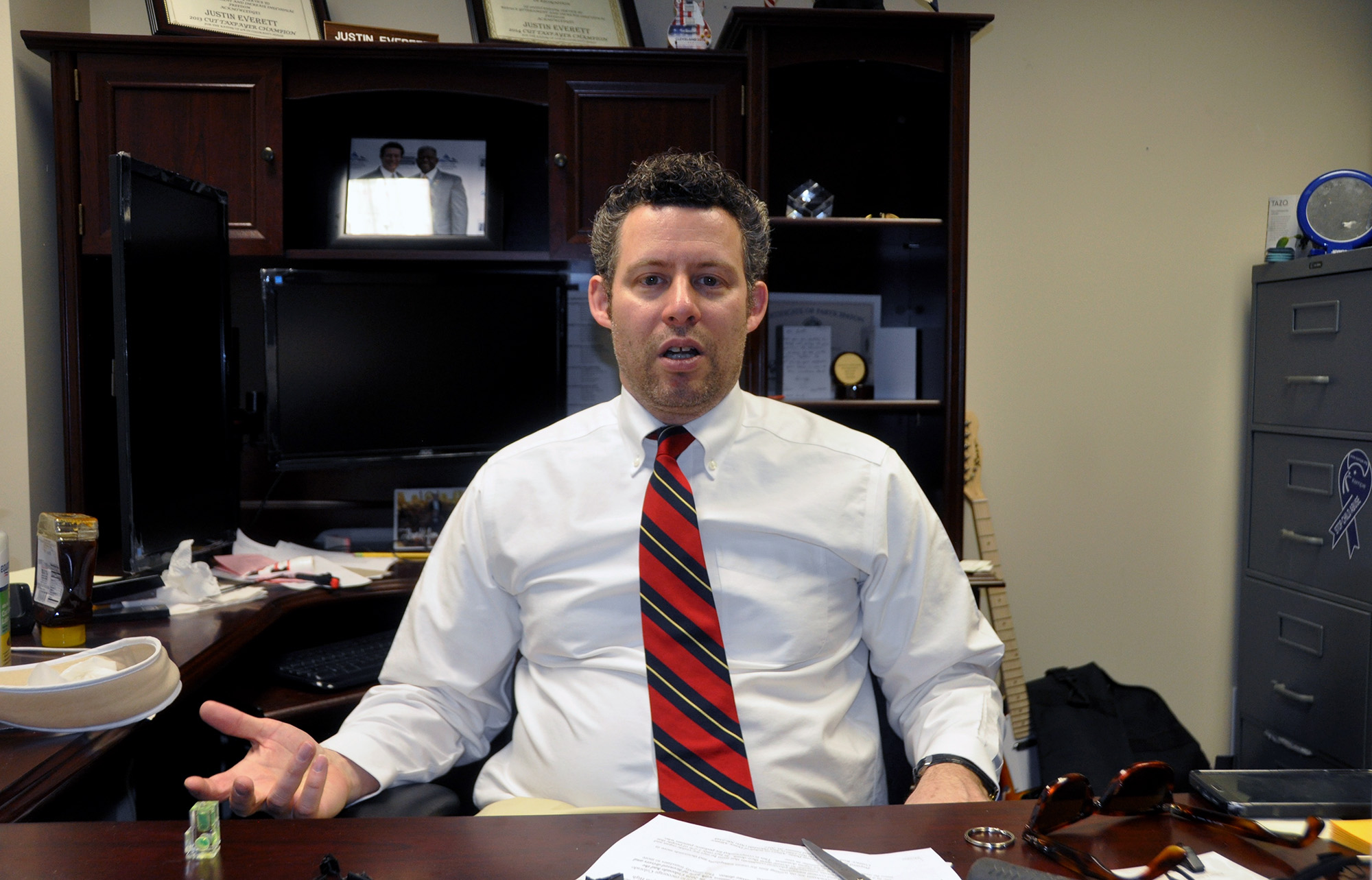
If things go according to plan, Justin Everett will be up late next year, reading every word in every bill introduced in the Colorado House of Representatives, and when the legislation comes up for a vote, he’ll give a good share of it a thumbs down.
On March 28, the Littleton Republican, who lost a bid for state treasurer two years ago in a close primary, won top-line designation in this year’s primary for the House District 22 seat he represented for three terms, securing the spot by acclamation in the district’s virtual GOP assembly.
He’ll face off against state Rep. Colin Larson, R-Littleton, a small business owner who crosses the aisle to work with Democrats too often for Everett’s taste – and, to hear Everett tell it, too often to represent the most conservative House seat in Jefferson County.
“Like the saying goes, ‘Represent your district or someone will,’ ” Everett said, pointing to a statistic showing that House District 22 boasts more churches than any other district in the state.
The district sits just north of Martin Marietta in the southwest metro area, covering neighborhoods including Columbine, Ken Caryl, Dakota Ridge and a tiny sliver of Bow Mar. Republicans outnumber Democrats by 10 percentage points, though the district counts more unaffiliated voters than members of either party.
When Everett served in the statehouse, he earned a reputation – and steadfastly cultivated the image – for voting “no” on bills, though only after reading every single one before voting on it.
It was former state Rep. Max Tyler, D-Lakewood, who first called him “Dr. No,” early in his legislative tenure, Everett says, but he adds that when his colleague suggested the nickname, he shook his head and replied, “No – it’s ‘Justin Neverett.’ “
Two years ago, the same night Democrats romped up and down the ballot statewide and in Jefferson County, Larson beat Democrat Todd Kastetter by just over 3,000 votes, retaining the seat for Republicans by a comfortable 7 percentage points.
Two years earlier, however, Everett cruised to his third term by about 9,000 votes and 21 percentage points over unaffiliated nominee Mary Parker, who lost the 2014 election to Everett by a slightly closer margin when she was a Democrat.
Larson won the 2016 GOP nomination by a nose in a bitter, expensive primary fight against Frank Francone, founder of the local Tea Party and an Everett protégé, in a classic battle between the GOP establishment – which favors more moderate candidates – and the party’s rabble-rousing right wing.
In late March, after learning that he had successfully petitioned his way onto this year’s primary ballot, Larson cleared a path for Everett by withdrawing from the assembly.
It was a move Everett said suggested the incumbent couldn’t count on the support of grassroots Republicans, though political strategists tell Colorado Politics that Larson’s decision was a no-brainer, since there’s no reason to risk getting a bad headline if you’re already on the ballot.
Regardless, the stage is set for a rematch between the GOP’s power centers in what’s shaping up to be this year’s premier legislative primary.
“There seems to be a power struggle going on, and I’ve been trying to smooth the rift,” Everett said. “I think it’s important as Republicans, after the 2018 election, because if we want to have any relevance in Colorado, we need to come together. We need to learn how to do that or we’ll be an irrelevant party.”
Everett said he didn’t give a thought to running for office again for at least a year after he lost the treasurer’s primary by 1 percentage point to real estate mogul Brian Watson – even though he was outspent roughly 10 to 1 by Watson and former state Rep. Polly Lawrence, R-Roxborough Park. Instead, he enjoyed consulting with other candidates around the country who wanted to know how to blend rock-ribbed conservatism with success at the ballot box.
One thing that became clear, he said, was how difficult it is to recruit Republican candidates for legislative office in this year’s cutthroat political climate.
“You’re looking at being in session four months out of the year, and all the money that was spent for state senate seats, all the negative campaigning,” he said. “If you’re going to take that kind of heat from the left, and you’re making good money and you’re doing some good volunteer work and you’re raising a family, why the heck would you want to do that? It’s really hard for Republicans, who naturally don’t feel comfortable stepping into the public arena the way Democrats do. It was already harder for Republicans to recruit people, and now I think it’s gotten more difficult.”
The question kept coming up: “What are we going to do about Colorado? Because I don’t plan on moving. Colorado’s bad, but is Colorado done? There’s still part of me that’s, ‘Let’s fight,’ because you’re looking at reapportionment and redistricting in the next cycle, and maybe Republicans can take something back.”
Still, it was easy to leave the role of candidate to others, Everett said.
“It was nice making good money, not having a target on my back, no sleepless night for the session and not putting 70,000 miles on my car driving the state, having some down time,” he said. “I needed a break. I don’t mind being ‘the man,’ but it gets tiring being ‘the man,’ whether or not it’s true that I was.”
But soon he started getting calls, urging him to run for his old seat. The more his successor stood with Democrats on divisive legislation – including telling socially conservative Republicans that legislation they described as “pro-family” wasn’t representative of the attitudes in his district – the more Everett thought about diving back in.
“That’s funny, because I campaigned on pro-life, pro-traditional marriage, and won by bigger margins than he did,” Everett said.
“It came down to, am I going to continue to fight the good fight and do that? Then when I started reaching out, I kept on hearing this weird phrase that makes me a little sad and definitely a little humbling – ‘If you’re running, it gives me hope again.’ “
After pausing for a moment to collect himself, Everett continued: “I’ve preached for six years, don’t put faith in your politicians because they’ll always let you down. But that they think I can have that kind of impact – it’s been a real humbling experience.”
As soon as he started considering getting back in the game, Everett said things began to fall in place, including a strange series of coincidences. He added with a laugh that he isn’t superstitious, but it sure seemed like the universe was trying to tell him something.
He isn’t concerned that his no-holds-barred conservatism won’t appeal to his suburban neighbors.
“If you do stand for something, and whether they agree with you or not, they’re willing to vote for you. Everybody’s sick of the slick politician who’s going to tell you what you want to hear,” he said. “There’s still this sort of western individualism, libertarianism that’s out there, that people don’t like big government. People want somebody who stands for something. They know exactly what they’re getting and I’m not going to feed them a bunch of baloney to get their vote.”
What they don’t want, he said, is the kind of smoothed-off moderate politician that some high-priced GOP strategists say is the party’s only hope of staging a comeback in states like Colorado.
“These are the same people spending tens of millions of dollars every election cycle with crappy results, saying we need to not stand for anything and moderate our image. ” he said. “People want somebody who’s going to stick to their guns. I want to be able to make that case.”


Supreme Court rules states can count late-arriving mailed ballots, rejecting Trump-led challenge
The Associated Press
the-associated-press@coloradopolitics.com
Updated 10 hours ago
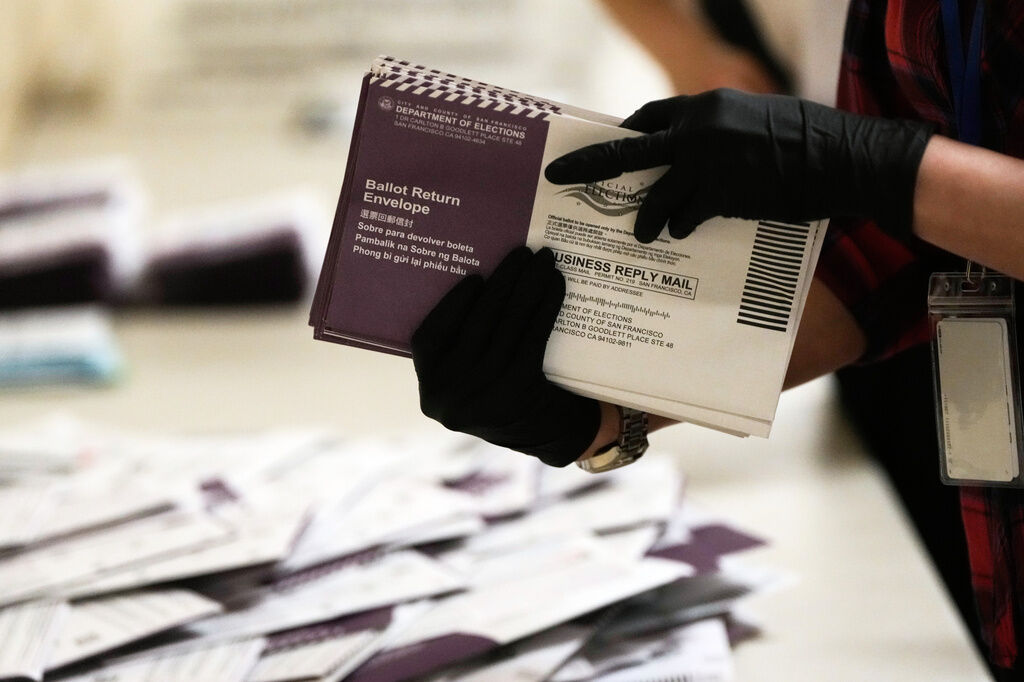
WASHINGTON (AP) — The Supreme Court on Monday ruled that states can count ballots that arrive after Election Day, a persistent target of President Donald Trump. The 5-4 decision rejected a Republican-led attack on laws in more than half the...
Colorado Supreme Court: Redistricting plans for 2028 election cannot proceed under state constitution
Michael Karlik
michael.karlik@coloradopolitics.com
Updated 2 hours ago
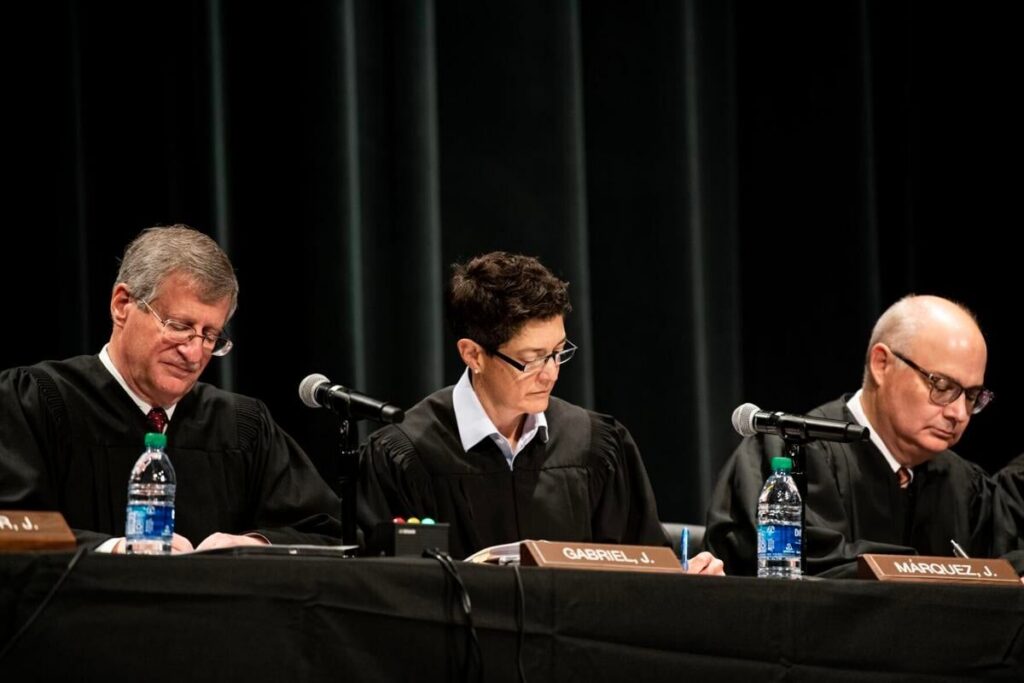
The Colorado Supreme Court blocked all attempts at redrawing congressional district boundaries for the 2028 election from reaching the ballot on Monday, concluding each of the proposed ballot measures violated the constitutional single-subject requirement. The court considered five distinct but...
Understanding Trump’s remarkable political comeback in 2024 | Cronin and Loevy
Tom Cronin Bob Loevy
tom-cronin-bob-loevy@coloradopolitics.com
Updated 1 day ago
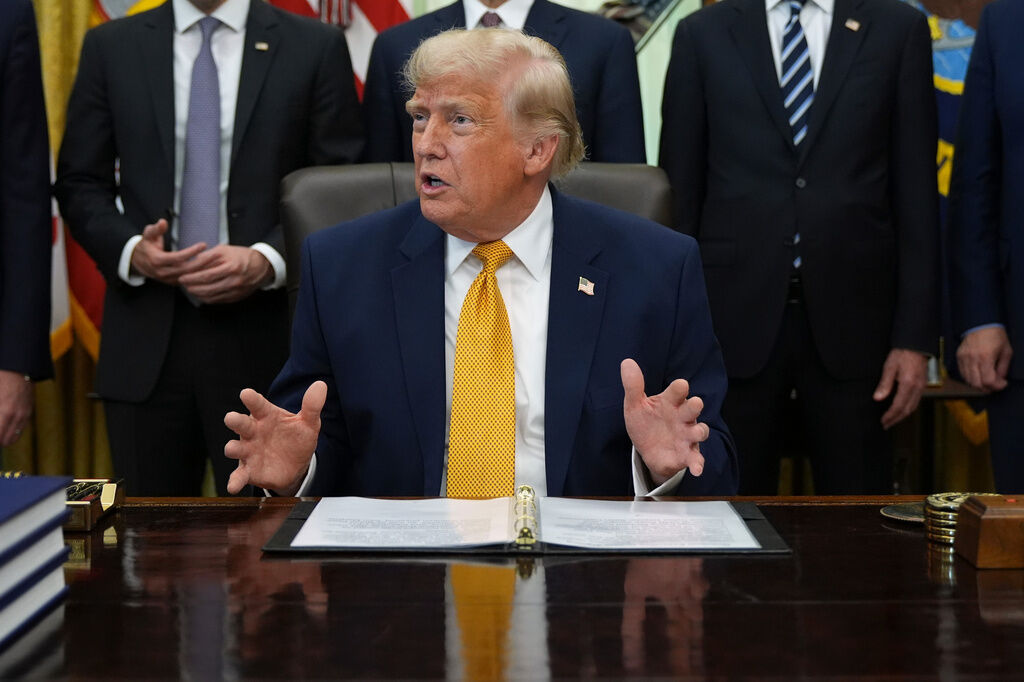
President Donald Trump lost the 2020 presidential election. He inspired a riot at the U.S. Capitol to try to overthrow the results of that election. He was impeached by the U.S. House of Representatives and later was indicted for several...
Crank challenger Jessica Killin signs on to new centrist Democratic group’s ‘Promise to America’
Ernest Luning
ernest.luning@coloradopolitics.com
Updated 2 hours ago
Jessica Killin, one of the Democrats running in Tuesday’s primary for the chance to challenge U.S. Rep. Jeff Crank in Colorado’s 5th Congressional District, joined with more than a dozen incumbent Democratic lawmakers and candidates this week signing on to...
Who’s spending in Colorado to get your vote?
Marianne Goodland
marianne.goodland@coloradopolitics.com
Updated 2 days ago
Groups that raise unlimited amounts of money have spent about $20 million in May and June to try and influence Colorado voters’ choices in the upcoming June 30 primaries. By law, these groups cannot coordinate with the candidates they support....
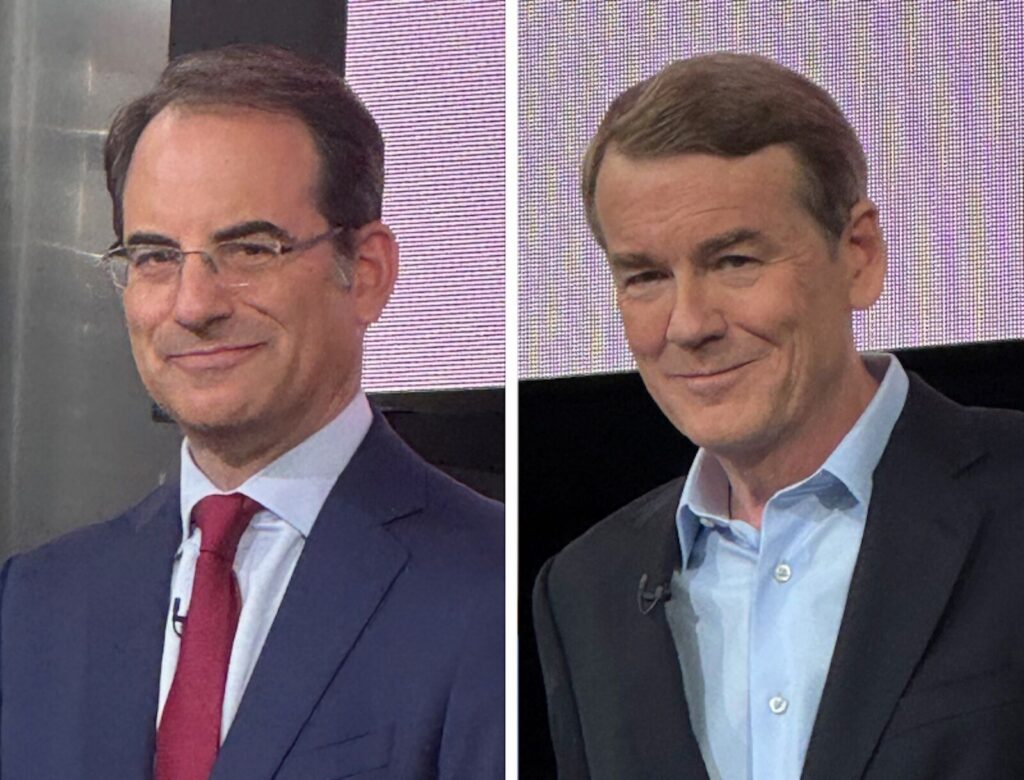
Phil Weiser leading Michael Bennet in Colorado’s Democratic gubernatorial primary, internal poll finds
Ernest Luning
ernest.luning@coloradopolitics.com
Updated 3 days ago
Attorney General Phil Weiser holds a lead over U.S. Sen. Michael Bennet among likely voters less than a week before ballots are due in Colorado’s Democratic gubernatorial primary, according to a new poll released Thursday by a group backing Weiser....

Colorado’s ‘right to natural gas’ measure submits signatures to qualify for November ballot
Marissa Ventrelli
marissa.ventrelli@coloradopolitics.com
Updated 3 days ago
A natural-gas rights initiative backed by Advance Colorado is likely headed to the November ballot, triggering a parallel campaign by environmental groups seeking to impose new liabilities on oil and gas operators. Petitions for Initiative No. 177 were turned in...
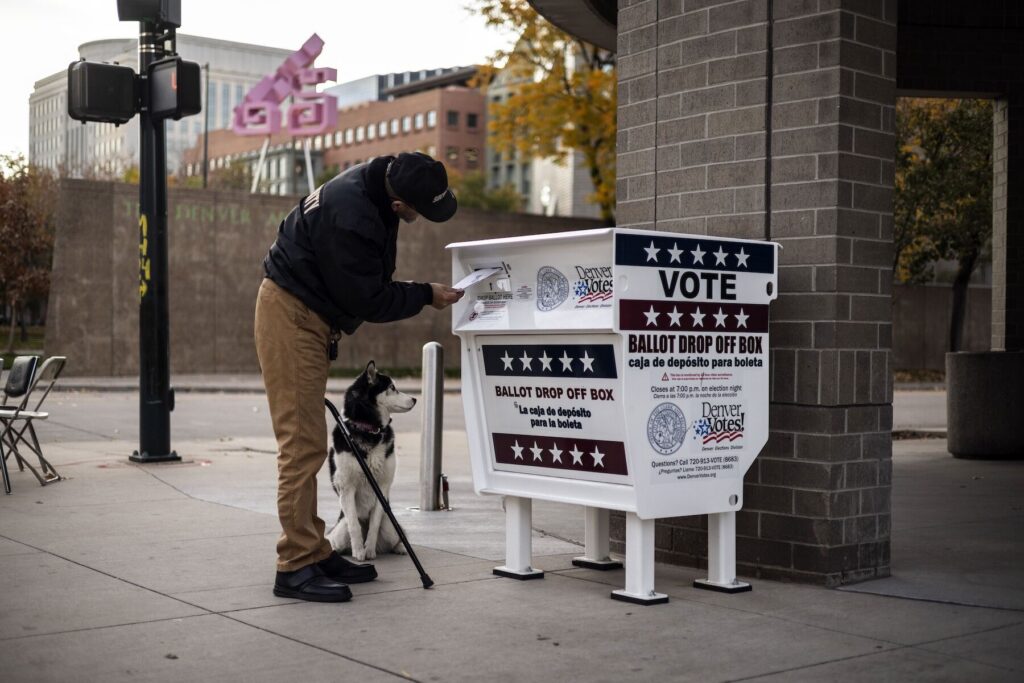
Colorado’s primary turnout tops 10% as election officials warn it’s too late to mail ballots
Ernest Luning
ernest.luning@coloradopolitics.com
Updated 5 days ago
Colorado election officials cautioned on Tuesday that it’s too late to mail ballots for the June 30 primary and urged voters to use drop boxes and their county’s voting centers instead. Secretary of State Jena Griswold said in a release...
Rural frustration, parental rights shape Scott Bottoms’ pitch ahead of Colorado’s gubernatorial primaries
Thelma Grimes
thelma.grimes@coloradopolitics.com
Updated 2 days ago
With just weeks before Colorado’s June primary, Republican gubernatorial candidate state Rep. Scott Bottoms is spending nearly all his time on the road — literally crisscrossing the Western Slope and Eastern Plains — in a final push to connect with...
Registered voters on the eve of the 2026 primaries | Cronin & Loevy
Tom Cronin Bob Loevy
tom-cronin-bob-loevy@coloradopolitics.com
Updated 1 week ago
The Colorado Secretary of State’s Office has published the latest voter registration figures for the state and its counties as of June. Colorado ranks among the highest states for independent, or unaffiliated, voters. Only Alaska and Massachusetts have more. New Hampshire, New Jersey, Maine and Oregon also rank highly. So here...
PREV
PREVIOUS

41-year-old El Paso County sheriff's deputy death attributed to coronavirus
A deputy who worked in the El Paso County jail has died of coronavirus, the Sheriff’s Office said Thursday. Jeff Hopkins, 41, had been with the Sheriff’s Office since 2001, and had previously been a patrol deputy. He most recently worked in the jail’s intake and release section. He is survived by his wife and parents, […]

Colorado to receive $14.2 million in Justice Department grants
As part of the recent $2.2 trillion CARES Act, Colorado will receive $14.2 million in grant money specifically to help the justice system respond to the COVID-19 pandemic. “Eligible Colorado agencies should apply for this money and be forward thinking in how to serve our citizens during this very stressful time,” said U.S. Attorney Jason […]