

SONDERMANN | Curbing COVID-19 is worth the risk of an economic downturn


It’s the newly-discussed tradeoff and a very real one – the public health steps currently imposed to slow the spread of the coronavirus versus the massive economic damage left in the wake of those measures.
A few days ago, these pages included a column from my friend, Jon Caldara, opening with the assertion that, “The cure could be far more deadly than the disease.”
Jon’s is a fair point, thoughtfully made. But it also happens to be wrong. So allow me to offer a rebuttal.
First off, at the risk of damaging my reputation, I should acknowledge that I agree with Jon on more issues than some of my friends might surmise. His free-market zeal rings true more often than not. With respect to COVID-19, Jon and the Independence Institute which he heads have put forth a number of useful deregulatory suggestions, some of which have been put in place by Gov. Jared Polis.
Jon is someone easy to caricature. He often seems to relish his role as a punching bag for many on the other political side. However, that is not my manner nor my purpose here.
The flaw in Jon’s core argument, and in that being more vocally made in recent days by others including the stock-ticker virtuoso occupying the Oval Office, relates to the nature of the threat and the potency of this virus.
COVID-19 is not your typical winter influenza. Exclamation point; underscore; bold face.
There is nothing typical or normal about this disease. This is a once-in-multiple-generations occurrence; perhaps once in a century. At least, we can only pray that is the case.
The sooner that we accept the scale and dimension of this peril, the easier it will be to take stock of the tradeoffs and accept the short-term economic medicine, no matter how distasteful.
Of course, there are tradeoffs and multiple considerations. Such is life. To take a few of the examples most frequently posited, certainly we could reduce traffic fatalities by lowering the speed limit to an absurd number. And save some lives by instituting stringent quarantine and isolation protocols during annual flu season.
As a society that still understands at some level the concept of intelligent balance, we have chosen to accept such standard risks. But the argument does not logically flow that, therefore, we should accept all risks and carry on in some fashion of business-as-usual in the face of an historically potent and lethal hazard.e
The risk here is not just to Jon’s parents in their mid-80s. Or to my mother at age 92. In her case, my wife and I have made the painful choice not to see for the past few weeks, or presumably for a number of weeks ahead, in the interest of responsible social distancing.
Nor is the risk just to countless others of this age cohort.
Rather, it is a systemic risk to this country’s ability to deliver essential health care in an unparalleled moment. This is the whole idea of “flattening the curve.” Even if vast masses are to be infected with the virus, it is critical to slow the pace so that the system does not get overwhelmed and overrun.
Jon, it would be sad enough if either of your elderly parents caught this. But picture them being “treated” on a gurney in some corridor. Or in a high school stadium turned field hospital. With medical staff having to keep a distance due to lack of protective equipment. And gasping for air while being denied access to a life-saving ventilator. God forbid.
Those are the pictures we see out of Italy and Spain. Those are scenes coming very soon to New York City and far too many other American locales if we don’t take the personally and economically distasteful steps to keep the curve from spiking.
National news tends to focus on the macro-economic impacts. I am far more interested in the micro-economic consequences for individuals, families and small businesses trying to stay afloat. While the congressional stimulus package is no doubt laden with the usual political pork and special favors, let’s hope that it can ameliorate some of this hardship.
This is not the first crisis to cause a major economic downturn. There’s a meme going through the ether to the effect of, “Our fathers and grandfathers were called upon to go to war. All that is being asked of us is to sit on the couch.”
That period of economic sacrifice was measured in multiple years, including rationing of food and goods, while this, if we do it right, will be presumably limited to many weeks or a few months. We can buckle up and get through this.
When we come out the other side, the economic fundamentals should not be wholly different than they were at the onset of the health emergency, save for a significant increase in the governmental debt load. The economic rebound can be just as sharp as has been the falloff.
Jon’s bromide as to “wealth equals health” is generally true, even if we wish it was even more the case in our land of obesity. But the implication that the United States is going to emerge from this a broken, diminished country is vastly overblown.
No one is more eager to restart and jump-start the economy. Our daughter is longing to begin grad school and our son needs a job. Further, it’s going to get quite ugly around here if I can’t get a haircut in the next few weeks. (That’s a problem that doesn’t concern Jon. Okay, one ad hominem cheap shot I couldn’t resist.)
But, ultimately, I trust that call to be made by experts in public health and epidemiology, and governors wise enough to listen to them, not by business boosters or a president more focused on his polling numbers than rates of viral transmission and laying down a silly marker of putting an end to this by Easter Sunday, two weeks hence.
Eric Sondermann is a Colorado-based independent political commentator. His column appears regularly on Sundays in ColoradoPolitics. Reach him at EWS@EricSondermann.com; follow him at @EricSondermann


Colorado Parks and Wildlife Commissioner Murphy Robinson resigns
Marianne Goodland
marianne.goodland@coloradopolitics.com
Updated 7 hours ago
Murphy Robinson, who has served on the Colorado Parks and Wildlife Commission for just over a year, announced his resignation on Wednesday. In a statement, Gov. Jared Polis thanked Robinson, saying he is “incredibly grateful for Murphy’s service to the...
Colorado Supreme Court’s opinion output drops by two-thirds amid justice’s absence
Michael Karlik
michael.karlik@coloradopolitics.com
Updated 9 hours ago
The Colorado Supreme Court has released significantly fewer new opinions in recent months compared to the previous two years, even as the judicial branch insisted that a member’s open-ended absence is not causing delays. Justice Melissa Hart has been on...

Adams County officials call for resignation of county treasurer after ‘inappropriate behavior’
Kyla Pearce
kyla.pearce@gazette.com
Updated 9 hours ago
Adams County Commissioners requested the resignation of the county’s treasurer after multiple allegations of inappropriate behavior toward staff members. Treasurer Alex Villagran has declined to step down. An independent investigation by Employment Matters LLC Flynn Investigations Group found multiple allegations...

Aurora’s consent decree monitor reviews fatal pursuit crash, notes ‘inherent risk’ of police chases
Kyla Pearce
kyla.pearce@gazette.com
Updated 10 hours ago
Two people died in a crash that resulted from an Aurora police pursuit last week, which the city’s decree monitor is reviewing. The monitor said the incident underscores the “inherent risks” of pursuits. Meanwhile, the city police department said it...
Colorado’s universal preschool enrollment begins for upcoming school year
Marissa Ventrelli
marissa.ventrelli@coloradopolitics.com
Updated 9 hours ago
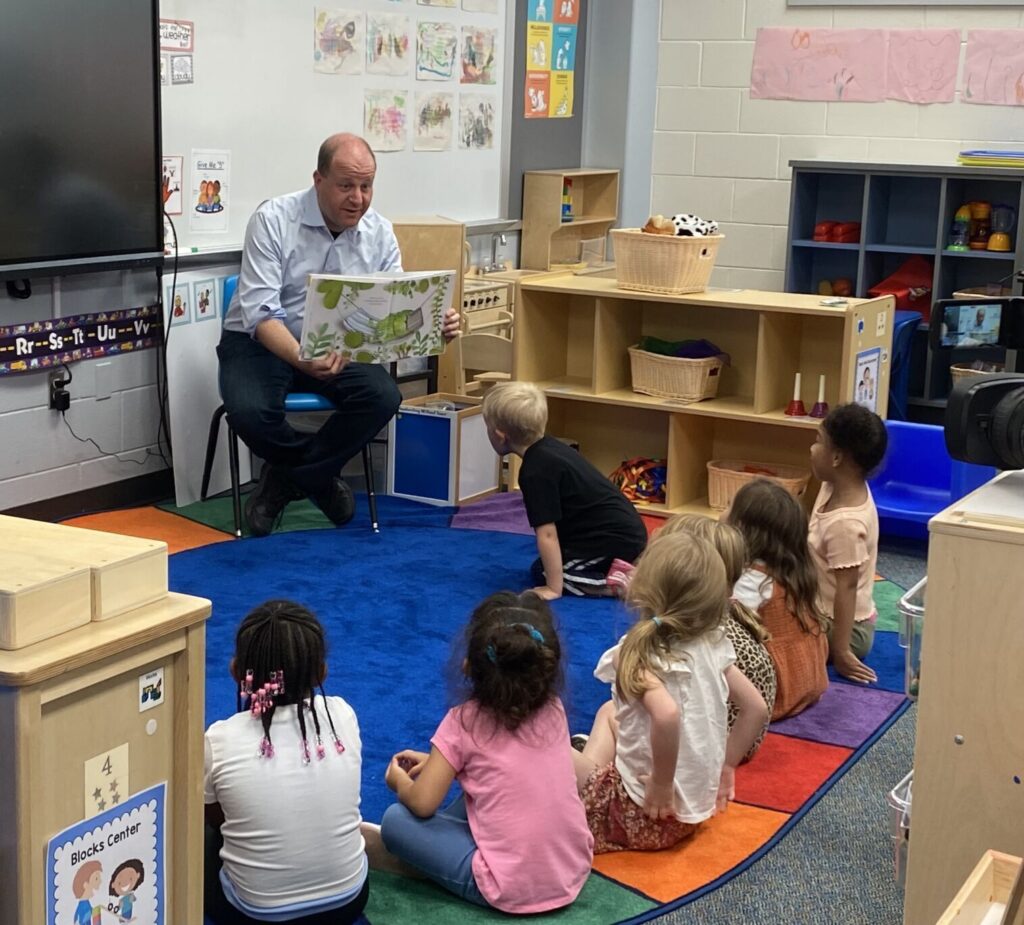
Enrollment is now open for Colorado’s universal preschool program, which provides up to 15 hours of free education for four-year-old children across the state. The $344 million program has served nearly 90,000 children since its creation in 2023, the Governor’s...

Divided 10th Circuit rules bank customer must arbitrate discrimination-related claims
Michael Karlik
michael.karlik@coloradopolitics.com
Updated 9 hours ago
The Denver-based federal appeals court ruled on Monday that a mandatory arbitration clause in the fine print of a customer’s bank account agreement prohibited her from pursuing claims of racial discrimination in court. Jeanetta Vaughn filed suit against JPMorgan Chase...

Colorado’s federal trial court denies admission to lawyer owing tens of thousands in dues, penalties
Michael Karlik
michael.karlik@coloradopolitics.com
Updated 11 hours ago
Colorado’s U.S. District Court declined last month to allow an attorney to practice before the court due to his failure to pay enrollment fees and penalties to another state’s bar association for years. The federal trial court requires attorneys to...
Douglas County businesses to pay fines for unreported thefts under proposed ordinance
Noah Festenstein
noah.festenstein@denvergazette.com
Updated 8 hours ago
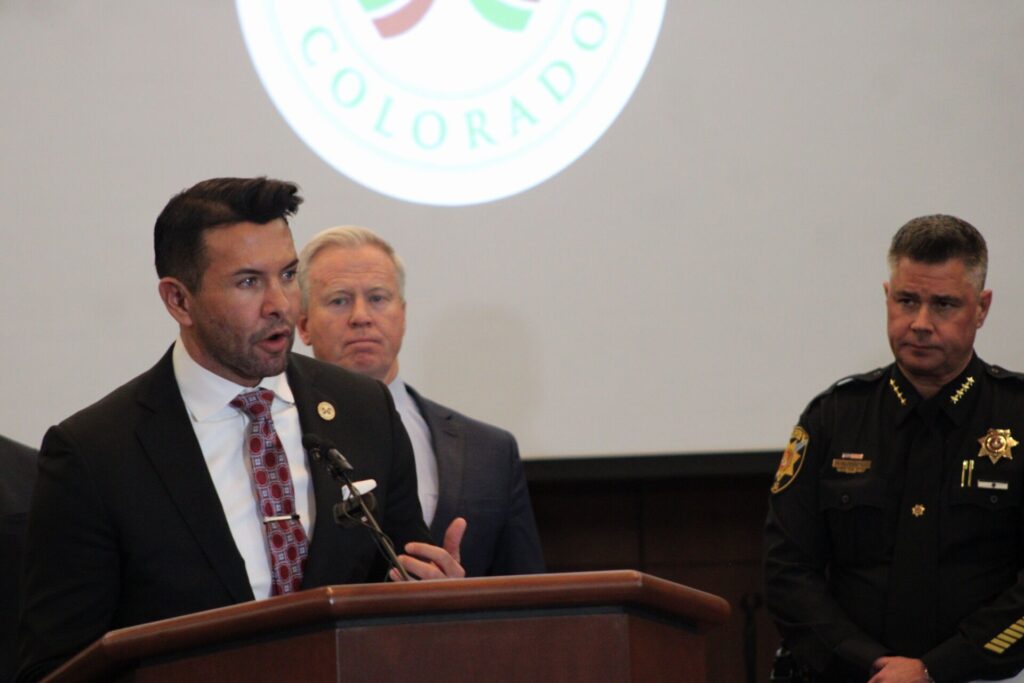
Douglas County commissioners on Tuesday advanced an ordinance aimed at curbing retail theft by penalizing businesses that refuse to report shoplifters to law enforcement. The proposal is notable in that it shifts the onus of responsibility to businesses. Officials said...

Federal judge labels appeal ‘frivolous,’ state Supreme Court to hold arguments | COURT CRAWL
Michael Karlik
michael.karlik@coloradopolitics.com
Updated 15 hours ago
Welcome to Court Crawl, Colorado Politics’ roundup of news from the third branch of government. A federal judge deemed a government defendant’s appeal “frivolous,” and the state Supreme Court will have an abbreviated oral argument schedule next week. Heard on...

Humane Colorado bids fond farewell to its CEO at Celebration of Compassionate Leadership | NONPROFIT REGISTER
Joanne Davidson Special to Colorado Politics
joanne-davidson-special-to-colorado-politics@coloradopolitics.com
Updated 18 hours ago
HUMANE COLORADO Denver News: Veterinarian Apryl Steele is not one to toot her own horn, so the general public might have no idea of the depth and scope of the role she has played in elevating the standard of care for companion animals and for expanding the socially...
PREV
PREVIOUS

'We will get through this': Bennet hails passage of coronavirus rescue package
U.S. Sen. Michael Bennet said Friday that legislation to speed $2.2 trillion in economic relief to businesses, health care providers and families reeling under the coronavirus epidemic “reflects the need for urgent and comprehensive action” but could be only the first installment of the federal response. “Right now Colorado and the country are facing a challenge […]
Colorado coronavirus case update for Saturday, March 28: 2,061 cases, 274 hospitalized, 44 deaths
The Colorado Department of Public Health and Environment on Saturday updated its COVID-19 case numbers to 2,061 cases, with 274 patients hospitalized and 44 deaths. The number of deaths reported may not yet include individual reports from individual county departments. The virus has spread across 44 counties in the state – Denver County has the […]