

Oil and gas operators ask for a break from rulemaking by state commission
A coalition of small operators in the oil and gas industry Friday asked Gov. Jared Polis to pause rulemaking by the Colorado Oil and Gas Conservation Commission.
The Small Operator Society, which represents 50 small and family-owned oil and gas operations across the state with about 7,000 wells, said that in a matter of days they faced a “double black swan” event: historic low prices for oil and gas, as well as the deadly novel coronavirus.
It’s mean that producers are “already stretched thin and fighting for survival…We are on the brink of collapse,” wrote Sam Bradley, the group’s founder.
The group asked the state to delay “the sweeping series” of rulemakings currently being considered by the COGCC as a result of Senate Bill 19-181. “As small business owners we absolutely must be focusing all our limited time and resources to avoiding lay-offs and doing everything we can to get our businesses through the coming months.”
Monday’s state revenue forecasts attributed some of the forecasted drop in state revenues, more than $800 million, to the decline in oil prices. A barrel of oil last week was selling for $31.50, and state economists said that’s less than what it costs to pull the oil out of the ground for many operators.
“Now is not the time to trade saving jobs and facilities for administrative rulemaking that can and should wait,” Bradley wrote.
But the heart of the letter appeared to be complaints that the rulemaking process has not been fair. “These are not ‘business as usual’ rulemakings,” Bradley wrote. They “represent a wholesale rewrite of COGCC program carrying serious and lasting consequences,” and “it’s preposterous” to think such a massive undertaking can fairly be accomplished via conference call. The society is most afraid, Bradley wrote, that small operators and related service providers will get lost in the shuffle, which they said present “serious constitutional due process concerns.” They asked for a delay until the professional Commission, which is supposed to be in place on July 1, can be installed, which would establish a fair and reasonable schedule.”
The governor said that like most state functions, he would not surprised if the rulemaking process slowed down. However, he said he did not see a “nexus” between the COGCC and the state’s response to the novel coronavirus, COVID-19. He pointed to deferments in tax payments and a delay in the 2019 state tax returns, now pushed back to July 15, as ways he is working to help small businesses.
The COGCC has delayed some of its rulemaking, such as on wellbore integrity, to the end of April. It’s also making its March 25 and subsequent hearings accessible via remote access rather than in-person.

Colorado lawmakers grapple with spending cuts amid $1 billion-plus deficit
Marianne Goodland
marianne.goodland@coloradopolitics.com
Updated 2 hours ago
The battle over Colorado’s budget for next year — which stalled in the House over a procedural maneuver — entered a more difficult phase on Thursday, when legislators grappled with hundreds of millions of dollars in proposed reductions to balance...
New rules for private judges in Colorado include discipline oversight, campaign contributions
David Migoya
david.migoya@gazette.com
Updated 5 hours ago
The Colorado Supreme Court recently determined the state’s private judges — retired jurists appointed to oversee civil cases that rarely get public scrutiny — can now make political contributions freely and without reserve, overruling a prohibition that had been in...

Colorado bill reshaping RTD board advances
Marissa Ventrelli
marissa.ventrelli@coloradopolitics.com
Updated 5 hours ago
A proposal to reshape the Regional Transportation District’s leadership easily cleared a committee vote Wednesday, advancing the bill sponsors say is needed to revive a transit system still struggling to regain riders and public trust. Critics have countered that, while...

Colorado Democrat John Hickenlooper pulls in nearly $1.4M in 1st quarter, heads into primary with $4M
Ernest Luning
ernest.luning@coloradopolitics.com
Updated 2 hours ago
U.S. Sen. John Hickenlooper’s campaign raised nearly $1.4 million in the first quarter of 2026 and plans to report more than $4 million on hand heading into Colorado’s June primary, the first-term Democrat’s campaign said Thursday. That brings Hickenlooper’s total...
Republican Ron Hanks plans ‘grassroots’ primary challenge to US Rep. Jeff Hurd in Colorado’s 3rd CD
Ernest Luning
ernest.luning@coloradopolitics.com
Updated 6 hours ago
Colorado Republican Ron Hanks, a former state lawmaker, plans to challenge first-term U.S. Rep. Jeff Hurd in the 3rd Congressional District primary by seeking a spot on the June ballot at the GOP’s district assembly in Pueblo on Friday, Colorado...
Five ways Mullin is already pushing DHS in a new direction
Anna Giaritelli Washington Examiner
anna-giaritelli-washington-examiner@coloradopolitics.com
Updated 9 hours ago
The Trump administration’s newest Cabinet secretary, Markwayne Mullin, has already begun to implement major changes across the Department of Homeland Security Mullin replaced President Donald Trump’s first DHS secretary, Kristi Noem, and was an unexpected pick to lead the department...
Appeals court finds Prowers County judge incorrectly analyzed firetruck collision lawsuit
Michael Karlik
michael.karlik@coloradopolitics.com
Updated 10 hours ago
Colorado’s second-highest court directed a Prowers County judge last month to take a second look at whether a firetruck operator and the county itself can be held liable for a collision with a motorist. Donald Williamson was driving through a...
Appeals court reverses assault convictions after jury received no definition of ‘harm’
Michael Karlik
michael.karlik@coloradopolitics.com
Updated 11 hours ago
Colorado’s second-highest court reversed an Arapahoe County defendant’s assault convictions last week, concluding the trial judge neglected to define a key, ambiguous term for jurors. Police officers arrested David Cristobal Aragon at a house party for allegedly violating a restraining...
Colorado counties cannot challenge state law restricting immigration contracts, appeals court says
Michael Karlik
michael.karlik@coloradopolitics.com
Updated 7 hours ago
Colorado’s second-highest court ruled on Thursday that counties lack standing to challenge a 2023 state law that restricts their ability to contract with the federal government or private entities for immigration detention. A three-judge Court of Appeals panel agreed with...
Wayne Williams joins city as Colorado Springs Mayor Mobolade’s new chief of staff
Brennen Kauffman
brennen-kauffman@coloradopolitics.com
Updated 8 hours ago
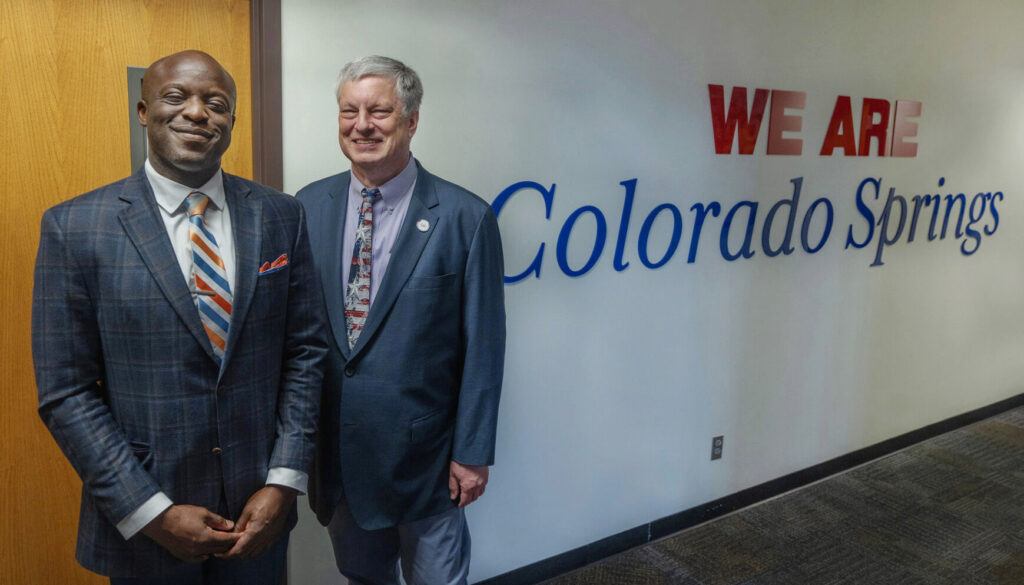
Wayne Williams will be the next chief of staff for Colorado Springs Mayor Yemi Mobolade, turning the two former election opponents into partners in city government. The two officially announced the hire Thursday, citing Williams’ decades of experience with city,...
PREV
PREVIOUS
Gov. Jared Polis assembles council to address long-term economic response
Gov. Jared Polis, after a week of closing schools and businesses of all kinds, announced Friday he has assembled a team of experts to help those businesses and others affected by the novel coronavirus, COVID-19, get back on their economic feet once the crisis is over. The team will be led by former U.S. Transportation […]

Amtrak routes through Colorado see ridership dip, but no plans to eliminate service
When Kevin Patterson was riding his bicycle in Glenwood Springs earlier this week, he stopped by the Amtrak station. He was curious how many riders were on the train, given the restrictions on group gatherings and increasing shelter-in-place orders. Two passengers, an employee told him. Patterson, who operates the Glenwood Canyon Resort, relayed the story […]